ExploreTravel GuidesPlan a trip
    de|en
    All Places & RegionsAbout FernwehFAQPrivacy PolicyImprint
    ExploreTravel GuidesPlan a trip
    • Neighborhoods & highlights
    • Eat & drink
    • Nightlife
    • Accommodation
    • Plan trip
    • Nearby
    Kreuzberg

    Germany

    Kreuzberg

    City

    Kreuzberg is a district in the Friedrichshain-Kreuzberg borough, named after the 66-meter-high Kreuzberg hill in Viktoriapark, where Schinkel's National Monument for the Liberation Wars has stood since 1821.

    1. Home
    2. Destinations
    3. Germany
    4. Berlin
    5. Kreuzberg
    Kreuzberg is a district in the Friedrichshain-Kreuzberg borough, named after the 66-meter-high Kreuzberg hill in Viktoriapark, where Schinkel's National Monument for the Liberation Wars has stood since 1821. During the time of the Berlin Wall, the eastern part, SO 36, was enclosed on three sides and became the hub of the alternative movement and squatting in the 1970s and 1980s. Today, around 160,000 people live here, many with Turkish roots, and its nightlife and cultural scene are well-known far beyond Berlin.During the day, you can visit the Jewish Museum or the German Museum of Technology, climb the Kreuzberg hill in Viktoriapark, or meet up at the Admiralbrücke over the Landwehrkanal, a popular meeting spot. In the evenings, the district's nightlife beckons. You can get here via U-Bahn lines U1 and U3, which largely follow the former Akzisemauer, with U6 and U8 running north-south, and also with U7; in total, there are 14 U-Bahn stations in the district.
    With around 160,000 inhabitants, Kreuzberg is one of Berlin's most densely populated districts and has formed a joint borough with Friedrichshain since 2001. It consists of the larger western part, Kreuzberg 61, with Viktoriapark and the Technology Museum, and the smaller eastern part SO 36 around the Wrangelkiez. The neighborhood meets at the Landwehrkanal and Admiralbrücke, and in the evenings, it boasts a nightlife known far beyond Berlin. With 14 U-Bahn stations, you can get anywhere fast.

    Sights in Kreuzberg

    Discover the most important sights and attractions

    German Technology Museum
    Museum

    1German Technology Museum

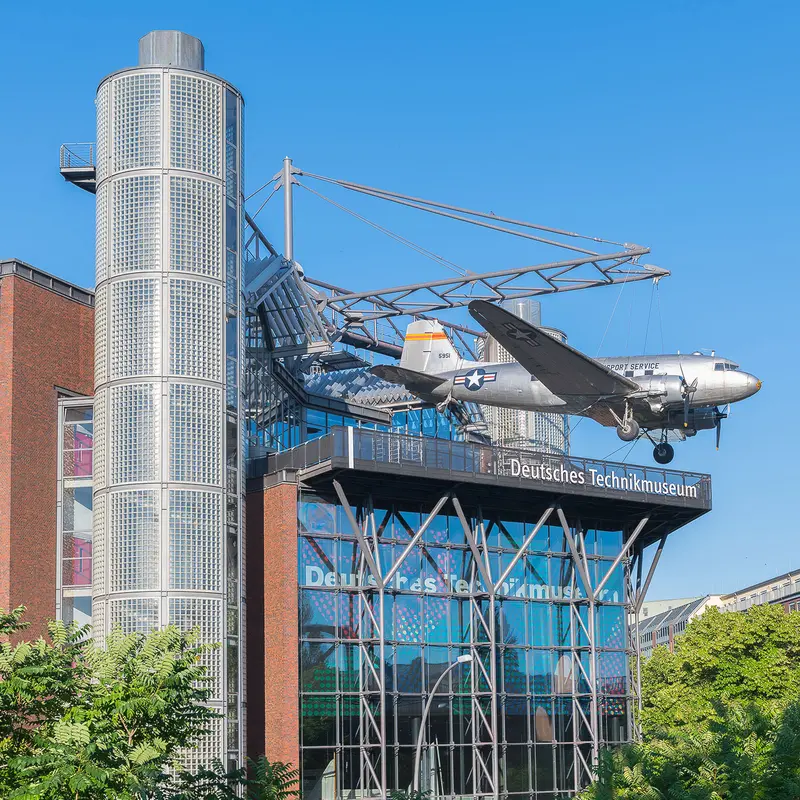
    On the site of the former Anhalter freight station, the museum, which opened in 1983, primarily exhibits rail transport, aerospace, and shipping. A Douglas C-47 'Raisin Bomber' has stood on the roof of the new building since 1999.
    Open in Google Maps
    Jewish Museum Berlin
    Museum

    2Jewish Museum Berlin

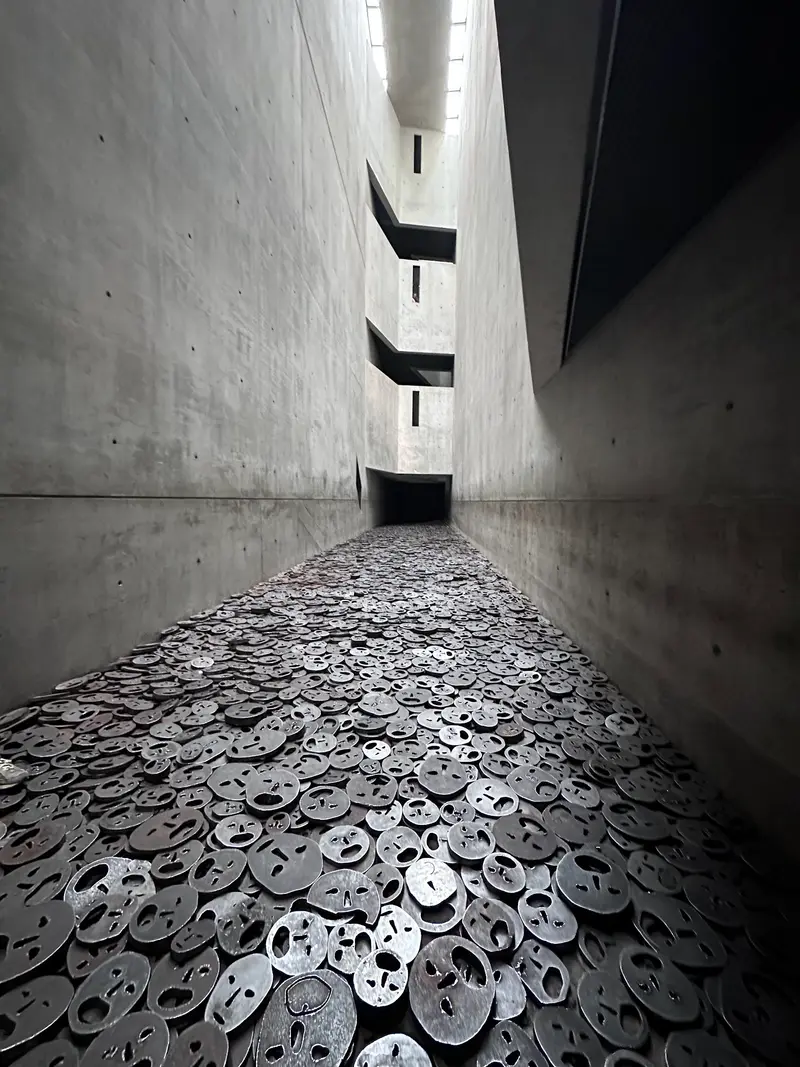
    The zigzag-shaped new building by Daniel Libeskind on Lindenstraße adjoins the baroque Kollegienhaus from 1735. The permanent exhibition 'Jewish History and Present in Germany' was opened on August 23, 2020.
    Open in Google Maps
    Victoria Park
    Park

    3Victoria Park

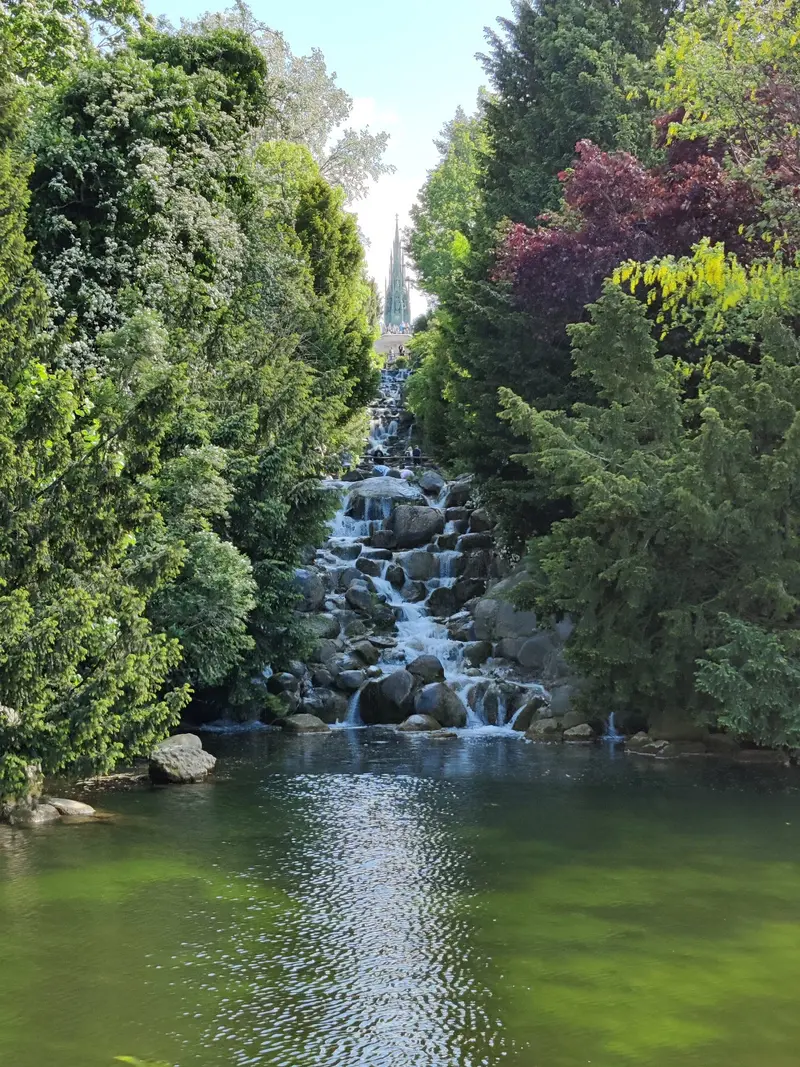
    The 12.8-hectare park, designed by Hermann Mächtig, was created from 1888 to 1894 and ascends the 66-meter-high Kreuzberg. An artificial waterfall drops 24 meters, and at its top stands Schinkel's National Monument for the Liberation Wars of 1821.
    Open in Google Maps

    Restaurants in Kreuzberg

    1

    ZAGROS Vegetable Kebab

    Turkish spot for vegetable kebab on Skalitzer Street.
    Show on Google Maps
    2

    Felix Austria

    Austrian classics like Schnitzel and Goulash in a casual setting with wooden chairs and a terrace.
    Show on Google Maps
    3

    Buya Ramen Factory

    Big restaurant for Japanese noodle soups with homemade noodles, vegan options, sake, and small dishes.
    Show on Google Maps

    Nightlife

    1

    Lidolino

    Bar on Cuvrystraße.
    Show on Google Maps
    2

    Choke Angel

    A traditional, cozy cocktail bar that also serves Mediterranean tapas.
    Show on Google Maps

    Accommodations in Kreuzberg

    Find perfect stay in Kreuzberg

    Booking.com* (Affiliate link)
    Search Hotels
    Agoda* (Affiliate link)
    Search Hotels
    Airbnb
    Vacation Rentals

    * Affiliate link: if you book through it, we earn a small commission. The price stays the same for you.

    Campgrounds in Kreuzberg

    Find perfect campground in Kreuzberg

    Search via Google Maps
    Campgrounds nearby (15km)
    Camping.info
    Find Campgrounds
    Park4Night
    RV Parks & Camping

    Plan your trip to Kreuzberg

    Save places, build a route and plan your city trip, all in one place.

    1. 1
      1234

      Round trip

      12 days · 4 stops

      Saved

      Pick a route

      Pick a ready-made one or save places and plan your own.

      Open bookmarks
    2. 2

      Trip to Kreuzberg

      Live
      • 1German Technology Museum3 days
      • 2Jewish Museum Berlin4 days
      • 3Victoria Park5 days
      Budget

      Plan your trip

      The planner sorts stops, days and budget. Plan together in real time.

      Start trip planning
    3. 3
      9:41 No signal
      Available offline

      Use it on the road

      Download the guide to your phone and use it on site, even offline.

    Nearby

    Berlin

    Berlin

    Berlin is the federal capital and, with around 3.66 million inhabitants, Germany's largest city. The city is completely surrounded by Brandenburg; the Spree flows through it from east to west and empties into the Havel in Spandau. Twelve districts with 97 localities structure the almost 892-square-kilometer urban area.Here are places that make German history come alive: from the Brandenburg Gate, over the remains of the Berlin Wall, to the Reichstag Building, where the Bundestag has met since 1999. Museum Island has been a UNESCO World Heritage site since 1999, and in neighborhoods like Kreuzberg, Friedrichshain, and Prenzlauer Berg, you'll find bars, restaurants, and a vibrant nightlife.
    Neukölln

    Neukölln

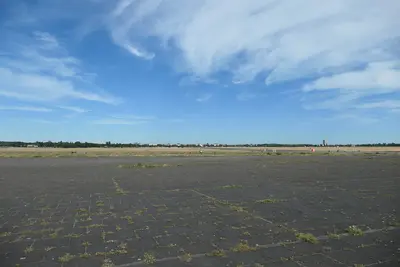
    Until 1912, Neukölln was called Rixdorf: A document from 1360 mentions the village, and in 1737 Friedrich Wilhelm I. settled Bohemian religious refugees who founded Böhmisch-Rixdorf. In 1899 Rixdorf became a city, in 1920 Neukölln joined Greater Berlin, and after the war, it belonged to West Berlin. Today, the densely built-up north with its Gründerzeit districts is vibrantly diverse; by mid-2021 almost half of its residents had a migration background from 155 countries.You can stroll along Sonnenallee and Karl-Marx-Straße, discover old Rixdorf around Richardplatz with its forge and Bethlehemskirche, and descend into the lower-lying Körnerpark. In Reuterkiez, which Berliners call Kreuzkölln, and in Schillerkiez, many bars and cafés have opened since the 2000s, and right next door, the expansive Tempelhofer Feld beckons. At Hermannplatz U-Bahn station, lines U7 and U8 intersect, and the S-Bahn lines S41, S42, S45, S46, and S47 also run through the district.
    Berlin

    Berlin

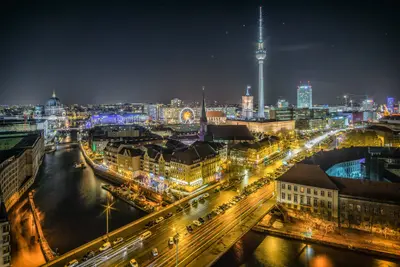
    With approximately 3.66 million inhabitants, Berlin is Germany's largest city and has been the federal capital since reunification in 1990; the federal government and the Bundestag have been based here since 1999. The Spree flows through the city from east to west, its banks are home to the Government District, Museum Island, and the East Side Gallery.Few cities tell the story of the 20th century so powerfully: On Bernauer Straße, you see the former border strip, at the Brandenburg Gate, the symbol of unity. Additionally, there are three opera houses, the museums of the World Heritage Museum Island, and districts like Kreuzberg, Friedrichshain, and Prenzlauer Berg, known for their bars, restaurants, and nightlife.
    Scheunenviertel & Hackescher Markt

    Scheunenviertel & Hackescher Markt

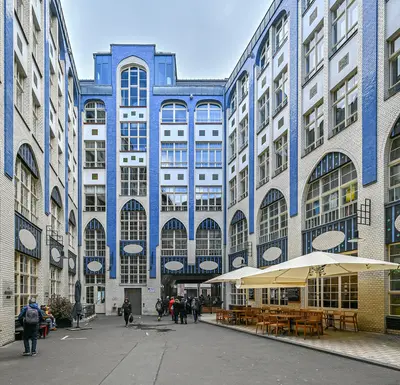
    Das Viertel rund um den Hackeschen Markt heißt historisch Spandauer Vorstadt und liegt im Ortsteil Mitte zwischen Spree, Friedrichstraße und Torstraße; den Teil östlich der Rosenthaler Straße nennt man Scheunenviertel. Ab 1685 wurden hier Straßen angelegt und Parzellen an Berliner Bürger und Hugenotten verkauft, 1712 bekam die Vorstadt mit der Sophienkirche ihre eigene Pfarrkirche. Heute steht das Gebiet als Ensemble unter Denkmalschutz und gilt als der größte und am besten erhaltene historische Stadtteil Berlins.Du bummelst durch die acht Höfe der Hackeschen Höfe, schaust an der Oranienburger Straße zur Kuppel der Neuen Synagoge hinauf und ziehst durch die Auguststraße, die für ihre Galerien bekannt ist. Am Bahnhof Hackescher Markt halten die S-Bahn-Linien S3, S5, S7 und S9 sowie die Trams M1, M4, M5 und M6.
    Friedrichshain

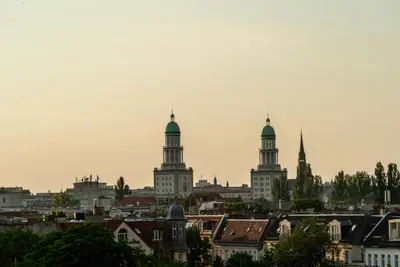
    Friedrichshain

    Friedrichshain owes its name to the Volkspark Friedrichshain in the north, laid out from 1846 as Berlin's first public park, and reaching south to the Spree. The 1950s saw the creation of Stalinallee, today's Karl-Marx-Allee, whose Socialist Classicist buildings are now listed monuments; the uprising of June 17, 1953 began on its construction sites. To the east, Gründerzeit tenements define the image; since 2001, the district has formed a joint borough with Kreuzberg.Stroll along Karl-Marx-Allee from Strausberger Platz to Frankfurter Tor, ascend the Großer Bunkerberg in the Volkspark, and browse the Saturday weekly market at Boxhagener Platz. In the evenings, bars and restaurants around Simon-Dach-Straße draw visitors from across the city. Warschauer Straße station serves S-Bahn lines S3, S5, S7, S75, S9, and is the terminus for U-Bahn lines U1 and U3; Ostkreuz is Berlin's busiest station.