ExploreTravel GuidesPlan a trip
    de|en
    All Places & RegionsAbout FernwehFAQPrivacy PolicyImprint
    ExploreTravel GuidesPlan a trip
    • Places in the region
    • Round trips
    • Nearby
    Berlin

    Germany

    Berlin

    Region

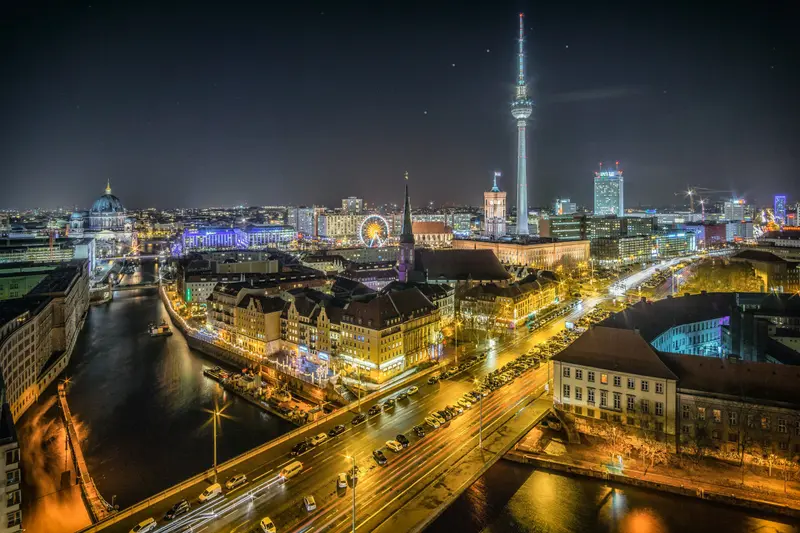
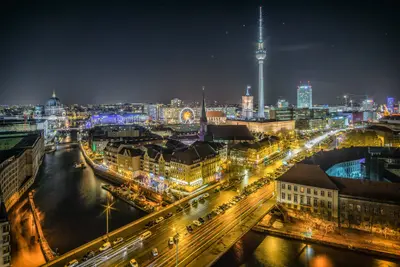
    Berlin is the federal capital and, with around 3.66 million inhabitants, Germany's largest city. The city is completely surrounded by Brandenburg; the Spree flows through it from east to west and empties into the Havel in Spandau.

    1. Home
    2. Destinations
    3. Germany
    4. Berlin
    Berlin is the federal capital and, with around 3.66 million inhabitants, Germany's largest city. The city is completely surrounded by Brandenburg; the Spree flows through it from east to west and empties into the Havel in Spandau. Twelve districts with 97 localities structure the almost 892-square-kilometer urban area.Here are places that make German history come alive: from the Brandenburg Gate, over the remains of the Berlin Wall, to the Reichstag Building, where the Bundestag has met since 1999. Museum Island has been a UNESCO World Heritage site since 1999, and in neighborhoods like Kreuzberg, Friedrichshain, and Prenzlauer Berg, you'll find bars, restaurants, and a vibrant nightlife.

    More places in Berlin
    Berlin

    Berlin

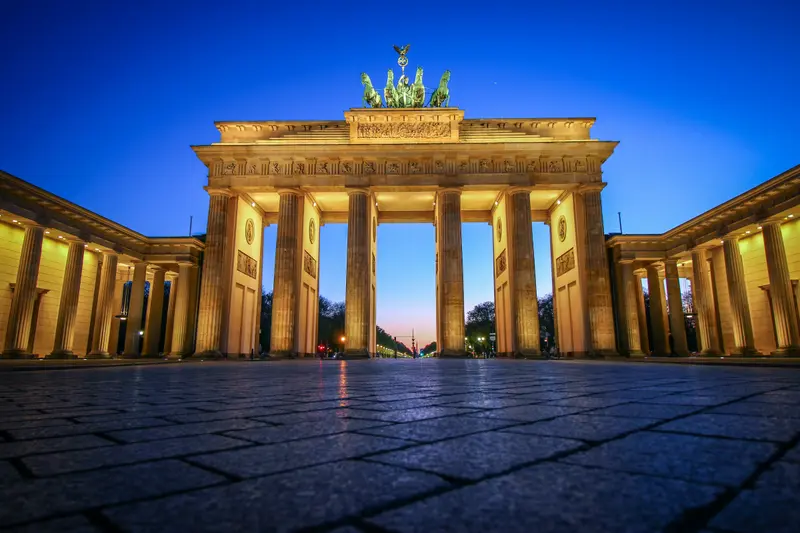
    With approximately 3.66 million inhabitants, Berlin is Germany's largest city and has been the federal capital since reunification in 1990; the federal government and the Bundestag have been based here since 1999. The Spree flows through the city from east to west, its banks are home to the Government District, Museum Island, and the East Side Gallery.Few cities tell the story of the 20th century so powerfully: On Bernauer Straße, you see the former border strip, at the Brandenburg Gate, the symbol of unity. Additionally, there are three opera houses, the museums of the World Heritage Museum Island, and districts like Kreuzberg, Friedrichshain, and Prenzlauer Berg, known for their bars, restaurants, and nightlife.
    Round trips through this region

    Classics in 14 Days

    This 14-day journey combines Germany's great cities and landscapes from Berlin to Cologne. From the capital, via Dresden to Franconia, whose Bamberg Old Town is a UNESCO World Heritage site since 1993, and further via Nuremberg to Munich. Near Füssen, you visit Schloss Neuschwanstein; the route then leads via Heidelberg to Koblenz at the Moselle estuary, the north end of the Upper Middle Rhine Valley World Heritage site. The journey ends in Cologne; from the main station, you can reach Köln/Bonn Airport in 11 minutes by Regional-Express.

    14 Days
    10 stops
    Open jaw

    Nearby

    Scheunenviertel & Hackescher Markt

    Scheunenviertel & Hackescher Markt

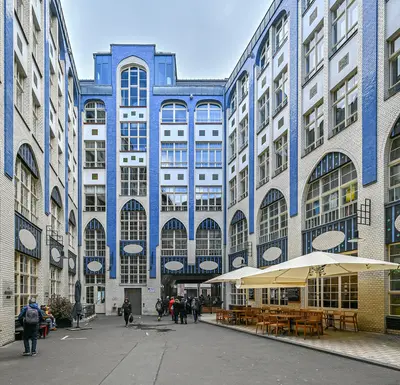
    Das Viertel rund um den Hackeschen Markt heißt historisch Spandauer Vorstadt und liegt im Ortsteil Mitte zwischen Spree, Friedrichstraße und Torstraße; den Teil östlich der Rosenthaler Straße nennt man Scheunenviertel. Ab 1685 wurden hier Straßen angelegt und Parzellen an Berliner Bürger und Hugenotten verkauft, 1712 bekam die Vorstadt mit der Sophienkirche ihre eigene Pfarrkirche. Heute steht das Gebiet als Ensemble unter Denkmalschutz und gilt als der größte und am besten erhaltene historische Stadtteil Berlins.Du bummelst durch die acht Höfe der Hackeschen Höfe, schaust an der Oranienburger Straße zur Kuppel der Neuen Synagoge hinauf und ziehst durch die Auguststraße, die für ihre Galerien bekannt ist. Am Bahnhof Hackescher Markt halten die S-Bahn-Linien S3, S5, S7 und S9 sowie die Trams M1, M4, M5 und M6.
    Berlin

    Berlin

    With approximately 3.66 million inhabitants, Berlin is Germany's largest city and has been the federal capital since reunification in 1990; the federal government and the Bundestag have been based here since 1999. The Spree flows through the city from east to west, its banks are home to the Government District, Museum Island, and the East Side Gallery.Few cities tell the story of the 20th century so powerfully: On Bernauer Straße, you see the former border strip, at the Brandenburg Gate, the symbol of unity. Additionally, there are three opera houses, the museums of the World Heritage Museum Island, and districts like Kreuzberg, Friedrichshain, and Prenzlauer Berg, known for their bars, restaurants, and nightlife.
    Prenzlauer Berg

    Prenzlauer Berg

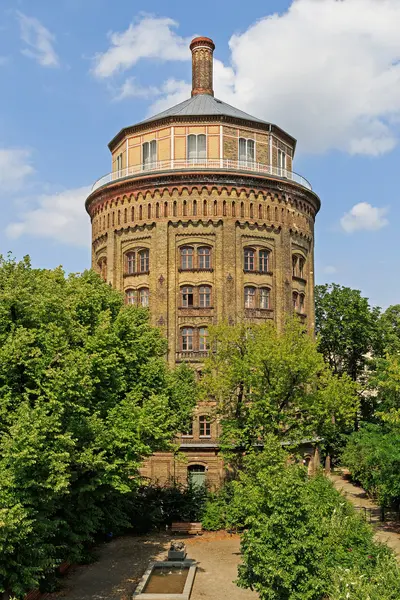
    Prenzlauer Berg is a district in the borough of Pankow and, with 168,947 inhabitants (end of 2023), Berlin's most populous district. Approximately two-thirds of the apartments were built between 1871 and 1914; typical are five-story apartment buildings with courtyards, and over 300 buildings are listed as historical monuments. In the 1980s, the GDR opposition gathered here, for instance around the Gethsemanekirche; after 1990, the district was considered Europe's largest contiguous redevelopment area.You can sit in the cafés and restaurants around Kollwitzplatz, Helmholtzplatz, and Kastanienallee, admire the water tower from 1877, and go to the flea market in Mauerpark on Sundays. The Kulturbrauerei, in the former Schultheiss brewery, combines cinema, stages, and clubs; nightlife focuses around the Eberswalder Straße U-Bahn station. The U2 stops at Senefelderplatz, Eberswalder Straße, and Schönhauser Allee, along with the M1 and M10 trams and five Ringbahn stations.
    Kreuzberg

    Kreuzberg

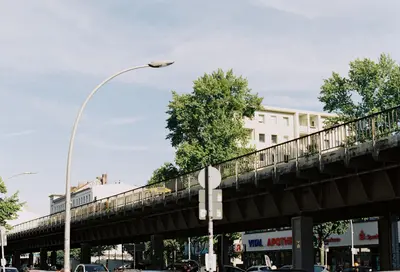
    Kreuzberg is a district in the Friedrichshain-Kreuzberg borough, named after the 66-meter-high Kreuzberg hill in Viktoriapark, where Schinkel's National Monument for the Liberation Wars has stood since 1821. During the time of the Berlin Wall, the eastern part, SO 36, was enclosed on three sides and became the hub of the alternative movement and squatting in the 1970s and 1980s. Today, around 160,000 people live here, many with Turkish roots, and its nightlife and cultural scene are well-known far beyond Berlin.During the day, you can visit the Jewish Museum or the German Museum of Technology, climb the Kreuzberg hill in Viktoriapark, or meet up at the Admiralbrücke over the Landwehrkanal, a popular meeting spot. In the evenings, the district's nightlife beckons. You can get here via U-Bahn lines U1 and U3, which largely follow the former Akzisemauer, with U6 and U8 running north-south, and also with U7; in total, there are 14 U-Bahn stations in the district.
    Friedrichshain

    Friedrichshain

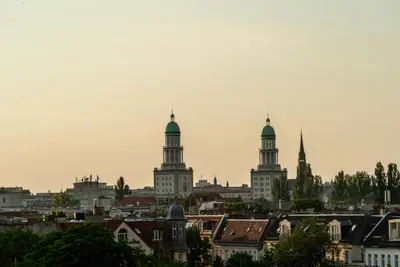
    Friedrichshain owes its name to the Volkspark Friedrichshain in the north, laid out from 1846 as Berlin's first public park, and reaching south to the Spree. The 1950s saw the creation of Stalinallee, today's Karl-Marx-Allee, whose Socialist Classicist buildings are now listed monuments; the uprising of June 17, 1953 began on its construction sites. To the east, Gründerzeit tenements define the image; since 2001, the district has formed a joint borough with Kreuzberg.Stroll along Karl-Marx-Allee from Strausberger Platz to Frankfurter Tor, ascend the Großer Bunkerberg in the Volkspark, and browse the Saturday weekly market at Boxhagener Platz. In the evenings, bars and restaurants around Simon-Dach-Straße draw visitors from across the city. Warschauer Straße station serves S-Bahn lines S3, S5, S7, S75, S9, and is the terminus for U-Bahn lines U1 and U3; Ostkreuz is Berlin's busiest station.