ExploreTravel GuidesPlan a trip
    de|en
    All Places & RegionsAbout FernwehFAQPrivacy PolicyImprint
    ExploreTravel GuidesPlan a trip
    • Neighborhoods & highlights
    • Eat & drink
    • Nightlife
    • Getting around
    • Accommodation
    • Plan trip
    • Nearby
    Downtown and Brickell

    United States

    Downtown and Brickell

    City

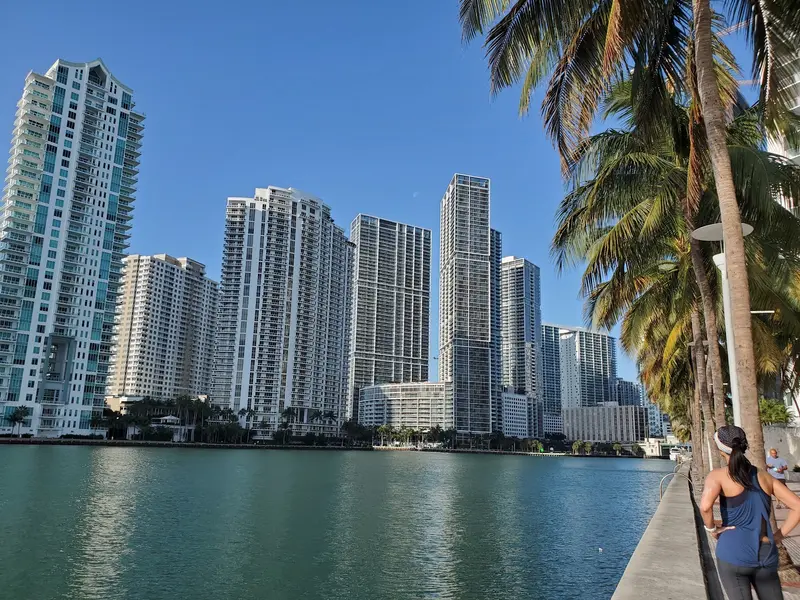
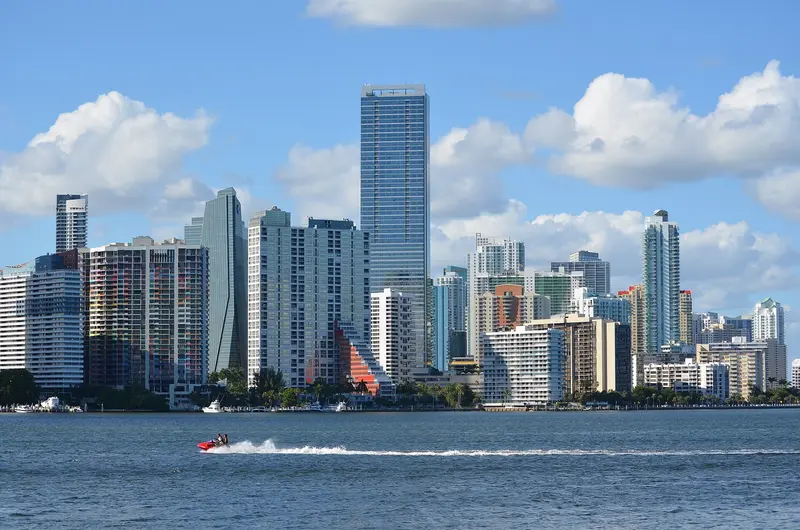
    Downtown Miami and the adjacent Brickell to the south form the city's center: skyscrapers, banks, hotels, and amidst them, parks along Biscayne Bay.

    1. Home
    2. Destinations
    3. United States
    4. Miami
    5. Downtown and Brickell
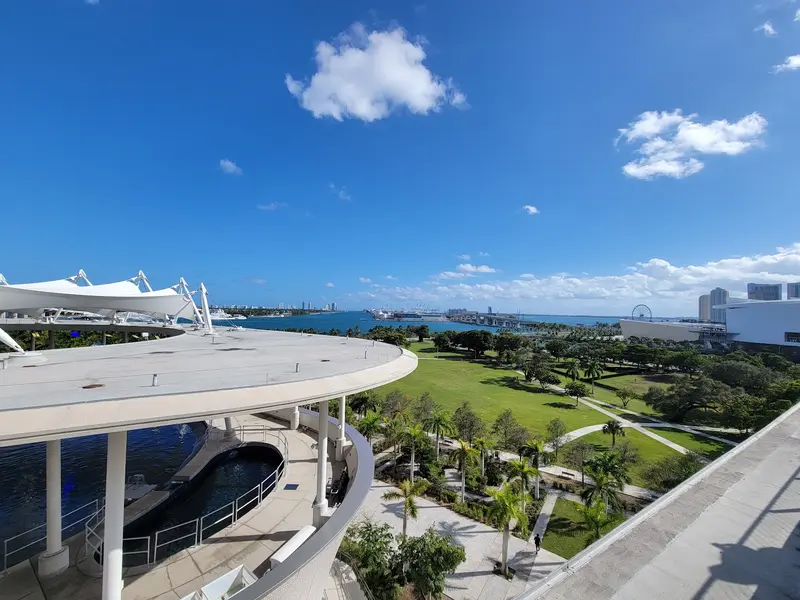
    Downtown Miami and the adjacent Brickell to the south form the city's center: skyscrapers, banks, hotels, and amidst them, parks along Biscayne Bay. Brickell is named after William and Mary Brickell; Mary Brickell had Brickell Avenue parceled for villas in the early 20th century. From the 1970s onwards, office towers replaced the mansions, and Brickell became one of the largest financial districts in the USA. Today, it's primarily apartment tower residents, and the streets are lively even in the evenings.Much of the action for visitors unfolds along the bay. Museum Park features the Pérez Art Museum with its hanging gardens and the Frost Museum of Science with a large aquarium. Further south are Bayfront Park, designed by sculptor Isamu Noguchi, and Bayside Marketplace with its shops and boat docks. Opposite, the Freedom Tower commemorates the 1960s, when Cuban refugees were registered here.The best part: The Metromover, a free, driverless elevated train. Glide above the streets, see the skyline from above, and get off wherever interests you.Best Time: Museums in the morning, followed by a Metromover ride. Bayfront Park is worthwhile in the late afternoon, and Brickell's rooftop bars in the evening.

    Sights in Downtown and Brickell

    Discover the most important sights and attractions

    Pérez Art Museum Miami
    Museum

    1Pérez Art Museum Miami

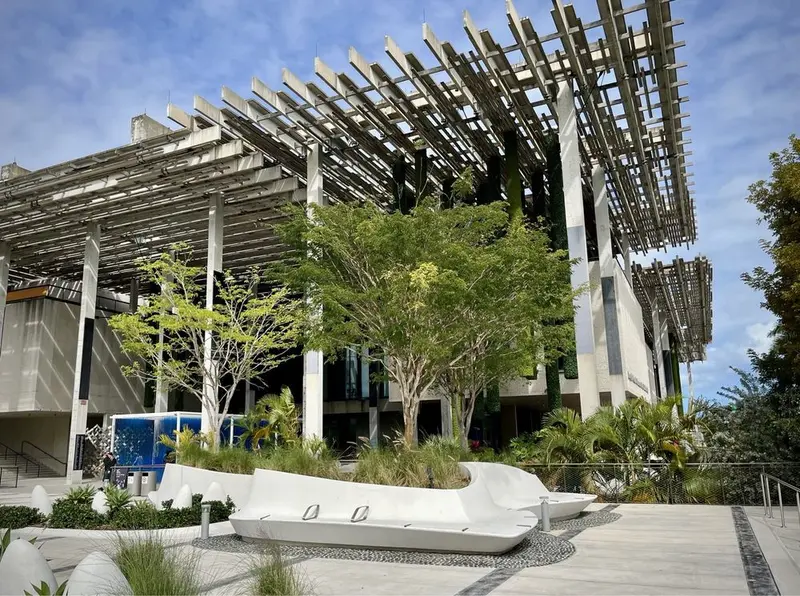
    The PAMM in Museum Park was designed by Herzog & de Meuron and opened in 2013. It showcases 20th and 21st-century art with a focus on cultures around the Atlantic; the hanging plant gardens on the facade are by botanist Patrick Blanc.
    Open in Google Maps
    Freedom Tower
    Museum

    2Freedom Tower

    The 1925 tower on Biscayne Boulevard is modeled after the Giralda in Seville. In the 1960s, Cuban refugees were registered and assisted here; since 2008, it has been a National Historic Landmark. After a restoration, it will reopen to the public in autumn 2025.
    Open in Google Maps
    Bayfront Park
    Park

    3Bayfront Park

    The park on Biscayne Bay was laid out from around 1980 according to plans by Isamu Noguchi. It features the Challenger Memorial, the illuminated Claude Pepper Fountain, and Noguchi's marble sculpture Slide Mantra; an open-air theater is located to the north.
    Open in Google Maps
    Phillip and Patricia Frost Museum of Science
    Museum

    4Phillip and Patricia Frost Museum of Science

    Opened in 2017, the Science Museum next to PAMM features an aquarium with approximately 1.9 million liters of water; through a 9.4-meter-diameter porthole, you look up at sharks and rays. It also features a planetarium with 250 seats.
    Open in Google Maps
    Bayside Marketplace
    Shopping Mall

    5Bayside Marketplace

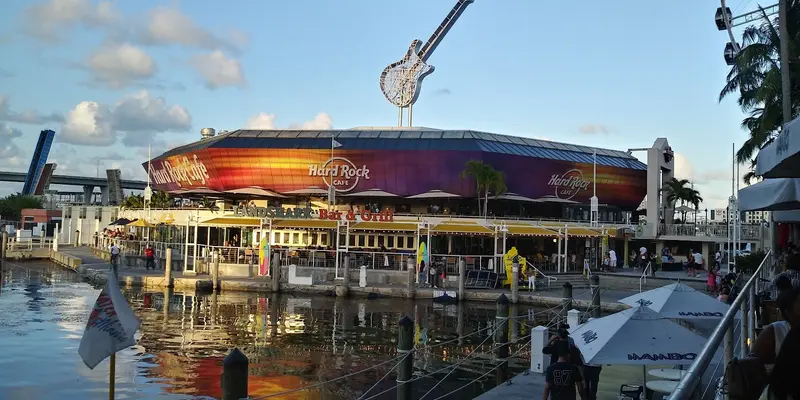
    The open-air waterfront shopping and entertainment center opened in 1987. It features shops, restaurants, and the marina; the Kaseya Center arena is directly adjacent.
    Open in Google Maps

    Restaurants in Downtown and Brickell

    1

    Garcia's Seafood Grille & Fish Market

    Since 1966, an exiled Cuban family's laid-back fish eatery sits on the Miami River. On the terrace, you can order the catch of the day, such as whole Yellowtail Snapper from the Keys or a Mahi-Mahi sandwich.
    Show on Google Maps
    2

    The River Oyster Bar

    Long-standing seafood bar in Brickell at 33 SE 7th Street with classic fish dishes, oysters, and a popular weekday Happy Hour.
    Show on Google Maps

    Nightlife

    1

    Sugar

    Rooftop bar on the 40th floor of the EAST Miami hotel in Brickell City Centre, with a tropical garden, lounges, and views of Biscayne Bay and the skyline.
    Show on Google Maps

    Getting There & Around

    Downtown and Brickell are the hub of public transport. Here, Metrorail, Metromover, Brightline, and numerous bus and trolley lines converge.Metromover: a free, driverless elevated train with three loops (Inner Loop, Omni Loop, Brickell Loop) and 21 stations, operating daily. Key stations: Museum Park (PAMM and Frost Science), College/Bayside and Bayfront Park (Bayside), Freedom Tower, Brickell City Centre.Metrorail: Transfer to Metromover at Government Center and Brickell stations. Southbound, it goes to Vizcaya, Coconut Grove, and Douglas Road (Coral Gables); northbound, to the airport.Brightline: MiamiCentral Station (600 NW 1st Avenue) is connected to Government Center Station via a pedestrian bridge. From here, trains run via Aventura, Fort Lauderdale, and West Palm Beach to Orlando.Trolleys (City of Miami): free, including the Brickell, Biscayne, and Little Havana lines.
    Accommodations in Downtown and Brickell

    Find perfect stay in Downtown and Brickell

    Booking.com* (Affiliate link)
    Search Hotels
    Agoda* (Affiliate link)
    Search Hotels
    Airbnb
    Vacation Rentals

    * Affiliate link: if you book through it, we earn a small commission. The price stays the same for you.

    Campgrounds in Downtown and Brickell

    Find perfect campground in Downtown and Brickell

    Search via Google Maps
    Campgrounds nearby (15km)
    Camping.info
    Find Campgrounds
    Park4Night
    RV Parks & Camping

    Plan your trip to Downtown and Brickell

    Save places, build a route and plan your city trip, all in one place.

    1. 1
      1234

      Round trip

      12 days · 4 stops

      Saved

      Pick a route

      Pick a ready-made one or save places and plan your own.

      Open bookmarks
    2. 2

      Trip to Downtown and Brickell

      Live
      • 1Pérez Art Museum Miami3 days
      • 2Freedom Tower4 days
      • 3Bayfront Park5 days
      Budget

      Plan your trip

      The planner sorts stops, days and budget. Plan together in real time.

      Start trip planning
    3. 3
      9:41 No signal
      Available offline

      Use it on the road

      Download the guide to your phone and use it on site, even offline.

    Nearby

    Miami

    Miami

    Miami is situated in southeastern Florida on Biscayne Bay, with Miami Beach located on a barrier island just opposite. You visit for its beaches, Art Deco architecture, and Cuban-influenced districts.The Art Deco District in Miami Beach is home to around 960 historic buildings, which have been on the National Register of Historic Places since 1979. The hotels on Ocean Drive overlook Lummus Park and the beach. In Little Havana, locals play dominoes in Máximo Gómez Park, known as Domino Park, on Calle Ocho. In Wynwood, the Wynwood Walls have showcased murals and sculptures by over 130 artists since 2009; a ticket is required for entry.Miami International is the largest aviation hub between the USA and Latin America. In Downtown and Brickell, the Metromover operates for free. The warm dry season lasts from November to April, and hurricane season from June to late November.
    Little Havana

    Little Havana

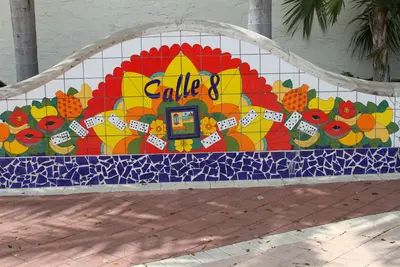
    Located west of Downtown, Little Havana has been the heart of Cuban Miami since the 1960s. After the 1959 revolution, tens of thousands of Cuban exiles arrived in what were then the Riverside and Shenandoah neighborhoods, many expecting to stay only briefly. By 1970, over 85 percent of residents were Cuban. Since the late 1990s, many people from Nicaragua, Honduras, and other Central American countries have joined them, but most businesses are still run by Cubans.Its main artery is Calle Ocho, SW 8th Street. Here, older gentlemen play dominoes in Máximo Gómez Park, Ventanitas (the street windows of cafes) offer Cafecito to go, and stars on the Calle Ocho Walk of Fame commemorate icons like Celia Cruz and Gloria Estefan. The Cuban Memorial Boulevard features monuments to the fighters of the 1961 Bay of Pigs Invasion.Little Havana is not a museum district: You come here to eat, drink coffee, and listen. In the evenings, live bands play in bars like Ball & Chain, and on salsa nights, the dance floor is packed.Best Time: Late morning, when games are underway in the Domino Park. On the last Friday of each month, the district celebrates Viernes Culturales with music, art, and stalls on Calle Ocho between 14th and 17th Avenue, from noon until late, with free admission.
    Wynwood and Design District

    Wynwood and Design District

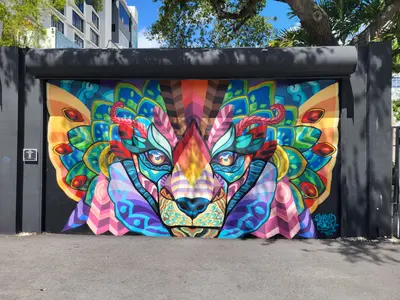
    North of Downtown lie two neighborhoods that have completely reinvented themselves in the last two decades. From the 1920s, Wynwood was a textile district; in the 1940s and 1950s, many families from Puerto Rico moved here, earning the neighborhood the nickname Little San Juan. When the clothing factories closed in the early 1990s, the warehouses stood empty.In 2009, real estate developer Tony Goldman, together with curator Jeffrey Deitch, had the exterior walls of several of his buildings painted by street artists: The Wynwood Walls were born. Today, almost every facade in the district is painted, interspersed with galleries, breweries, cafes, and bars.Directly north lies the Design District. Here, in the 1920s, T. V. Moore built a furniture store on a former pineapple farm; starting in the late 1990s, developer Craig Robins and his company Dacra acquired numerous buildings and brought in designers and later luxury brands like Louis Vuitton, Dior, and Hermès. Among the boutiques, there is much public art, such as Buckminster Fuller's Fly's Eye Dome, and the ICA Miami showcases contemporary art with free admission.Best time: Come in the afternoon when galleries and museums are open, and stay for the evening in Wynwood. The Wynwood Art Walk takes place on the second Saturday of the month.
    South Beach

    South Beach

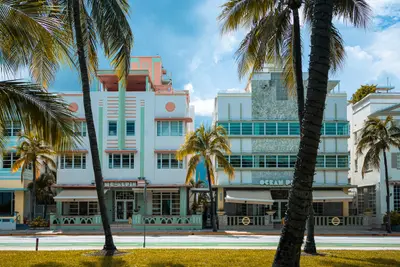
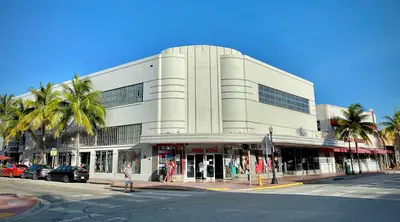
    South Beach is the southern tip of Miami Beach, a separate city on the long barrier island off Miami. It’s home to the Art Deco Historic District, with over 800 preserved historic buildings, added to the National Register of Historic Places in 1979. The pastel-colored hotels on Ocean Drive, Collins Avenue, and Washington Avenue owe their continued existence primarily to Barbara Capitman, who co-founded the Miami Design Preservation League in the late 1970s and campaigned against their demolition.The most famous stretch is Ocean Drive between 5th and 15th Street: a beach promenade by day, its hotels’ neon signs glow by night. A few blocks inland, you’ll find Lincoln Road, a pedestrian zone since 1960 designed by Morris Lapidus, and Española Way, a small alley in the 1920s Mediterranean Revival style.But South Beach is more than just beaches and façades. The Wolfsonian showcases design and propaganda from the period between industrialization and World War II, the New World Center broadcasts free concerts onto a large screen in the park, and from South Pointe Park at the southern tip, you can watch the Government Cut harbor entrance.Best Time: For architectural photos, early morning is ideal when the light is soft and Ocean Drive is still quiet. South Pointe Park is worth visiting for sunset, followed by the neon lights along Ocean Drive.
    Coconut Grove

    Coconut Grove

    Coconut Grove is one of the oldest settlements in the Miami area and much greener than the rest of the city. The name dates back to a post office established by Horace P. Porter in 1873. Early residents included sailors, naturalists, and artists from the northeastern USA, as well as workers from the Bahamas who built many of the early structures. To this day, many families with Bahamian roots live in West Grove. In 1925, Coconut Grove was incorporated into the City of Miami.The district stretches along the shore of Biscayne Bay. In the north, at the edge of the neighborhood, lies Vizcaya, the Italianate winter residence of industrialist James Deering. In the center, around Main Highway and Grand Avenue, you'll find cafés, restaurants, and the CocoWalk shopping center. At The Barnacle, you can see how pioneers lived in the 19th century, and at Dinner Key, Miami's City Hall is located in a former terminal for Pan-Am seaplanes.If you like plants, visit The Kampong, the tropical garden of plant collector David Fairchild. Otherwise, the Grove is a place for strolling: under banyan trees, past yacht harbors, with a coffee on the terrace.Best Time: Mornings to Vizcaya, before it gets hot; afternoons stroll through the town center and to the bay for sunset.