Fernweh: Home
ExploreGuideDestinationsMy tripsMy trip
de|en
All Places & RegionsRound tripsNight trains in EuropeAll highlightsAbout FernwehFAQPrivacy PolicyImprint
Download on the App StoreGet it on Google Play
ExploreGuideDestinationsMy tripsMy trip
    • Neighborhoods & highlights
    • Tours
    • Eat & drink
    • Culture
    • Getting around
    • Accommodation
    • Plan trip
    • Nearby
    Sofia

    Photo by Beau Swierstra on Unsplash

    Bulgaria

    Sofia

    City

    Sofia, the capital of Bulgaria, is located in the west of the country in a valley at the northern foot of the Vitosha Mountains. Around 1.3 million people live here; international flights land at Sofia Airport.

    by Felix Gillen

    1. Home
    2. Destinations
    3. Bulgaria
    4. Sofia
    Sofia, the capital of Bulgaria, is located in the west of the country in a valley at the northern foot of the Vitosha Mountains. Around 1.3 million people live here; international flights land at Sofia Airport.In the city center, layers of urban history are openly juxtaposed: Excavated remains of Roman Serdica, with city walls, baths, and gates, are freely accessible; the Rotunda of St. George dates from the 4th century. The landmark is the Alexander Nevsky Cathedral from the late 19th century, which can hold up to 10,000 people. On the city's outskirts lies the Boyana Church, a UNESCO World Heritage site since 1979. Sofia is also the starting point for excursions to the Rila Monastery, around 117 kilometers south.
    Bulgaria travel guidePlan a trip with Sofia

    Contents

    • Neighborhoods & highlights
    • Tours
    • Eat & drink
    • Culture
    • Getting around
    • Accommodation
    • Nearby

    Sights in Sofia

    Discover the most important sights and attractions

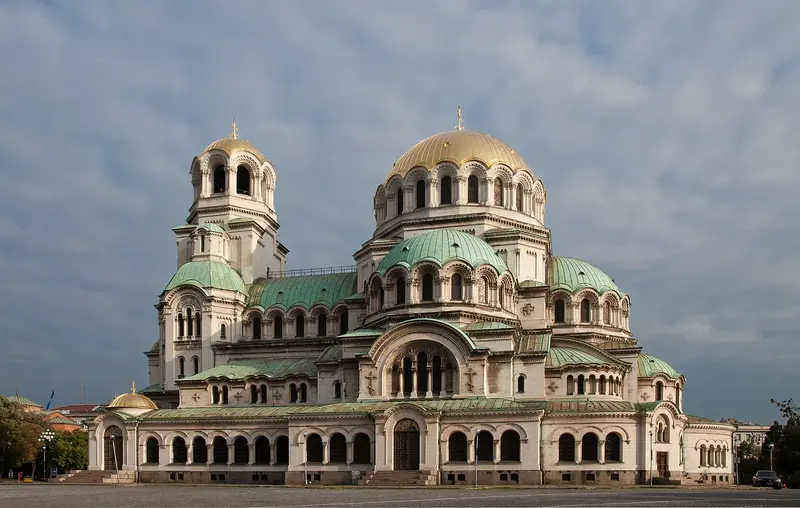
    Alexander Nevsky Cathedral

    Plamen Agov (user:MrPanyGoff) / Wikimedia Commons / CC BY-SA 4.0, mod.

    Church

    1Alexander Nevsky Cathedral

    The Patriarchal Cathedral of the Bulgarian Orthodox Church dates back to the late 19th century and can accommodate up to 10,000 people. It is Sofia's landmark and stands on the eponymous square in the city center.
    Open in Google Maps
    Museum

    2Ancient Serdica

    In the city center, the excavated remains of the Roman city of Serdica are visible: sections of the city wall, Roman baths, the eastern and western gates, and parts of the amphitheater. Nearby stands the 4th-century Rotunda of St. George.
    Open in Google Maps
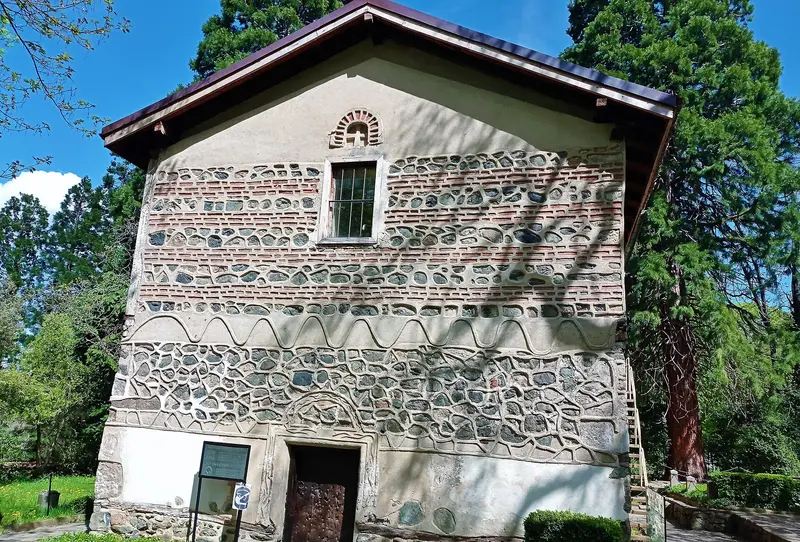
    Church of Bojana

    Ivano Giambattista / Wikimedia Commons / CC0

    Museum

    3Church of Bojana

    The small church in Bojana's outskirts has been a UNESCO World Heritage site since 1979. Its oldest part dates from the late 10th or early 11th century, the middle section from the 13th century. The frescoes from 1259 are famous, featuring 89 scenes and around 240 figures, placing them among the Balkans' most complete medieval fresco cycles. To protect the paintings, a maximum of eight people are allowed inside for ten minutes at a time.
    Open in Google Maps
    Museum

    4National Historical Museum

    The museum on the outskirts displays Bulgaria's history from prehistory to today, including Varna Necropolis gold; the Boyana Church is an annex. Open daily (April-September 9:30 AM-7 PM, otherwise until 6 PM), admission €6.14, free on the last Monday monthly (as of May 2026).
    Open in Google Maps
    Attraction

    5National Theatre Ivan Vazov

    The National Theater, founded in 1904, performs in a neoclassical building in the city center that was rebuilt in 1929.
    Open in Google Maps
    Mosque

    6Banja Bashi Mosque

    The 1576 Ottoman Mosque with a large dome stands right in the center next to the Central Mineral Baths. There you can fill your own bottle with hot spring water.
    Open in Google Maps

    Tours & experiences in Sofia

    Search tours for Sofia on GetYourGuide* (Affiliate link)On GetYourGuide, with reviews from other travellers

    * Affiliate link: if you book through it, we earn a small commission. The price stays the same for you.

    Restaurants in Sofia

    1

    MoMa Bulgarian Food & Wine

    A modernly interpreted Mehana in the center, with grilled dishes and meatballs in an understated ambiance. Lonely Planet ranks an evening here among the city's best and recommends reserving.
    Show on Google Maps
    2

    Manastirska Magernitsa

    Traditional Mehana in the center, noted by Lonely Planet for Bulgarian monastery recipes, like wine-braised rabbit. Portions are large; in summer, you sit in the garden.
    Show on Google Maps
    3

    Cosmos

    Upscale restaurant reinterpreting Bulgarian dishes; Lonely Planet lists it among the city's interesting new addresses.
    Show on Google Maps

    Romans, Churches and Fests

    City HistoryBeneath the city center lies Roman Serdika: Its West Gate dates from 176 to 180 AD, and the Amphitheater from the 3rd and 4th century. The Rotunda of St. George, also from the 4th century, is considered one of the city's oldest buildings. The Alexander Nevsky Cathedral was built between 1882 and 1912.FestivalsSofia Music Weeks from late May to early October.In late January, the Surva Mask Festival with Kukeri dancers takes place in nearby Pernik.

    On the Road in Sofia

    From the AirportMetro Line M4 has been running from Terminal 2 since 2015, reaching Serdika Station in the city centre in about 18 minutes, every 5 to 7 minutes. From Terminal 1, a free shuttle first connects to Terminal 2.Tickets (effective January 1, 2026, in Euros)Single ticket €0.80, Day pass €2, 24 hours €3, 72 hours €7.60.ExcursionsA chairlift ascends Vitosha, the local mountain, for skiing in winter and hiking in summer.The Rila Monastery is located about 117 kilometres south, Plovdiv is reachable by train in about 2.5 hours.

    Accommodations in Sofia

    Find perfect stay in Sofia

    Booking.com* (Affiliate link)
    Search Hotels
    Agoda* (Affiliate link)
    Search Hotels
    Airbnb
    Vacation Rentals

    * Affiliate link: if you book through it, we earn a small commission. The price stays the same for you.

    Campgrounds in Sofia

    Find perfect campground in Sofia

    Search via Google Maps
    Campgrounds nearby (15km)
    Camping.info
    Find Campgrounds
    Park4Night
    RV Parks & Camping

    Plan your trip to Sofia

    Save places, build a route and plan your city trip, all in one place.

    1. 1
      Sunrise over alpine peaks and a sea of clouds
      1234

      Round trip

      12 days · 4 stops

      Saved

      Pick a route

      Pick a ready-made one or save places and plan your own.

      Open bookmarks
    2. 2

      Trip to Sofia

      Live
      • 1Alexander Nevsky Cathedral3 days
      • 2Ancient Serdica4 days
      • 3Church of Bojana5 days
      Budget

      Plan your trip

      The planner sorts stops, days and budget. Plan together in real time.

      Start trip planning
    3. 3
      9:41 No signal
      Sofia
      Available offline

      Photo by Beau Swierstra on Unsplash

      Use it on the road

      Download the guide to your phone and use it on site, even offline.

    Nearby

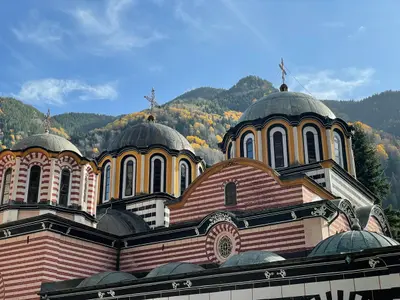
    Rila Abbey

    Rila Abbey

    The Rila Monastery in the Rila Mountains, located approximately 117 kilometers south of Sofia at an altitude of 1,147 meters, is Bulgaria's most famous monastery and a UNESCO World Heritage site since 1983. According to tradition, it was founded in 927; it is named after the hermit Ivan of Rila, whose disciples built the complex.The oldest buildings are Hreljo's Tower, dating from 1334 to 1335, and a small church from the same period. After a major fire in 1833, most of the complex was rebuilt between 1834 and 1862. From Sofia, the monastery is a day trip.

    Boris·Unsplash

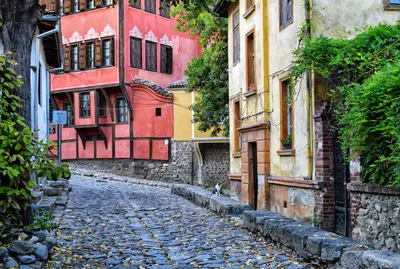
    Plovdiv

    Plovdiv

    Plovdiv is located about 144 kilometers southeast of Sofia in the Thracian Plain and is considered Europe's oldest continuously inhabited city, settled since approximately 6,000 BC. In 2019, it was European Capital of Culture alongside Matera.On the three hills of the Old Town stand Bulgarian Revival houses with decorated facades and interiors. Below them lies the Roman Theatre of Philippopolis, probably the country's most famous ancient structure, which accommodated up to 7,000 spectators. Of the stadium built under Emperor Hadrian, which held up to 30,000 spectators, a small northern section is visible in the center today.

    Jocelyn Erskine-Kellie·Pexels

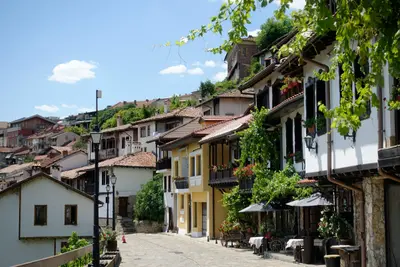
    Veliko Tarnovo

    Veliko Tarnovo

    Veliko Tarnovo in Northern Bulgaria was the capital of the Second Bulgarian Empire from 1185 until its conquest by the Ottomans on July 17, 1393. The old town is situated on three hills, Tsarevets, Trapezitsa, and Sveta Gora, within the meanders of the Yantra River.Tsarevets was home to the Tsar's and Patriarch's palaces, the Patriarchal Cathedral, and residential buildings behind thick walls; today, the fortress is the city's main attraction. In the Samovodska Charshiya, the craftsmen's quarter from the Revival period, artisans still work in small shops today.

    JOGphotos·Unsplash

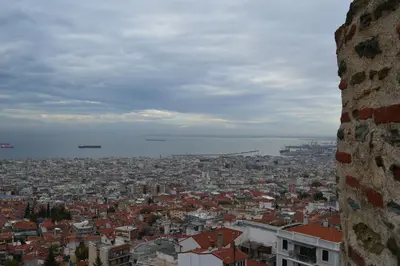
    Ano Poli

    Ano Poli

    Ano Poli is the Upper Town of Thessaloniki, situated on the slope below the Acropolis and within the Byzantine walls. As the only district spared from the 1917 fire, it features cobblestone alleys, small squares, and houses of Greek and Ottoman architecture.

    Maris Uuetoa·Pexels

    Central Macedonia

    Central Macedonia

    Central Macedonia stretches from Olympus' peak to Chalkidiki's three peninsulas, hosting Thessaloniki, Greece's second-largest city. In between are Vergina's Royal Tombs, Pella's mosaics, and a coast where Greeks themselves summer. Antiquity, Byzantium, and bathing coves lie here as close as almost nowhere else in the country.

    Michael Pointner·Pexels

    Your next steps

    Sofia is in Bulgaria. Ways to carry on from here.

    • More in Bulgaria

      Highlights, areas, routes and the best time to travel for all of Bulgaria.

      Bulgaria travel guide

    Sources & method

    • Photos: Wikimedia Commons, Unsplash. Each photo carries its credit.
    • Place data such as addresses and ratings comes from Google Maps.
    • The content is based on web research from public, traceable sources. How the content is made · The role of AI