Fernweh: Home
ExploreGuideDestinationsMy tripsMy trip
de|en
All Places & RegionsRound tripsNight trains in EuropeAll highlightsAbout FernwehFAQPrivacy PolicyImprint
Download on the App StoreGet it on Google Play
ExploreGuideDestinationsMy tripsMy trip
    • Neighborhoods & highlights
    • Tours
    • Eat & drink
    • Culture
    • Getting around
    • Accommodation
    • Plan trip
    • Round trips
    • Nearby
    Pécs

    Hansencharly / Wikimedia Commons / CC BY-SA 4.0, mod.

    Hungary

    Pécs

    City

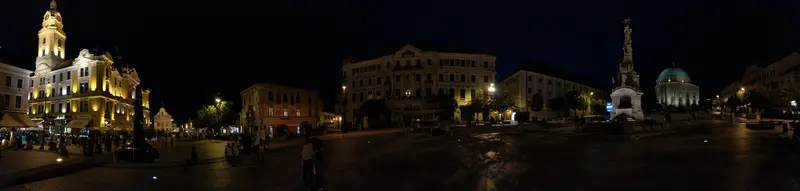
    Pécs (German Fünfkirchen) is Hungary's fifth-largest city, located in the southwest on the slopes of the Mecsek Mountains, near the Croatian border.

    by Felix Gillen

    1. Home
    2. Destinations
    3. Hungary
    4. Pécs
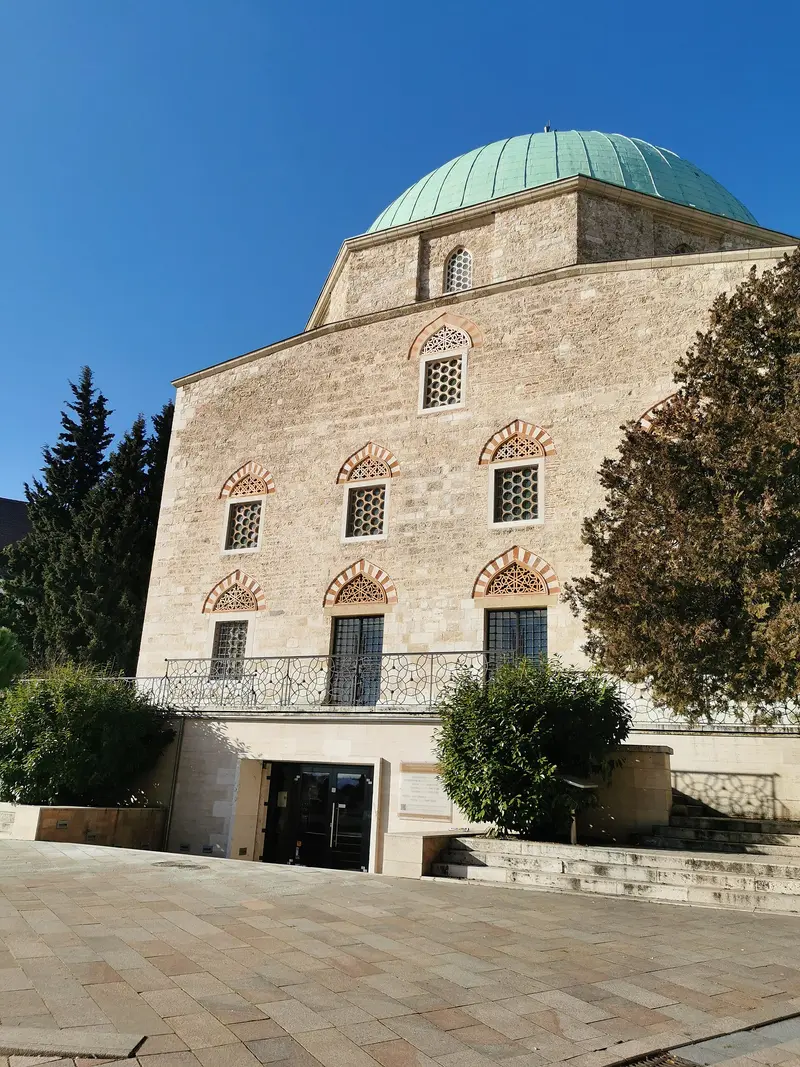
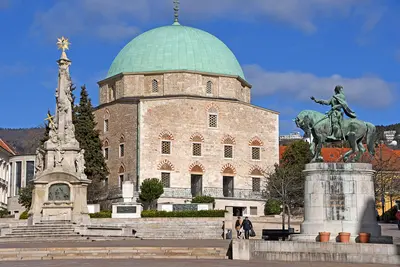
    Pécs (German Fünfkirchen) is Hungary's fifth-largest city, located in the southwest on the slopes of the Mecsek Mountains, near the Croatian border. This university city, with its Mediterranean feel, was a European Capital of Culture in 2010, alongside Essen and Istanbul.Beneath the Old Town are the early Christian burial chambers of Roman Sopianae, a UNESCO World Heritage site since 2000. On the main square, Széchenyi tér, stands Pasha Gazi Kasim's Mosque (1543-1546), which became a Catholic church after the Ottoman withdrawal: its dome displays a crescent moon and a cross superimposed. The four-towered Cathedral of St. Peter and Paul dates back to the 11th century.Founded in 1367 by King Louis I, the university is Hungary's oldest. The city's appearance is shaped by the ceramics from the local Zsolnay Manufactory, which adorn the roofs and facades of many buildings.
    Hungary travel guideSee the round tripPlan a trip with Pécs

    Contents

    • Neighborhoods & highlights
    • Tours
    • Eat & drink
    • Culture
    • Getting around
    • Accommodation
    • Round trips
    • Nearby

    Sights in Pécs

    Discover the most important sights and attractions

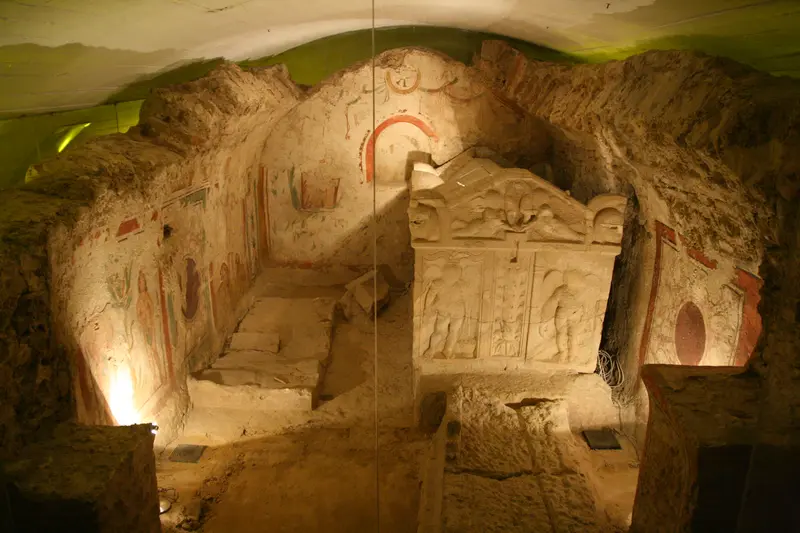
    Early Christian Necropolis and Cella Septichora

    “Pécs - Early Christian Mausoleum 02” by Lestat (Jan Mehlich) / Wikimedia Commons / CC BY-SA 3.0, mod.

    Museum

    1Early Christian Necropolis and Cella Septichora

    The 4th-century tomb complexes of the Roman city of Sopianae have been a UNESCO World Heritage site since 2000: underground burial chambers with memorial chapels built above them and wall paintings with Christian motifs, totaling 16 monuments. At the Cella Septichora Visitor Centre on Szent István tér, the chambers are connected underground and accessible. Open Tuesday to Sunday, from November to March 10 am to 4 pm, and from April to October 10 am to 6 pm.
    Open in Google Maps
    Cathedral St. Peter and Paul

    Salix39 / Wikimedia Commons / CC BY-SA 4.0, mod.

    Church

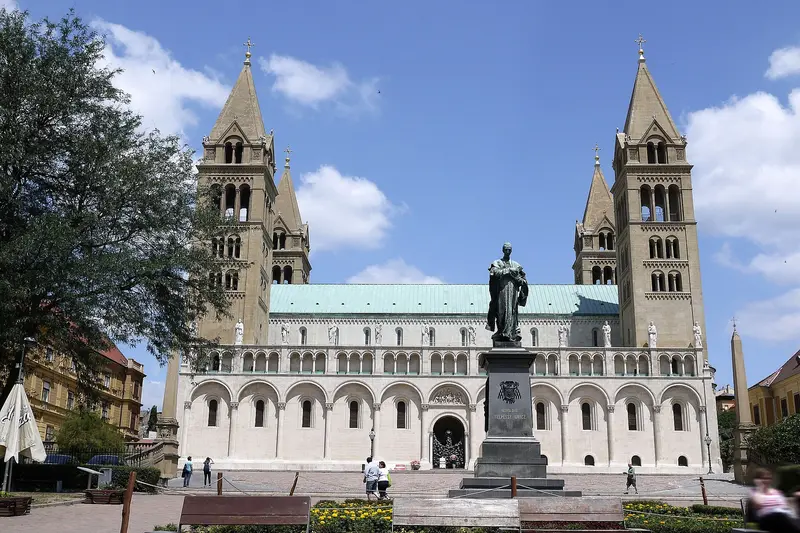
    2Cathedral St. Peter and Paul

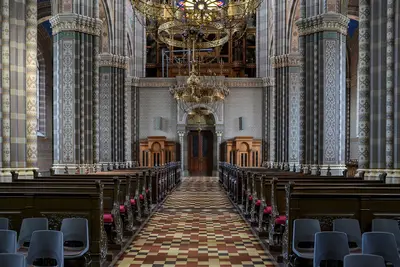
    The Cathedral on Dóm tér received its current Neo-Romanesque appearance between 1882 and 1891, following plans by Viennese architect Friedrich von Schmidt. Its towers are up to 60 meters high. Inside, wall paintings by Károly Lotz and Bertalan Székely, as well as an organ with over 6,000 pipes, impress. From the southeast tower, you get a view over the city. Admission costs 2,800 Forint.
    Open in Google Maps
    Mosque of the Pasha Gázi Kászim

    Elekes Andor / Wikimedia Commons / CC BY 4.0, mod.

    Church

    3Mosque of the Pasha Gázi Kászim

    Pasha Kászim had the domed building on Széchenyi Square erected as a mosque from 1543 to 1546. After the city's reconquest, it was converted into a church in 1702 and is now the Catholic Downtown Parish Church of Candlemas, one of Pécs's landmarks.
    Open in Google Maps
    Gallery

    4Zsolnay Cultural Quarter

    Auf dem Gelände der 1851 gegründeten Porzellanmanufaktur Zsolnay entstand als Hauptprojekt der Kulturhauptstadt Europas 2010 ein Kulturviertel mit 15 denkmalgeschützten Gebäuden. Heute gibt es hier Ausstellungen zur Zsolnay-Keramik, die Galerie m21, einen Konzertsaal, ein Planetarium, ein Puppentheater und das Zsolnay-Mausoleum. Das Gelände ist täglich von 6 bis 22 Uhr zugänglich, ab dem Hauptbahnhof fahren die Busse 4 und 4Y.
    Open in Google Maps

    Tours & experiences in Pécs

    Search tours for Pécs on GetYourGuide* (Affiliate link)On GetYourGuide, with reviews from other travellers

    * Affiliate link: if you book through it, we earn a small commission. The price stays the same for you.

    Restaurants in Pécs

    1

    Morzsa

    Bakery-bistro on Király utca with a Bib Gourmand in the Michelin Guide. All day long, we offer small dishes of contemporary Hungarian cuisine, complemented by a wine list featuring biodynamic wines, and a terrace on the partly traffic-calmed lane.
    Show on Google Maps

    Romans, Ottomans and Zsolnay

    Early Christian SopianaeThe tomb chambers of the early Christian necropolis, featuring 4th-century wall paintings, are a UNESCO World Heritage site.Mosque on the Main SquarePasha Gázi Kászim's Mosque, now a Catholic church, blends 16th-century Ottoman architecture with 1930s frescoes.Zsolnay and CsontváryThe Zsolnay Cultural Quarter was established in 2010 on the site of the former ceramics factory when Pécs was a European Capital of Culture. The Csontváry Museum showcases works by Tivadar Kosztka Csontváry, including "Lonely Cedar" (1907). The Zsolnay Light Festival takes place in early July.

    Arrival and How-to

    Getting ThereFrom Budapest, approx. 2 hours by car, a bit longer by train.LocallyMany museums are located close together on Káptalan utca.The cathedral ticket includes a panoramic tower.Outside the city: Hosszúhetény village with the farm-to-table restaurant Hosszú tányér and local wines.

    Accommodations in Pécs

    Find perfect stay in Pécs

    Booking.com* (Affiliate link)
    Search Hotels
    Agoda* (Affiliate link)
    Search Hotels
    Airbnb
    Vacation Rentals

    * Affiliate link: if you book through it, we earn a small commission. The price stays the same for you.

    Campgrounds in Pécs

    Find perfect campground in Pécs

    Search via Google Maps
    Campgrounds nearby (15km)
    Camping.info
    Find Campgrounds
    Park4Night
    RV Parks & Camping

    Plan your trip to Pécs

    Save places, build a route and plan your city trip, all in one place.

    1. 1
      Sunrise over alpine peaks and a sea of clouds
      1234

      Round trip

      12 days · 4 stops

      Saved

      Pick a route

      Pick a ready-made one or save places and plan your own.

      Open bookmarks
    2. 2

      Trip to Pécs

      Live
      • 1Early Christian Necropolis and Cella Septichora3 days
      • 2Cathedral St. Peter and Paul4 days
      • 3Mosque of the Pasha Gázi Kászim5 days
      Budget

      Plan your trip

      The planner sorts stops, days and budget. Plan together in real time.

      Start trip planning
    3. 3
      9:41 No signal
      Pécs
      Available offline

      Hansencharly / Wikimedia Commons / CC BY-SA 4.0, mod.

      Use it on the road

      Download the guide to your phone and use it on site, even offline.

    Round trips with Pécs

    By night train to Budapest and Pécs

    By night train to Budapest and Pécs

    Shortly before midnight, the EuroNight to Budapest departs from Munich; in the morning, you arrive at Ostbahnhof Keleti. After three nights, you travel by Intercity in just under three hours south to Pécs, a city with Roman burial chambers, an Ottoman mosque, and a porcelain manufactory. For the return journey, you take the train back to Budapest and in the evening the night train to Munich. Two nights on the train, one capital city, and a city that few visitors know.

    6 Days
    5 stops

    Pasztilla aka Attila Terbócs·CC BY-SA 4.0

    Nearby

    Osijek

    Osijek

    Osijek is the largest city in Slavonia and is located on the Drava in eastern Croatia. The baroque fortress town of Tvrđa, a long riverside promenade, and its proximity to Kopački rit Nature Park make it the best starting point for the east of the country.

    Vladimir Srajber·Pexels

    Slavonia

    Slavonia

    Slavonia is eastern Croatia, a vast plain between Drava, Sava and Danube. Baroque cities like Osijek, the floodplains of Kopački rit and wine towns like Ilok and Kutjevo showcase a side of the country that few coastal tourists know.

    Pudelek·CC BY-SA 4.0

    Kopački Rit Nature Park

    Kopački Rit Nature Park

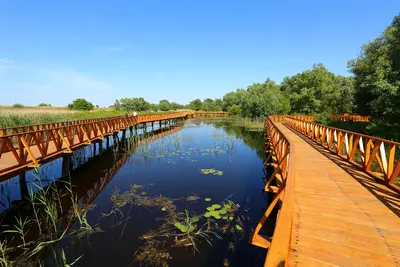
    Kopački rit is a floodplain near the confluence of the Drava and Danube in eastern Croatia. Over 140 bird species breed in the nature park, which you explore on wooden boardwalks and by boat.

    Misalalic·CC BY-SA 4.0

    Balaton

    Balaton

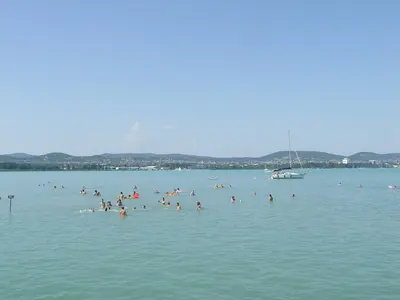
    The Balaton (Plattensee), at around 600 square kilometers and 78 kilometers long, is Central Europe's largest lake and Hungary's most important summer destination. As it's only just over three meters deep on average, it warms to around 25 °C in summer.The two shores differ significantly: The flat southern shore with Siófok is characterized by resorts and lidos; the hilly northern shore, with Balatonfüred, the Tihany peninsula, and the volcanic cones around Badacsony, by vineyards and old village centers. At the western end are Keszthely with Festetics Palace and, around eight kilometers away, the thermal lake of Hévíz.

    Christo·CC BY-SA 4.0

    Varaždin

    Varaždin

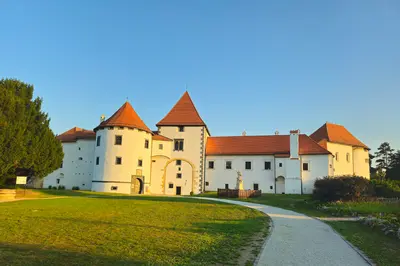
    Varaždin is a Baroque city in northern Croatia, north of Zagreb. Palaces, churches, and the medieval fortress Stari grad define the Old Town, which was the capital of Croatia from 1767 until a major fire in 1776.

    Ptrnc7965·CC0

    Your next steps

    Pécs is in Hungary. Ways to carry on from here.

    • More in Hungary

      Highlights, areas, routes and the best time to travel for all of Hungary.

      Hungary travel guide
    • Round trips with Pécs

      One route passes through Pécs, with stops, nights and a map.

      See the round trip

    Sources & method

    • Photos: Wikimedia Commons. Each photo carries its credit.
    • Place data such as addresses and ratings comes from Google Maps.
    • The content is based on web research from public, traceable sources. How the content is made · The role of AI