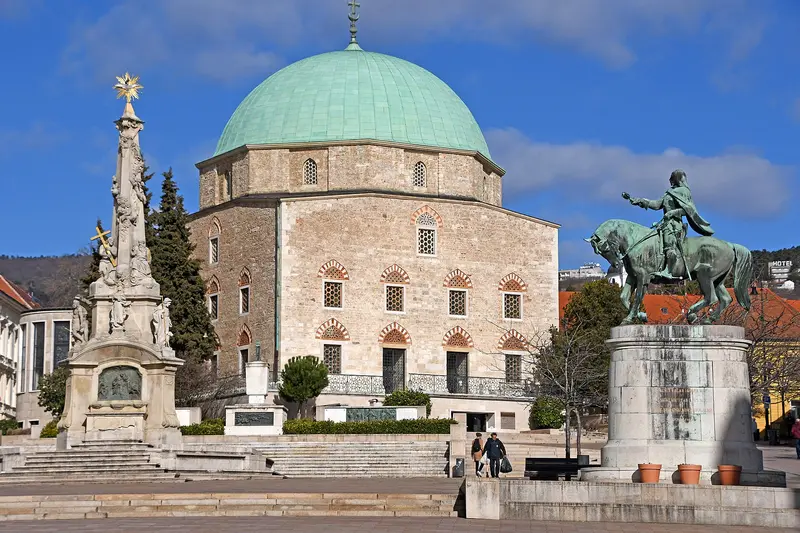
Pasztilla aka Attila Terbócs / Wikimedia Commons / CC BY-SA 4.0, mod.
Night train trip
By night train to Budapest and Pécs
by Felix Gillen
- 6 Days / 5 Nights
- Munich → Munich
Shortly before midnight, the EuroNight to Budapest departs from Munich; in the morning, you arrive at Ostbahnhof Keleti. After three nights, you travel by Intercity in just under three hours south to Pécs, a city with Roman burial chambers, an Ottoman mosque, and a porcelain manufactory. For the return journey, you take the train back to Budapest and in the evening the night train to Munich. Two nights on the train, one capital city, and a city that few visitors know.
At a glance
- Duration
- 6 Days / 5 Nights
- Stops
- 5 · Munich → Munich
- Countries on the route
- Hungary, Germany, Austria
- Arrival
- Train · München Ost
- Nights on a night train or ferry
- 2
- Best Time to Go
- April to June and September to October. In mid-summer, both cities are hot
More on when to go
The thermal baths are open all year.
5 stops
Why This Route?
Many know Budapest from a weekend flight, few know Pécs. The night train gets you there without flying, leaving time for both: the capital's thermal baths and market halls, and the Mediterranean-like southern city with UNESCO World Heritage, ceramics, and local wine.
Hidden Gems
- The Hold utca Market Hall in the 5th District, where the neighborhood shops and eats lunch on the gallery
- the Rudas Bath at the foot of Gellért Hill, quieter than Széchenyi
- the early Christian burial chambers beneath Pécs' Cathedral Square
Getting there and back
Round trip, returning to where you started
- Arrival
- Train · München OstThe night train starts in Stuttgart and stops just before midnight at Munich East; you're there in a few minutes by S-Bahn from the main station. From Switzerland, an EuroNight departs daily from Zurich HB at 21:07 to Budapest. Book couchettes and sleeping cars with ÖBB or Deutsche Bahn.
- Departure
- Train · München OstThe night train from Budapest arrives at Munich East around 6 AM and continues to Stuttgart. Plan your return journey day to ensure you arrive in Budapest from Pécs with a buffer before 7 PM, as trains in Hungary sometimes operate with replacement buses due to construction.
Itinerary
Start
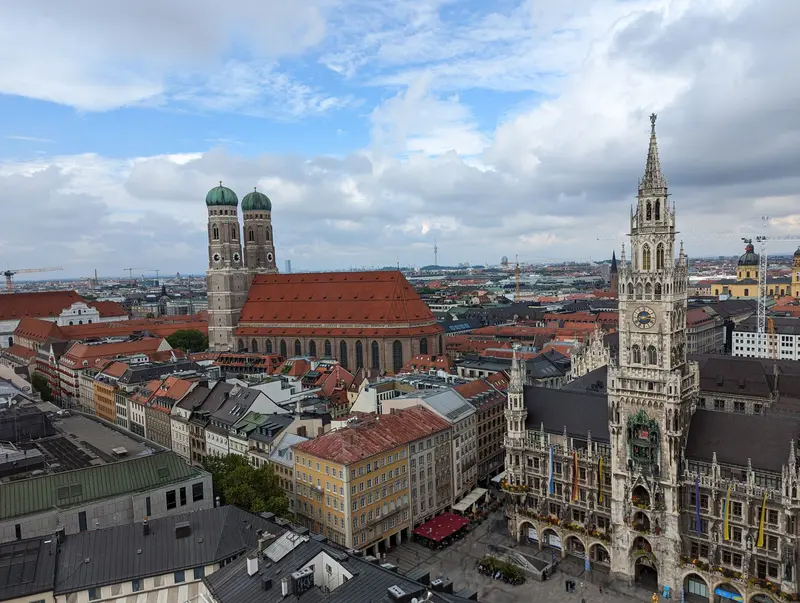
Munich
Departure just before midnight from München Ost. Before that, dinner in Haidhausen works well, just a few minutes from Ostbahnhof.
Night train
EuroNight EN 50237 (aus Stuttgart) München Ost ab 23:49, Budapest-Keleti an 9:29, täglich (Herbst 2026).
Budapest
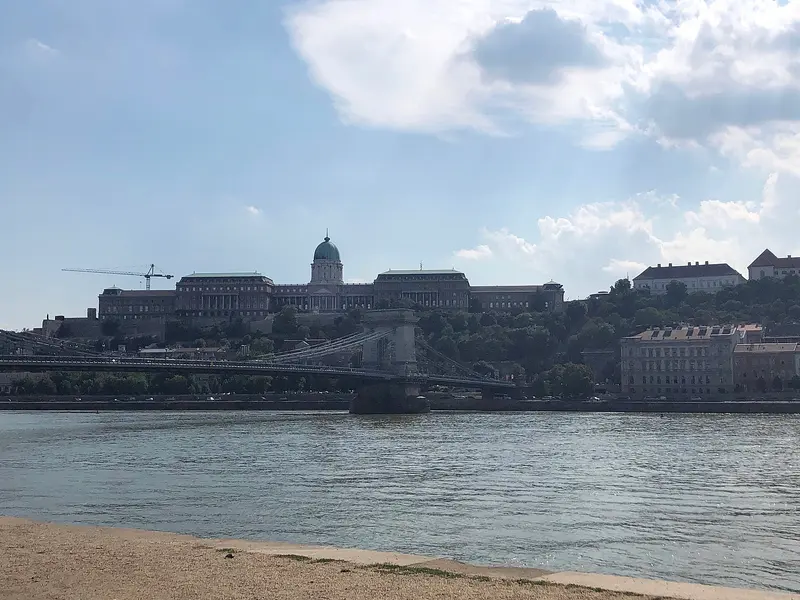
Hungary's capital was formed in 1873 from the cities of Buda, Pest, and Óbuda and has around 1.7 million inhabitants. On the hilly Buda side, Buda Castle, Fishermen's Bastion, and Matthias Church perch above the Danube, while on the flat Pest bank opposite stand the Parliament and St. Stephen's Basilica. The Danube Embankment, Castle District, and Andrássy Avenue are UNESCO World Heritage sites; some 125 thermal springs feed the famous baths.
Shop and have lunch at the small Hold utca Market Hall in District V instead of the crowded Central Market Hall. For Hungarian-Jewish cuisine, visit family restaurant Rosenstein near the Eastern Railway Station. Bathe at Rudas at the foot of Gellért Hill, and in the evening, walk through the former Jewish Quarter with the Great Synagogue.
9 Sights
6 Restaurants
Baths, UNESCO Sites and Ruin Bars
Thermal BathsAround 125 thermal springs feed the city's baths, Budapest is considered one of Europe's most significant spa cities. The best known is the Széchenyi Bath in the City Park. The Gellért Bath has been closed since October 2025 for a major renovation lasting two and a half to three years.World Heritage on the DanubeThe Danube Embankments, the Castle District, and since 2002 also Andrássy út with the Millennium Underground, are part of the UNESCO World Heritage. Many buildings, such as the Millennium Monument on Heroes' Square, were built for the millennium celebration in 1896.NightlifeIn the former Jewish Quarter around the Dohány Synagogue, the ruin bars (romkocsmák) characterize the city's nightlife.
Train
Intercity Budapest-Kelenföld – Pécs, around 2.5 to 3 hours, several times daily.
Pécs
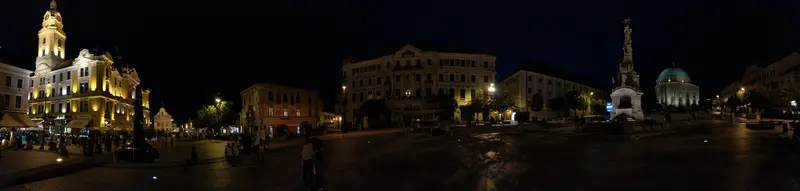
Pécs (German Fünfkirchen) is Hungary's fifth-largest city, located in the southwest on the slopes of the Mecsek Mountains, near the Croatian border. This university city, with its Mediterranean feel, was a European Capital of Culture in 2010, alongside Essen and Istanbul.Beneath the Old Town are the early Christian burial chambers of Roman Sopianae, a UNESCO World Heritage site since 2000. On the main square, Széchenyi tér, stands Pasha Gazi Kasim's Mosque (1543-1546), which became a Catholic church after the Ottoman withdrawal: its dome displays a crescent moon and a cross superimposed. The four-towered Cathedral of St. Peter and Paul dates back to the 11th century.Founded in 1367 by King Louis I, the university is Hungary's oldest. The city's appearance is shaped by the ceramics from the local Zsolnay Manufactory, which adorn the roofs and facades of many buildings.
Under Cathedral Square lie early Christian tombs, UNESCO World Heritage since 2000. Zsolnay Cultural Quarter: shimmering Eosin ceramics, once on Budapest's roofs. Grab food and regional wine at Bistro Morzsa on Kírály utca.
4 Sights
1 Restaurant
Romans, Ottomans and Zsolnay
Early Christian SopianaeThe tomb chambers of the early Christian necropolis, featuring 4th-century wall paintings, are a UNESCO World Heritage site.Mosque on the Main SquarePasha Gázi Kászim's Mosque, now a Catholic church, blends 16th-century Ottoman architecture with 1930s frescoes.Zsolnay and CsontváryThe Zsolnay Cultural Quarter was established in 2010 on the site of the former ceramics factory when Pécs was a European Capital of Culture. The Csontváry Museum showcases works by Tivadar Kosztka Csontváry, including "Lonely Cedar" (1907). The Zsolnay Light Festival takes place in early July.
Train
Intercity Pécs – Budapest, approx. 3 hours; take a train that arrives in Budapest before 19:00.
Budapest
Hungary's capital was formed in 1873 from the cities of Buda, Pest, and Óbuda and has around 1.7 million inhabitants. On the hilly Buda side, Buda Castle, Fishermen's Bastion, and Matthias Church perch above the Danube, while on the flat Pest bank opposite stand the Parliament and St. Stephen's Basilica. The Danube Embankment, Castle District, and Andrássy Avenue are UNESCO World Heritage sites; some 125 thermal springs feed the famous baths.
Transfer at Keleti Railway Station, time for an evening meal in the vicinity.
9 Sights
6 Restaurants
Baths, UNESCO Sites and Ruin Bars
Thermal BathsAround 125 thermal springs feed the city's baths, Budapest is considered one of Europe's most significant spa cities. The best known is the Széchenyi Bath in the City Park. The Gellért Bath has been closed since October 2025 for a major renovation lasting two and a half to three years.World Heritage on the DanubeThe Danube Embankments, the Castle District, and since 2002 also Andrássy út with the Millennium Underground, are part of the UNESCO World Heritage. Many buildings, such as the Millennium Monument on Heroes' Square, were built for the millennium celebration in 1896.NightlifeIn the former Jewish Quarter around the Dohány Synagogue, the ruin bars (romkocsmák) characterize the city's nightlife.
Night train
EuroNight EN 50462 Budapest-Keleti dep 20:30, München Ost arr 6:01, daily (Autumn 2026).
Plan this route as your trip
All stops, trains and nights go into your trip planner. You adjust dates and places to stay afterwards.
This route is a suggestion from our research. Please check timetables, times in port, opening hours and prices before you book – what your tour operator or carrier says is what counts.
Fernweh is a free travel guide and trip planner: routes researched by people, taken over in one click, used day by day on the road. More about Fernweh
5 stops
Route Summary
Duration6 Days
Stops5 Places
TypeCulture