ExploreTravel GuidesPlan a trip
    de|en
    All Places & RegionsAbout FernwehFAQPrivacy PolicyImprint
    ExploreTravel GuidesPlan a trip
    • Neighborhoods & highlights
    • Eat & drink
    • Food culture
    • Culture
    • Nightlife
    • Getting around
    • Accommodation
    • Plan trip
    • Nearby
    Munich

    Germany

    Munich

    CityCulture

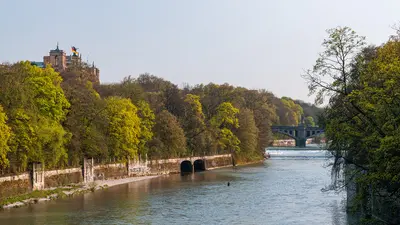
    Munich is Bavaria's state capital and, with over 1.6 million inhabitants, Germany's third-largest municipality. The Isar River flows through the city for nearly 14 kilometers.

    1. Home
    2. Destinations
    3. Germany
    4. Munich & Upper Bavaria
    5. Munich
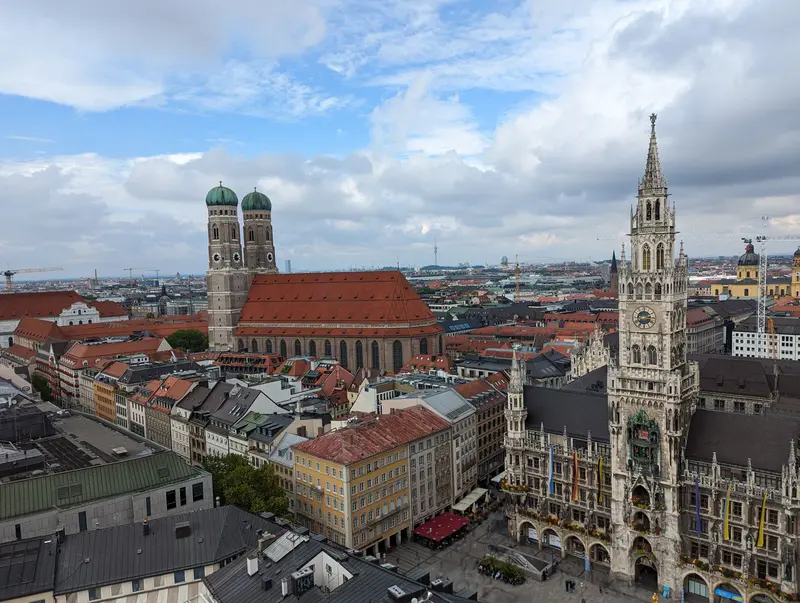
    Munich is Bavaria's state capital and, with over 1.6 million inhabitants, Germany's third-largest municipality. The Isar River flows through the city for nearly 14 kilometers. The heart of the Old Town is Marienplatz with the New Town Hall, where the carillon chimes daily at 11 AM and 12 PM; a few steps away stand the two towers of the Frauenkirche.The Wittelsbach dynasty ruled from 1508 to 1918 from the Residenz, Germany's largest city palace, and created extensive grounds like Nymphenburg Palace and the English Garden. In Maxvorstadt lie the Pinakothek museums of the Kunstareal, and on an Isar island, the Deutsches Museum. Every year, starting the Saturday after September 15th, the city celebrates Oktoberfest on the Theresienwiese, an event dating back to Crown Prince Ludwig's wedding in 1810.
    Munich has over 1.6 million residents, but its Old Town (Marienplatz, Frauenkirche, Viktualienmarkt, Residenz) is easily explored on foot. North of this lies Maxvorstadt with Königsplatz and the Kunstareal, and Schwabing, an artists' quarter around 1900. The English Garden stretches over 375 hectares along the city center's edge; Nymphenburg Palace and the Olympic Park are further out. For nightlife, visit Glockenbachviertel or Haidhausen. In the Au, the Auer Dult happens three times yearly on Mariahilfplatz, and Neuhausen-Nymphenburg offers the Hirschgarten with its beer garden. For longer journeys, use the U-Bahn or S-Bahn; their network was greatly expanded for the 1972 Olympic Games.
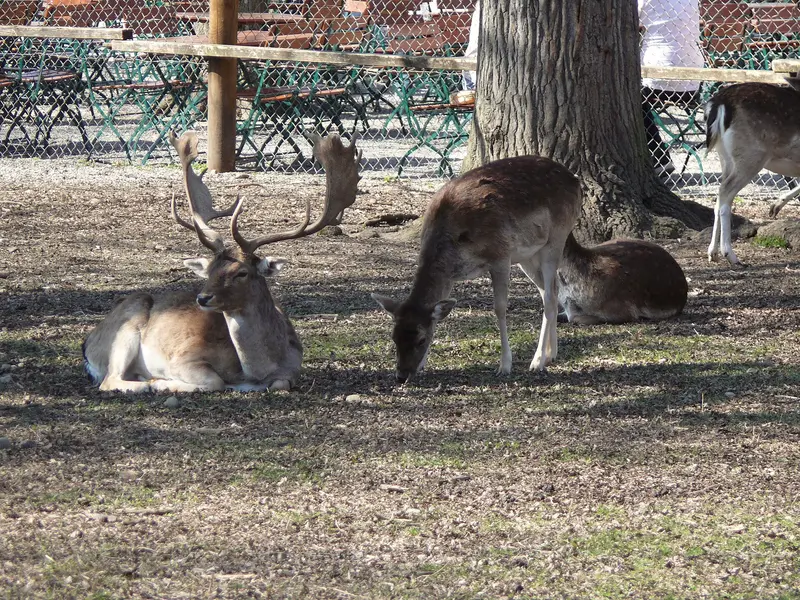
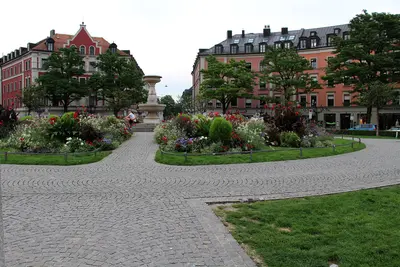
    Neuhausen-Nymphenburg
    Martinus KE / Wikimedia Commons / CC BY-SA 4.0

    District 1 of 4

    Neuhausen-Nymphenburg

    Neuhausen was incorporated into Munich in 1890, followed by the then independent Nymphenburg in 1899. Since 1992, both have formed the Neuhausen-Nymphenburg district.

    Neuhausen-Nymphenburg lies west of the city center and is the greenest of the central districts. Besides Nymphenburg Palace, you'll find the Botanical Garden, the Hirschgarten with one of the largest beer gardens, and modern architecture like the Herz-Jesu-Kirche here.

    Discover
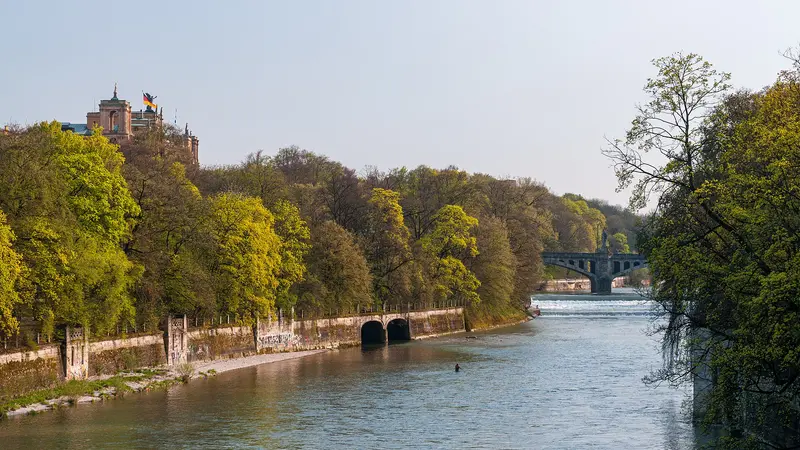
    Haidhausen
    Achim Lammerts (Syntaxys) / Wikimedia Commons / CC BY-SA 4.0

    District 2 of 4

    Haidhausen

    Haidhausen, first mentioned in 808 as "haidhusir" (houses on the heath), long thrived on brick production. Small lodging houses for brickyard workers emerged around Wiener Platz, some of which still stand today.

    Haidhausen lies on the eastern Isar bank opposite the Old Town, blending old guesthouses with the Gründerzeit streets of the French Quarter. Sights include the Maximilianeum and Villa Stuck; for nightlife, traditional pubs, bistros, beer gardens, and jazz clubs await.

    Discover
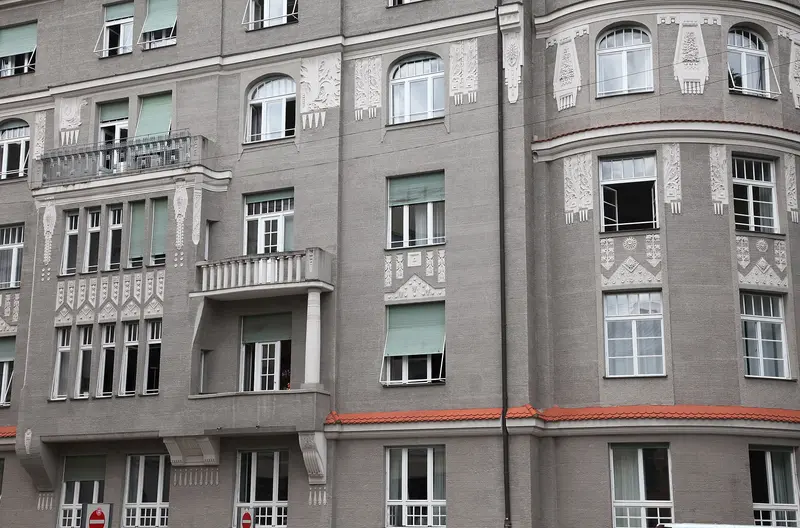
    Schwabing
    Marc-Lautenbacher / Wikimedia Commons / CC BY-SA 4.0

    District 3 of 4

    Schwabing

    Schwabing was an independent town until 1890, when it was incorporated into Munich.

    Schwabing begins at Siegestor and stretches north along Leopoldstraße. Around 1900, it was Munich's artists' quarter; today, Wilhelminian era buildings, cafés, and pubs define the scene.

    Discover
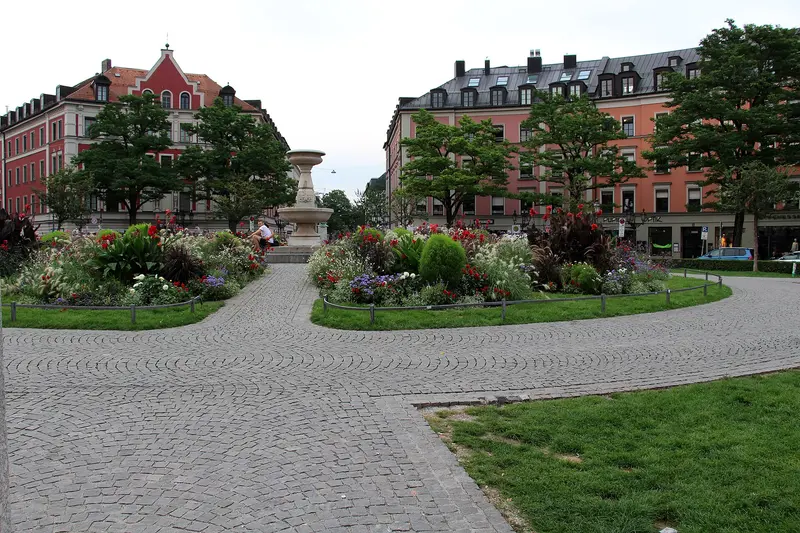
    Glockenbachviertel
    Fred Romero from Paris, France / Wikimedia Commons / CC BY 2.0

    District 4 of 4

    Glockenbachviertel

    The Glockenbachviertel gets its name from a bell foundry in front of the Sendlinger Tor, where bells were cast from 1476 to 1671, and from the stream next to it, first documented as Glockenbach in 1575.

    The Glockenbachviertel is located south of the Altstadt, between Sendlinger Tor and the Isar, and is one of Munich's most famous nightlife districts. Together with the Gärtnerplatzviertel, it is characterized by Gründerzeit buildings, bars, cafés, and a long tradition as a center for the gay and lesbian scene.

    Discover

    More districts in Munich

    Au

    Au

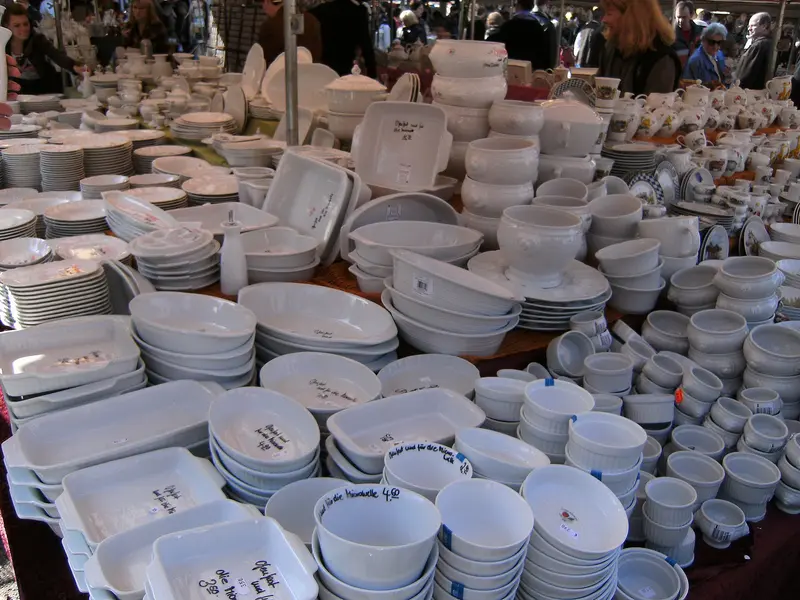
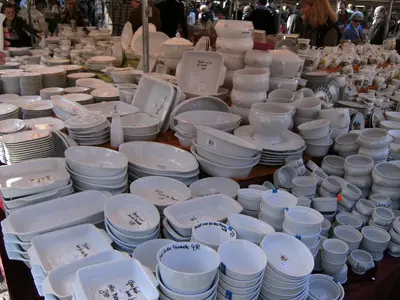
    The Au is situated in the Isar lowlands on the right bank of the river and was first mentioned in 1340 as "Awe ze Gyesingen," a name meaning land by the water. In 1808, it was elevated to a city and granted market rights; in 1854, it became part of Munich. Following the air raids of 1944, post-war architecture largely defines its appearance today, with the Auer Mühlbach flowing right through the district. On Nockherberg, Duke Wilhelm V founded a monastery in 1623, its brewery being the precursor to Paulaner, and Karl Valentin was born here.The heart of the district is Mariahilfplatz with its Neo-Gothic Mariahilfkirche. Three times a year, the Auer Dult transforms it for nine days into a large market featuring pottery, antiques, and rides; the Kirchweihdult 2026 runs from October 17 to 25. In spring, the Starkbierfest on Nockherberg attracts visitors. Tram 18 goes to Mariahilfplatz; for U1 and U2, you alight at Fraunhoferstraße or Kolumbusplatz.
    Maxvorstadt

    Maxvorstadt

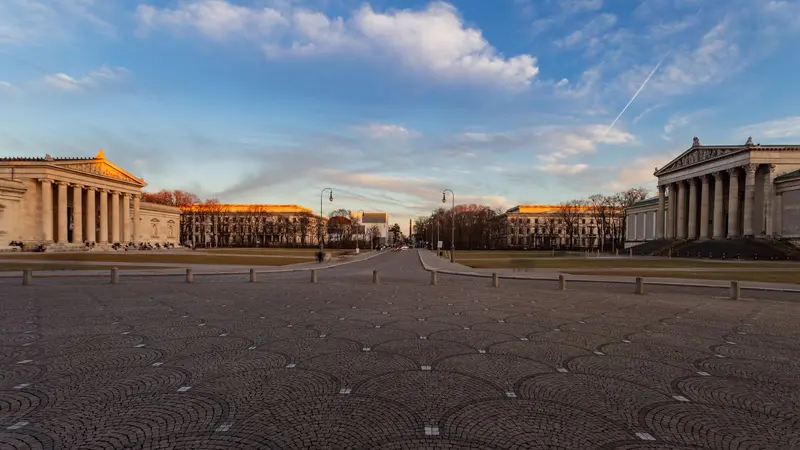
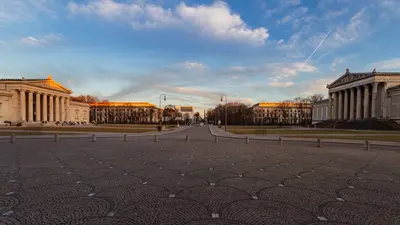
    Maxvorstadt originated in 1805 as Munich's first planned urban expansion and is named after King Max I. Joseph. Most of it was built only after 1825 under Ludwig I., in a neoclassical style and with a grid-like street plan. The Ludwigstraße, between Feldherrnhalle and Siegestor, was the first to be built. With Ludwig-Maximilians-Universität and Technischer Universität, the district remains an academic and student quarter to this day.You primarily come for the Kunstareal: Around Königsplatz, the Glyptothek, Lenbachhaus, the Pinakotheken, and the Museum Brandhorst are located close together, allowing you to visit several venues in one day. In between, you can relax in the eateries on Schellingstraße and Türkenstraße, where students and artists have been gathering for over a hundred years. The U2 stops at Königsplatz and Theresienstraße, U3 and U6 at Universität station.

    Sights in Munich

    Discover the most important sights and attractions

    Marienplatz and New Town Hall
    Attraction

    1Marienplatz and New Town Hall

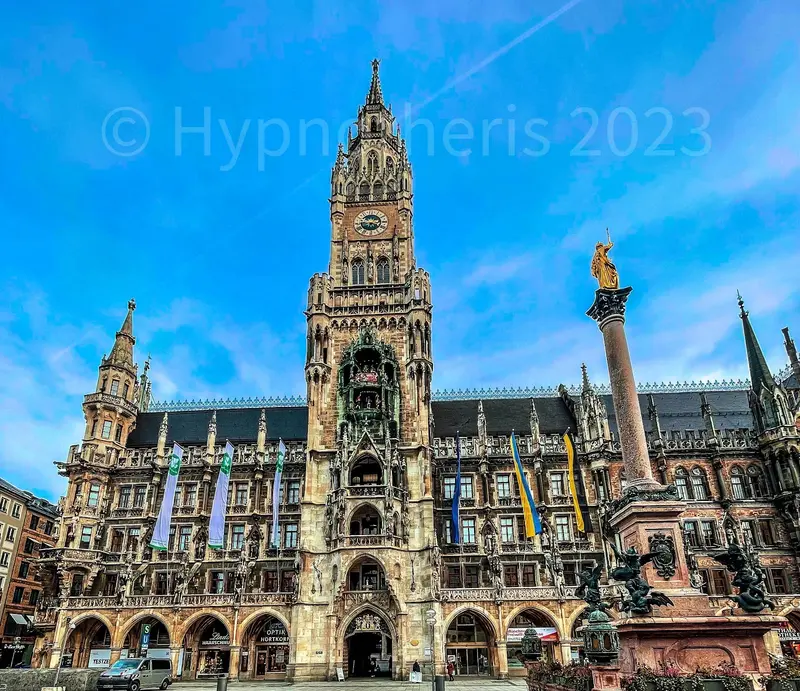
    The Neo-Gothic City Hall on the north side of Marienplatz was built from 1867 to 1909, designed by Georg von Hauberrisser. In the 85-meter-high tower, the Glockenspiel with 43 bells and 32 figures plays daily at 11 and 12 o'clock, and from March to October at 5 o'clock. Above it lies a viewing gallery, which you reach by lift.
    Open in Google Maps
    Frauenkirche
    Church

    2Frauenkirche

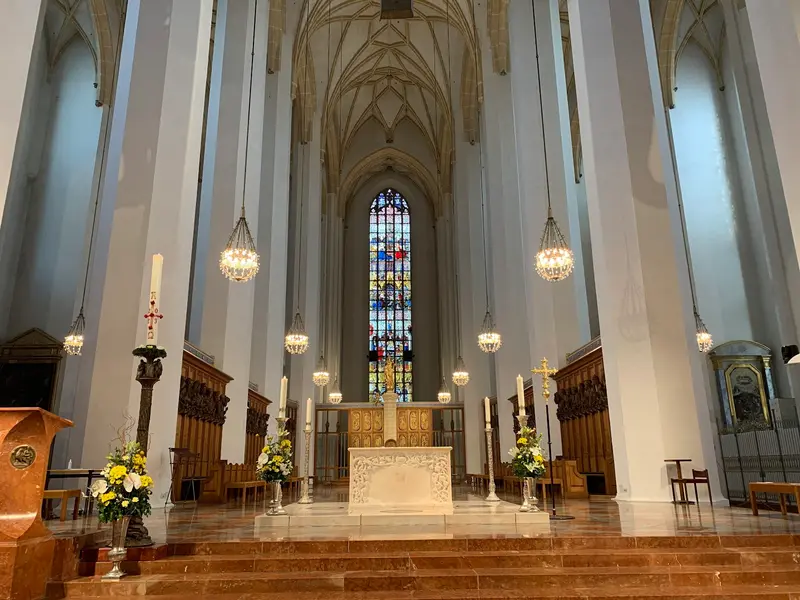
    Founded in 1468, the late Gothic church's towers, topped with Welsche domes around 1525, are a good 98 meters high. Since 1821, it is the cathedral of the Archdiocese of Munich and Freising. In the entrance, a footprint marks the legendary Devil's Footprint; an elevator to the South Tower.
    Open in Google Maps
    English Garden
    Park

    3English Garden

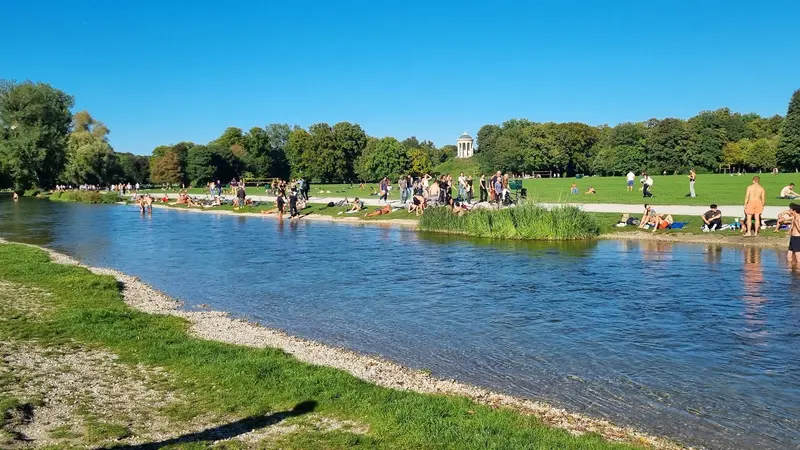
    Opened in 1792, the Volkspark covers 375 hectares. By the 25-meter Chinese Tower is a beer garden with 7000 seats; the 1836 circular temple Monopteros stands on a hill above the meadows. It also features the 1803 Kleinhesseloher Lake.
    Open in Google Maps
    Munich Residenz
    Castle

    4Munich Residenz

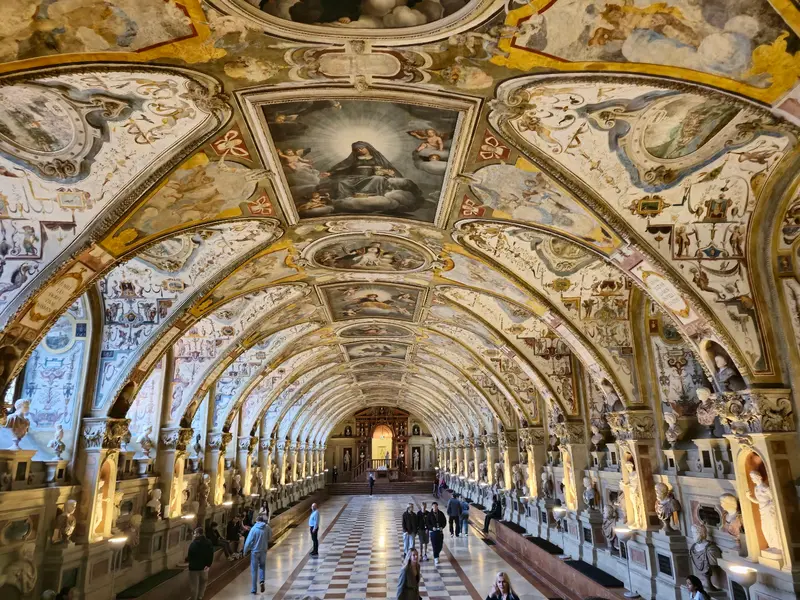
    The Wittelsbach dynasty resided here from 1508 to 1918; today, the complex with ten courtyards is Germany's largest city palace. More than 150 showrooms are on display, including the Antiquarium, the largest Renaissance hall north of the Alps, and the Treasury with over 1200 pieces.
    Open in Google Maps
    Deutsches Museum
    Museum

    5Deutsches Museum

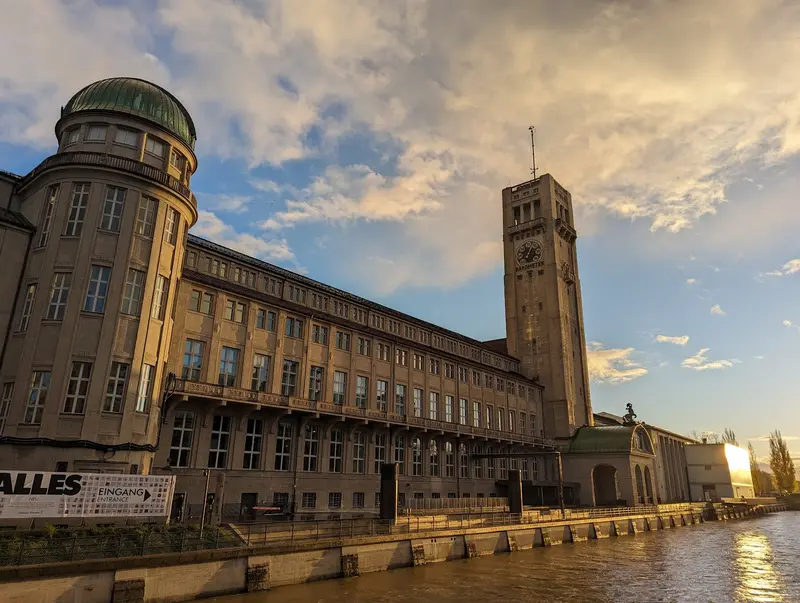
    Founded in 1903 by Oskar von Miller, the museum on Museum Island in the Isar ranks among the world's largest science and technology museums. Since 2015, it has been undergoing phased renovation; its first updated section with about 20 exhibitions opened in July 2022.
    Open in Google Maps
    Alte Pinakothek
    Museum

    6Alte Pinakothek

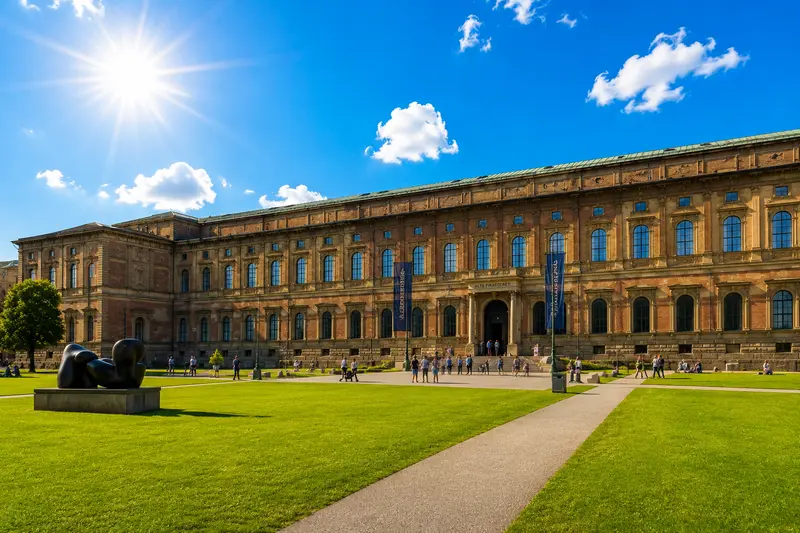
    King Ludwig I. had the painting gallery built by Leo von Klenze; it opened on October 16, 1836. It features European painting from the Middle Ages to the mid-18th century, including Old German, Early Netherlandish, Italian Renaissance and 17th-century Flemish and Dutch masters. As the Neue Pinakothek has been undergoing renovation since 2019, selected works are displayed on the ground floor of the Alte Pinakothek.
    Open in Google Maps

    Restaurants in Munich

    1

    Augustiner Monastery Inn

    Traditional Bavarian inn on two floors in the Old Town near the Frauenkirche, with regional cuisine and Augustiner beer on tap.
    Show on Google Maps
    2

    Steinheil 16

    Casual restaurant with schnitzel dishes and fried sides, plus beer, wine, and cocktails.
    Show on Google Maps
    3

    Giorgia Trattoria

    Italian trattoria with a relaxed vibe and colorful decor, featuring pizza, pasta, and other classics on the menu.
    Show on Google Maps
    4

    White Brewhouse in Valley

    Weißbier brewery restaurant on Tal, between Marienplatz and Isartor, with classic Bavarian cuisine.
    Show on Google Maps
    5

    The Franziskaner

    Family-run Bavarian inn near Residenz and Opera with local sausage specialties, sometimes rustic, sometimes festive dining rooms.
    Show on Google Maps

    Eating & Drinking in Munich

    Munich's cuisine is hearty and closely tied to beer. Many classics are best enjoyed in a Wirtshaus or under chestnut trees in a beer garden.

    Weisswurst

    According to legend, it originated in 1857 at the Gasthaus Zum Ewigen Licht on Marienplatz. The sausage meat consists mainly of veal and bacon, seasoned with ingredients including parsley. Traditionally, you eat them in the morning with sweet mustard, pretzels, and Weißbier, and they shouldn't hear the midday chimes. When zuzeling, you pull the sausage meat out of the skin with your teeth.

    Brezn

    The lye pretzel is briefly dipped in lye before baking for its glossy copper-brown crust. A Munich legend claims baker Anton Nepomuk Pfannenbrenner confused sugar water with lye in 1839. Since 2014, the Bayerische Breze has been a protected geographical indication.

    Obatzda

    The piquant cheese spread, made from Camembert or Brie, butter, and paprika, often with onions, is a classic beer garden dish. It's served with Brezn or rye bread and Radi. The Obatzda gained fame in the 1920s at the Weihenstephaner Bräustüberl in Freising.

    Pork knuckle

    Bavarian Haxn is uncured, oven-roasted or grilled until the rind becomes a crisp crust, differing from boiled Eisbein.

    Munich's Helles

    Spatenbräu brewed the bottom-fermented, lightly hopped Helles in 1894 as a response to Pils, introducing it in Munich in 1895. Münchner Bier has been a protected geographical indication since 1998, exclusive to beer brewed within the city by Augustiner, Hacker-Pschorr, Hofbräu, Löwenbräu, Paulaner, Spaten, and Giesinger.

    Biergarten

    Brewers planted chestnuts above their beer cellars, whose shade kept the beer cool. In 1812, King Max I. Joseph permitted direct serving at the cellars. Even today, a traditional beer garden lets you bring your own Brotzeit.

    Culture and Lifestyle

    The City of the WittelsbachsFrom 1508 to 1918, the Wittelsbachs ruled from the Residenz. King Ludwig I had the Alte Pinakothek built from 1826 and began the systematic urban expansion around Königsplatz in Maxvorstadt. Today, the Pinakotheken, Museum Brandhorst, and other buildings form the Kunstareal.Beer and Beer GardensDuke Wilhelm V founded the Hofbräuhaus in 1589 as a brewery for the court. Beer gardens are part of the Munich summer; the one at the Chinese Tower in the English Garden alone offers 7,000 seats.OktoberfestThe Wiesn dates back to the wedding of Crown Prince Ludwig and Princess Therese in October 1810. It traditionally begins on the Saturday after September 15th on the Theresienwiese, lasting 16 to 18 days. Festival tents are run by the six Munich breweries (Spaten, Augustiner, Paulaner, Hacker-Pschorr, Hofbräu, Löwenbräu); 7.2 million visitors came in 2023.

    Nightlife

    1

    Hofbräuhaus am Platzl

    The Hofbräuhaus has stood at Platzl since 1607, taking on its current form in 1896/97. In the main hall on the ground floor, around 1000 guests sit at wooden tables, and in summer, the inner courtyard with the Lion Fountain opens as a beer garden.
    Show on Google Maps
    2

    Augustiner Cellar

    Traditional Bavarian restaurant on Arnulfstraße in Maxvorstadt with a large beer garden under chestnut trees, home to a more than 200-year-old horse chestnut. Augustiner beer is served.
    Show on Google Maps
    3

    Biergarten at the Chinese Tower

    With 7,000 seats, Munich's second-largest beer garden, set in the heart of the English Garden around the 25-meter-high pagoda from 1789/90. Rustic Bavarian cuisine is also served.
    Show on Google Maps
    4

    Schumann's Bar at the Hofgarten

    American-style cocktail bar by the Hofgarten with classic interior and well-crafted drinks.
    Show on Google Maps
    5

    P1 Club

    Nightclub with Electro and Pop on two dance floors, plus an outdoor area. Smart dress code enforced at the entrance.
    Show on Google Maps

    Getting There & Around

    Plane: Munich Airport is located about 30 kilometers outside. S-Bahn lines S1 and S8 run alternately every 10 minutes into the city; the journey to Hauptbahnhof takes about 40 minutes.In the City: Explore the Old Town on foot; for longer distances, take the U-Bahn or S-Bahn.Excursions: Regional trains on line RB 68 travel from Munich to Füssen, the starting point for Neuschwanstein.

    Accommodations in Munich

    Find perfect stay in Munich

    Booking.com* (Affiliate link)
    Search Hotels
    Agoda* (Affiliate link)
    Search Hotels
    Airbnb
    Vacation Rentals

    * Affiliate link: if you book through it, we earn a small commission. The price stays the same for you.

    Campgrounds in Munich

    Find perfect campground in Munich

    Search via Google Maps
    Campgrounds nearby (15km)
    Camping.info
    Find Campgrounds
    Park4Night
    RV Parks & Camping

    Plan your trip to Munich

    Save places, build a route and plan your city trip, all in one place.

    1. 1
      1234

      Round trip

      12 days · 4 stops

      Saved

      Pick a route

      Pick a ready-made one or save places and plan your own.

      Open bookmarks
    2. 2

      Trip to Munich

      Live
      • 1Marienplatz and New Town Hall3 days
      • 2Frauenkirche4 days
      • 3English Garden5 days
      Budget

      Plan your trip

      The planner sorts stops, days and budget. Plan together in real time.

      Start trip planning
    3. 3
      9:41 No signal
      Available offline

      Use it on the road

      Download the guide to your phone and use it on site, even offline.

    Nearby

    Glockenbachviertel

    Glockenbachviertel

    The Glockenbachviertel gets its name from a bell foundry in front of the Sendlinger Tor, where bells were cast from 1476 to 1671, and from the stream next to it, first documented as Glockenbach in 1575. The district belongs to the Ludwigsvorstadt-Isarvorstadt borough and extends south from Fraunhoferstraße along the Isar. It has a long history as a gay and lesbian-influenced district; Germany's first leather bar opened on Müllerstraße as early as 1967. Together with the neighboring Gärtnerplatzviertel, it is now considered a trendy district with many pubs and bars.During the day, you can stroll through the Alter Südfriedhof with the graves of famous Munich residents, sit at Gärtnerplatz, or walk down to the Isar, which forms the district's southeastern border. In the evenings, the bars and traditional pubs around Fraunhoferstraße, Hans-Sachs-Straße, and Müllerstraße fill up. You can reach the heart of the district by taking U1 and U2 to Fraunhoferstraße station.
    Maxvorstadt

    Maxvorstadt

    Maxvorstadt originated in 1805 as Munich's first planned urban expansion and is named after King Max I. Joseph. Most of it was built only after 1825 under Ludwig I., in a neoclassical style and with a grid-like street plan. The Ludwigstraße, between Feldherrnhalle and Siegestor, was the first to be built. With Ludwig-Maximilians-Universität and Technischer Universität, the district remains an academic and student quarter to this day.You primarily come for the Kunstareal: Around Königsplatz, the Glyptothek, Lenbachhaus, the Pinakotheken, and the Museum Brandhorst are located close together, allowing you to visit several venues in one day. In between, you can relax in the eateries on Schellingstraße and Türkenstraße, where students and artists have been gathering for over a hundred years. The U2 stops at Königsplatz and Theresienstraße, U3 and U6 at Universität station.
    Haidhausen

    Haidhausen

    Haidhausen, first mentioned in 808 as "haidhusir" (houses on the heath), long thrived on brick production. Small lodging houses for brickyard workers emerged around Wiener Platz, some of which still stand today. In 1854, Haidhausen, along with Au and Giesing, became part of Munich. From 1872, the French Quarter was developed around Ostbahnhof, with streets named after sites of the Franco-Prussian War.Perched on the Isar high bank is the Maximilianeum, seat of the Bavarian State Parliament; to its north, Villa Stuck showcases a turn-of-the-century artist's home. In the evenings, the district offers traditional taverns, French bistros, and cultural venues like the Muffatwerk and Jazzclub Unterfahrt. U4 and U5 stop at Max-Weber-Platz, and Ostbahnhof is connected by S-Bahn and U5.
    Au

    Au

    The Au is situated in the Isar lowlands on the right bank of the river and was first mentioned in 1340 as "Awe ze Gyesingen," a name meaning land by the water. In 1808, it was elevated to a city and granted market rights; in 1854, it became part of Munich. Following the air raids of 1944, post-war architecture largely defines its appearance today, with the Auer Mühlbach flowing right through the district. On Nockherberg, Duke Wilhelm V founded a monastery in 1623, its brewery being the precursor to Paulaner, and Karl Valentin was born here.The heart of the district is Mariahilfplatz with its Neo-Gothic Mariahilfkirche. Three times a year, the Auer Dult transforms it for nine days into a large market featuring pottery, antiques, and rides; the Kirchweihdult 2026 runs from October 17 to 25. In spring, the Starkbierfest on Nockherberg attracts visitors. Tram 18 goes to Mariahilfplatz; for U1 and U2, you alight at Fraunhoferstraße or Kolumbusplatz.
    Schwabing

    Schwabing

    Schwabing was an independent town until 1890, when it was incorporated into Munich. Around 1900, artists and writers made the district famous: Wassily Kandinsky, Alexej Jawlensky, and Franz Marc shaped the Blauer Reiter movement, and from 1896, the satirical magazine Simplicissimus was published here, with Thomas Mann serving as an editor for a time. To this day, the main axis is Leopoldstraße, which starts at the Siegestor and made headlines in the 1960s due to the Schwabinger Krawalle.You can stroll along Leopoldstraße, sit in pubs and bars around Münchner Freiheit, and visit the Englischer Garten, which directly borders the district. Further west, Luitpoldpark awaits with its panoramic hill. U3 and U6 stop at Münchner Freiheit, so you're just a few minutes from Odeonsplatz or Marienplatz.