ExploreTravel GuidesPlan a trip
    de|en
    All Places & RegionsAbout FernwehFAQPrivacy PolicyImprint
    ExploreTravel GuidesPlan a trip
    • Neighborhoods & highlights
    • Eat & drink
    • Nightlife
    • Accommodation
    • Plan trip
    • Nearby
    Glockenbachviertel
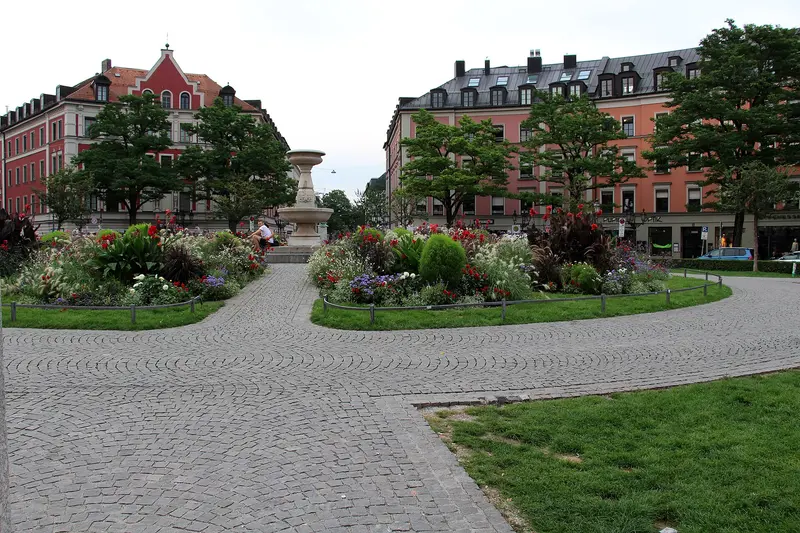
    Fred Romero from Paris, France / Wikimedia Commons / CC BY 2.0

    Germany

    Glockenbachviertel

    City

    The Glockenbachviertel gets its name from a bell foundry in front of the Sendlinger Tor, where bells were cast from 1476 to 1671, and from the stream next to it, first documented as Glockenbach in 1575.

    1. Home
    2. Destinations
    3. Germany
    4. Munich
    5. Glockenbachviertel
    The Glockenbachviertel gets its name from a bell foundry in front of the Sendlinger Tor, where bells were cast from 1476 to 1671, and from the stream next to it, first documented as Glockenbach in 1575. The district belongs to the Ludwigsvorstadt-Isarvorstadt borough and extends south from Fraunhoferstraße along the Isar. It has a long history as a gay and lesbian-influenced district; Germany's first leather bar opened on Müllerstraße as early as 1967. Together with the neighboring Gärtnerplatzviertel, it is now considered a trendy district with many pubs and bars.During the day, you can stroll through the Alter Südfriedhof with the graves of famous Munich residents, sit at Gärtnerplatz, or walk down to the Isar, which forms the district's southeastern border. In the evenings, the bars and traditional pubs around Fraunhoferstraße, Hans-Sachs-Straße, and Müllerstraße fill up. You can reach the heart of the district by taking U1 and U2 to Fraunhoferstraße station.
    The Glockenbachviertel is located south of the Altstadt, between Sendlinger Tor and the Isar, and is one of Munich's most famous nightlife districts. Together with the Gärtnerplatzviertel, it is characterized by Gründerzeit buildings, bars, cafés, and a long tradition as a center for the gay and lesbian scene. For a breath of fresh air, head to the Alter Südfriedhof or the Isar. The U1 and U2 subway lines stop at Fraunhoferstraße.

    Sights in Glockenbachviertel

    Discover the most important sights and attractions

    Gärtnerplatz and State Theatre
    Historic Landmark

    1Gärtnerplatz and State Theatre

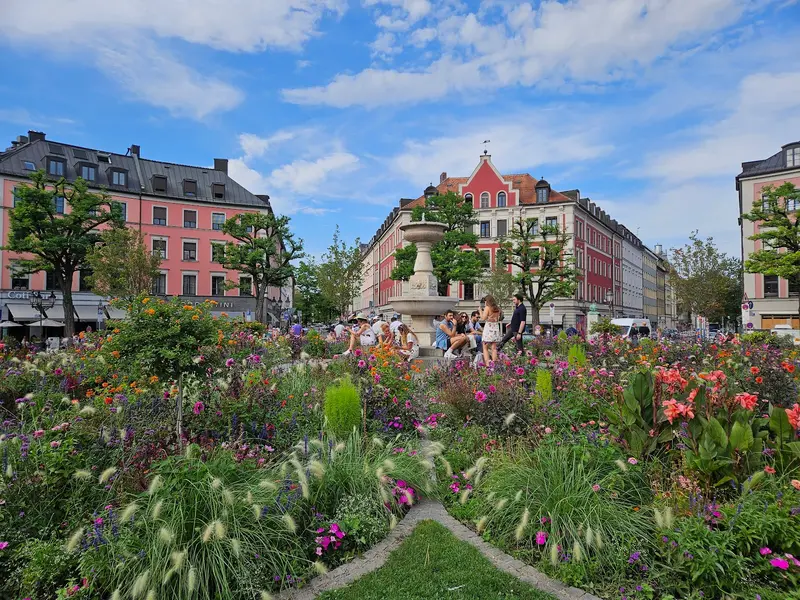
    Der runde Platz entstand um 1860 als Zentrum der neuen Isarvorstadt und ehrt den Architekten Friedrich von Gärtner, im Mittelrondell stehen Büsten von Gärtner und Leo von Klenze. An seiner Südseite steht das 1865 erbaute Staatstheater am Gärtnerplatz.
    Open in Google Maps
    Old South Cemetery
    Museum

    2Old South Cemetery

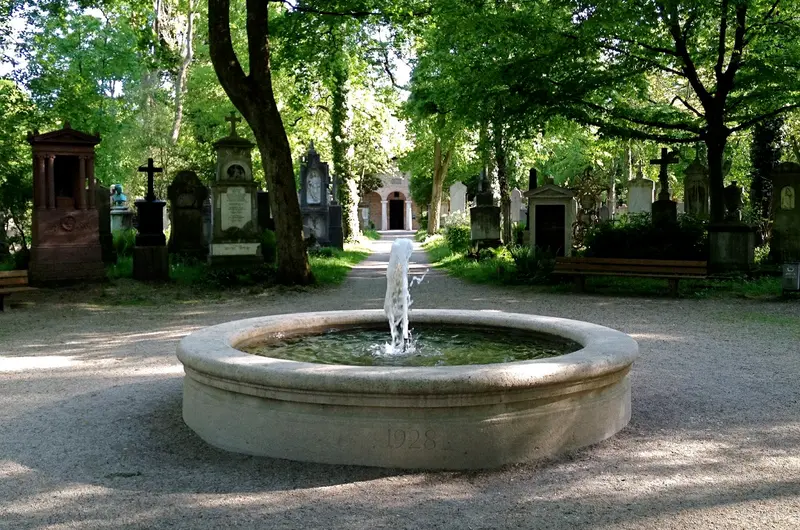
    Duke Albrecht V. commissioned the cemetery in 1563 as a plague cemetery outside the city gates; from 1788 to 1886, it was Munich's sole burial site. On nearly seven hectares with around 18,000 graves, Leo von Klenze, Friedrich von Gärtner, Carl Spitzweg, and Georg Simon Ohm, among others, rest. Today, the listed grounds serve as a tranquil park.
    Open in Google Maps
    Wittelsbach Bridge
    Attraction

    3Wittelsbach Bridge

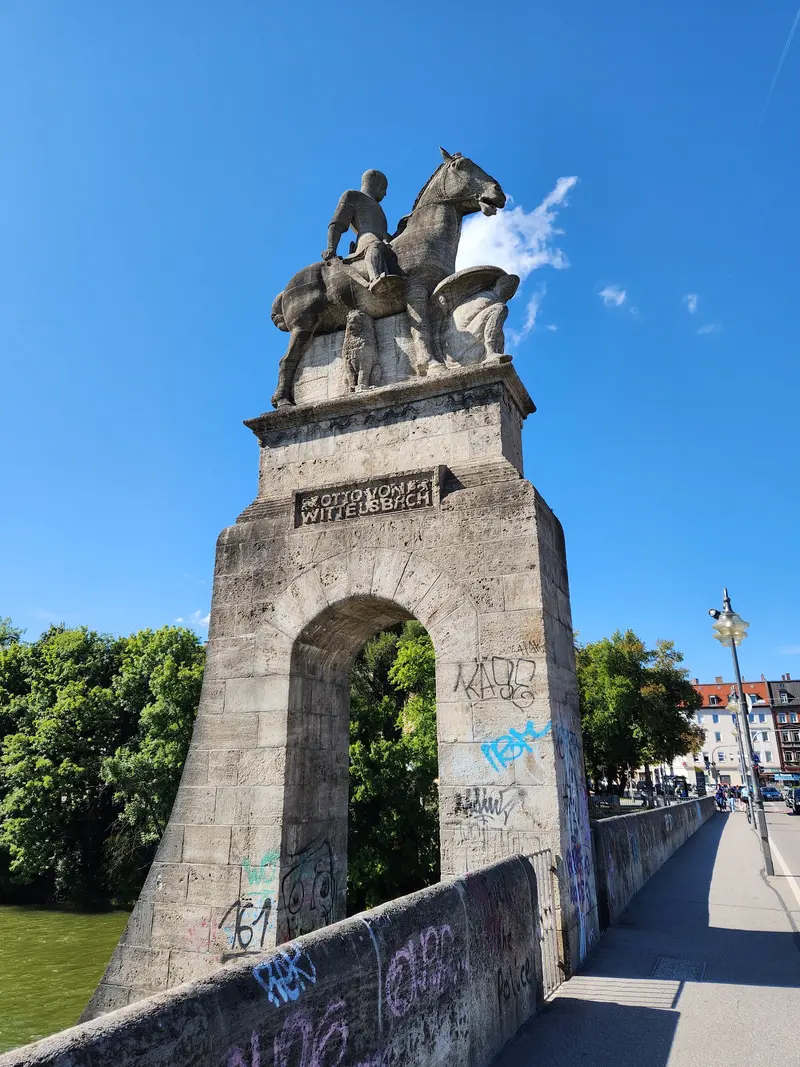
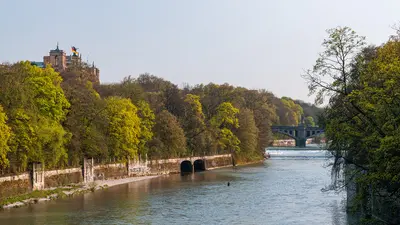
    The 1904 concrete bridge, designed by Theodor Fischer, connects Isarvorstadt with Au. On it stands the equestrian statue of Otto von Wittelsbach by Georg Wrba. From here, you walk along the Isar banks.
    Open in Google Maps

    Restaurants in Glockenbachviertel

    1

    Fraunhofer

    Traditional inn on Fraunhoferstraße with Bavarian dishes and folk music, cabaret, improv theater.
    Show on Google Maps
    2

    Faun

    Bistro-style eatery with classic ambience, international & German dishes, and Augustiner beer.
    Show on Google Maps
    3

    Andy's Krablergarten

    Casual restaurant with a beer garden, serving hearty Bavarian grilled dishes and Schnitzel.
    Show on Google Maps

    Nightlife

    1

    Holy Home

    Small, cozy pub near Gärtnerplatz with changing DJs and a wall of shelves full of spirits and quirky figures.
    Show on Google Maps
    2

    Prosecco

    Colourful, eclectically decorated disco club, popular with gays and lesbians, dancing to popular hits and chart music.
    Show on Google Maps
    3

    Oxen Garden

    The bar on Müllerstraße opened in 1967 as Germany's first leather bar and remains a meeting point for the gay scene to this day, with admission for men only and a dress code.
    Show on Google Maps

    Accommodations in Glockenbachviertel

    Find perfect stay in Glockenbachviertel

    Booking.com* (Affiliate link)
    Search Hotels
    Agoda* (Affiliate link)
    Search Hotels
    Airbnb
    Vacation Rentals

    * Affiliate link: if you book through it, we earn a small commission. The price stays the same for you.

    Campgrounds in Glockenbachviertel

    Find perfect campground in Glockenbachviertel

    Search via Google Maps
    Campgrounds nearby (15km)
    Camping.info
    Find Campgrounds
    Park4Night
    RV Parks & Camping

    Plan your trip to Glockenbachviertel

    Save places, build a route and plan your city trip, all in one place.

    1. 1
      1234

      Round trip

      12 days · 4 stops

      Saved

      Pick a route

      Pick a ready-made one or save places and plan your own.

      Open bookmarks
    2. 2

      Trip to Glockenbachviertel

      Live
      • 1Gärtnerplatz and State Theatre3 days
      • 2Old South Cemetery4 days
      • 3Wittelsbach Bridge5 days
      Budget

      Plan your trip

      The planner sorts stops, days and budget. Plan together in real time.

      Start trip planning
    3. 3
      9:41 No signal
      Available offline

      Use it on the road

      Download the guide to your phone and use it on site, even offline.

    Nearby

    Munich

    Munich

    Munich is Bavaria's state capital and, with over 1.6 million inhabitants, Germany's third-largest municipality. The Isar River flows through the city for nearly 14 kilometers. The heart of the Old Town is Marienplatz with the New Town Hall, where the carillon chimes daily at 11 AM and 12 PM; a few steps away stand the two towers of the Frauenkirche.The Wittelsbach dynasty ruled from 1508 to 1918 from the Residenz, Germany's largest city palace, and created extensive grounds like Nymphenburg Palace and the English Garden. In Maxvorstadt lie the Pinakothek museums of the Kunstareal, and on an Isar island, the Deutsches Museum. Every year, starting the Saturday after September 15th, the city celebrates Oktoberfest on the Theresienwiese, an event dating back to Crown Prince Ludwig's wedding in 1810.
    Au

    Au

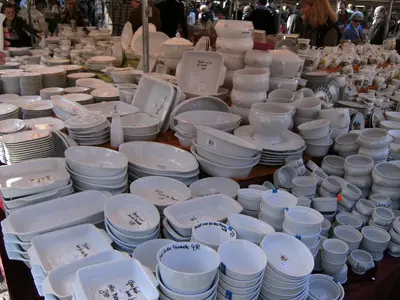
    The Au is situated in the Isar lowlands on the right bank of the river and was first mentioned in 1340 as "Awe ze Gyesingen," a name meaning land by the water. In 1808, it was elevated to a city and granted market rights; in 1854, it became part of Munich. Following the air raids of 1944, post-war architecture largely defines its appearance today, with the Auer Mühlbach flowing right through the district. On Nockherberg, Duke Wilhelm V founded a monastery in 1623, its brewery being the precursor to Paulaner, and Karl Valentin was born here.The heart of the district is Mariahilfplatz with its Neo-Gothic Mariahilfkirche. Three times a year, the Auer Dult transforms it for nine days into a large market featuring pottery, antiques, and rides; the Kirchweihdult 2026 runs from October 17 to 25. In spring, the Starkbierfest on Nockherberg attracts visitors. Tram 18 goes to Mariahilfplatz; for U1 and U2, you alight at Fraunhoferstraße or Kolumbusplatz.
    Haidhausen

    Haidhausen

    Haidhausen, first mentioned in 808 as "haidhusir" (houses on the heath), long thrived on brick production. Small lodging houses for brickyard workers emerged around Wiener Platz, some of which still stand today. In 1854, Haidhausen, along with Au and Giesing, became part of Munich. From 1872, the French Quarter was developed around Ostbahnhof, with streets named after sites of the Franco-Prussian War.Perched on the Isar high bank is the Maximilianeum, seat of the Bavarian State Parliament; to its north, Villa Stuck showcases a turn-of-the-century artist's home. In the evenings, the district offers traditional taverns, French bistros, and cultural venues like the Muffatwerk and Jazzclub Unterfahrt. U4 and U5 stop at Max-Weber-Platz, and Ostbahnhof is connected by S-Bahn and U5.
    Maxvorstadt

    Maxvorstadt

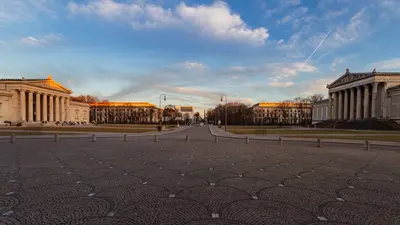
    Maxvorstadt originated in 1805 as Munich's first planned urban expansion and is named after King Max I. Joseph. Most of it was built only after 1825 under Ludwig I., in a neoclassical style and with a grid-like street plan. The Ludwigstraße, between Feldherrnhalle and Siegestor, was the first to be built. With Ludwig-Maximilians-Universität and Technischer Universität, the district remains an academic and student quarter to this day.You primarily come for the Kunstareal: Around Königsplatz, the Glyptothek, Lenbachhaus, the Pinakotheken, and the Museum Brandhorst are located close together, allowing you to visit several venues in one day. In between, you can relax in the eateries on Schellingstraße and Türkenstraße, where students and artists have been gathering for over a hundred years. The U2 stops at Königsplatz and Theresienstraße, U3 and U6 at Universität station.
    Neuhausen-Nymphenburg

    Neuhausen-Nymphenburg

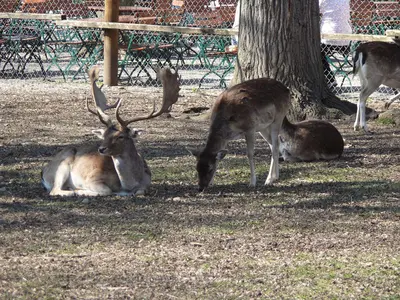
    Neuhausen was incorporated into Munich in 1890, followed by the then independent Nymphenburg in 1899. Since 1992, both have formed the Neuhausen-Nymphenburg district. Its defining characteristic is the mix: urban residential streets around Rotkreuzplatz, the urban center; the villa colonies of Neuwittelsbach and Gern along the access avenues to the palace; and plenty of green with the Palace Park, Botanical Garden, and Hirschgarten.You'll come here mainly for Schloss Nymphenburg, whose park directly adjoins the Botanical Garden, and for the Hirschgarten, with its deer enclosure and enormous beer garden. A side trip to the glass Herz-Jesu-Kirche is well worth it. The U1 takes you to Rotkreuzplatz, from where it's a short walk to the quarter's inns and beer gardens.