Fernweh: Home
ExploreGuideDestinationsMy tripsMy trip
de|en
All Places & RegionsRound tripsNight trains in EuropeAll highlightsAbout FernwehFAQPrivacy PolicyImprint
Download on the App StoreGet it on Google Play
ExploreGuideDestinationsMy tripsMy trip
    • Neighborhoods & highlights
    • Tours
    • Eat & drink
    • Culture
    • Nightlife
    • Getting around
    • Accommodation
    • Plan trip
    • Round trips
    • Nearby
    Budapest

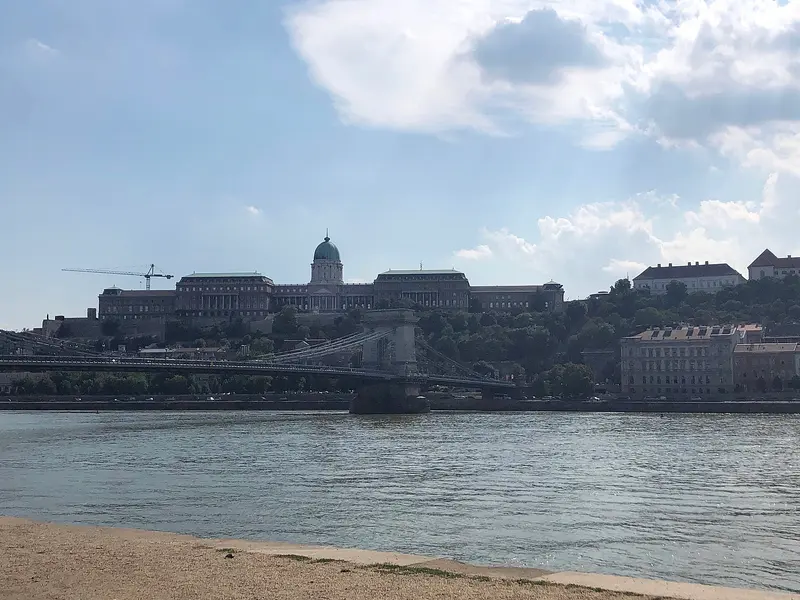
    Pythagoreio / Wikimedia Commons / CC BY-SA 4.0, mod.

    Hungary

    Budapest

    CityCulture

    Hungary's capital was formed in 1873 from the cities of Buda, Pest, and Óbuda and has around 1.7 million inhabitants.

    by Felix Gillen

    1. Home
    2. Destinations
    3. Hungary
    4. Budapest
    Hungary's capital was formed in 1873 from the cities of Buda, Pest, and Óbuda and has around 1.7 million inhabitants. On the hilly Buda side, Buda Castle, Fishermen's Bastion, and Matthias Church perch above the Danube, while on the flat Pest bank opposite stand the Parliament and St. Stephen's Basilica. The Danube Embankment, Castle District, and Andrássy Avenue are UNESCO World Heritage sites; some 125 thermal springs feed the famous baths.
    Hungary travel guideSee 2 round tripsPlan a trip with Budapest

    Contents

    • Neighborhoods & highlights
    • Tours
    • Eat & drink
    • Culture
    • Nightlife
    • Getting around
    • Accommodation
    • Round trips
    • Nearby
    Buda and Castle Hill

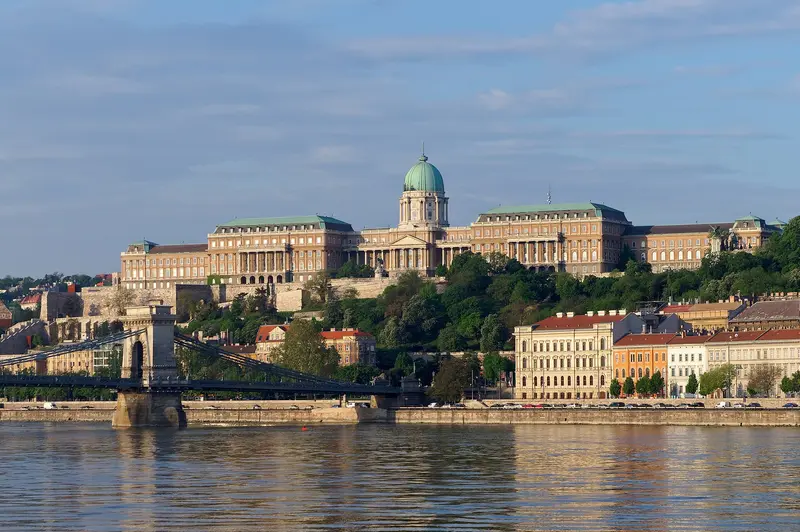
    Perituss / Wikimedia Commons / CC0

    District 1 of 2

    Buda and Castle Hill

    The hilly west bank of the Danube is the oldest part of Budapest. On Castle Hill lie Buda Castle, Matthias Church, and Fisherman's Bastion, the core of the UNESCO World Heritage site.

    Discover
    Pest

    Lynx1211 / Wikimedia Commons / CC BY-SA 4.0, mod.

    District 2 of 2

    Pest

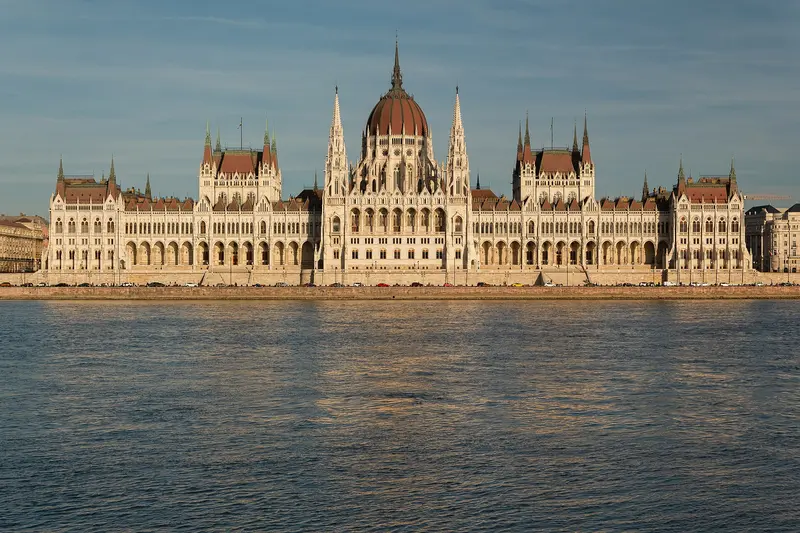
    The city's flat eastern bank is its business and entertainment hub. By the Danube stand the Parliament and the 'Shoes on the Danube Bank' memorial; in the center are St. Stephen's Basilica and the Great Market Hall.

    Discover

    Sights in Budapest

    Discover the most important sights and attractions

    Buda Castle

    Jakub Hałun / Wikimedia Commons / CC BY-SA 4.0, mod.

    Castle

    1Buda Castle

    The Palace on Castle Hill above the Danube is the core of the 1987 UNESCO World Heritage site and today houses, among other things, the Hungarian National Gallery. From the terraces, you look across the river at the Parliament and Pest. The Castle District also includes Matthias Church and Fisherman's Bastion.
    Open in Google Maps
    Attraction

    2Parliament

    The Neo-Gothic Parliament Building on Pest's Danube bank was built 1885-1904, designed by Imre Steindl. It's Hungary's largest building, housing the Holy Crown – St. Stephen's Crown. Visits are by guided tour only; tickets via the Parliament's official website.
    Open in Google Maps
    Fisherman's Bastion

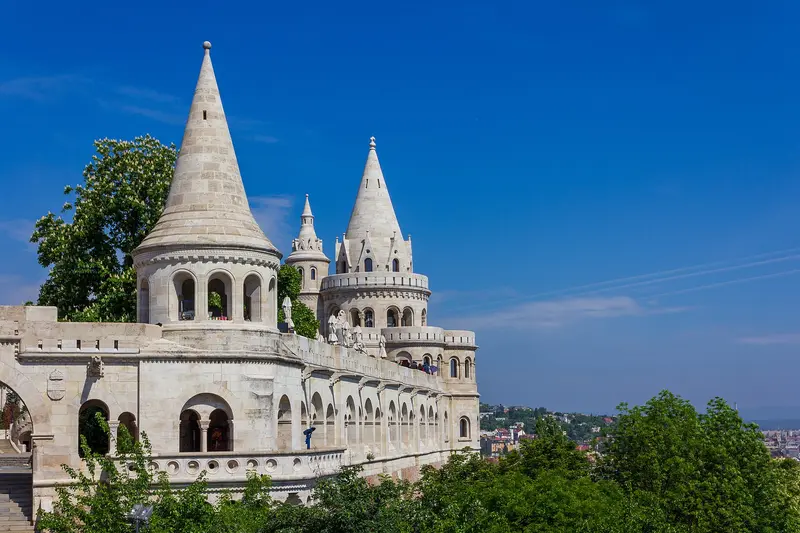
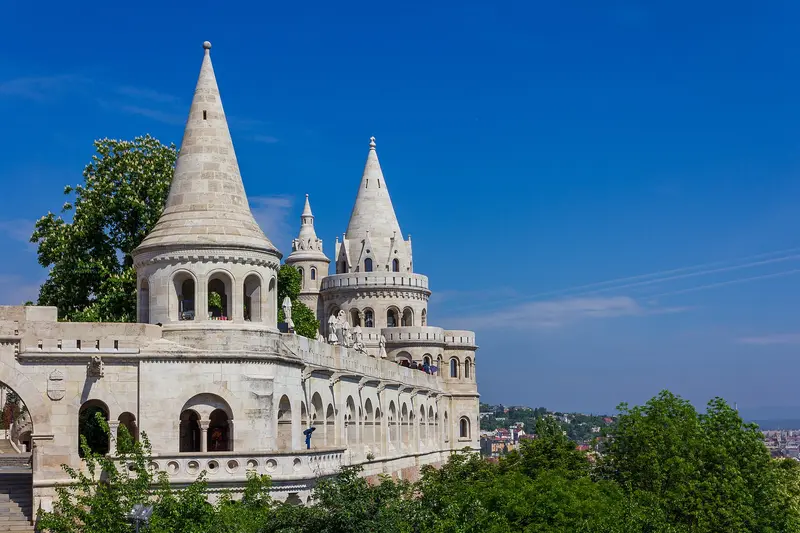
    Perituss / Wikimedia Commons / CC0

    Attraction

    3Fisherman's Bastion

    The panoramic terrace with its seven towers was built 1895-1902, designed by Frigyes Schulek, next to Matthias Church. It offers one of the most famous views across the Danube to the Parliament.
    Open in Google Maps
    Chain Bridge

    Wilfredor / Wikimedia Commons / CC0

    Attraction

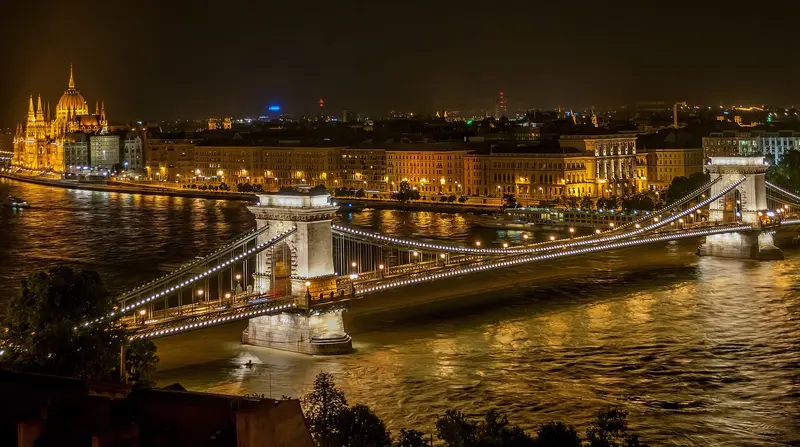
    4Chain Bridge

    The Széchenyi Chain Bridge opened in 1849 as the first permanent bridge across the Danube between Buda and Pest; its stone lions at either end date from 1852. Like all Budapest bridges, it was destroyed in World War II and later rebuilt. In the evenings, it is illuminated.
    Open in Google Maps
    Church

    5St. Stephen's Basilica

    The dome church in the center of Pest was built from 1851 to 1905 and is 96 meters high. It preserves the 'Holy Right Hand', the revered relic hand of state founder Stephan I. Concerts are regularly held here.
    Open in Google Maps
    Spa

    6Széchenyi Thermal Bath

    Opened in 1913 in Neo-Baroque style, the City Park Bath is the city's most famous thermal spa, with 15 indoor, 3 outdoor pools, saunas, and steam baths. Outdoor pools are 27 to 38 degrees, varying by pool, even in winter. M1 Széchenyi fürdő metro station is directly opposite. Buy tickets online from operator; it's much busier on weekends.
    Open in Google Maps

    Tours & experiences in Budapest

    Search tours for Budapest on GetYourGuide* (Affiliate link)On GetYourGuide, with reviews from other travellers

    * Affiliate link: if you book through it, we earn a small commission. The price stays the same for you.

    Restaurants in Budapest

    1

    Stand

    The only two-Michelin-starred restaurant in Budapest, located on Székely Mihály utca at the edge of the Jewish Quarter. It serves tasting menus, including vegetarian options, that transform Hungarian ingredients and dishes with modern techniques. Highest price level, reservations essential.
    Show on Google Maps
    2

    Rosenstein

    Family-run restaurant on Mosonyi utca in District VIII, near Keleti (East) Station. It features Jewish-Hungarian cuisine. Time Out calls it the city's best Hungarian restaurant, highlighting pan-fried foie gras with Tokaji sauce. Cholent is served on Fridays and Saturdays, with inexpensive lunch specials during the week. Closed on Sundays.
    Show on Google Maps
    3

    Déryné Bisztró

    Bistro on Krisztina tér below Castle Hill, where Buda locals have breakfast, lunch, and sit at the bar in the evenings. The kitchen mixes Hungarian classics with bistro dishes, and its own in-house sourdough bakery Déryné Kenyér bakes its bread.
    Show on Google Maps
    4

    Frici Papa Kifőzdéje

    A kifőzde is a simple eatery serving home cooking, and Frici Papa's on Király utca in District VII is one of the best known in the city. The menu changes daily: főzelék vegetable stews, roasts and fried dishes, plus homemade cake, to eat in or take away.
    Show on Google Maps
    5

    Kispiac Bisztró

    Small bistro with Hungarian cooking on Hold utca in District V, in the building of the Hold utca market hall, a few minutes from the Basilica and Parliament. The dining room is cramped.
    Show on Google Maps
    6

    Kéhli Vendéglő

    Old inn in Óbuda, open since the late 19th century; writer Gyula Krúdy sat here almost daily in his final years. Features traditional Hungarian cuisine: Goulash soup, stuffed cabbage, and goose leg with red cabbage.
    Show on Google Maps

    Baths, UNESCO Sites and Ruin Bars

    Thermal BathsAround 125 thermal springs feed the city's baths, Budapest is considered one of Europe's most significant spa cities. The best known is the Széchenyi Bath in the City Park. The Gellért Bath has been closed since October 2025 for a major renovation lasting two and a half to three years.World Heritage on the DanubeThe Danube Embankments, the Castle District, and since 2002 also Andrássy út with the Millennium Underground, are part of the UNESCO World Heritage. Many buildings, such as the Millennium Monument on Heroes' Square, were built for the millennium celebration in 1896.NightlifeIn the former Jewish Quarter around the Dohány Synagogue, the ruin bars (romkocsmák) characterize the city's nightlife.

    Nightlife

    1

    Szimpla Kert

    Budapest's first and best-known ruin bar, in an old apartment building on Kazinczy utca in the former Jewish Quarter. On Sundays from 9 a.m. to 2 p.m. the courtyard hosts a farmers' market.
    Show on Google Maps

    On the Road in Budapest

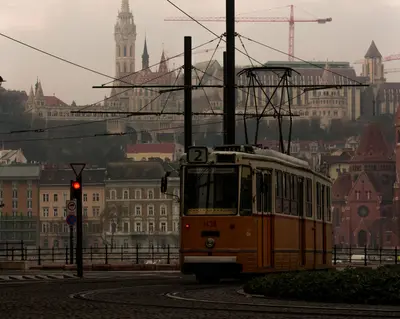
    From the Airport to the CityThe 100E Airport Express bus runs around the clock, taking about 40 minutes via Kálvin tér to Deák Ferenc tér, every 6 to 10 minutes during the day. It is only valid with its dedicated Airport Shuttle Ticket for 2,500 HUF (as of October 2026), which you can purchase by bank card directly on the bus, in the BudapestGO app, or from a machine.The 200E bus offers a cheaper option to the Metro with a regular ticket.Metro, Tram, and BusThe BKK operates the Metro, trams, and buses. A single ticket costs 500 HUF, or 700 HUF if purchased on board. A 24-hour ticket costs 2,750 HUF, and a 72-hour ticket costs 5,750 HUF (as of October 2026).The M1 Metro line, from 1896 under Andrássy út, is continental Europe's oldest underground and stops directly at Széchenyi Bath.Tram line 2 runs along the Pest side of the Danube, offering views of Castle Hill and the Parliament building en route.On FootPest's city center and the Castle District are great to explore on foot; the Chain Bridge and other Danube bridges connect the two banks.

    Accommodations in Budapest

    Find perfect stay in Budapest

    Booking.com* (Affiliate link)
    Search Hotels
    Agoda* (Affiliate link)
    Search Hotels
    Airbnb
    Vacation Rentals

    * Affiliate link: if you book through it, we earn a small commission. The price stays the same for you.

    Campgrounds in Budapest

    Find perfect campground in Budapest

    Search via Google Maps
    Campgrounds nearby (15km)
    Camping.info
    Find Campgrounds
    Park4Night
    RV Parks & Camping

    Plan your trip to Budapest

    Save places, build a route and plan your city trip, all in one place.

    1. 1
      Sunrise over alpine peaks and a sea of clouds
      1234

      Round trip

      12 days · 4 stops

      Saved

      Pick a route

      Pick a ready-made one or save places and plan your own.

      Open bookmarks
    2. 2

      Trip to Budapest

      Live
      • 1Buda Castle3 days
      • 2Parliament4 days
      • 3Fisherman's Bastion5 days
      Budget

      Plan your trip

      The planner sorts stops, days and budget. Plan together in real time.

      Start trip planning
    3. 3
      9:41 No signal
      Budapest
      Available offline

      Pythagoreio / Wikimedia Commons / CC BY-SA 4.0, mod.

      Use it on the road

      Download the guide to your phone and use it on site, even offline.

    Round trips with Budapest

    By night train to Budapest and Pécs

    By night train to Budapest and Pécs

    Shortly before midnight, the EuroNight to Budapest departs from Munich; in the morning, you arrive at Ostbahnhof Keleti. After three nights, you travel by Intercity in just under three hours south to Pécs, a city with Roman burial chambers, an Ottoman mosque, and a porcelain manufactory. For the return journey, you take the train back to Budapest and in the evening the night train to Munich. Two nights on the train, one capital city, and a city that few visitors know.

    6 Days
    5 stops

    Pasztilla aka Attila Terbócs·CC BY-SA 4.0

    Budapest in four days

    Budapest in four days

    Four days on both banks of the Danube: on arrival day Parliament, the riverbank and the Basilica in Pest, then Castle Hill, Gellért Hill and the Ottoman Rudas Bath in Buda, on the third day the market hall, the Jewish Quarter, Andrássy út and the Széchenyi Bath, and finally Szentendre on the Danube Bend and Óbuda. Pest is flat and laid out in a grid, Buda is hilly; the metro, trams and the HÉV suburban railway link them, and you walk the rest. You eat in kifőzdék, in the bistro by the market hall and in the old inn where the writer Krúdy used to sit.

    5 Days
    1 stop

    Misa Stoffel·Pexels

    Nearby

    Donauknie

    Donauknie

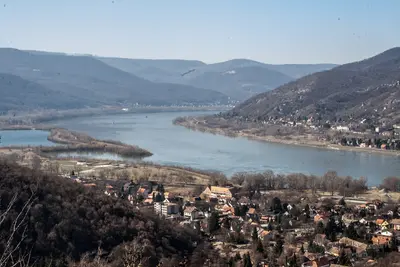
    Nördlich von Budapest ändert die Donau zwischen Esztergom und Vác ihre Richtung und biegt in einer engen Schleife nach Süden ab, wohl entlang des Randes einer erodierten Vulkancaldera. Das Donauknie (Dunakanyar) mit seinen bewaldeten Hängen und Kleinstädten ist das klassische Tagesausflugsziel von Budapest aus.Drei Orte prägen die Strecke: Szentendre, das Künstlerstädtchen mit serbisch geprägter Altstadt, erreichst du mit der Vorortbahn HÉV H5 ab Batthyány tér. In Visegrád thronen Königspalast und Zitadelle über dem Fluss. In Esztergom, dem Sitz des Erzbischofs, steht die Basilika, die größte Kirche Ungarns, direkt über der Donau mit Blick hinüber in die Slowakei.

    Szilas·public domain

    Eger

    Eger

    Eger is a Baroque episcopal city in Northern Hungary, nestled between the Mátra and Bükk Mountains, famous for its castle, an Ottoman-era minaret, and the red wine Egri Bikavér (Bull's Blood of Eger). It's a two-hour Intercity train ride from Budapest.In 1552, castle captain István Dobó defended the castle with a small garrison against the advancing Ottoman army. Despite this, the city fell in 1596 and remained under Ottoman rule for 91 years until its liberation in December 1687. Dating from this period is the approximately 40-meter-high minaret, which is considered Europe's northernmost Turkish minaret and can be climbed.On the southern edge of the city lies the Szépasszony-völgy (Valley of the Beautiful Woman) with numerous wine cellars carved into the hillside, where you can sample Egri Bikavér directly from the winemaker. In summer, a quaint tourist train runs from Dobó Square into the valley.

    Armagan·CC BY-SA 4.0

    Balaton

    Balaton

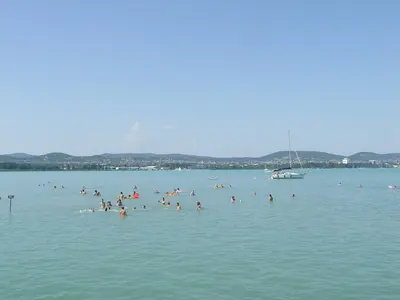
    The Balaton (Plattensee), at around 600 square kilometers and 78 kilometers long, is Central Europe's largest lake and Hungary's most important summer destination. As it's only just over three meters deep on average, it warms to around 25 °C in summer.The two shores differ significantly: The flat southern shore with Siófok is characterized by resorts and lidos; the hilly northern shore, with Balatonfüred, the Tihany peninsula, and the volcanic cones around Badacsony, by vineyards and old village centers. At the western end are Keszthely with Festetics Palace and, around eight kilometers away, the thermal lake of Hévíz.

    Christo·CC BY-SA 4.0

    Hortobágy National Park

    Hortobágy National Park

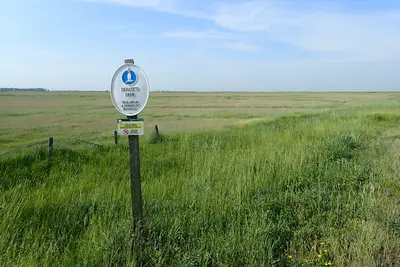
    The Hortobágy Puszta in the Great Hungarian Plain is Europe's largest semi-natural grassland. In 1973, it was designated as Hungary's first national park, followed in 1999 by its inscription as a UNESCO World Heritage site, a cultural landscape of herdsmen.Across approximately 800 square kilometers, Hungarian Grey cattle, Racka sheep, and Nonius horses graze, herded by mounted herdsmen, the Csikós. In autumn, migrating cranes rest in the wetlands. Its landmark is the Nine-Arch Bridge in Hortobágy village, the country's longest stone bridge.

    Krzysztof Ziarnek, Kenraiz·CC BY-SA 4.0

    Pécs

    Pécs

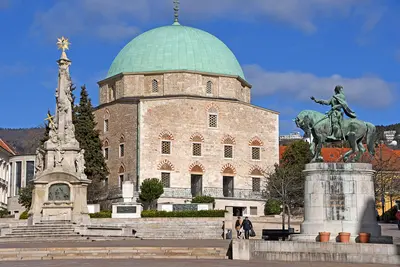
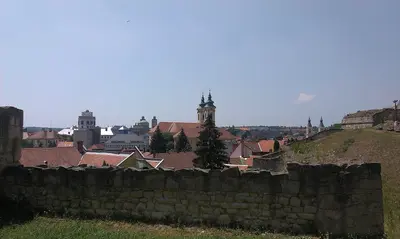
    Pécs (German Fünfkirchen) is Hungary's fifth-largest city, located in the southwest on the slopes of the Mecsek Mountains, near the Croatian border. This university city, with its Mediterranean feel, was a European Capital of Culture in 2010, alongside Essen and Istanbul.Beneath the Old Town are the early Christian burial chambers of Roman Sopianae, a UNESCO World Heritage site since 2000. On the main square, Széchenyi tér, stands Pasha Gazi Kasim's Mosque (1543-1546), which became a Catholic church after the Ottoman withdrawal: its dome displays a crescent moon and a cross superimposed. The four-towered Cathedral of St. Peter and Paul dates back to the 11th century.Founded in 1367 by King Louis I, the university is Hungary's oldest. The city's appearance is shaped by the ceramics from the local Zsolnay Manufactory, which adorn the roofs and facades of many buildings.

    Hansencharly·CC BY-SA 4.0

    Your next steps

    Budapest is in Hungary. Ways to carry on from here.

    • More in Hungary

      Highlights, areas, routes and the best time to travel for all of Hungary.

      Hungary travel guide
    • Round trips with Budapest

      2 routes pass through Budapest, with stops, nights and a map.

      See 2 round trips

    Sources & method

    • Photos: Wikimedia Commons, Unsplash. Each photo carries its credit.
    • Place data such as addresses and ratings comes from Google Maps.
    • The content is based on web research from public, traceable sources. How the content is made · The role of AI