Fernweh: Home
ExploreGuideDestinationsMy tripsMy trip
de|en
All Places & RegionsRound tripsNight trains in EuropeAll highlightsAbout FernwehFAQPrivacy PolicyImprint
Download on the App StoreGet it on Google Play
ExploreGuideDestinationsMy tripsMy trip
    • Places & highlights
    • Tours
    • Eat & drink
    • Culture
    • Getting around
    • Accommodation
    • Nearby
    Hortobágy National Park

    Krzysztof Ziarnek, Kenraiz / Wikimedia Commons / CC BY-SA 4.0, mod.

    Hungary

    Hortobágy National Park

    Point of Interest

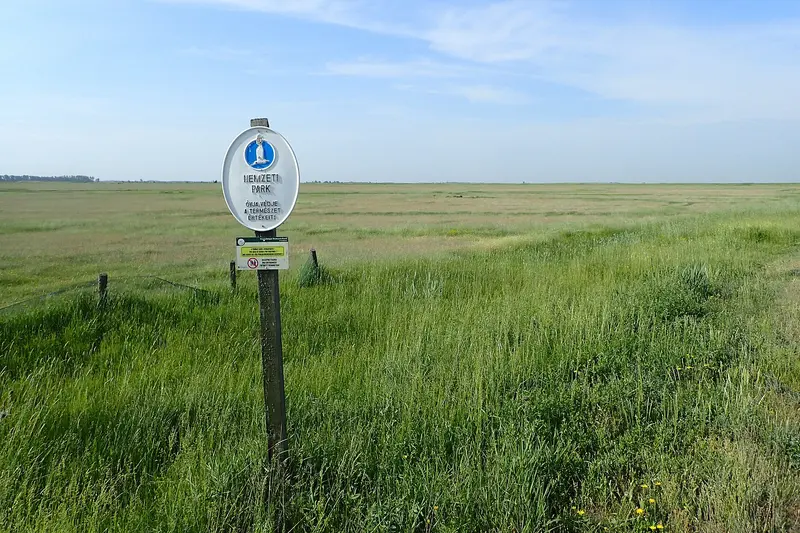
    The Hortobágy Puszta in the Great Hungarian Plain is Europe's largest semi-natural grassland.

    by Felix Gillen

    1. Home
    2. Destinations
    3. Hungary
    4. Hortobágy National Park
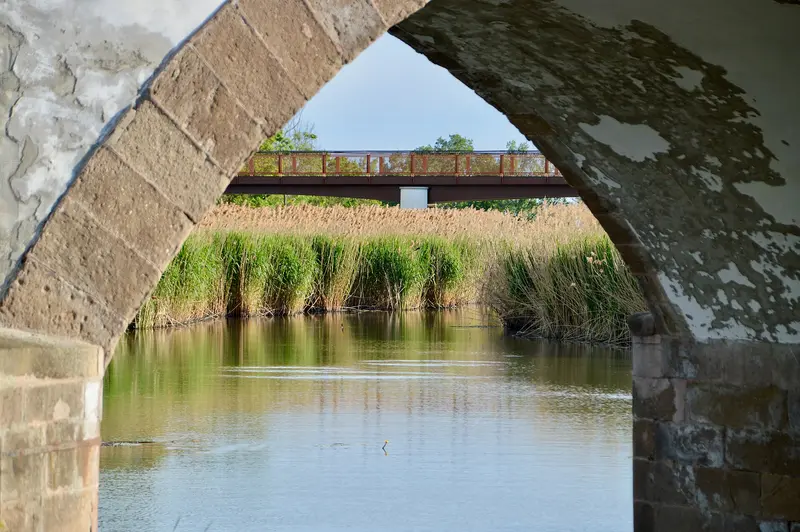
    The Hortobágy Puszta in the Great Hungarian Plain is Europe's largest semi-natural grassland. In 1973, it was designated as Hungary's first national park, followed in 1999 by its inscription as a UNESCO World Heritage site, a cultural landscape of herdsmen.Across approximately 800 square kilometers, Hungarian Grey cattle, Racka sheep, and Nonius horses graze, herded by mounted herdsmen, the Csikós. In autumn, migrating cranes rest in the wetlands. Its landmark is the Nine-Arch Bridge in Hortobágy village, the country's longest stone bridge.
    Hungary travel guideRound trips in HungaryPlan a trip with Hortobágy National Park

    Contents

    • Places & highlights
    • Tours
    • Eat & drink
    • Culture
    • Getting around
    • Accommodation
    • Nearby

    Sights in Hortobágy National Park

    Discover the most important sights and attractions

    Nine Arch Bridge (Kilenclyukú híd)

    VargaA / Wikimedia Commons / CC BY-SA 4.0, mod.

    1Nine Arch Bridge (Kilenclyukú híd)

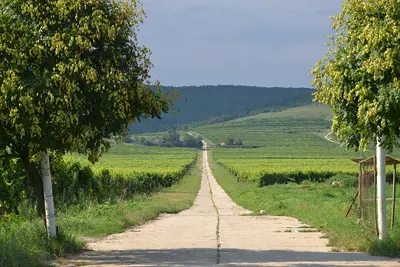
    The Stone Bridge over the Hortobágy River was decided in 1827 and completed in 1833; previously, a wooden bridge had stood here since the Middle Ages. With a total length of 167.3 meters, it is considered, according to the National Park administration, Hungary's longest stone bridge. It once carried an important trade route through the Puszta and is today the landmark of the region.
    Open in Google Maps

    Tours & experiences in Hortobágy National Park

    Search tours for Hortobágy National Park on GetYourGuide* (Affiliate link)On GetYourGuide, with reviews from other travellers

    * Affiliate link: if you book through it, we earn a small commission. The price stays the same for you.

    Restaurants in Hortobágy National Park

    Puszta and Pastoral Culture

    Puszta World HeritageThe National Park has been a UNESCO World Heritage Site since 1999. Hungarian Grey cattle and Racka sheep graze in its pastures.Crane MigrationFrom late September to early November, cranes rest here, with October being the peak; on October 8, 2026, 166,745 birds were counted.Csárda and BridgeThe Hortobágyi Csárda, dating from 1699 on the old Salt Road, is the oldest building in the area. The Nine-Arch Bridge, built between 1827 and 1833, is Hungary's longest stone road bridge at 167.3 meters.

    Getting Here & Tips

    Getting ThereDirect train from Debrecen in 37-54 minutes, approx. every 1-2 hours; last return around 20:46.ProgramThe horse show at Máta Stud Farm runs during high season until mid-October; it is closed in winter, but the stables are then freely accessible.The Visitor Centre at Petőfi tér is closed on Mondays in winter.The Csárda operates as a restaurant daily from 11:00 to 18:00.

    Accommodations in Hortobágy National Park

    Find perfect stay in Hortobágy National Park

    Booking.com* (Affiliate link)
    Search Hotels
    Agoda* (Affiliate link)
    Search Hotels
    Airbnb
    Vacation Rentals

    * Affiliate link: if you book through it, we earn a small commission. The price stays the same for you.

    Campgrounds in Hortobágy National Park

    Find perfect campground in Hortobágy National Park

    Search via Google Maps
    Campgrounds nearby (15km)
    Camping.info
    Find Campgrounds
    Park4Night
    RV Parks & Camping

    Nearby

    Tokaj

    Tokaj

    The small wine town of Tokaj is located in northeastern Hungary at the confluence of the Tisza and Bodrog rivers, approximately 54 kilometers east of Miskolc, at the foot of Kopasz Hill. It is the main town of the eponymous wine region, whose cultural landscape, comprising 27 villages with vineyards, farmsteads, and cellars, has been a UNESCO World Heritage site since 2002.The region is famous for Tokaji Aszú, which is considered the oldest noble rot sweet wine; viticulture has been documented here since 1561. Characteristic are the cellar systems, mostly dug by hand into volcanic rock, where you can taste wines with winemakers. The oldest known, the König-Kálmán-Keller in the neighboring village of Tarcal, dates back to 1110.

    Pudelek·CC BY-SA 4.0

    Eger

    Eger

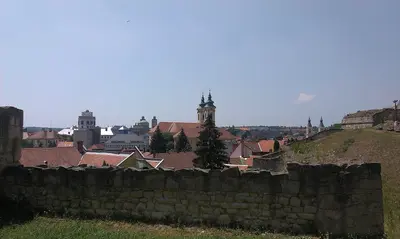
    Eger is a Baroque episcopal city in Northern Hungary, nestled between the Mátra and Bükk Mountains, famous for its castle, an Ottoman-era minaret, and the red wine Egri Bikavér (Bull's Blood of Eger). It's a two-hour Intercity train ride from Budapest.In 1552, castle captain István Dobó defended the castle with a small garrison against the advancing Ottoman army. Despite this, the city fell in 1596 and remained under Ottoman rule for 91 years until its liberation in December 1687. Dating from this period is the approximately 40-meter-high minaret, which is considered Europe's northernmost Turkish minaret and can be climbed.On the southern edge of the city lies the Szépasszony-völgy (Valley of the Beautiful Woman) with numerous wine cellars carved into the hillside, where you can sample Egri Bikavér directly from the winemaker. In summer, a quaint tourist train runs from Dobó Square into the valley.

    Armagan·CC BY-SA 4.0

    Pest

    Pest

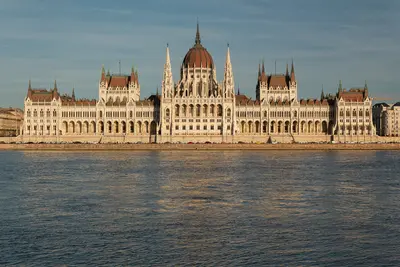
    The city's flat eastern bank is its business and entertainment hub. By the Danube stand the Parliament and the 'Shoes on the Danube Bank' memorial; in the center are St. Stephen's Basilica and the Great Market Hall. In the former Jewish Quarter around the Dohány Synagogue are many ruin bars; Andrássy út leads to Heroes' Square and City Park with the Széchenyi Bath.

    Lynx1211·CC BY-SA 4.0

    Budapest

    Budapest

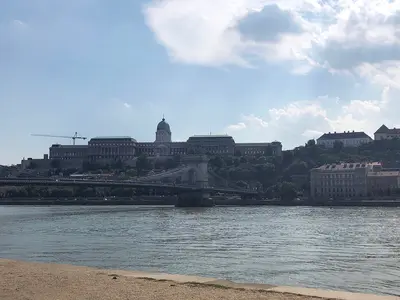
    Hungary's capital was formed in 1873 from the cities of Buda, Pest, and Óbuda and has around 1.7 million inhabitants. On the hilly Buda side, Buda Castle, Fishermen's Bastion, and Matthias Church perch above the Danube, while on the flat Pest bank opposite stand the Parliament and St. Stephen's Basilica. The Danube Embankment, Castle District, and Andrássy Avenue are UNESCO World Heritage sites; some 125 thermal springs feed the famous baths.

    Pythagoreio·CC BY-SA 4.0

    Buda and Castle Hill

    Buda and Castle Hill

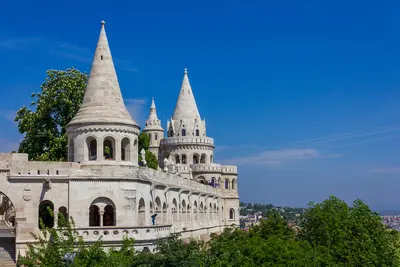
    The hilly west bank of the Danube is the oldest part of Budapest. On Castle Hill lie Buda Castle, Matthias Church, and Fisherman's Bastion, the core of the UNESCO World Heritage site. South of it rises Gellért Hill with the Citadel, re-opening in 2026, and the Cave Church; from its summit, you overlook the Danube with its bridges.

    Perituss·CC0

    Your next steps

    Hortobágy National Park is in Hungary. Ways to carry on from here.

    • More in Hungary

      Highlights, areas, routes and the best time to travel for all of Hungary.

      Hungary travel guide
    • Round trips in Hungary

      Ready-made routes through Hungary, with stops, nights and a map.

      See the routes
    • Plan a trip with Hortobágy National Park

      The Guide asks about season, length and who is coming, and suggests a trip with Hortobágy National Park.

      Plan the trip

    Sources & method

    • Photos: Wikimedia Commons. Each photo carries its credit.
    • The content is based on web research from public, traceable sources. How the content is made · The role of AI