Fernweh: Home
ExploreGuideDestinationsMy tripsMy trip
de|en
All Places & RegionsRound tripsNight trains in EuropeAll highlightsAbout FernwehFAQPrivacy PolicyImprint
Download on the App StoreGet it on Google Play
ExploreGuideDestinationsMy tripsMy trip
    • Neighborhoods & highlights
    • Tours
    • Eat & drink
    • Culture
    • Getting around
    • Accommodation
    • Plan trip
    • Nearby
    Tokaj

    Pudelek / Wikimedia Commons / CC BY-SA 4.0, mod.

    Hungary

    Tokaj

    City

    The small wine town of Tokaj is located in northeastern Hungary at the confluence of the Tisza and Bodrog rivers, approximately 54 kilometers east of Miskolc, at the foot of Kopasz Hill.

    by Felix Gillen

    1. Home
    2. Destinations
    3. Hungary
    4. Tokaj
    The small wine town of Tokaj is located in northeastern Hungary at the confluence of the Tisza and Bodrog rivers, approximately 54 kilometers east of Miskolc, at the foot of Kopasz Hill. It is the main town of the eponymous wine region, whose cultural landscape, comprising 27 villages with vineyards, farmsteads, and cellars, has been a UNESCO World Heritage site since 2002.The region is famous for Tokaji Aszú, which is considered the oldest noble rot sweet wine; viticulture has been documented here since 1561. Characteristic are the cellar systems, mostly dug by hand into volcanic rock, where you can taste wines with winemakers. The oldest known, the König-Kálmán-Keller in the neighboring village of Tarcal, dates back to 1110.
    Hungary travel guideRound trips in HungaryPlan a trip with Tokaj

    Contents

    • Neighborhoods & highlights
    • Tours
    • Eat & drink
    • Culture
    • Getting around
    • Accommodation
    • Nearby

    Sights in Tokaj

    Discover the most important sights and attractions

    Rákóczi Cellar

    PM / Wikimedia Commons / public domain

    Attraction

    1Rákóczi Cellar

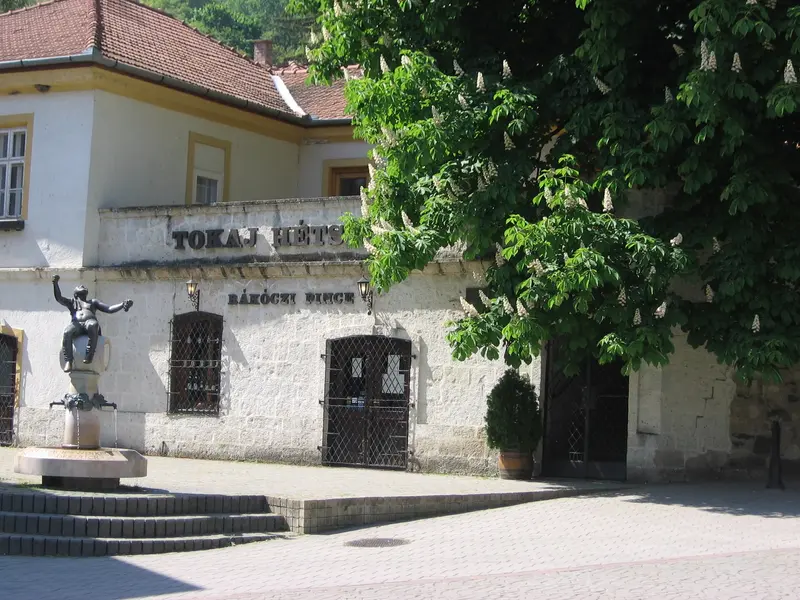
    The wine cellar on Tokaj's main square dates back to the early 15th century. In its Knights' Hall, cited by the Tourist Office as the region's largest underground hall, the Estates elected János Szapolyai king in 1526. Today, the cellar is part of the Tokaj Hétszőlő winery; its corridors feature a small wine museum; tastings are available by booking.
    Open in Google Maps
    Museum

    2Tokaj-Museum

    Housed since 1985 in a former Greek merchant's house, the Regional Museum tells the story of Tokaj Hill's geology, history, and viticulture; royal charters from the 16th and 17th centuries are also on display, and a lapidarium is in the garden. Open until the end of November, Tuesday to Sunday; in winter, Tuesday to Saturday, 10 am to 4 pm.
    Open in Google Maps

    Tours & experiences in Tokaj

    Search tours for Tokaj on GetYourGuide* (Affiliate link)On GetYourGuide, with reviews from other travellers

    * Affiliate link: if you book through it, we earn a small commission. The price stays the same for you.

    Restaurants in Tokaj

    1

    Dereszla Bistro

    Bistro with modern Hungarian cuisine in the wine village of Bodrogkeresztúr near Tokaj, newly added to the Guide Michelin selection in 2025.
    Show on Google Maps

    Wine Cultural Landscape

    World Heritage since 2002The historical wine cultural landscape of Tokaj, with its 27 villages, is a UNESCO World Heritage site. As early as 1737, the region was legally demarcated, making it one of the world's earliest closed wine regions. Aszú wines have been documented since 1561; the wetlands along the Bodrog and Tisza rivers promote noble rot.Cellars and SynagogueThe cellars are hewn into volcanic rock; the Kálmán Cellar in Tarcal dates back to 1110. In Mád, there is an 18th-century synagogue.FestivalsWine Auction late April, Wine Festival in Tokaj in June, Furmint Festival in Mád in September.

    Getting There & Tips

    Getting ThereDirect trains from Budapest Keleti approx. every 2h, journey 2h 40m.Wine TastingsFor wineries, take a taxi: Hungary has a 0.0‰ alcohol limit.Side TripThe restored Rákóczi Castle in Sárospatak is worth a detour.

    Accommodations in Tokaj

    Find perfect stay in Tokaj

    Booking.com* (Affiliate link)
    Search Hotels
    Agoda* (Affiliate link)
    Search Hotels
    Airbnb
    Vacation Rentals

    * Affiliate link: if you book through it, we earn a small commission. The price stays the same for you.

    Campgrounds in Tokaj

    Find perfect campground in Tokaj

    Search via Google Maps
    Campgrounds nearby (15km)
    Camping.info
    Find Campgrounds
    Park4Night
    RV Parks & Camping

    Plan your trip to Tokaj

    Save places, build a route and plan your city trip, all in one place.

    1. 1
      Sunrise over alpine peaks and a sea of clouds
      1234

      Round trip

      12 days · 4 stops

      Saved

      Pick a route

      Pick a ready-made one or save places and plan your own.

      Open bookmarks
    2. 2

      Trip to Tokaj

      Live
      • 1Rákóczi Cellar3 days
      • 2Tokaj-Museum4 days
      Budget

      Plan your trip

      The planner sorts stops, days and budget. Plan together in real time.

      Start trip planning
    3. 3
      9:41 No signal
      Tokaj
      Available offline

      Pudelek / Wikimedia Commons / CC BY-SA 4.0, mod.

      Use it on the road

      Download the guide to your phone and use it on site, even offline.

    Nearby

    Hortobágy National Park

    Hortobágy National Park

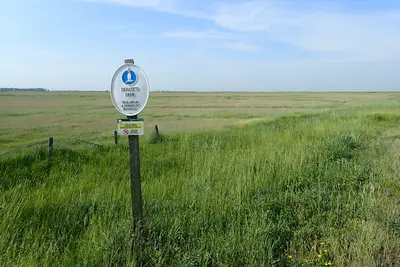
    The Hortobágy Puszta in the Great Hungarian Plain is Europe's largest semi-natural grassland. In 1973, it was designated as Hungary's first national park, followed in 1999 by its inscription as a UNESCO World Heritage site, a cultural landscape of herdsmen.Across approximately 800 square kilometers, Hungarian Grey cattle, Racka sheep, and Nonius horses graze, herded by mounted herdsmen, the Csikós. In autumn, migrating cranes rest in the wetlands. Its landmark is the Nine-Arch Bridge in Hortobágy village, the country's longest stone bridge.

    Krzysztof Ziarnek, Kenraiz·CC BY-SA 4.0

    Eger

    Eger

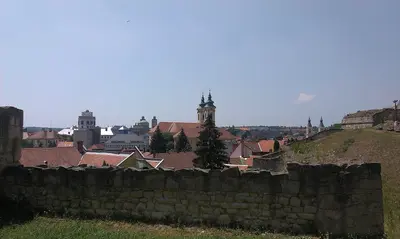
    Eger is a Baroque episcopal city in Northern Hungary, nestled between the Mátra and Bükk Mountains, famous for its castle, an Ottoman-era minaret, and the red wine Egri Bikavér (Bull's Blood of Eger). It's a two-hour Intercity train ride from Budapest.In 1552, castle captain István Dobó defended the castle with a small garrison against the advancing Ottoman army. Despite this, the city fell in 1596 and remained under Ottoman rule for 91 years until its liberation in December 1687. Dating from this period is the approximately 40-meter-high minaret, which is considered Europe's northernmost Turkish minaret and can be climbed.On the southern edge of the city lies the Szépasszony-völgy (Valley of the Beautiful Woman) with numerous wine cellars carved into the hillside, where you can sample Egri Bikavér directly from the winemaker. In summer, a quaint tourist train runs from Dobó Square into the valley.

    Armagan·CC BY-SA 4.0

    Bieszczady

    Bieszczady

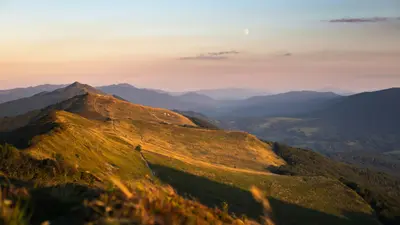
    The Bieszczady Mountains, in the far southeast of Poland, bordering Slovakia and Ukraine, are part of the Eastern Carpathians. Its heart is the Bieszczady National Park (Bieszczadzki Park Narodowy), founded in 1973, and at over 292 square kilometers, it's the largest national park in the Polish mountains. Since 1992, it has been part of the transnational East Carpathian Biosphere Reserve, and since 2021, parts of its beech forests have been on the UNESCO World Heritage List.Characteristic features are the Połoniny, treeless mountain meadows above the tree line, such as Połonina Caryńska and Połonina Wetlińska, as well as the peaks Tarnica (1346 meters), Krzemień, and Halicz. Bears, wolves, lynx, and a free-ranging herd of European bison live in the forests. To the north lies the Solina Reservoir, Poland's largest capacity reservoir; in the region's villages stand wooden Cerkwie, including the UNESCO World Heritage churches of Smolnik and Turzańsk.
    Marek Piwnicki·Unsplash

    Tatra National Park and Morskie Oko

    Tatra National Park and Morskie Oko

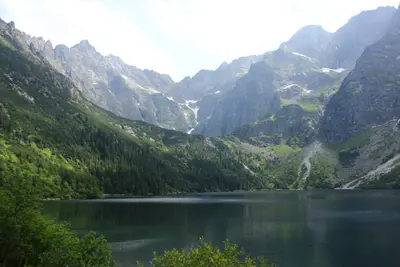
    The Tatra National Park (Tatrzański Park Narodowy, TPN) has protected the Polish part of the Tatra Mountains since 1955, covering over 211 square kilometers. Together with the Slovak National Park, it has formed a cross-border UNESCO Biosphere Reserve since 1993. Here, Rysy (2,499 meters on the Polish side) is Poland's highest peak; chamois, marmots, brown bears, and lynxes live in the forests and cirques.The most famous destination is Morskie Oko, a glacial lake at an altitude of 1,395 meters in the Rybi Potok Valley at the foot of the Mięguszowieckie Szczyty. Covering almost 35 hectares, it is the second-largest lake in the Tatra after Wielki Staw and up to approximately 51 meters deep. From the Palenica Białczańska car park, an approximately 8.5-kilometer-long asphalt road leads up, which is closed to private cars.

    Lāsma Artmane·Unsplash

    Pieniny and the Dunajec Gorge

    Pieniny and the Dunajec Gorge

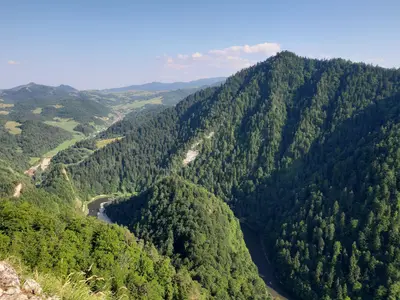
    The Pieniny Mountains are a small limestone range on the border with Slovakia, east of the Tatra Mountains. The Polish Pieniny National Park was established in 1932 as Poland's first national park and covers just over 23 square kilometres. The highest peak of the central massif is Trzy Korony (Three Crowns) at 982 metres, from whose viewing platform on Okrąglica you look deep into the valley.The Pieniny Mountains are primarily known for the Dunajec Gorge: The river has carved its way in loops between steep limestone cliffs. On wooden rafts, the region's rafters take visitors from Sromowce through the gorge to Szczawnica or Krościenko. West of this, the castles of Niedzica and Czorsztyn face each other across the Czorsztyn Reservoir.

    Wadolek·Pexels

    Your next steps

    Tokaj is in Hungary. Ways to carry on from here.

    • More in Hungary

      Highlights, areas, routes and the best time to travel for all of Hungary.

      Hungary travel guide
    • Round trips in Hungary

      Ready-made routes through Hungary, with stops, nights and a map.

      See the routes

    Sources & method

    • Photos: Wikimedia Commons. Each photo carries its credit.
    • Place data such as addresses and ratings comes from Google Maps.
    • The content is based on web research from public, traceable sources. How the content is made · The role of AI