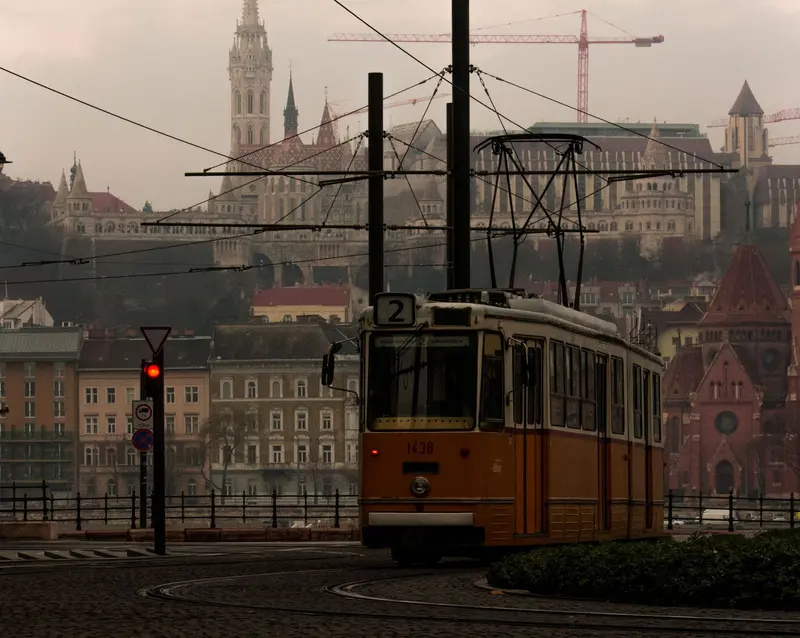
Photo by Misa Stoffel on Pexels
City trip · Hungary
Budapest in four days
by Felix Gillen
- 5 Days / 4 Nights
Four days on both banks of the Danube: on arrival day Parliament, the riverbank and the Basilica in Pest, then Castle Hill, Gellért Hill and the Ottoman Rudas Bath in Buda, on the third day the market hall, the Jewish Quarter, Andrássy út and the Széchenyi Bath, and finally Szentendre on the Danube Bend and Óbuda. Pest is flat and laid out in a grid, Buda is hilly; the metro, trams and the HÉV suburban railway link them, and you walk the rest. You eat in kifőzdék, in the bistro by the market hall and in the old inn where the writer Krúdy used to sit.
At a glance
- Duration
- 5 Days / 4 Nights
- Stops
- 1
- Arrival
- Train · Budapest-Keleti
- Best Time to Go
- April to June and September to October: pleasantly warm, so the outdoor pools are a pleasure rather than an escape from the heat. July and August are often above 30 degrees and crowded
More on when to go
In Advent there are Christmas markets on Vörösmarty tér and by the Basilica, and even in winter the locals bathe outdoors in the warm thermal water.
1 stop
Why This Route?
Budapest rewards anyone who does more than stand on the Fisherman's Bastion. The route puts the busy places in the early hours, adds the domed bath the locals use to the famous one, and takes you to districts like Óbuda where hardly any tour bus goes. Each day has one bank of the river and one theme, so you spend little time going back and forth.
Hidden Gems
- Before 9 a.m. even the upper towers of the Fisherman's Bastion are free, and you share the view with joggers
- On Friday and Saturday nights you can bathe in the Rudas Bath from 10 p.m. to 3 a.m., tickets online only
- On Sundays from 9 a.m. to 2 p.m. the courtyard of the ruin bar Szimpla Kert becomes a farmers' market
Getting there and back
Round trip, returning to where you started
- Arrival
- Train · Budapest-KeletiThe Railjet takes about two and three quarter hours from Vienna Hbf to Budapest-Keleti; from Munich there are only a few direct trains a day, taking just over seven hours, and the EuroNight runs overnight from Munich. From Keleti, metro line M2 reaches Deák tér in five minutes and continues to Parliament (Kossuth tér), while the M4 runs into the city centre towards Fővám tér.
- Departure
- Train · Budapest-KeletiBack from Budapest-Keleti. Railjets to Vienna run throughout the day, direct trains to Munich only a few times; reserve a seat early, as trains are full on Fridays and Sundays. From Margaret Island, trams 4 or 6 and the M2 get you to the station in about 25 minutes.
Day by day
Day 1: Lipótváros: Parliament, Danube bank and Basilica
- RosensteinFive minutes from Keleti station: family-run Jewish-Hungarian cooking with an affordable lunch menu on weekdays. Closed on Sundays.
- ParliamentTake the M2 straight to Kossuth tér. Visits only on a guided tour with timed tickets from Parliament's website; EU citizens pay less than other visitors, so bring ID.
- Shoes on the Danube BankTen minutes south along the river. The memorial by Can Togay and Gyula Pauer (2005) remembers the people murdered here on the Danube bank by Arrow Cross militiamen in 1944/45, most of them Jews. People leave stones or candles.
- St. Stephen's BasilicaIn the late afternoon, up to the dome gallery with a ticket to see Castle Hill in the evening light.
- Kispiac BisztróFive minutes to Hold utca: a small bistro with Hungarian cooking in the market hall building; the room is cramped.
- Tram 2 along the DanubeAfter dinner, ride line 2 south along the Pest bank from Kossuth tér: Parliament, the castle and the Chain Bridge are lit up, and a normal ticket is all you need. Get off at Fővám tér and walk back.
Day 2: Castle Hill, Gellért Hill and Rudas Bath
- Chain BridgeWalk across the bridge to Buda early. The funicular at Clark Ádám tér is expensive and has queues; bus 16 goes up from there on a normal ticket, and the stairs take 15 minutes.
- Fisherman's BastionBefore 9 a.m. the upper towers are free too and the terraces nearly empty; after that only the upper walkway charges admission.
- Matthias ChurchInside with a ticket; no sightseeing during mass. The colourful diamond-patterned roof looks best from the bastion.
- Buda CastleThrough the lanes of the Castle District to the palace. The terraces are free; inside, the National Gallery shows Hungarian painting.
- Déryné BisztróDown the west side to Krisztina tér, about 15 minutes: a bistro with its own bakery where people from Buda have lunch.
- Rudas Bath (Rudas Gyógyfürdő)Walk along the foot of Castle Hill to the Danube, about 20 minutes. Here you share the Ottoman domed pool with locals rather than tour groups; an online ticket saves queuing.
- Citadel and Liberty StatueFrom the bath, half an hour up the paths on Gellért Hill, in time for sunset. The Citadel reopened in April 2026 after renovation.
Day 3: Market hall, Jewish Quarter and City Park
- Great Market Hall (Nagy Vásárcsarnok)On a weekday morning, when locals shop: paprika, salami and sausage on the ground floor, pickles in the basement. Closed on Sundays, and many stalls shut on Saturday afternoons.
- Great Synagogue (Dohány Synagogue)A 15-minute walk along Múzeum körút. Closed on Saturdays; in the winter months open Sun–Thu 10 a.m.–4 p.m. and Fri 10 a.m.–2 p.m., with the ticket office closing an hour earlier; cover shoulders and knees.
- Kazinczy utcaThrough the street of the old Jewish Quarter with the Orthodox synagogue, back courtyards and small workshops; it is quiet here in the morning.
- Frici Papa KifőzdéjeLunch at the kifőzde on Király utca: főzelék vegetable stews, roasts and homemade cake, with a menu that changes daily; Mon–Sat 11 a.m.–10 p.m.
- Andrássy út and Metro M1Walk to Oktogon, then take the Földalatti, the little yellow underground line from 1896, beneath the boulevard to Heroes' Square.
- Heroes' SquareA short walk across the square with the Millennium Monument, then into City Park.
- Széchenyi Thermal BathInto the warm outdoor pools in the late afternoon, even in winter. Mon–Fri from 7 a.m., Sat and Sun from 8 a.m., until 8 p.m.; book online, weekends are busy.
- Szimpla KertBack on the M1 to District VII and the city's first ruin bar. Come early in the evening; later it gets crowded and loud.
Day 4: Szentendre, Óbuda and departure
- SzentendreFrom Batthyány tér on the HÉV H5 suburban train in about 40 minutes. The Budapest pass is only valid as far as Békásmegyer; for the rest you need a supplementary ticket from the machine or the MÁV app. In the morning the lanes with the Serbian churches are still quiet.
- Kéhli VendéglőOn the way back, get off at the HÉV stop Árpád híd and walk five minutes to the old inn where Gyula Krúdy was a regular. Goulash soup, stuffed cabbage, goose leg with red cabbage; daily from noon.
- Margaret Island (Margitsziget)Across Árpád Bridge onto the almost car-free island: walk from the northern tip southwards, past the running track, the rose garden and the water tower, about an hour. This is where locals spend their Sundays.
- To Keleti stationFrom Margaret Bridge take tram 4 or 6 to Blaha Lujza tér and the M2 to Keleti; allow an hour before your train.
Itinerary
Budapest
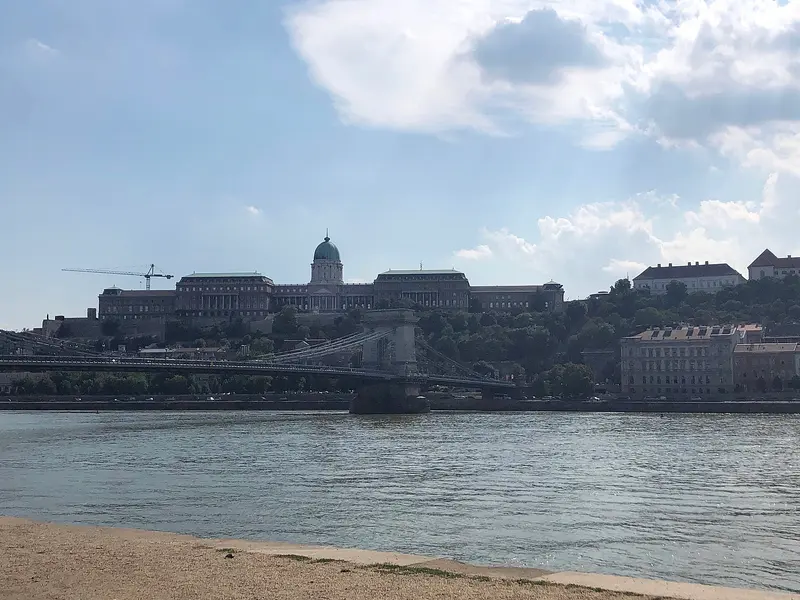
Hungary's capital was formed in 1873 from the cities of Buda, Pest, and Óbuda and has around 1.7 million inhabitants. On the hilly Buda side, Buda Castle, Fishermen's Bastion, and Matthias Church perch above the Danube, while on the flat Pest bank opposite stand the Parliament and St. Stephen's Basilica. The Danube Embankment, Castle District, and Andrássy Avenue are UNESCO World Heritage sites; some 125 thermal springs feed the famous baths.
Stay in District V or VI between the Basilica and Oktogon and you can walk almost everywhere; District VII with the ruin bars is lively but loud at night. Locals use travel passes from the BudapestGO app; a 72-hour pass covers metro, tram, bus and HÉV within the city limits, and paper tickets must be validated.
9 Sights
6 Restaurants
Baths, UNESCO Sites and Ruin Bars
Thermal BathsAround 125 thermal springs feed the city's baths, Budapest is considered one of Europe's most significant spa cities. The best known is the Széchenyi Bath in the City Park. The Gellért Bath has been closed since October 2025 for a major renovation lasting two and a half to three years.World Heritage on the DanubeThe Danube Embankments, the Castle District, and since 2002 also Andrássy út with the Millennium Underground, are part of the UNESCO World Heritage. Many buildings, such as the Millennium Monument on Heroes' Square, were built for the millennium celebration in 1896.NightlifeIn the former Jewish Quarter around the Dohány Synagogue, the ruin bars (romkocsmák) characterize the city's nightlife.
Plan this route as your trip
All stops, trains and nights go into your trip planner. You adjust dates and places to stay afterwards.
This route is a suggestion from our research. Please check timetables, times in port, opening hours and prices before you book – what your tour operator or carrier says is what counts.
Fernweh is a free travel guide and trip planner: routes researched by people, taken over in one click, used day by day on the road. More about Fernweh
1 stop
Route Summary
Duration5 Days
Stops1 Places
TypeCulture