Fernweh: Home
ExploreGuideDestinationsMy tripsMy trip
de|en
All Places & RegionsRound tripsNight trains in EuropeAll highlightsAbout FernwehFAQPrivacy PolicyImprint
Download on the App StoreGet it on Google Play
ExploreGuideDestinationsMy tripsMy trip
    • Places in the region
    • Culture
    • Getting around
    • Nearby
    Donauknie

    Szilas / Wikimedia Commons / public domain

    Hungary

    Donauknie

    Region

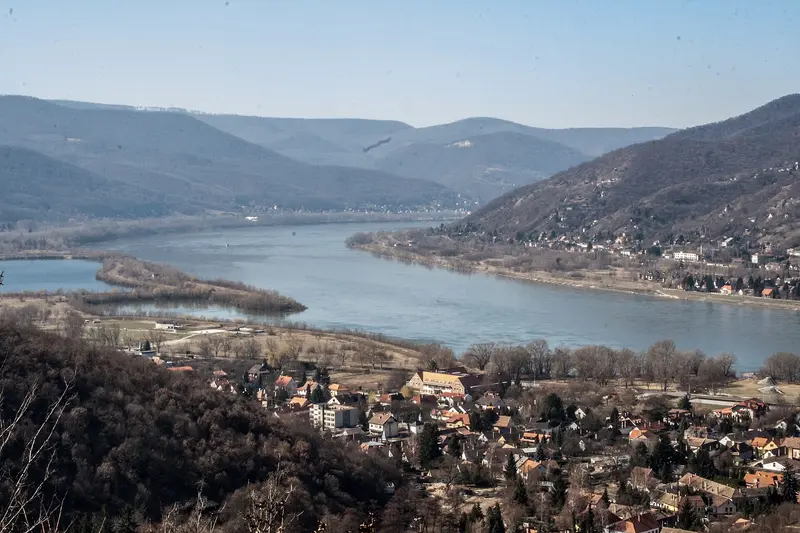
    Nördlich von Budapest ändert die Donau zwischen Esztergom und Vác ihre Richtung und biegt in einer engen Schleife nach Süden ab, wohl entlang des Randes einer erodierten Vulkancaldera.

    by Felix Gillen

    1. Home
    2. Destinations
    3. Hungary
    4. Donauknie
    Nördlich von Budapest ändert die Donau zwischen Esztergom und Vác ihre Richtung und biegt in einer engen Schleife nach Süden ab, wohl entlang des Randes einer erodierten Vulkancaldera. Das Donauknie (Dunakanyar) mit seinen bewaldeten Hängen und Kleinstädten ist das klassische Tagesausflugsziel von Budapest aus.Drei Orte prägen die Strecke: Szentendre, das Künstlerstädtchen mit serbisch geprägter Altstadt, erreichst du mit der Vorortbahn HÉV H5 ab Batthyány tér. In Visegrád thronen Königspalast und Zitadelle über dem Fluss. In Esztergom, dem Sitz des Erzbischofs, steht die Basilika, die größte Kirche Ungarns, direkt über der Donau mit Blick hinüber in die Slowakei.
    Hungary travel guideRound trips in HungaryPlan a trip with Donauknie

    Contents

    • Places in the region
    • Culture
    • Getting around
    • Nearby

    Sights in Donauknie

    Discover the most important sights and attractions

    Church

    Basilica of Esztergom

    Hungary's largest church rises on Castle Hill above the Danube: 118 meters long, its dome 71.5 meters high inside. The foundation stone was laid in 1822, the upper church consecrated in 1856, and József Hild completed the construction in 1869. Inside, the Bakócz Chapel (1506 to 1507) of red marble is preserved, considered Hungary's most valuable Renaissance work; in the crypt rest the Archbishops of Esztergom.
    Open in Google Maps
    Attraction

    Citadel Visegrád

    King Béla IV had the citadel built in the 1240s and 1250s after the Mongols had destroyed the older fortification. From the 14th century until 1526, the royal regalia were kept here. From the walls, you look out over the narrow bend of the Danube Bend. Down by the river lie the remains of the Royal Palace, where Charles I received the Kings of Bohemia and Poland for a summit meeting in 1335 and which Matthias Corvinus had rebuilt in the Renaissance style from 1477 to 1484.
    Open in Google Maps
    Museum

    Open-air Museum Skanzen (Szentendre)

    Founded in 1967, the Hungarian Open-Air Museum on the outskirts of Szentendre showcases village and small-town life from the late 18th to the mid-20th century in reconstructed farmsteads and workshops. Its own museum railway, opened in 2009, connects the expansive areas.
    Open in Google Maps

    Museums, Kings and Church Princes

    SzentendreSzentendre is known for the Margit Kovács Ceramic Museum and the Hungarian Open-Air Museum Skanzen.Visegrád and EsztergomIn Visegrád are the Royal Palace and the Citadel with an exhibition on the Holy Crown. Esztergom Basilica is Hungary's largest church; admission is free, but climbing to the dome costs extra. In Esztergom, Restaurant 42, which will be awarded a Michelin star in 2025, offers fine dining.

    Arrival and Tips

    SzentendreBy suburban train HÉV H5 from Batthyány tér in approx. 40 minutes; off-peak, every 20 minutes. The BKV ticket is valid to Békásmegyer; an extension ticket is required beyond that.Buses to Skanzen take approx. 12 minutes; the open-air museum is open from late March to late October in 2026.Visegrád and EsztergomEsztergom: Train from Budapest-Nyugati, approx. 65 min, every 30 minutes.Visegrád: Bus 880 from Újpest-Városkapu (approx. 74 min) or train to Nagymaros-Visegrád and ferry across the Danube.Excursion boats from Budapest run only in summer; in 2026, they were suspended early due to low water.

    Nearby

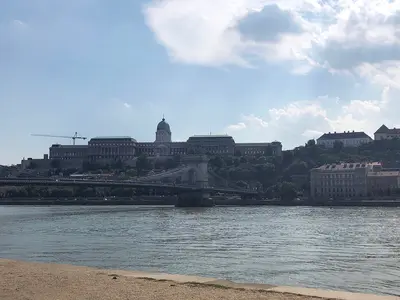
    Buda and Castle Hill

    Buda and Castle Hill

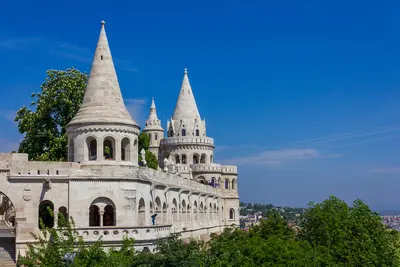
    The hilly west bank of the Danube is the oldest part of Budapest. On Castle Hill lie Buda Castle, Matthias Church, and Fisherman's Bastion, the core of the UNESCO World Heritage site. South of it rises Gellért Hill with the Citadel, re-opening in 2026, and the Cave Church; from its summit, you overlook the Danube with its bridges.

    Perituss·CC0

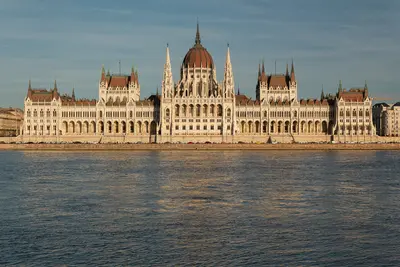
    Budapest

    Budapest

    Hungary's capital was formed in 1873 from the cities of Buda, Pest, and Óbuda and has around 1.7 million inhabitants. On the hilly Buda side, Buda Castle, Fishermen's Bastion, and Matthias Church perch above the Danube, while on the flat Pest bank opposite stand the Parliament and St. Stephen's Basilica. The Danube Embankment, Castle District, and Andrássy Avenue are UNESCO World Heritage sites; some 125 thermal springs feed the famous baths.

    Pythagoreio·CC BY-SA 4.0

    Pest

    Pest

    The city's flat eastern bank is its business and entertainment hub. By the Danube stand the Parliament and the 'Shoes on the Danube Bank' memorial; in the center are St. Stephen's Basilica and the Great Market Hall. In the former Jewish Quarter around the Dohány Synagogue are many ruin bars; Andrássy út leads to Heroes' Square and City Park with the Széchenyi Bath.

    Lynx1211·CC BY-SA 4.0

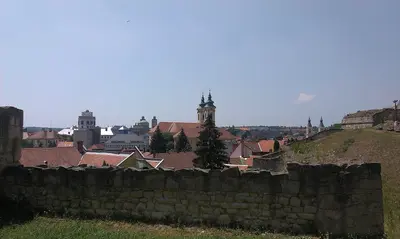
    Eger

    Eger

    Eger is a Baroque episcopal city in Northern Hungary, nestled between the Mátra and Bükk Mountains, famous for its castle, an Ottoman-era minaret, and the red wine Egri Bikavér (Bull's Blood of Eger). It's a two-hour Intercity train ride from Budapest.In 1552, castle captain István Dobó defended the castle with a small garrison against the advancing Ottoman army. Despite this, the city fell in 1596 and remained under Ottoman rule for 91 years until its liberation in December 1687. Dating from this period is the approximately 40-meter-high minaret, which is considered Europe's northernmost Turkish minaret and can be climbed.On the southern edge of the city lies the Szépasszony-völgy (Valley of the Beautiful Woman) with numerous wine cellars carved into the hillside, where you can sample Egri Bikavér directly from the winemaker. In summer, a quaint tourist train runs from Dobó Square into the valley.
    Armagan·CC BY-SA 4.0

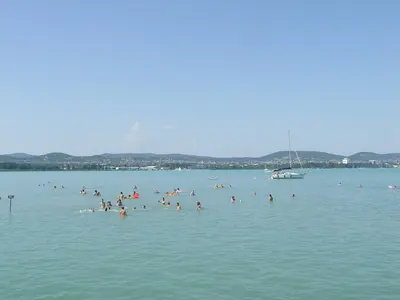
    Balaton

    Balaton

    The Balaton (Plattensee), at around 600 square kilometers and 78 kilometers long, is Central Europe's largest lake and Hungary's most important summer destination. As it's only just over three meters deep on average, it warms to around 25 °C in summer.The two shores differ significantly: The flat southern shore with Siófok is characterized by resorts and lidos; the hilly northern shore, with Balatonfüred, the Tihany peninsula, and the volcanic cones around Badacsony, by vineyards and old village centers. At the western end are Keszthely with Festetics Palace and, around eight kilometers away, the thermal lake of Hévíz.

    Christo·CC BY-SA 4.0

    Your next steps

    Donauknie is in Hungary. Ways to carry on from here.

    • More in Hungary

      Highlights, areas, routes and the best time to travel for all of Hungary.

      Hungary travel guide
    • Round trips in Hungary

      Ready-made routes through Hungary, with stops, nights and a map.

      See the routes
    • Plan a trip with Donauknie

      The Guide asks about season, length and who is coming, and suggests a trip with Donauknie.

      Plan the trip

    Sources & method

    • Photos: Wikimedia Commons. Each photo carries its credit.
    • Place data such as addresses and ratings comes from Google Maps.
    • The content is based on web research from public, traceable sources. How the content is made · The role of AI