Fernweh: Home
ExploreGuideDestinationsMy tripsMy trip
de|en
All Places & RegionsRound tripsNight trains in EuropeAll highlightsAbout FernwehFAQPrivacy PolicyImprint
Download on the App StoreGet it on Google Play
ExploreGuideDestinationsMy tripsMy trip
    • Neighborhoods & highlights
    • Recommendations
    • Eat & drink
    • Culture
    • Getting around
    • Accommodation
    • Plan trip
    • Nearby
    Metz

    Photo by Dimitry Anikin on Pexels

    France

    Metz

    CityCultureArchitecture

    Metz lies at the confluence of the Moselle and Seille, near the tri-border area with Germany and Luxembourg, and is reachable by TGV in around 1 hour 20 minutes from Paris.

    by Felix Gillen

    1. Home
    2. Destinations
    3. France
    4. Lorraine (Lorraine)
    5. Metz
    Metz lies at the confluence of the Moselle and Seille, near the tri-border area with Germany and Luxembourg, and is reachable by TGV in around 1 hour 20 minutes from Paris. The Gallo-Roman city was capital of Lotharingia from 843, passed to France in 1552, and was part of the German Empire from 1871-1918. The Imperial Quarter, with its monumental train station, dates from this era.The landmark is the Gothic Cathedral of Saint-Étienne, with around 6,500 m² of stained-glass windows, including those by Marc Chagall. The Centre Pompidou-Metz, with its curved wooden roof, offers a modern contrast.
    France travel guideRound trips in FrancePlan a trip with Metz

    Contents

    • Neighborhoods & highlights
    • Recommendations
    • Eat & drink
    • Culture
    • Getting around
    • Accommodation
    • Nearby

    Sights in Metz

    Discover the most important sights and attractions

    Cathedral Saint-Étienne

    “Metz (Moselle) - Cathédrale Saint-Étienne (32283913217)” by Patrick from Compiègne, France / Wikimedia Commons / CC BY-SA 2.0, mod.

    Church

    1Cathedral Saint-Étienne

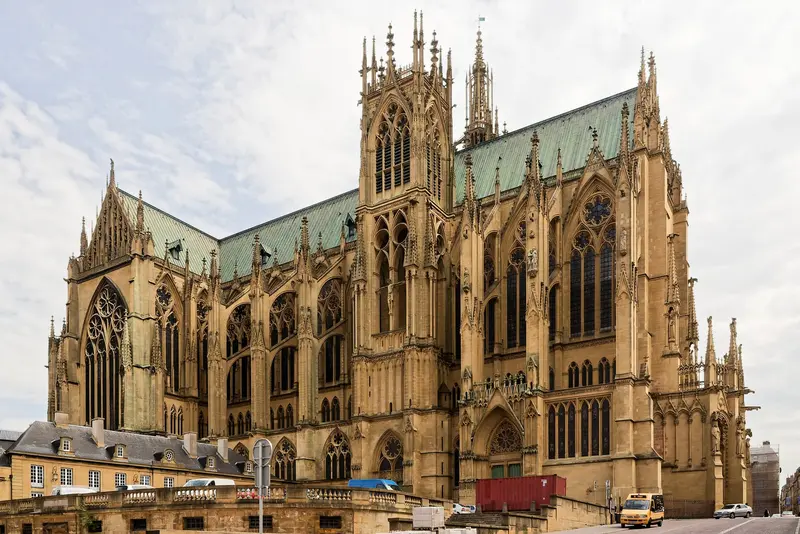
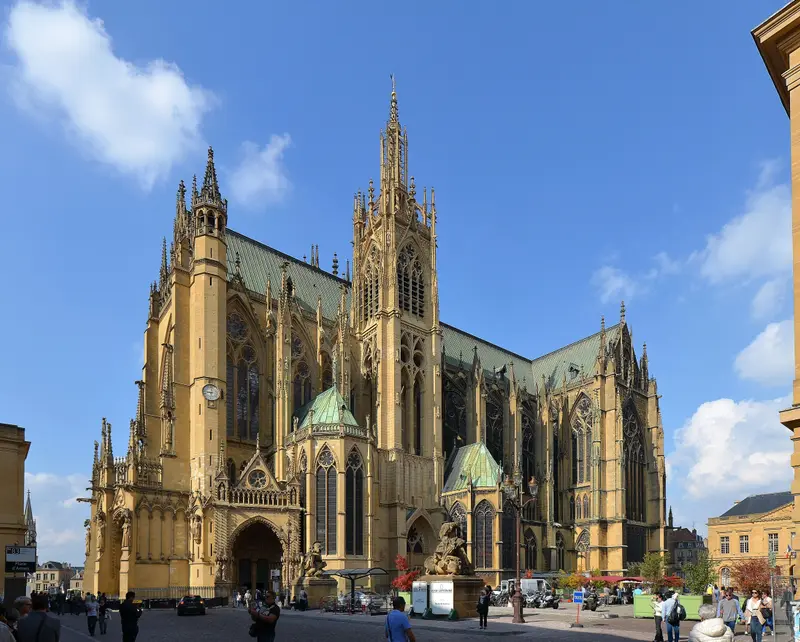
    The Gothic cathedral was begun around 1240 and largely completed by 1525. With approximately 6,500 m² of stained-glass windows, it boasts the largest glazed area of all cathedrals in France, including windows by Marc Chagall (designed from 1958, fully installed in 1970). The vault reaches over 41 m in height. Admission is free.
    Open in Google Maps
    Museum

    2Centre Pompidou-Metz

    The annex of Paris' Centre Pompidou opened on May 12, 2010; Shigeru Ban, Jean de Gastines, and Philip Gumuchdjian designed the building with its curved roof made of approximately 16 km of glued laminated timber beams and a 77-meter-high mast, a nod to the Parisian institution's founding year of 1977. In winter 2026/27, it will be open daily except Tuesdays from 10 am to 6 pm, with free admission for visitors under 26.
    Open in Google Maps
    Temple Neuf

    PatrikRoy / Wikimedia Commons / CC BY-SA 4.0, mod.

    Church

    3Temple Neuf

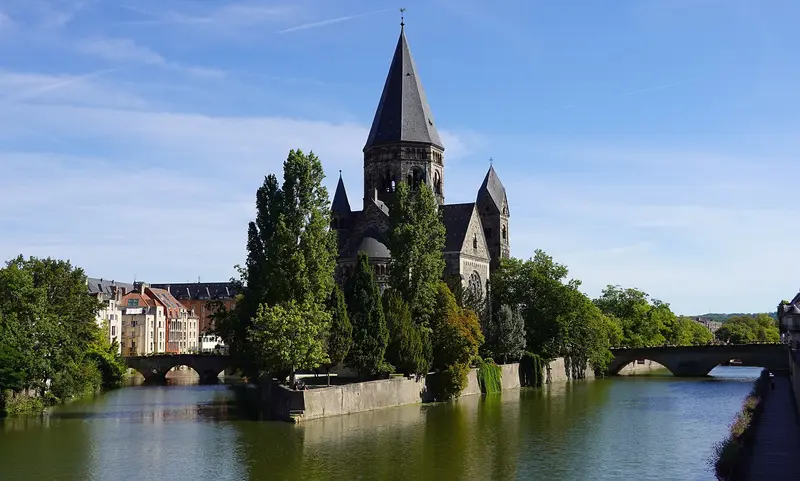
    The Neo-Romanesque Protestant church on the Moselle island of Petit-Saulcy was consecrated on May 14, 1904, in the presence of Wilhelm II; its main tower is 55 m high. Behind it lies the small Jardin d'Amour by the water.
    Open in Google Maps
    Point of Interest

    4Metz-Ville Station and Imperial Quarter

    The Neo-Romanesque station, built from 1905 to 1908 according to plans by Jürgen Kröger, is over 300 m long and features a 40 m high clock tower; it has been a protected monument since 1975. It marks the beginning of the German-era Kaiserviertel, featuring the former main post office from 1911 and residential villas along Rue Gambetta and Avenue Foch.
    Open in Google Maps
    Gate of the Germans

    Unknown authorUnknown author / Wikimedia Commons / public domain

    Historic Landmark

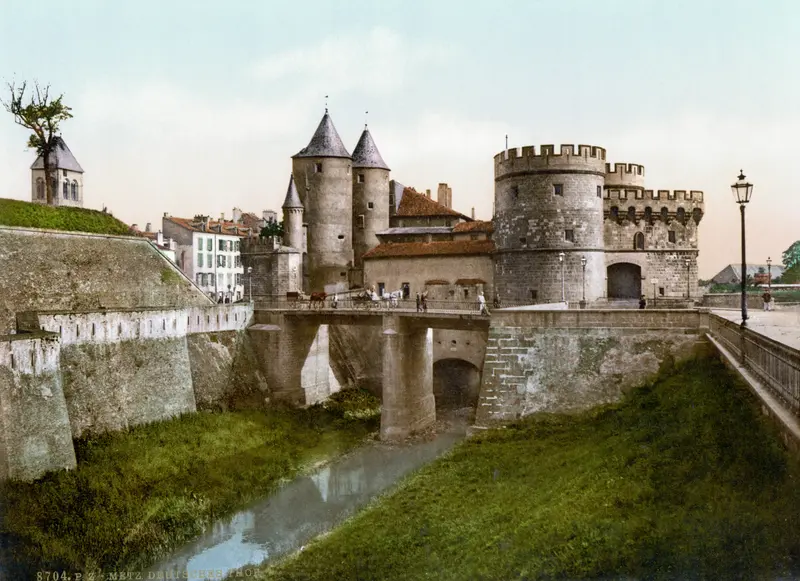
    5Gate of the Germans

    The German Gate, dating from 1230, augmented in 1445 with towers and a fortified bridge over the Seille. Sole surviving of the 17 medieval city gates, it is, since 2013, a cultural venue for exhibitions; Open Nov 2 - Dec 24, 2026, Tue-Sun, 2-6 PM, free admission.
    Open in Google Maps

    Restaurants in Metz

    The Land Between France and Germany

    Lotharingia and Imperial CityMetz was an important Gallo-Roman city and from 843, the capital of Lotharingia. In 1552, it became part of France. It holds the "Ville d'art et d'histoire" label and is on France's tentative list for UNESCO World Heritage.The German HeritageFrom 1871 to 1918, Metz belonged to the German Empire. During this period, the Imperial Quarter was built, featuring the train station (1908), the former main post office (1911), and the Temple Neuf (1904), whose imposing architecture clearly stands out from the Old Town.

    Getting there and around

    Getting ThereBy TGV from Paris-Est in approx. 1 hour 20 minutes to Metz-Ville.Getting AroundThe Mettis A and B express bus lines connect the train station with the city centre and the outskirts.The Centre Pompidou-Metz is right behind the train station and has a 24-hour car park with 700 spaces.Paid parking is available at the Market Hall and the Cathedral, with an underground car park at Centre Saint-Jacques.

    Accommodations in Metz

    Find perfect stay in Metz

    Booking.com* (Affiliate link)
    Search Hotels
    Agoda* (Affiliate link)
    Search Hotels
    Airbnb
    Vacation Rentals

    * Affiliate link: if you book through it, we earn a small commission. The price stays the same for you.

    Campgrounds in Metz

    Find perfect campground in Metz

    Search via Google Maps
    Campgrounds nearby (15km)
    Camping.info
    Find Campgrounds
    Park4Night
    RV Parks & Camping

    Plan your trip to Metz

    Save places, build a route and plan your city trip, all in one place.

    1. 1
      Sunrise over alpine peaks and a sea of clouds
      1234

      Round trip

      12 days · 4 stops

      Saved

      Pick a route

      Pick a ready-made one or save places and plan your own.

      Open bookmarks
    2. 2

      Trip to Metz

      Live
      • 1Cathedral Saint-Étienne3 days
      • 2Centre Pompidou-Metz4 days
      • 3Temple Neuf5 days
      Budget

      Plan your trip

      The planner sorts stops, days and budget. Plan together in real time.

      Start trip planning
    3. 3
      9:41 No signal
      Metz
      Available offline

      Photo by Dimitry Anikin on Pexels

      Use it on the road

      Download the guide to your phone and use it on site, even offline.

    Nearby

    Lorraine (Lorraine)

    Lorraine (Lorraine)

    Lorraine is the historic region in northeastern France, the only one in the country that borders three neighboring states: Germany, Belgium, and Luxembourg. Since 2016, it has been part of the larger Grand Est region and comprises the départements of Meurthe-et-Moselle, Meuse, Moselle, and Vosges.History shapes its character: The duchy fell to the Polish ex-king Stanislaus Leszczyński in 1738 and to France in 1766, while most of the present-day Moselle département belonged to the German Empire from 1871 to 1918. Here you will find the baroque Place Stanislas in Nancy, the Art Nouveau of the École de Nancy, the Centre Pompidou-Metz, the battlefields of Verdun, and the High Vosges.

    Nicolas Cornet·CC BY-SA 4.0

    Nancy

    Nancy

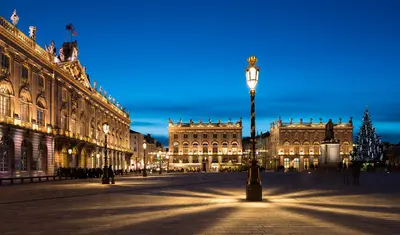
    Nancy, the former capital of the Duchy of Lorraine, is located on the Meurthe, about an hour and a half by TGV from Paris. The city unites two periods of splendor: the 18th century, when Stanislas Leszczynski had the Place Stanislas built, and the period around 1900, when Émile Gallé, Louis Majorelle and the artists of the École de Nancy made the city a center of Art Nouveau.Together with the Place de la Carrière and the Place d'Alliance, the Place Stanislas has been a UNESCO World Heritage site since 1983. For Art Nouveau, the Musée de l'École de Nancy and the Villa Majorelle are worth visiting; for glass art, the Daum Collection in the Musée des Beaux-Arts.

    MartinD·CC BY-SA 4.0

    Trier

    Trier

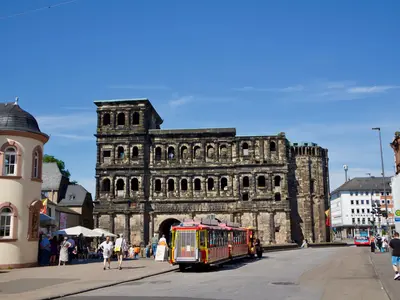
    Trier on the Moselle, near the Luxembourg border, is one of Germany's oldest cities. Augustus founded it no later than 16 BC as Augusta Treverorum, and in late antiquity, it was one of the Roman Empire's capitals. Nowhere north of the Alps are so many Roman structures preserved.Nine monuments, including Porta Nigra, Imperial Baths, Amphitheater, Basilica of Constantine, Cathedral, and Church of Our Lady, have formed a UNESCO World Heritage site since 1986. Other attractions include the Main Market with its burgher houses and Karl Marx's birthplace. The city, with around 112,000 inhabitants, is compact; most sights are reachable on foot from the central station.

    Gintare K.·Pexels

    Province of Luxembourg

    Province of Luxembourg

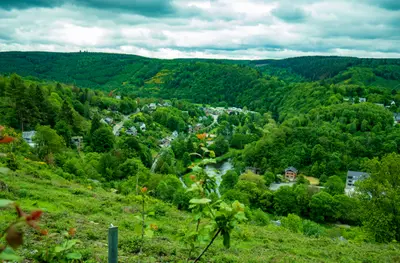
    Belgian Luxembourg in the southeast is the country's largest and most sparsely populated province, a land of forests, river valleys, and villages in the Ardennes. You come for hiking and paddling, for the memorial sites of the Battle of the Bulge in Bastogne, and for Trappist beer from Orval.To the north, the Ourthe winds around La Roche-en-Ardenne and Durbuy; to the west lie Saint-Hubert, the book village of Redu, and Bouillon on the Semois. Further south, in the Gaume region, it gets milder, and the border with France and Luxembourg is close.

    Casper Menting·Unsplash

    Bernkastel-Kues

    Bernkastel-Kues

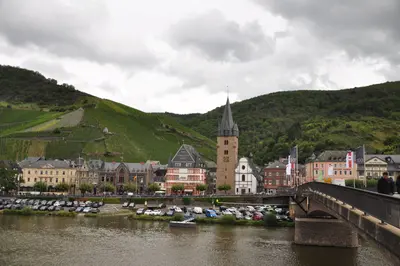
    Bernkastel-Kues on the Middle Moselle consists of two districts on both sides of the river. In Bernkastel, half-timbered houses frame the medieval market square with the town hall from 1608 and St. Michael's Fountain from 1606; right next to it stands the narrow Spitzhäuschen from 1416. Above the town lies the ruin of Landshut Castle, once the summer residence of the Archbishops of Trier.Directly above the old town grows the Bernkasteler Doctor, one of the world's most expensive Riesling vineyards. In Kues, the Cusanusstift with its Gothic chapel, wine museum, and library commemorates the scholar Nikolaus von Kues. There is no train station; you arrive by bus from Wittlich, by boat, or via the Moselle Cycle Path.

    Оля Дмитрів·Pexels

    Your next steps

    Metz is in France. Ways to carry on from here.

    • More in France

      Highlights, areas, routes and the best time to travel for all of France.

      France travel guide
    • Round trips in France

      Ready-made routes through France, with stops, nights and a map.

      See the routes

    Sources & method

    • Photos: Wikimedia Commons, Pexels. Each photo carries its credit.
    • Place data such as addresses and ratings comes from Google Maps.
    • The content is based on web research from public, traceable sources. How the content is made · The role of AI