ExploreTravel GuidesPlan a trip
    de|en
    All Places & RegionsAbout FernwehFAQPrivacy PolicyImprint
    ExploreTravel GuidesPlan a trip
    • Neighborhoods & highlights
    • Eat & drink
    • Culture
    • Nightlife
    • Getting around
    • Accommodation
    • Plan trip
    • Nearby
    Erfurt

    Germany

    Erfurt

    CityUNESCO

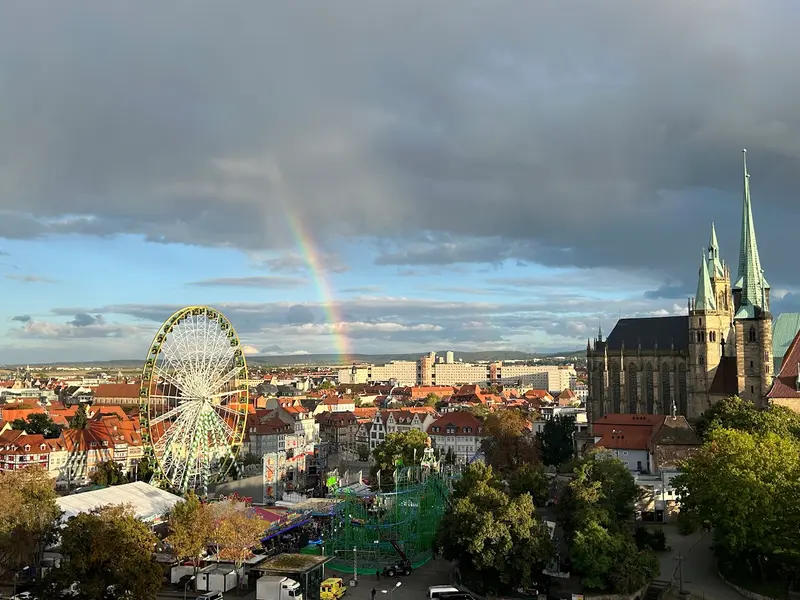
    Erfurt is located in the wide valley of the Gera and, with approximately 215,000 inhabitants, is the largest city and state capital of Thuringia.

    1. Home
    2. Destinations
    3. Germany
    4. Thuringia
    5. Erfurt
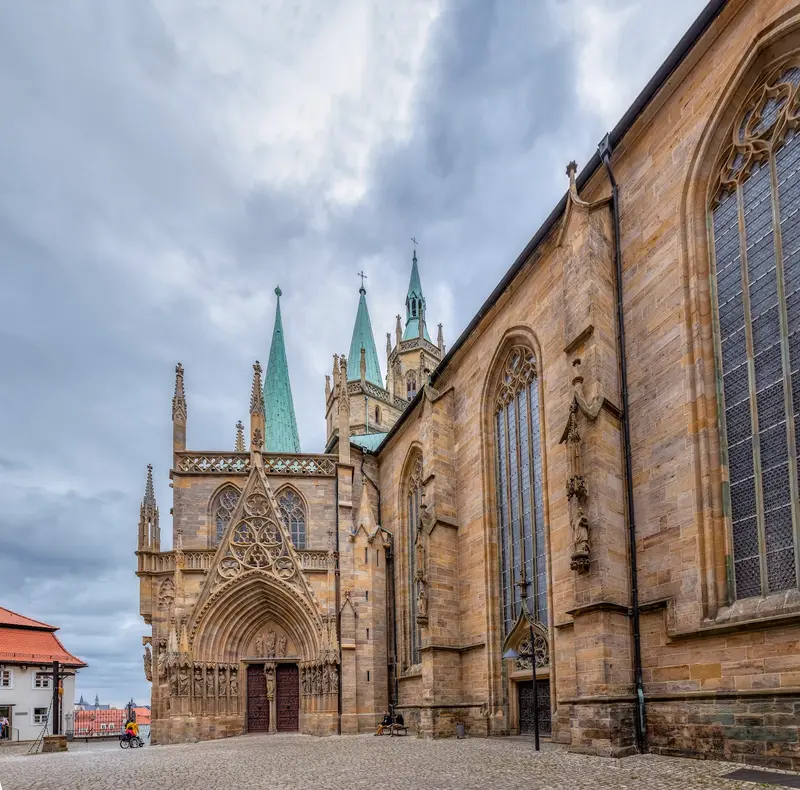
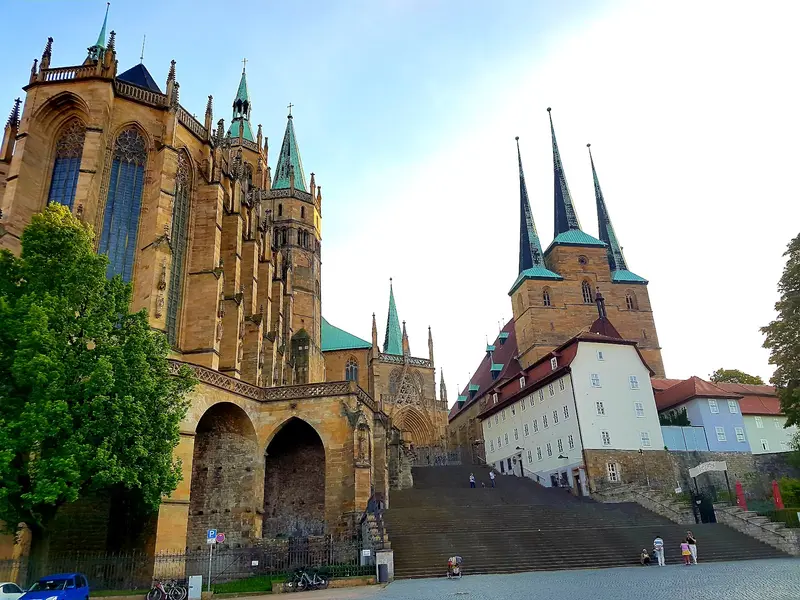
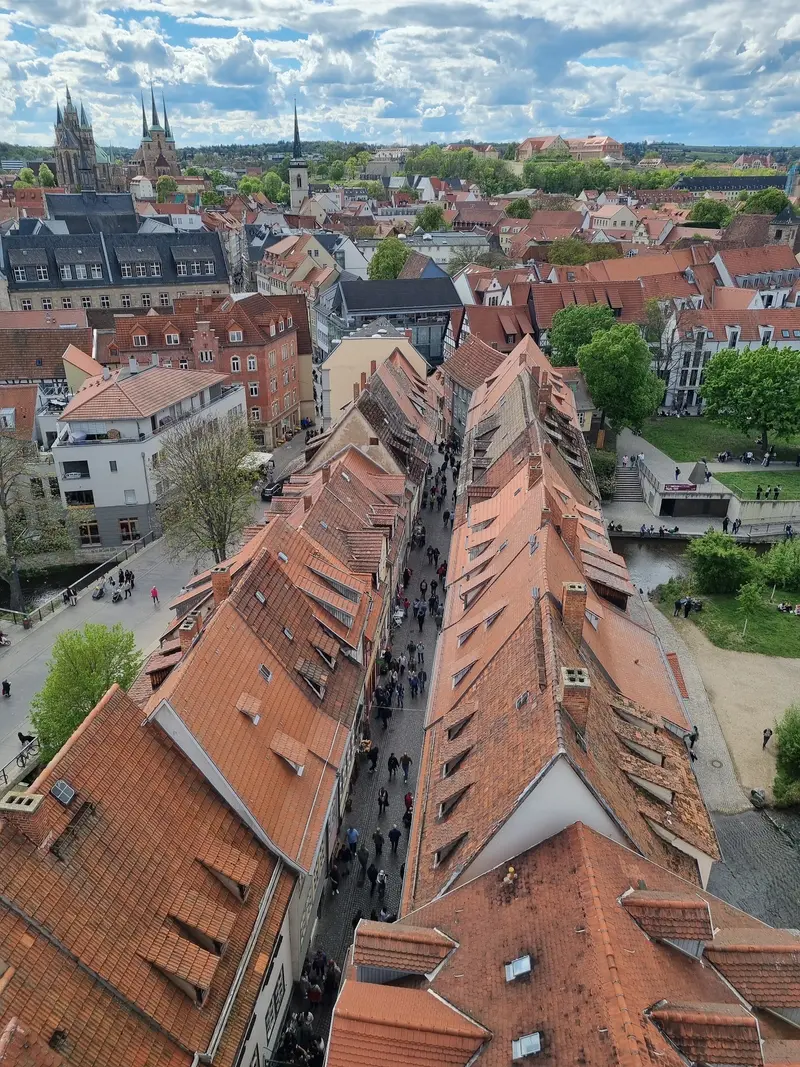
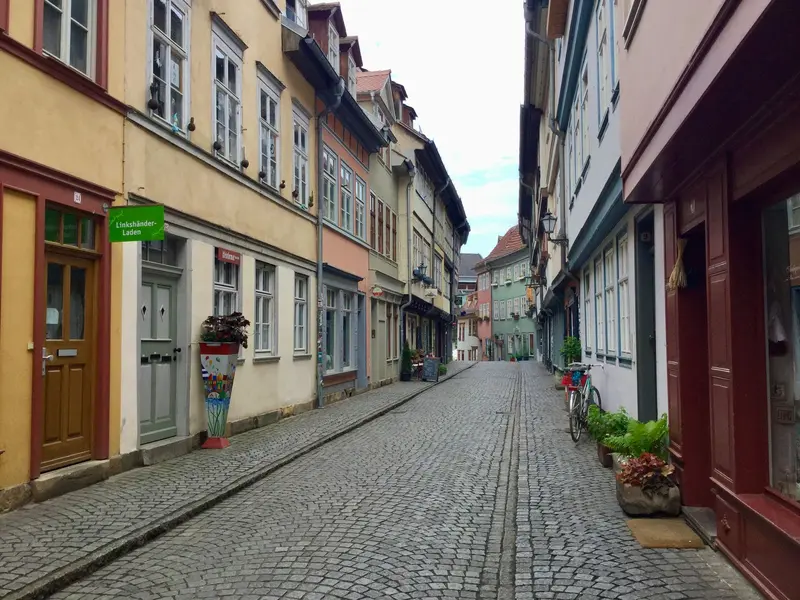
    Erfurt is located in the wide valley of the Gera and, with approximately 215,000 inhabitants, is the largest city and state capital of Thuringia. Landmarks include the ensemble of Mariendom and Severikirche on the Domberg, reachable via over 70 cathedral steps, and the Krämerbrücke, Europe's longest bridge continuously built with houses.Martin Luther studied here from 1501 to 1505. Since September 17, 2023, the city's Jewish-medieval heritage, with Alte Synagoge, Mikwe, and Steinernes Haus, has been part of the UNESCO World Heritage. Above the old town towers the baroque Petersberg Citadel.
    With around 215,000 inhabitants, Erfurt is Thuringia's largest city and its state capital. The city center is compact and best explored on foot; trams run on most lines at least every 10 minutes during the day. Highlights include the ensemble of the Dom and Severikirche, the inhabited Krämerbrücke, and the Jewish-medieval heritage, which has been a UNESCO World Heritage site since 2023. In the evenings, many are drawn to the small bars around Michaelisstraße near the Fischmarkt.

    Sights in Erfurt

    Discover the most important sights and attractions

    Mariendom
    Church

    1Mariendom

    In the central tower hangs the Gloriosa, cast in 1497, the world's largest freely swinging medieval bell. The stained glass cycle of the High Choir, dating from around 1370 to 1420, is among the largest of its kind in Germany; the 1329 choir stalls are largely original.
    Open in Google Maps
    Severi Church
    Church

    2Severi Church

    The church and cathedral share Cathedral Hill, together forming Erfurt's landmark. You reach both via the 70 Cathedral Steps. Its nave was rebuilt as early as the mid-14th century after a fire.
    Open in Google Maps
    Petersberg Citadel
    Attraction

    3Petersberg Citadel

    The Baroque Citadel, erected under Johann Philipp von Schönborn, rises northwest of the Domberg above the Old Town.
    Open in Google Maps
    Andreasstraße Memorial and Education Site
    Museum

    4Andreasstraße Memorial and Education Site

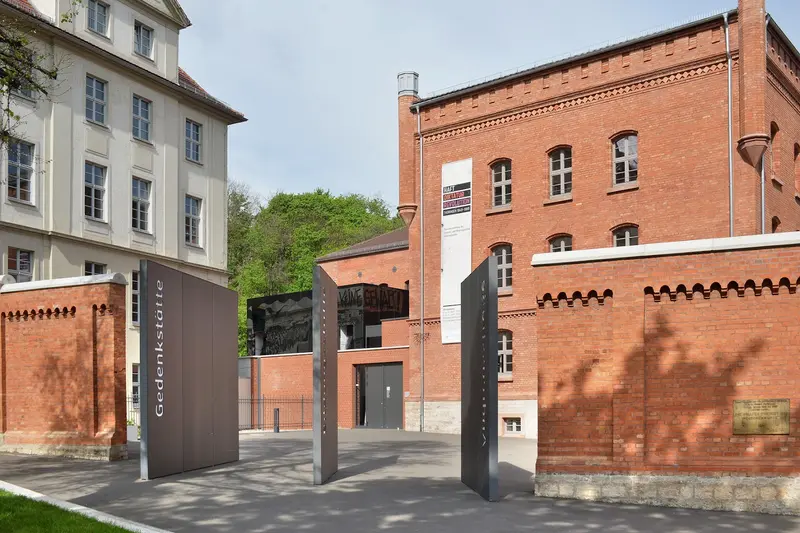
    The exhibitions focus on oppression and resistance under the SED dictatorship in Thuringia from 1949 to 1989.
    Open in Google Maps
    Krämerbrücke
    Historic Landmark

    5Krämerbrücke

    The 79-meter-long vaulted bridge from 1325 is Europe's longest continuously house-lined bridge. Today, 32 houses still stand on it.
    Open in Google Maps
    Old Synagogue
    Museum

    6Old Synagogue

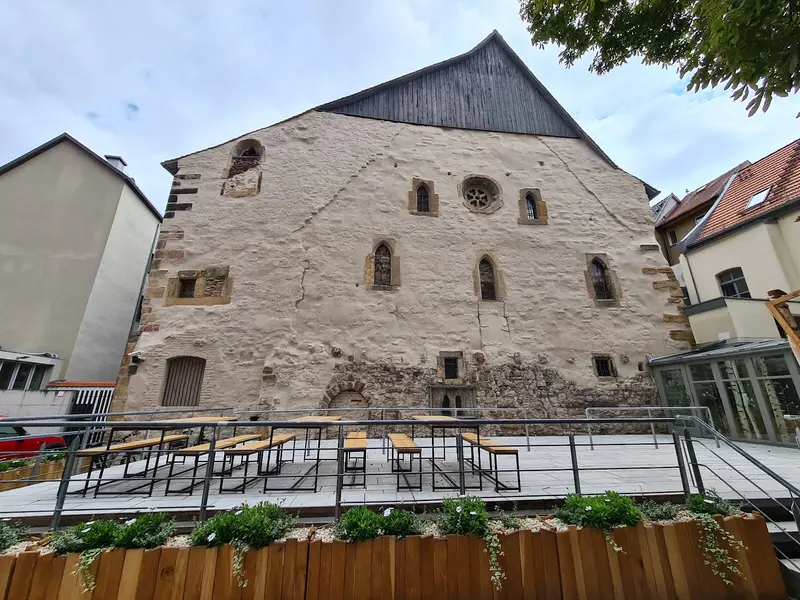
    The Old Synagogue, together with the Mikveh and Stone House, is part of Erfurt's Jewish-medieval heritage, which was inscribed on the UNESCO World Heritage List on September 17, 2023.
    Open in Google Maps

    Restaurants in Erfurt

    1

    Kromer's Restaurant and Vaulted Cellar

    Cozy restaurant with a shaded terrace and vaulted cellar, serving regional, European-influenced classics.
    Show on Google Maps
    2

    Ristorante Pavarotti

    Traditional Italian restaurant with courtyard, pizza, pasta, and regional specialities.
    Show on Google Maps
    3

    ChiChiMi

    Asian Fusion Restaurant on Marktstraße, between Domplatz and Fischmarkt.
    Show on Google Maps

    Churches, Luther and Jewish Heritage

    On Domberg, St. Mary's Cathedral and St. Severus Church stand side by side; the 1497-cast Gloriosa hangs in the cathedral's mid-tower. Martin Luther studied in Erfurt from 1501 to 1505.On September 17, 2023, the city's Jewish medieval heritage (Old Synagogue, Mikveh, Stone House) was added to the UNESCO World Heritage List. The Andreasstraße Memorial and Education Center recalls oppression and resistance in the SED dictatorship.

    Nightlife

    1

    Café Füchsen

    Cozy cafe and wine bar with a quiet terrace, evenings with wine and regional craft beer.
    Show on Google Maps
    2

    Espach

    Restaurant, cafe and bar by the river in a former lifeguard's house, with terrace and live music.
    Show on Google Maps
    3

    Hirsch Heinrich Summer Garden

    Beer garden with bar on Rubensstraße.
    Show on Google Maps

    On the go in Erfurt

    From the main train station, hourly ICE connections take you to Leipzig in about 45 minutes, to Berlin in approximately 1:45 to 2 hours, and to Frankfurt in around 2:10 hours. From the small Erfurt-Weimar Airport, tram line 4 takes about 25 minutes to reach the city center.The city center is easy to explore on foot. For longer journeys, use trams and buses; night buses run from the main train station after midnight.

    Accommodations in Erfurt

    Find perfect stay in Erfurt

    Booking.com* (Affiliate link)
    Search Hotels
    Agoda* (Affiliate link)
    Search Hotels
    Airbnb
    Vacation Rentals

    * Affiliate link: if you book through it, we earn a small commission. The price stays the same for you.

    Campgrounds in Erfurt

    Find perfect campground in Erfurt

    Search via Google Maps
    Campgrounds nearby (15km)
    Camping.info
    Find Campgrounds
    Park4Night
    RV Parks & Camping

    Plan your trip to Erfurt

    Save places, build a route and plan your city trip, all in one place.

    1. 1
      1234

      Round trip

      12 days · 4 stops

      Saved

      Pick a route

      Pick a ready-made one or save places and plan your own.

      Open bookmarks
    2. 2

      Trip to Erfurt

      Live
      • 1Mariendom3 days
      • 2Severi Church4 days
      • 3Petersberg Citadel5 days
      Budget

      Plan your trip

      The planner sorts stops, days and budget. Plan together in real time.

      Start trip planning
    3. 3
      9:41 No signal
      Available offline

      Use it on the road

      Download the guide to your phone and use it on site, even offline.

    Nearby

    Thuringia

    Thuringia

    Since 1897, Thuringia has borne the moniker "green heart of Germany," a name attributable to its rich forests. Its largest mountain range is the Thuringian Forest, through which the Rennsteig ridge trail runs. The state capital and largest city is Erfurt, featuring its Cathedral, St. Severus Church, and the Krämerbrücke.Culturally, Thuringia is known for Weimar Classicism: Duchess Anna Amalia and Duke Carl August attracted poets like Goethe to Weimar, where the Bauhaus was also founded in 1919. At Wartburg Castle near Eisenach, Martin Luther secretly worked on his Bible translation.
    Weimar

    Weimar

    Weimar lies on a bend of the Ilm and has around 66,000 inhabitants, yet hardly any city of its size has shaped German culture so significantly. With Wieland, Goethe, Herder, and Schiller, it became the center of Weimar Classicism; since 1998, the "Classical Weimar" ensemble has been a UNESCO World Heritage site. In 1999, Weimar was the European Capital of Culture.In 1919, the Bauhaus was founded here; in the same year, the National Assembly convened in the city that gave its name to the first German Republic. Its history also includes the Buchenwald concentration camp on the Ettersberg, where more than 56,000 people were murdered by 1945.
    Wartburg

    Wartburg

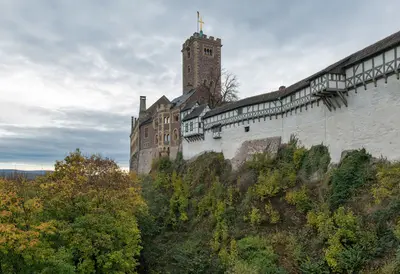
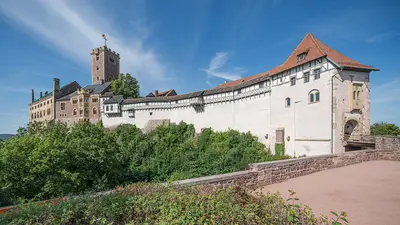
    Wartburg Castle towers approximately 220 meters above Eisenach on the edge of the Thuringian Forest and has been a UNESCO World Heritage site since 1999. According to legend, Louis the Springer founded the castle; its Romanesque Palas, dating from around 1156 to 1162, is considered the first of its architectural type in the German-speaking world. Elizabeth of Thuringia lived and worked here from 1211 to 1227.From May 4, 1521, to March 1, 1522, Martin Luther lived in hiding at the castle as "Junker Jörg" and translated the New Testament in just eleven weeks. On October 18, 1817, students gathered for the first Wartburg Festival, a demonstration calling for a nation-state with its own constitution.
    Harz & Saxony-Anhalt

    Harz & Saxony-Anhalt

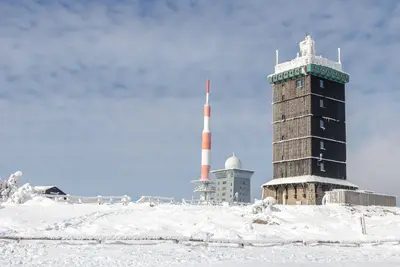
    The Harz is the low mountain range in western Saxony-Anhalt. Its highest peak is the Brocken at 1141 meters, making it also the highest mountain in Northern Germany. The Harz National Park extends around the summit, accessible via the Brocken Railway of the Harz Narrow Gauge Railways, which departs from Wernigerode.Along the northern edge of the range are half-timbered towns like Wernigerode, known as the "colourful town on the Harz", and Quedlinburg, whose old town, boasting over 2100 half-timbered houses, has been a UNESCO World Heritage site since 1994. Further east, by the Elbe, Lutherstadt Wittenberg and its World Heritage Sites recall the beginnings of the Reformation.
    Quedlinburg

    Quedlinburg

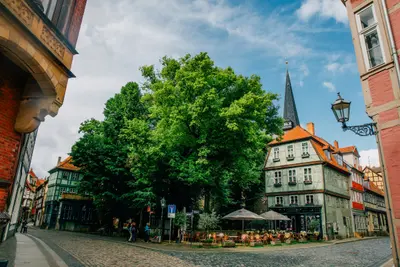
    Quedlinburg is located north of the Harz on the Bode and boasts over 2100 half-timbered houses from eight centuries. Since 1994, the Old Town, Castle Hill with the Collegiate Church, and the Münzenberg are listed as an ensemble on the UNESCO World Heritage list.The town was first mentioned in 922; King Heinrich I. was buried here after his death in 936. Perched on Castle Hill is the Collegiate Church of St. Servatius with its cathedral treasure; in the town, the Lyonel Feininger Gallery, opened in 1986, exhibits works by the Bauhaus artist.