Fernweh: Home
    ExploreTravel GuidesPlan a tripMy tripLast visited
    de|en
    All Places & RegionsAll highlightsAbout FernwehFAQPrivacy PolicyImprint
    ExploreTravel GuidesPlan a tripMy tripLast visited
    Skellig Michael

    Ireland

    Skellig Michael

    Point of Interest

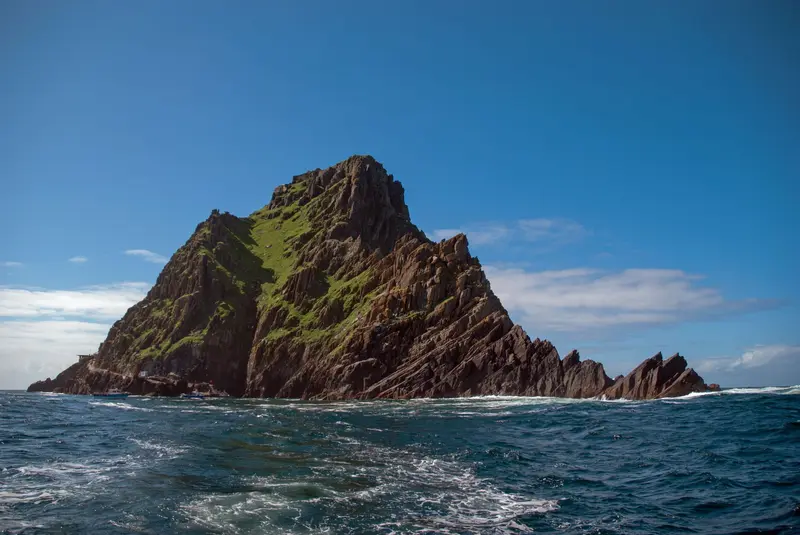
    Skellig Michael is a steep rocky island approximately twelve kilometres off the coast of Kerry, on whose summit monks built a monastery with beehive-shaped stone huts between the 6th and 8th centuries.

    by Felix Gillen

    1. Home
    2. Destinations
    3. Ireland
    4. Cork & Kerry
    5. Skellig Michael
    Skellig Michael is a steep rocky island approximately twelve kilometres off the coast of Kerry, on whose summit monks built a monastery with beehive-shaped stone huts between the 6th and 8th centuries. The exceptionally well-preserved site has been a UNESCO World Heritage site since 1996; on the neighbouring island of Little Skellig, one of the world's largest gannet colonies breeds.You may only land in summer with one of the licensed boat operators, for example from Portmagee, and only in calm seas; children under 12 years are not permitted. The ascent via approximately 600 steps is steep and unsecured. Book early, as the number of visitors per day is limited. Boat tours without landing also circumnavigate the islands in less favourable conditions.

    Restaurants in Skellig Michael

    Accommodations in Skellig Michael

    Find perfect stay in Skellig Michael

    Booking.com* (Affiliate link)
    Search Hotels
    Agoda* (Affiliate link)
    Search Hotels
    Airbnb
    Vacation Rentals

    * Affiliate link: if you book through it, we earn a small commission. The price stays the same for you.

    Campgrounds in Skellig Michael

    Find perfect campground in Skellig Michael
    Search via Google Maps
    Campgrounds nearby (15km)
    Camping.info
    Find Campgrounds
    Park4Night
    RV Parks & Camping

    Nearby

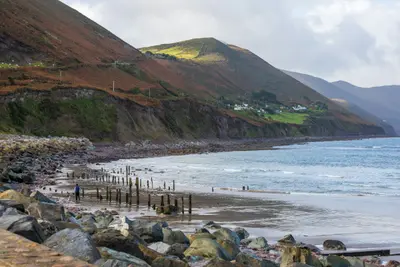
    The Ring of Kerry is a 179-kilometre-long scenic drive around the Iveragh Peninsula in southwest Ireland, starting and ending in Killarney. Along the way are towns like Killorglin, Cahersiveen, Waterville, Sneem and Kenmare, interspersed with coastal views of the Atlantic, islands, and mountains.Tour buses travel the Ring counter-clockwise because they can barely pass each other on the narrow roads; car drivers should consider this when planning. Quieter is the detour via the Skellig Ring to Portmagee and Ballinskelligs, and across the bridge to Valentia Island, where the first transatlantic cable came ashore in 1858.

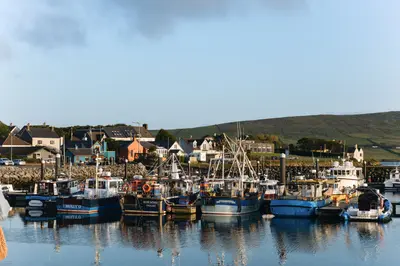
    Dingle is a small harbour town on the southwest coast in County Kerry and a starting point for the Dingle Peninsula, whose cliffs, beaches, and stone monuments are among Ireland's most impressive landscapes. The town (An Daingean) is located in the Irish-speaking region of Corca Dhuibhne; you'll find colourful rows of houses, pubs with live music, a whiskey distillery, and fish restaurants by the harbour.The Slea Head Drive is a circular route along the western tip of the peninsula, passing the stone fort Dunbeg, beehive-shaped stone huts, the Blasket Centre, and the early Christian Gallarus Oratory. Drive it clockwise and follow the signage. Buses, caravans, and motorhomes are not permitted to drive over the Conor Pass northbound; the limit is 2 tons in weight.
    Killarney & Killarney National Park

    Killarney & Killarney National Park

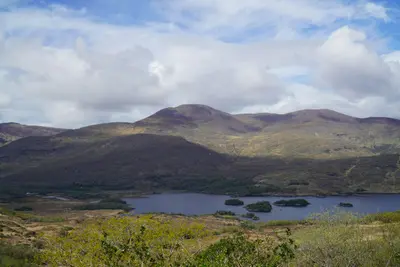
    Killarney National Park in County Kerry, Ireland's first national park, was founded in 1932. It covers some 10,000 hectares, with three lakes, oak forests, and the foothills of the MacGillycuddy's Reeks. It is home to Ireland's only native red deer herd; since 1981, the area has been a UNESCO Biosphere Reserve.Classic sights include Muckross House (completed 1843), Ross Castle on Lough Leane, and the approx. 20-meter-high Torc Waterfall, only minutes from the car park. The Gap of Dunloe, an 11-kilometer glacial pass, can be explored on foot, by bike, or horse-drawn carriage; return by boat across the lakes to Ross Castle.
    Cork & Kerry

    Cork & Kerry

    For many, the Southwest is Ireland's most scenically impressive corner: The Iveragh and Dingle peninsulas stretch far into the Atlantic, with Ireland's highest mountains, the lakes of Killarney National Park, and the monastic island Skellig Michael off the coast.Cork, the Republic's second-largest city, is a good starting point with its airport and ferry port. For Kerry, you should plan several days; Killarney is suitable as a base for the National Park and the Ring of Kerry, Dingle for its namesake peninsula.
    Cork

    Cork

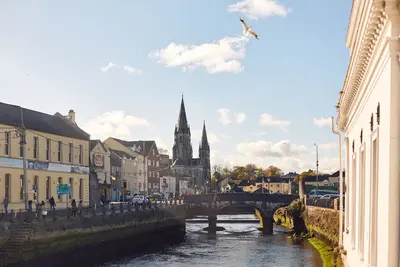
    With a population of around 224,000, Cork is the second-largest city in the Republic of Ireland; its centre lies on an island between two arms of the River Lee. The covered English Market, a municipal market since the late 18th century, is the city's most famous food market.Overlooking the city is St Anne's Church in Shandon, while to the south rises the neo-Gothic St Fin Barre's Cathedral. Excursions lead to Cobh, the Titanic's last port of call in April 1912 and the departure point for around 2.5 million emigrants, and to Blarney Castle, about eight kilometres northwest, where visitors lean backwards to kiss the Blarney Stone.

    Sources & method

    • Photos: Pexels. Each photo carries its credit.
    • The content is based on web research from public, traceable sources. How the content is made · The role of AI