Fernweh: Home
ExploreGuideDestinationsMy tripsMy trip
de|en
All Places & RegionsRound tripsNight trains in EuropeAll highlightsAbout FernwehFAQPrivacy PolicyImprint
Download on the App StoreGet it on Google Play
ExploreGuideDestinationsMy tripsMy trip
    • Places in the region
    • Recommendations
    • Culture
    • Getting around
    • Round trips
    • Nearby
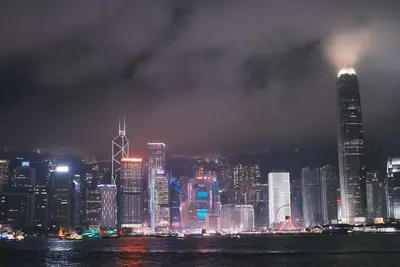
    Hong Kong Island

    Photo by Tito Zzzz on Pexels

    Hong Kong

    Hong Kong Island

    Region

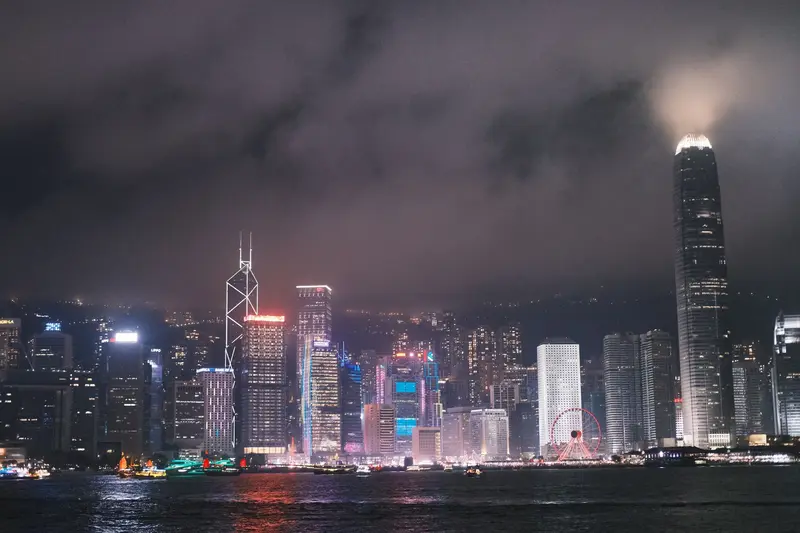
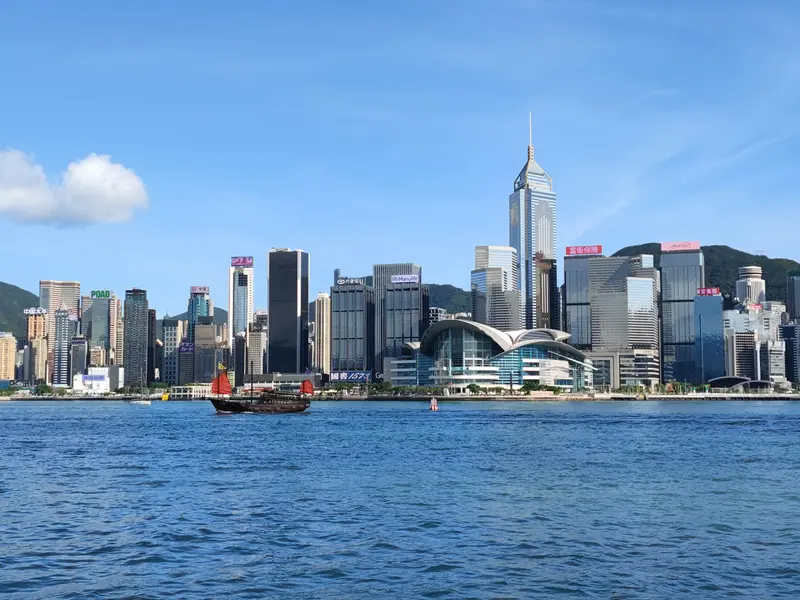
    Hong Kong Island is the city's birthplace: The British landed here in 1841, and on its north coast stand the office towers of Central and Wan Chai, and above it rises Victoria Peak.

    by Felix Gillen

    1. Home
    2. Destinations
    3. Hong Kong
    4. Hong Kong Island
    Hong Kong Island is the city's birthplace: The British landed here in 1841, and on its north coast stand the office towers of Central and Wan Chai, and above it rises Victoria Peak. In Sheung Wan, temples and dried seafood stores speak of the old Chinese trading district; in the south lies Stanley with its market and waterfront promenade; and in the east, the Dragon's Back hiking trail.
    Hong Kong travel guideSee the round tripPlan a trip with Hong Kong Island

    Contents

    • Places in the region
    • Recommendations
    • Culture
    • Getting around
    • Round trips
    • Nearby
    Stanley

    Photo by Sean Choo on Unsplash

    Place 1 of 4

    Stanley

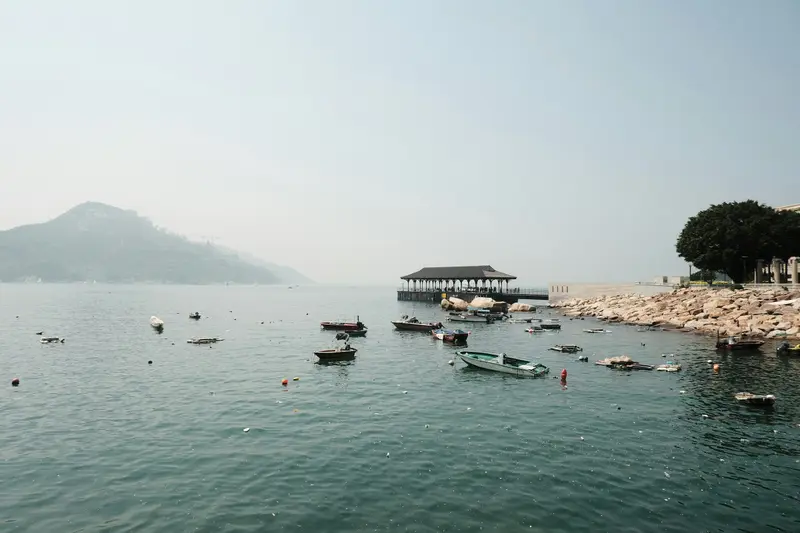
    Situated on Hong Kong Island's south coast, Stanley is a popular half-day excursion from the city, featuring Stanley Market, the promenade, the colonial Murray House (relocated to Stanley), and the historic Blake Pier pavilion.

    Discover
    Victoria Peak

    Photo by HONG SON on Pexels

    Place 2 of 4

    Victoria Peak

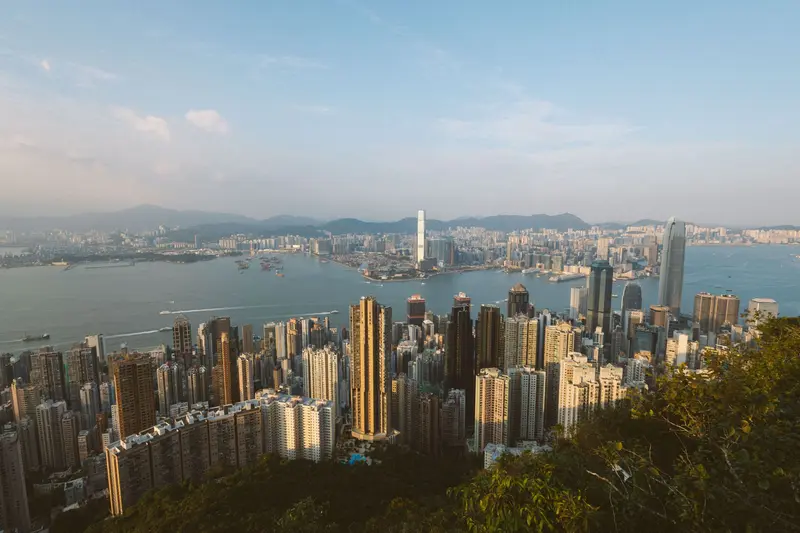
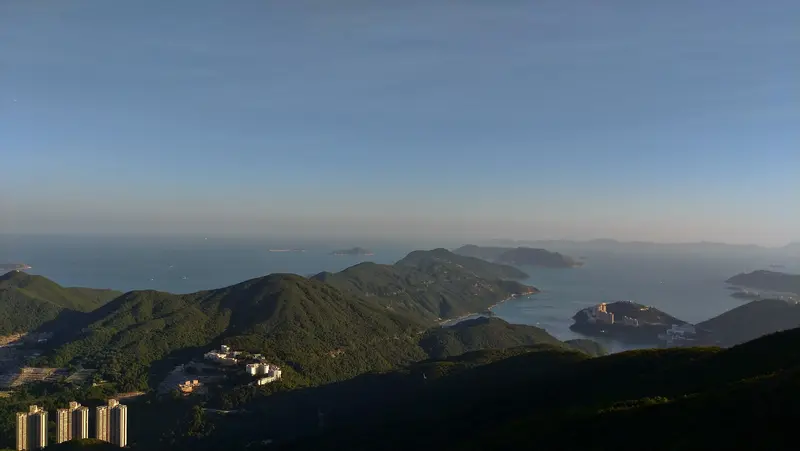
    At 552 meters, Victoria Peak, or The Peak, is Hong Kong Island's highest point.

    Discover
    Wan Chai

    Photo by Cheung Yin on Unsplash

    Place 3 of 4

    Wan Chai

    Wan Chai, east of Central, connects the convention center and harbor-front office towers with an old residential neighborhood on the hillside.

    Discover
    Sheung Wan

    Photo by Kamus Cheung on Pexels

    Place 4 of 4

    Sheung Wan

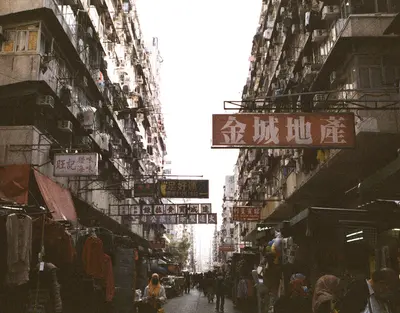
    Sheung Wan, adjoining Central to the west, is one of the city's historic districts: The British landed on Possession Street in 1841, the Man Mo Temple stands on Hollywood Road, and around Des Voeux Road West, shops trade in dried seafood.

    Discover

    More places in Hong Kong Island

    Central

    P. Ho·Pexels

    Central

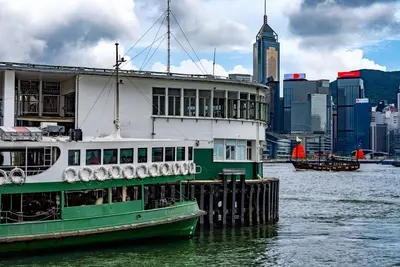
    Central is Hong Kong's business hub: bank towers, shopping malls, and the piers for the Star Ferry and island ferries at the harbour, behind which steep alleys ascend to the Mid-Levels. Among the high-rises are former colonial buildings such as Tai Kwun, the creative hub PMQ, and the nightlife district Lan Kwai Fong.

    Sights in Hong Kong Island

    Discover the most important sights and attractions

    Dragon's Back

    Starcopter / Wikimedia Commons / CC BY-SA 4.0, mod.

    Attraction

    Dragon's Back

    The high-level path over Dragon's Back is part of Section 8 of the Hong Kong Trail and leads along the ridge in Shek O Country Park, with its highest point being Shek O Peak at 284 metres. The starting point is the To Tei Wan bus stop on Shek O Road, accessible by Bus 9 or minibus from Shau Kei Wan MTR Station. The circular route covers about 5.2 kilometres (approx. 1.5 hours), while the variant to Big Wave Bay beach is about 8.5 kilometres (2.5 to 3 hours).
    Open in Google Maps
    Beach

    Big Wave Bay Beach

    The beach on the east coast of Hong Kong Island is the classic endpoint of the hike over Dragon's Back: A long staircase leads from the path down to the bay. On the beach, there are cafés and snack bars for a break after the tour.
    Open in Google Maps

    Colonial History and Cantonese Daily Life

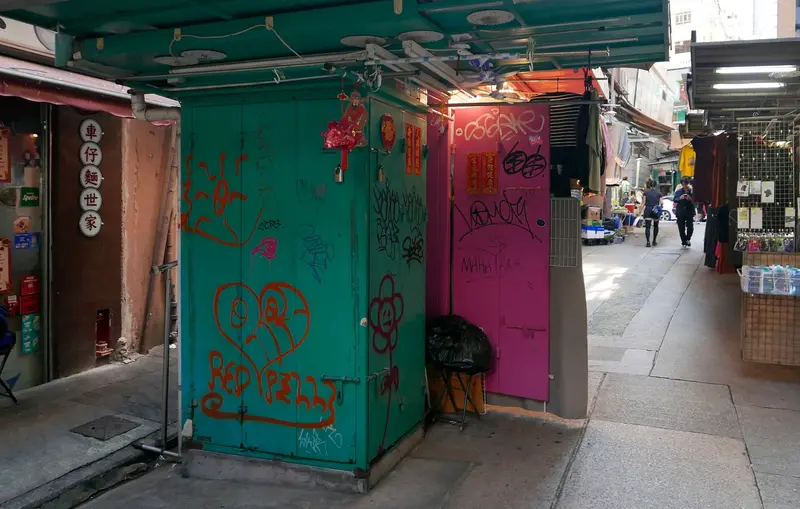
    Amidst Colonial Buildings and TemplesWithin a compact area, the island reveals traces of over 150 years of British administration: the former Police Headquarters Tai Kwun, Flagstaff House in Hong Kong Park, or Murray House, relocated to Stanley. Right alongside them, temples like Man Mo Temple in Sheung Wan or Pak Tai Temple in Wan Chai shape the daily lives of many residents.Markets, Street Stalls and TeahousesTypical of the northern coastal districts are Cha Chaan Tengs with milk tea and pineapple buns, Siu-Mei eateries with roasted goose and Char Siu, as well as the last remaining Dai Pai Dongs – open-air street food stalls. In western Sheung Wan, vendors of dried seafood and ginseng line the streets.

    Out and About on Hong Kong Island

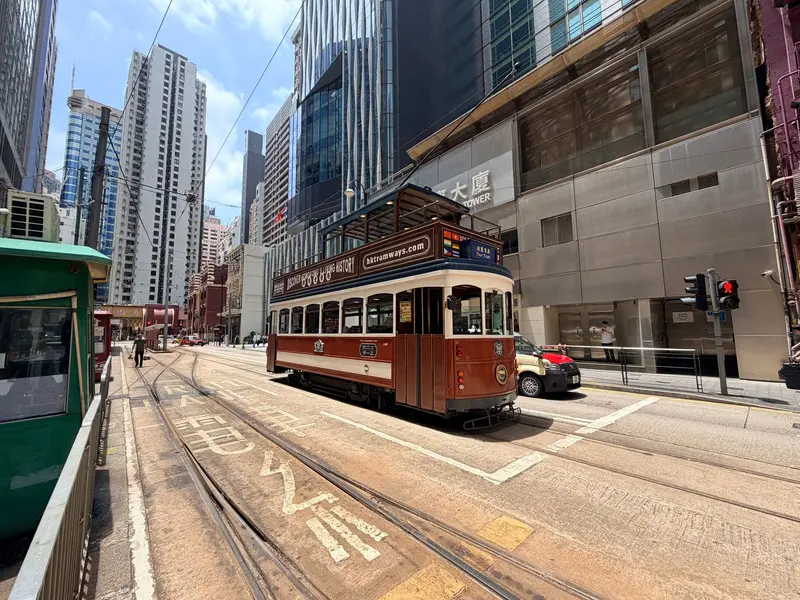
    Along the North CoastThe double-decker tram, called “Ding Ding” by locals, has been running since 1904 between Kennedy Town in the west and Shau Kei Wan in the east, connecting Sheung Wan, Central, Wan Chai, and Causeway Bay; adults pay HK$3.30 per ride. The MTR runs parallel. You can pay with an Octopus Card, or on the tram, with a credit card, mobile payment, or exact change.To the Peak and the SouthTo Victoria Peak, take the Peak Tram from Garden Road in Central, or alternatively Bus 15. To Stanley, take buses 6, 6A, and 6X from Exchange Square in Central over the mountains. To Dragon's Back, take Bus 9 or a minibus from MTR Station Shau Kei Wan.

    Round trips through this region

    Hong Kong in four days

    Hong Kong in four days

    A compact stopover program with fixed accommodation: Day one explores Hong Kong Island, including Central, Sheung Wan, and Victoria Peak; day two covers Kowloon on the opposite side of the harbour; day three Lantau; and day four offers a choice between the New Territories and a hike on car-free Lamma Island. Reach all destinations by MTR, ferry, tram, and bus.

    5 Days
    5 stops

    Tito Zzzz·Pexels

    Nearby

    Tsim Sha Tsui

    Tsim Sha Tsui

    Tsim Sha Tsui, or TST for short, is the southern tip of the Kowloon Peninsula and for many travellers, the first glimpse of Hong Kong. From the promenade with the Avenue of Stars, you look across Victoria Harbour to the Hong Kong Island skyline, which is particularly impressively lit up in the evenings.Along the waterfront are the Clock Tower of the former Kowloon Station, the Star Ferry Pier, the Hong Kong Museum of Art, and the Hong Kong Space Museum. Inland, Nathan Road leads northwards, with shopping malls, hotels, and the Chungking Mansions, next to which lies Kowloon Park. To the west, the West Kowloon Cultural District adjoins, featuring M+ and the Hong Kong Palace Museum.

    Water White·Pexels

    Yau Ma Tei and Jordan

    Yau Ma Tei and Jordan

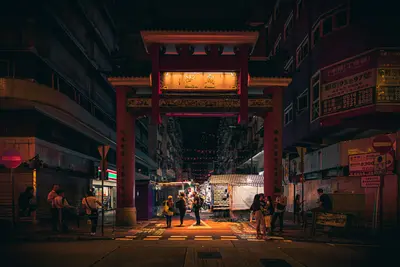
    Yau Ma Tei and Jordan immediately south form one of Kowloon's oldest districts. Where Tanka fishermen worked on a beach before 1860, a residential and commercial area grew on reclaimed land, with ground-floor shops, a wholesale fruit market, a cinema-theater, and a typhoon shelter.In the evenings, everything revolves around Temple Street: The night market stretches from Jordan to the Tin Hau Temple Complex, which gave the street its name. Additionally, there are street food stalls, fortune tellers, and occasional open-air Cantonese opera. During the day, the Jade Market, the wholesale fruit market on Waterloo Road, and old Cha Chaan Tengs like Mido Café are worth visiting.

    Aleksandar Pasaric·Pexels

    Mong Kok

    Mong Kok

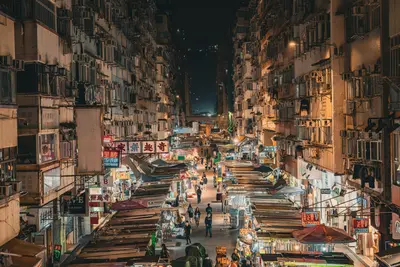
    Mong Kok is considered one of the most densely populated districts in the world, with around 130,000 people per square kilometer. Its Chinese name roughly translates to 'prosperous corner'. Amidst neon signs, high-rises, and street stalls, you'll experience everyday Hong Kong in its most concentrated form here.The markets are sorted by goods: Ladies' Market in the south of Tung Choi Street, Goldfish Market in the north of the same street, sneaker shops in Fa Yuen Street, florists on Flower Market Road, and finally, the Yuen Po Street Bird Garden with songbirds in ornate cages. Towering above it all is Langham Place, the district's tallest building.

    Ehsan Haque·Pexels

    Kowloon

    Kowloon

    Kowloon is the peninsula north of Victoria Harbour, opposite Hong Kong Island. With over two million people living on approximately 67 square kilometers, it is Hong Kong's smallest yet most densely populated of its three main territories.For travelers, many attractions are just a few MTR stations apart: the Tsim Sha Tsui waterfront promenade with views of the Hong Kong Island skyline, the M+ and Hong Kong Palace Museum in the West Kowloon Cultural District, the street markets of Yau Ma Tei, Jordan, and Mong Kok, and the electronics and fabric streets of Sham Shui Po. Further north are the Wong Tai Sin Temple and the Chi Lin Nunnery with its Nan Lian Garden, overlooked by Lion Rock.

    Alex M·Pexels

    Sham Shui Po

    Sham Shui Po

    Sham Shui Po, in northwest Kowloon, is a working-class and commercial district where many streets are still named after their wares: electronics and used goods on Apliu Street, buttons on Ki Lung Street, ribbons on Nam Cheong Street, beads on Yu Chau Street, and toys on Fuk Wing Street. Around Tai Nan Street, cafés and designers have settled in former leather and fabric shops.The district is also a destination for affordable food, featuring several establishments from the Michelin Guide's Bib Gourmand selection. At Mei Ho House, one of the first resettlement blocks built after the devastating Shek Kip Mei fire in 1953, a small museum recounts the history of public housing.

    sl wong·Pexels

    Your next steps

    Hong Kong Island is in Hong Kong. Ways to carry on from here.

    • More in Hong Kong

      Highlights, areas, routes and the best time to travel for all of Hong Kong.

      Hong Kong travel guide
    • Round trips with Hong Kong Island

      One route passes through Hong Kong Island, with stops, nights and a map.

      See the round trip
    • Plan a trip with Hong Kong Island

      The Guide asks about season, length and who is coming, and suggests a trip with Hong Kong Island.

      Plan the trip

    Sources & method

    • Photos: Wikimedia Commons, Pexels. Each photo carries its credit.
    • Place data such as addresses and ratings comes from Google Maps.
    • The content is based on web research from public, traceable sources. How the content is made · The role of AI