Round trip · Hong Kong
Hong Kong in four days
by Felix Gillen
- 5 Days / 4 Nights
- Hong Kong Island → Lamma Island
A compact stopover program with fixed accommodation: Day one explores Hong Kong Island, including Central, Sheung Wan, and Victoria Peak; day two covers Kowloon on the opposite side of the harbour; day three Lantau; and day four offers a choice between the New Territories and a hike on car-free Lamma Island. Reach all destinations by MTR, ferry, tram, and bus.
At a glance
- Duration
- 5 Days / 4 Nights
- Stops
- 5 · Hong Kong Island → Lamma Island
- Arrival
- Flight · Hongkong (HKG)
- Best Time to Go
- October to December
5 stops
Why This Route?
This route links urban districts, with their temples, markets, and colonial buildings, to Hong Kong's green areas. Since all destinations are accessible via public transport, you won't need to switch hotels.
Hidden Gems
- Peak Circle Walk on Lugard Road for sunset instead of the paid viewing terrace
- Noodles in tomato broth at Dai Pai Dong Sing Heung Yuen in Central
- Kamikaze Caves near Sok Kwu Wan on Lamma
Getting there and back
Round trip, returning to where you started
- Arrival
- Flight · Hongkong (HKG)Airport Express to Central (Hong Kong Station) from airport: ~24 min, trains ~10 min. Standard Octopus Card not sold at Airport Station. Tourist Octopus available at airport (MTR Customer Service/7-Eleven in Arrivals).
- Departure
- Flight · Hongkong (HKG)At Hong Kong and Kowloon stations, you can pre-check in for many flights before taking the Airport Express to the airport.
Itinerary
Hong Kong Island
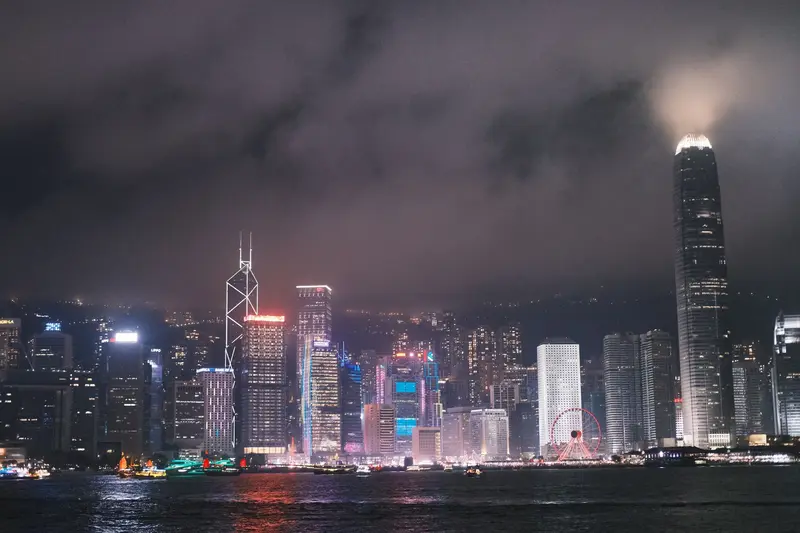
Hong Kong Island is the city's birthplace: The British landed here in 1841, and on its north coast stand the office towers of Central and Wan Chai, and above it rises Victoria Peak. In Sheung Wan, temples and dried seafood stores speak of the old Chinese trading district; in the south lies Stanley with its market and waterfront promenade; and in the east, the Dragon's Back hiking trail.
Day 1: Walking tour from Star Ferry via Tai Kwun and PMQ to Man Mo Temple in Sheung Wan; in the afternoon, take the Peak Tram to Victoria Peak and for sunset, the Peak Circle Walk.
2 Sights
Colonial History and Cantonese Daily Life
Amidst Colonial Buildings and TemplesWithin a compact area, the island reveals traces of over 150 years of British administration: the former Police Headquarters Tai Kwun, Flagstaff House in Hong Kong Park, or Murray House, relocated to Stanley. Right alongside them, temples like Man Mo Temple in Sheung Wan or Pak Tai Temple in Wan Chai shape the daily lives of many residents.Markets, Street Stalls and TeahousesTypical of the northern coastal districts are Cha Chaan Tengs with milk tea and pineapple buns, Siu-Mei eateries with roasted goose and Char Siu, as well as the last remaining Dai Pai Dongs – open-air street food stalls. In western Sheung Wan, vendors of dried seafood and ginseng line the streets.
Kowloon
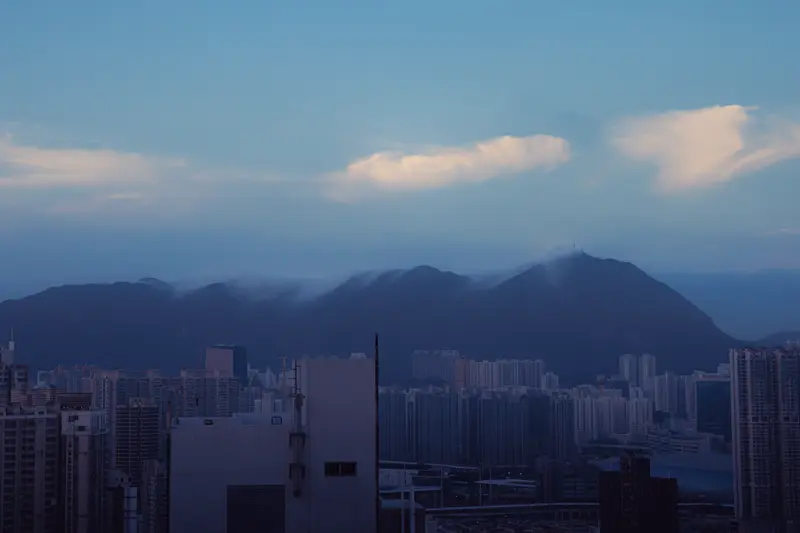
Kowloon is the peninsula north of Victoria Harbour, opposite Hong Kong Island. With over two million people living on approximately 67 square kilometers, it is Hong Kong's smallest yet most densely populated of its three main territories.For travelers, many attractions are just a few MTR stations apart: the Tsim Sha Tsui waterfront promenade with views of the Hong Kong Island skyline, the M+ and Hong Kong Palace Museum in the West Kowloon Cultural District, the street markets of Yau Ma Tei, Jordan, and Mong Kok, and the electronics and fabric streets of Sham Shui Po. Further north are the Wong Tai Sin Temple and the Chi Lin Nunnery with its Nan Lian Garden, overlooked by Lion Rock.
Day 2: Take the Star Ferry to Tsim Sha Tsui in about nine minutes and continue through Kowloon.
5 Sights
History and Daily Life in Kowloon
From Cession to MetropolisThe part of Kowloon south of Boundary Street and Stonecutters Island were ceded to Great Britain in 1860 with the Convention of Peking. The area north of it, New Kowloon, was added in 1898 under a 99-year lease. Extensive development began in the early 20th century. Because the flight paths of the old Kai Tak Airport led over the peninsula, buildings here remained lower for a long time than on Hong Kong Island.Nine DragonsThe Chinese name Kowloon means “Nine Dragons” and refers to eight mountains and an emperor of the Song Dynasty. Approximately 86 percent of residents speak Cantonese in daily life. Those who walk through Yau Ma Tei, Mong Kok, or Sham Shui Po will experience markets, street food stalls, and workshops in confined spaces.Temples and Folk BeliefsAt the Wong Tai Sin Temple, devotees consult the Kau Cim stick oracle; the Tin Hau Temple complex in Yau Ma Tei gave Temple Street its name. The Chi Lin Nunnery showcases Buddhist wooden architecture in the style of the Tang Dynasty.
Lantau
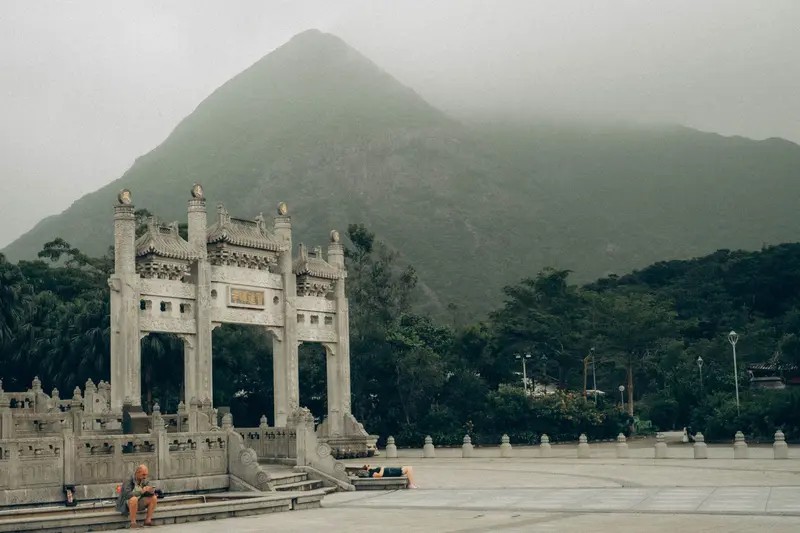
Lantau, at around 147 square kilometers, is Hong Kong's largest island, approximately twice the size of Hong Kong Island. Slightly more than half its area is covered by Country Parks, above which rises the 934-meter-high Lantau Peak, Hong Kong's second-highest summit.Most visitors come for the Tian Tan Buddha and Po Lin Monastery on the Ngong Ping plateau, which the Ngong Ping 360 cable car connects with Tung Chung. To the west lies the stilt village of Tai O, to the south the long sandy beach of Cheung Sha, and to the east the ferry port of Mui Wo. The airport on Chek Lap Kok off the north coast and the new town of Tung Chung simultaneously make Lantau the gateway to Hong Kong.
Day 3: Day trip to Lantau, such as Ngong Ping and Tai O.
4 Sights
Monasteries, Fishing Villages and Airport
Buddhist LantauOn the Ngong Ping Plateau, three monks from Jiangsu founded the Po Lin Monastery in 1906. In 1993, the 34-meter-high Tian Tan Buddha was completed, which has since attracted pilgrims and travelers. A Trappist monastery is also located northeast of Mui Wo.Fishermen by the WaterIn the west, the Tanka community lives in Tai O, residing in stilt houses above the canals. In the 1940s, salt was also extracted here in large salt pans.The New LantauSince 1998, the Hong Kong International Airport has been located on Chek Lap Kok off the north coast. Alongside it, the new city of Tung Chung grew, with high-rises for over 45,000 people. Yet, over half the island has remained Country Park.
New Territories
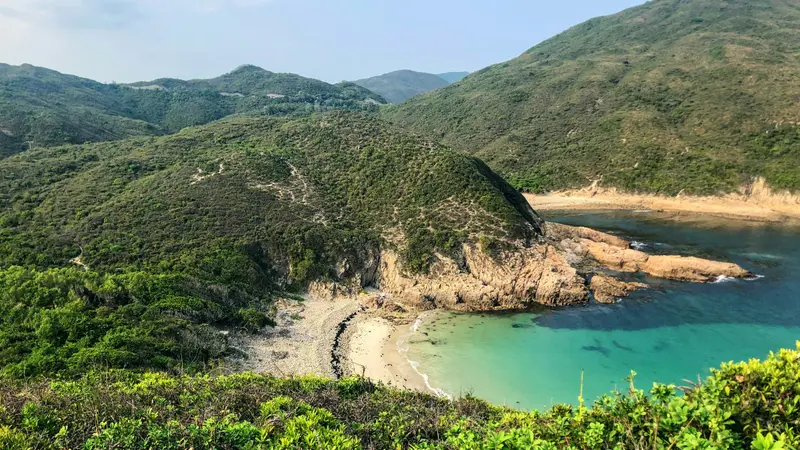
The New Territories, covering approximately 952 square kilometers, comprise 86 percent of Hong Kong's land area, extending from Kowloon to the mainland border. Great Britain leased the territory in 1898 for 99 years, returning it to China in 1997.This region features satellite cities, home to over three million people, alongside ancestral halls and villages of ancient clans, hillside monasteries, and vast Country Parks. Highlights for travelers include the Sai Kung Peninsula with its Hong Kong UNESCO Global Geopark, the Ten Thousand Buddhas Monastery, the Heritage Museum in Sha Tin, the Ping Shan Heritage Trail, and the Hong Kong Wetland Park in the northwest.
Day 4, Option A: Nature and villages in the New Territories, e.g., around Sai Kung.
5 Sights
Clans, Monasteries, and New Cities
The Lease of 1898In 1898, the Qing Empire leased the New Territories to Great Britain for 99 years. When the British took over administration in 1899, the long-established clans resisted; British artillery shelled their walled villages. In 1997, the area, along with all of Hong Kong, returned to China.Ancestral Halls and TemplesThe Tang Clan still shapes Ping Shan near Yuen Long today: its ancestral hall is one of the largest in Hong Kong, and the Tsui Sing Lau Pagoda is the city's only surviving ancient pagoda. In Lam Tsuen, visitors hang their wishes on the wishing trees at the Tin Hau Temple; in Sha Tin, they ascend to the thousands of Buddha figures at the Ten Thousand Buddhas Monastery.Satellite Towns and LandscapeFrom the late 1970s onwards, new towns emerged here for people from overcrowded Kowloon and Hong Kong Island; in 2021, nearly four million people lived in the New Territories. At the same time, according to Lonely Planet, more than 40 percent of the area is protected as a nature reserve or country park.
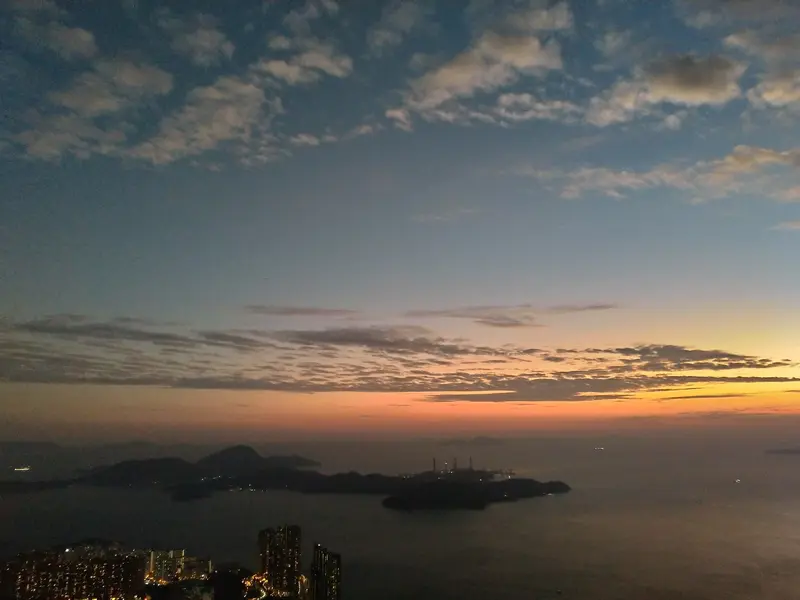
Lamma Island
Lamma is a car-free island southwest of Hong Kong Island, 30 ferry minutes from Central. The two main villages, Yung Shue Wan with small shops and eateries, and Sok Kwu Wan with its waterside seafood restaurants, are connected by the Family Trail, along which beaches like Hung Shing Yeh lie.
Day 4, Variant B: From Central Pier 4 to Lamma in approx. 30 minutes, via the Family Trail from Yung Shue Wan to Sok Kwu Wan, then to the waterfront for a meal.
4 Sights
1 Restaurant
Car-free island life
Two Villages, Two CharactersNo cars run on Lamma, making the island much quieter than the city. Yung Shue Wan has small boutiques, specialty shops, and simple eateries, while Sok Kwu Wan is known for its waterfront seafood restaurants. The island, according to the ferry operator, has a maximum of 10,000 residents.Traces of HistoryNear Sok Kwu Wan are the Kamikaze Caves, tunnels where the Japanese military intended to hide speedboats for suicide attacks during World War II. On Tai Ling hill stands Lamma Winds, Hong Kong's first commercial-scale wind turbine.
Plan this route as your trip
All stops, trains and nights go into your trip planner. You adjust dates and places to stay afterwards.
This route is a suggestion from our research. Please check timetables, times in port, opening hours and prices before you book – what your tour operator or carrier says is what counts.
Fernweh is a free travel guide and trip planner: routes researched by people, taken over in one click, used day by day on the road. More about Fernweh
5 stops
Route Summary
Duration5 Days
Stops5 Places
TypeMixed