Fernweh: Home
ExploreGuideDestinationsMy tripsMy trip
de|en
All Places & RegionsRound tripsNight trains in EuropeAll highlightsAbout FernwehFAQPrivacy PolicyImprint
Download on the App StoreGet it on Google Play
ExploreGuideDestinationsMy tripsMy trip
    • Places in the region
    • Recommendations
    • Culture
    • Getting around
    • Round trips
    • Nearby
    New Territories

    Photo by Clars Puk on Unsplash

    Hong Kong

    New Territories

    Region

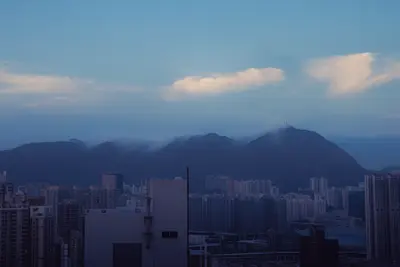
    The New Territories, covering approximately 952 square kilometers, comprise 86 percent of Hong Kong's land area, extending from Kowloon to the mainland border.

    by Felix Gillen

    1. Home
    2. Destinations
    3. Hong Kong
    4. New Territories
    The New Territories, covering approximately 952 square kilometers, comprise 86 percent of Hong Kong's land area, extending from Kowloon to the mainland border. Great Britain leased the territory in 1898 for 99 years, returning it to China in 1997.This region features satellite cities, home to over three million people, alongside ancestral halls and villages of ancient clans, hillside monasteries, and vast Country Parks. Highlights for travelers include the Sai Kung Peninsula with its Hong Kong UNESCO Global Geopark, the Ten Thousand Buddhas Monastery, the Heritage Museum in Sha Tin, the Ping Shan Heritage Trail, and the Hong Kong Wetland Park in the northwest.
    Hong Kong travel guideSee the round tripPlan a trip with New Territories

    Contents

    • Places in the region
    • Recommendations
    • Culture
    • Getting around
    • Round trips
    • Nearby

    More places in New Territories

    Sai Kung

    Kamus Cheung·Pexels

    Sai Kung

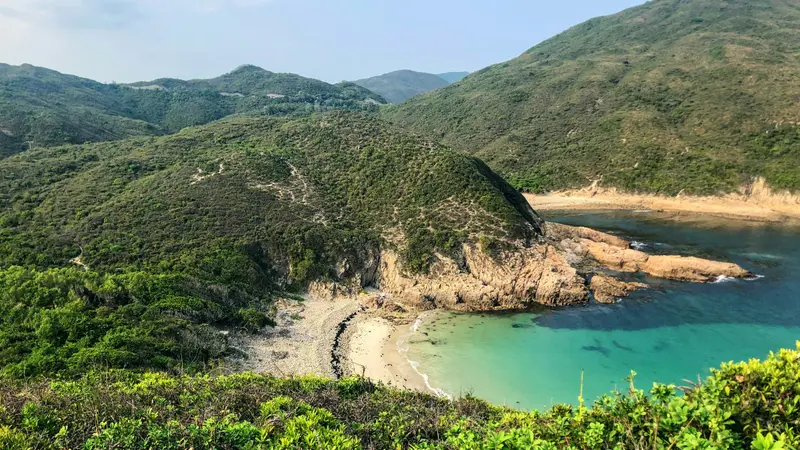
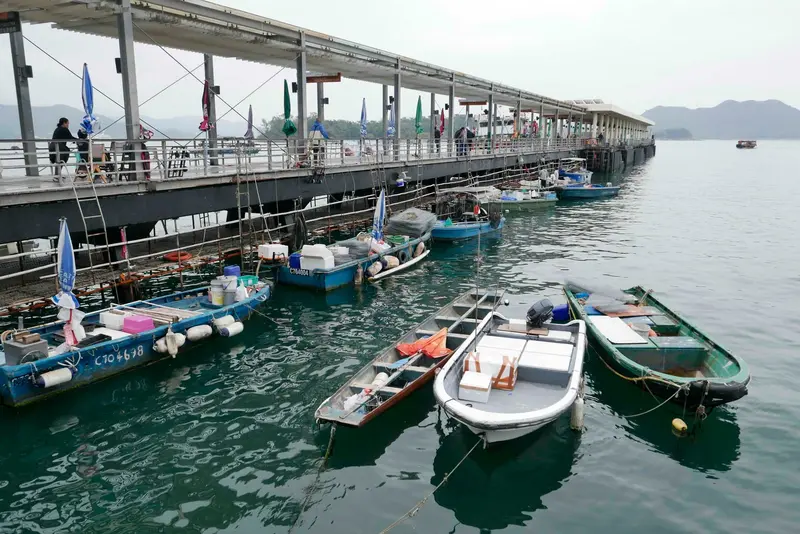
    Sai Kung Town is located on Inner Port Shelter bay, on the peninsula of the same name in the eastern New Territories. The town has no MTR connection, but is easily accessible by bus and minibus, and serves as a gateway to the surrounding islands, beaches, and hiking trails.Along the waterfront promenade are seafood restaurants with aquariums out front, including the Michelin-starred Loaf On. From the pier, small boats, called Kaitos, travel to islands such as Sharp Island. By taxi or bus, you can reach the East Dam of the High Island Reservoir, where the Hong Kong UNESCO Global Geopark displays its most famous hexagonal rock columns.

    Sights in New Territories

    Discover the most important sights and attractions

    Ten Thousand Buddhas Monastery

    Bernard Spragg / Wikimedia Commons / CC0

    Place of Worship

    Ten Thousand Buddhas Monastery

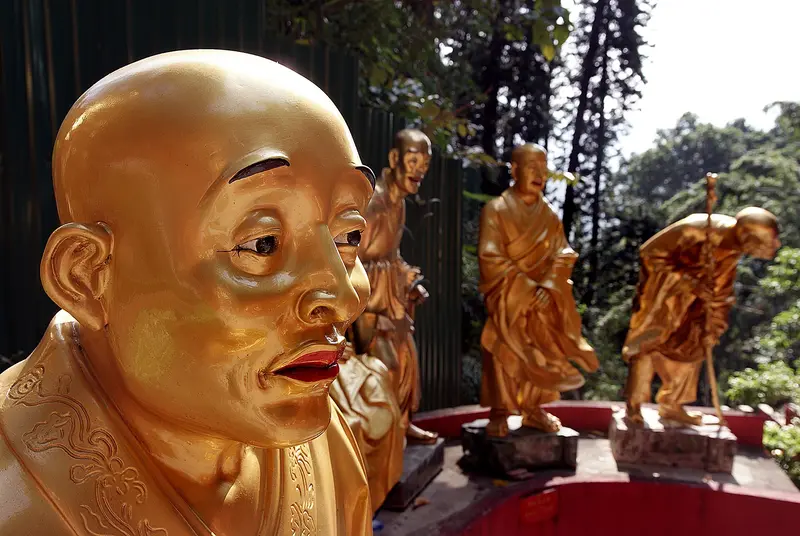
    The monastery in the hills above Sha Tin was founded in 1949 by Monk Yuet Kai and completed in 1957. The climb up 431 steep steps leads past life-sized, gold-painted Buddha figures; depending on the source, the complex contains some 12,000 to 13,000 Buddha statues in total. At the top stand halls, pavilions, and a nine-story pagoda. Open daily 9:30 AM to 5 PM according to Time Out. Due to the steps, plan for good footwear and enough water on hot days.
    Open in Google Maps
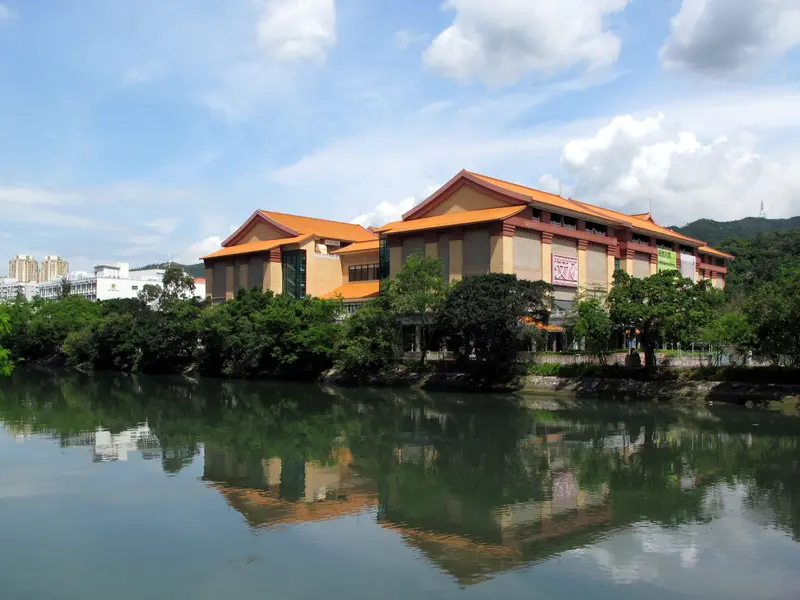
    Hong Kong Heritage Museum

    “Hong Kong Heritage Museum 201305” by Wing1990hk / Wikimedia Commons / CC BY 3.0, mod.

    Museum

    Hong Kong Heritage Museum

    The large museum on the Shing Mun River in Sha Tin is dedicated to Hong Kong culture. A permanent feature is the Jin Yong Gallery about author Louis Cha, who wrote 15 wuxia novels under the name Jin Yong; admission there is free. It also features changing special exhibitions. Open Monday and Wednesday to Friday 10 AM to 6 PM, on weekends and public holidays 10 AM to 7 PM, closed on Tuesdays (as of November 2026). From MTR Che Kung Temple Station, Exit A, it's about a six-minute walk.
    Open in Google Maps
    Ping Shan Heritage Trail

    姒姓賢寧 / Wikimedia Commons / CC BY-SA 4.0, mod.

    Historic Landmark

    Ping Shan Heritage Trail

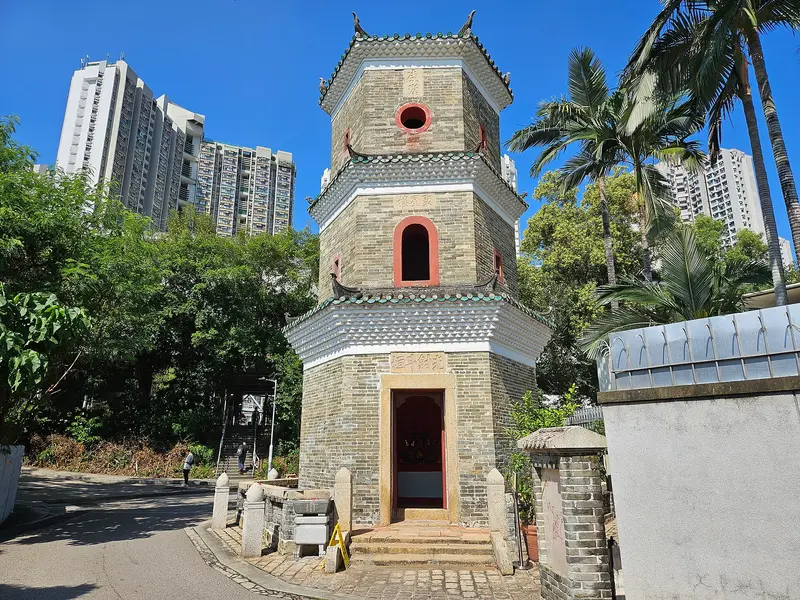
    Opened in 1993, the roughly one-kilometer Cultural Path in Yuen Long connects three Tang Clan villages with restored historic buildings. Highlights include the Tang Ancestral Hall, one of Hong Kong's largest with three halls and two courtyards, the walled village of Sheung Cheung Wai, and finally the Tsui Sing Lau Pagoda, Hong Kong's only surviving ancient pagoda. According to Lonely Planet, the ancestral halls and pagoda are open 9am-1pm and 2pm-5pm, closed on Tuesdays. Nearest MTR Station: Tin Shui Wai, Exit E.
    Open in Google Maps
    Hong Kong Wetland Park

    Wpcpey / Wikimedia Commons / CC BY-SA 4.0, mod.

    Park

    Hong Kong Wetland Park

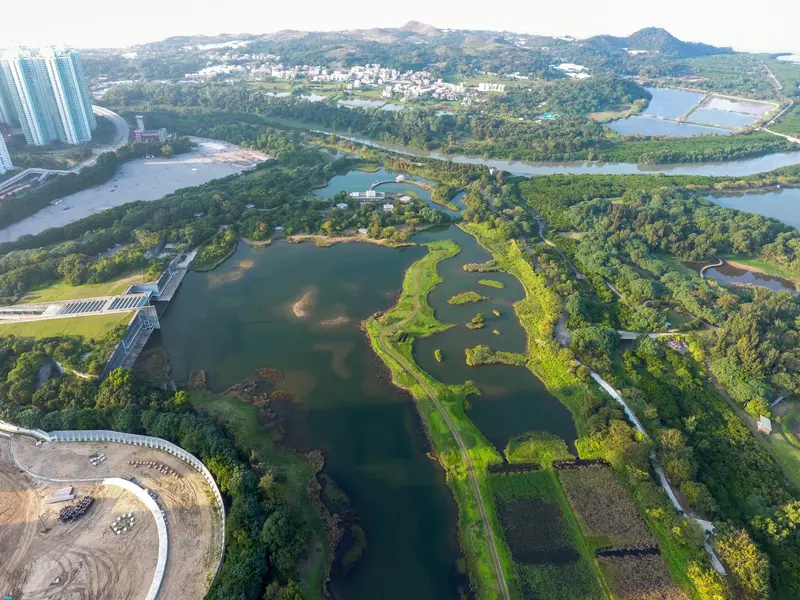
    The 61-hectare wetland in Tin Shui Wai showcases the nature of the northwestern New Territories. From observation hides with telescopes, you'll spot waterbirds, best at high tide; a floating boardwalk leads through mangroves with mudskippers and fiddler crabs. Its most famous resident is Pui Pui, the saltwater crocodile, rescued from a river in 2004. Open 10 AM to 5 PM, closed Tuesdays. According to the park, the exhibition halls and parts of the visitor centre are currently closed for modernisation (as of November 2026). Getting there: MTR Tin Shui Wai, then Light Rail 705 to Tin Sau.
    Open in Google Maps
    Lam Tsuen Wishing Trees

    Apluschaser / Wikimedia Commons / CC BY-SA 4.0, mod.

    Attraction

    Lam Tsuen Wishing Trees

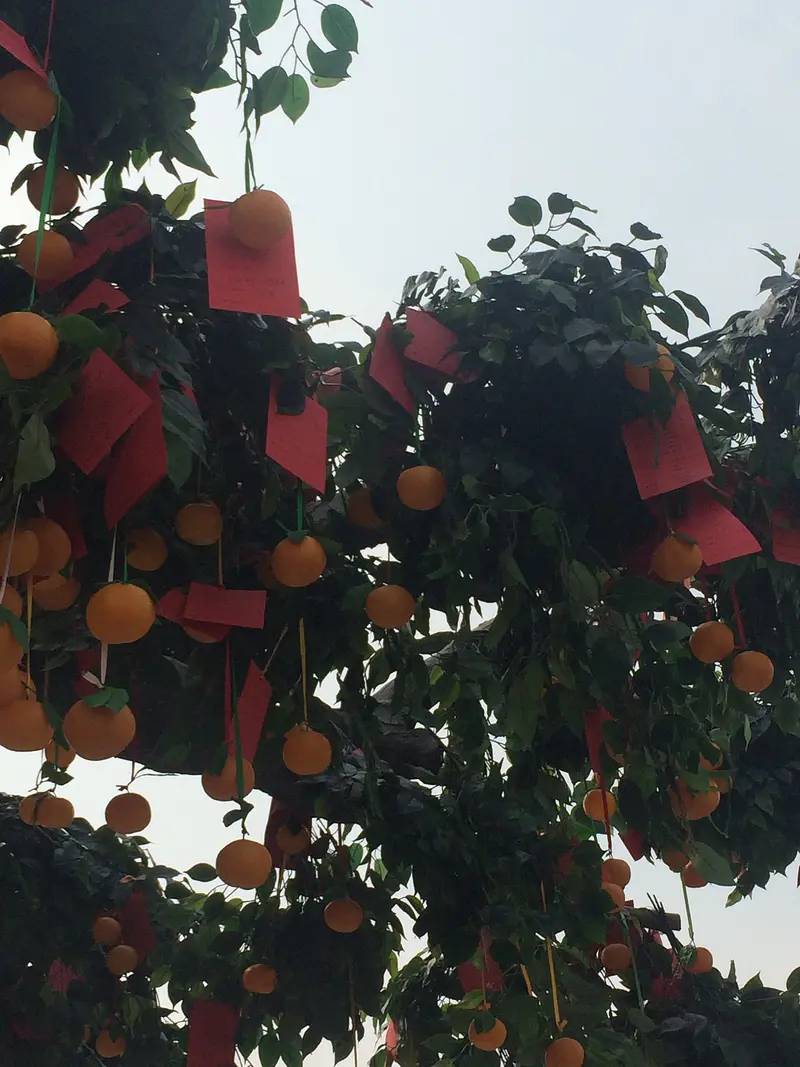
    In the village of Fong Ma Po near Tai Po, visitors hang their wishes on the wishing trees next to the Qing-era Tin Hau Temple. Previously, weighted wish slips were thrown into the banyan trees, until 2005, when a branch broke under the weight; today, wishes are attached to wooden racks and an artificial tree. For the New Year festival on the first and fifteenth day of the first lunar month, hundreds of thousands arrive. Directions: Bus 64K or 64P from MTR Tai Po Market to Fong Ma Po.
    Open in Google Maps

    Clans, Monasteries, and New Cities

    The Lease of 1898In 1898, the Qing Empire leased the New Territories to Great Britain for 99 years. When the British took over administration in 1899, the long-established clans resisted; British artillery shelled their walled villages. In 1997, the area, along with all of Hong Kong, returned to China.Ancestral Halls and TemplesThe Tang Clan still shapes Ping Shan near Yuen Long today: its ancestral hall is one of the largest in Hong Kong, and the Tsui Sing Lau Pagoda is the city's only surviving ancient pagoda. In Lam Tsuen, visitors hang their wishes on the wishing trees at the Tin Hau Temple; in Sha Tin, they ascend to the thousands of Buddha figures at the Ten Thousand Buddhas Monastery.Satellite Towns and LandscapeFrom the late 1970s onwards, new towns emerged here for people from overcrowded Kowloon and Hong Kong Island; in 2021, nearly four million people lived in the New Territories. At the same time, according to Lonely Planet, more than 40 percent of the area is protected as a nature reserve or country park.

    On the Road in the New Territories

    MTR and Light RailHong Kong Heritage Museum: Che Kung Temple Station, Exit A, then about a six-minute walk.Ping Shan Heritage Trail: Tin Shui Wai Station, Exit E.Hong Kong Wetland Park: Take the Tuen Ma Line to Tin Shui Wai, then Light Rail 705 to Tin Sau.Lam Tsuen Wishing Trees: From Tai Po Market Station, take Bus 64K or 64P to Fong Ma Po.To Sai KungSai Kung Town has no MTR connection. You can take Minibus 101M from Hang Hau, Minibus 1A or Bus 92 from Choi Hung, or Bus 92 from Diamond Hill.PlanningThe attractions are far apart. Plan a full day each for the Northwest (Ping Shan and Wetland Park) and for Sai Kung. Sha Tin, with its monastery and Heritage Museum, can be planned as a half-day trip.

    Round trips through this region

    Hong Kong in four days

    Hong Kong in four days

    A compact stopover program with fixed accommodation: Day one explores Hong Kong Island, including Central, Sheung Wan, and Victoria Peak; day two covers Kowloon on the opposite side of the harbour; day three Lantau; and day four offers a choice between the New Territories and a hike on car-free Lamma Island. Reach all destinations by MTR, ferry, tram, and bus.

    5 Days
    5 stops

    Tito Zzzz·Pexels

    Nearby

    Sham Shui Po

    Sham Shui Po

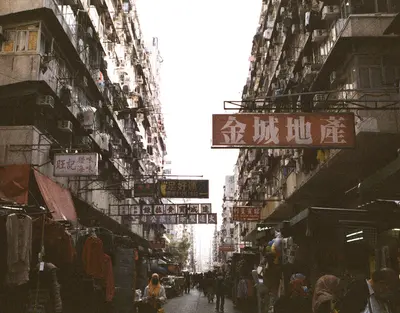
    Sham Shui Po, in northwest Kowloon, is a working-class and commercial district where many streets are still named after their wares: electronics and used goods on Apliu Street, buttons on Ki Lung Street, ribbons on Nam Cheong Street, beads on Yu Chau Street, and toys on Fuk Wing Street. Around Tai Nan Street, cafés and designers have settled in former leather and fabric shops.The district is also a destination for affordable food, featuring several establishments from the Michelin Guide's Bib Gourmand selection. At Mei Ho House, one of the first resettlement blocks built after the devastating Shek Kip Mei fire in 1953, a small museum recounts the history of public housing.

    sl wong·Pexels

    Kowloon

    Kowloon

    Kowloon is the peninsula north of Victoria Harbour, opposite Hong Kong Island. With over two million people living on approximately 67 square kilometers, it is Hong Kong's smallest yet most densely populated of its three main territories.For travelers, many attractions are just a few MTR stations apart: the Tsim Sha Tsui waterfront promenade with views of the Hong Kong Island skyline, the M+ and Hong Kong Palace Museum in the West Kowloon Cultural District, the street markets of Yau Ma Tei, Jordan, and Mong Kok, and the electronics and fabric streets of Sham Shui Po. Further north are the Wong Tai Sin Temple and the Chi Lin Nunnery with its Nan Lian Garden, overlooked by Lion Rock.

    Alex M·Pexels

    Mong Kok

    Mong Kok

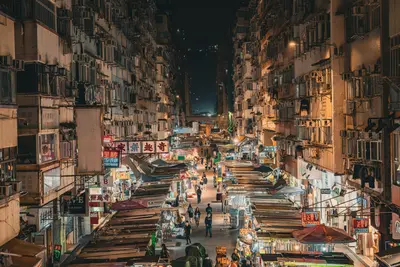
    Mong Kok is considered one of the most densely populated districts in the world, with around 130,000 people per square kilometer. Its Chinese name roughly translates to 'prosperous corner'. Amidst neon signs, high-rises, and street stalls, you'll experience everyday Hong Kong in its most concentrated form here.The markets are sorted by goods: Ladies' Market in the south of Tung Choi Street, Goldfish Market in the north of the same street, sneaker shops in Fa Yuen Street, florists on Flower Market Road, and finally, the Yuen Po Street Bird Garden with songbirds in ornate cages. Towering above it all is Langham Place, the district's tallest building.

    Ehsan Haque·Pexels

    Yau Ma Tei and Jordan

    Yau Ma Tei and Jordan

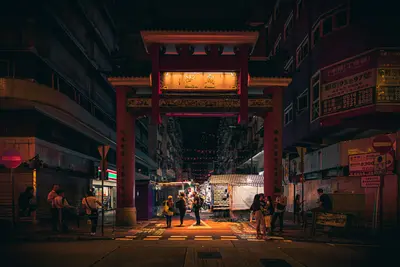
    Yau Ma Tei and Jordan immediately south form one of Kowloon's oldest districts. Where Tanka fishermen worked on a beach before 1860, a residential and commercial area grew on reclaimed land, with ground-floor shops, a wholesale fruit market, a cinema-theater, and a typhoon shelter.In the evenings, everything revolves around Temple Street: The night market stretches from Jordan to the Tin Hau Temple Complex, which gave the street its name. Additionally, there are street food stalls, fortune tellers, and occasional open-air Cantonese opera. During the day, the Jade Market, the wholesale fruit market on Waterloo Road, and old Cha Chaan Tengs like Mido Café are worth visiting.

    Aleksandar Pasaric·Pexels

    Tsim Sha Tsui

    Tsim Sha Tsui

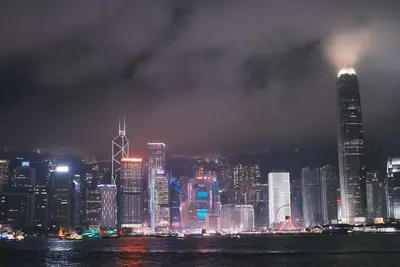
    Tsim Sha Tsui, or TST for short, is the southern tip of the Kowloon Peninsula and for many travellers, the first glimpse of Hong Kong. From the promenade with the Avenue of Stars, you look across Victoria Harbour to the Hong Kong Island skyline, which is particularly impressively lit up in the evenings.Along the waterfront are the Clock Tower of the former Kowloon Station, the Star Ferry Pier, the Hong Kong Museum of Art, and the Hong Kong Space Museum. Inland, Nathan Road leads northwards, with shopping malls, hotels, and the Chungking Mansions, next to which lies Kowloon Park. To the west, the West Kowloon Cultural District adjoins, featuring M+ and the Hong Kong Palace Museum.

    Water White·Pexels

    Your next steps

    New Territories is in Hong Kong. Ways to carry on from here.

    • More in Hong Kong

      Highlights, areas, routes and the best time to travel for all of Hong Kong.

      Hong Kong travel guide
    • Round trips with New Territories

      One route passes through New Territories, with stops, nights and a map.

      See the round trip
    • Plan a trip with New Territories

      The Guide asks about season, length and who is coming, and suggests a trip with New Territories.

      Plan the trip

    Sources & method

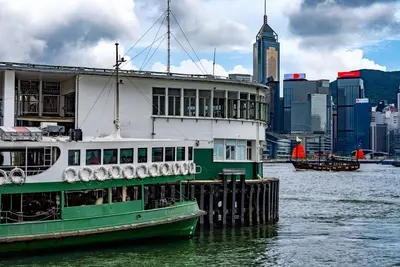
    • Photos: Wikimedia Commons, Unsplash. Each photo carries its credit.
    • Place data such as addresses and ratings comes from Google Maps.
    • The content is based on web research from public, traceable sources. How the content is made · The role of AI