ExploreTravel GuidesPlan a trip
    de|en
    All Places & RegionsAbout FernwehFAQPrivacy PolicyImprint
    ExploreTravel GuidesPlan a trip
    • Places in the region
    • Nearby
    South Holland

    Netherlands

    South Holland

    Region

    South Holland is the most densely populated province of the Netherlands, uniting two very different major cities: the port city of Rotterdam and the seat of government, The Hague.

    1. Home
    2. Destinations
    3. Netherlands
    4. South Holland
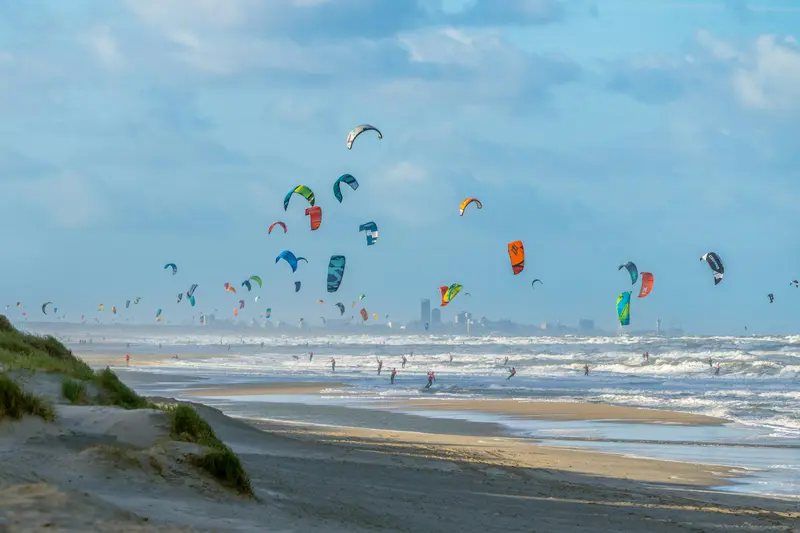
    South Holland is the most densely populated province of the Netherlands, uniting two very different major cities: the port city of Rotterdam and the seat of government, The Hague. In between lie the historic centers of Leiden, Delft, Gouda, Dordrecht, and Schiedam.Along the North Sea coast, behind the dunes, are seaside resorts such as Katwijk and Noordwijk. Southeast of Rotterdam stand the windmills of Kinderdijk, a UNESCO World Heritage site. In the south of the province, bridges and dams connect the islands of the Rhine Delta.
    Rotterdam

    Place 1 of 4

    Rotterdam

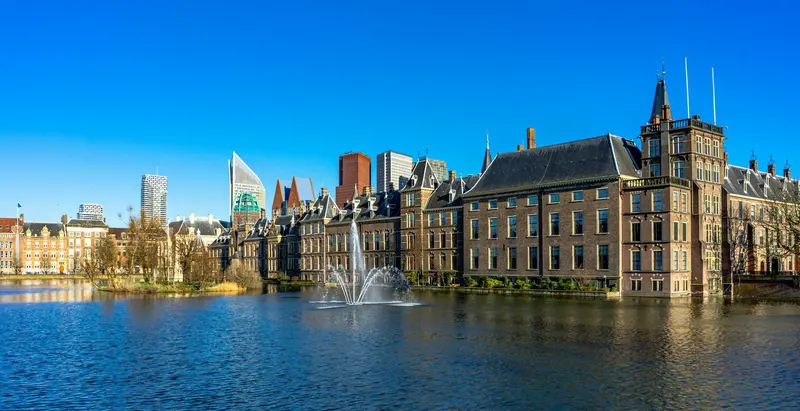
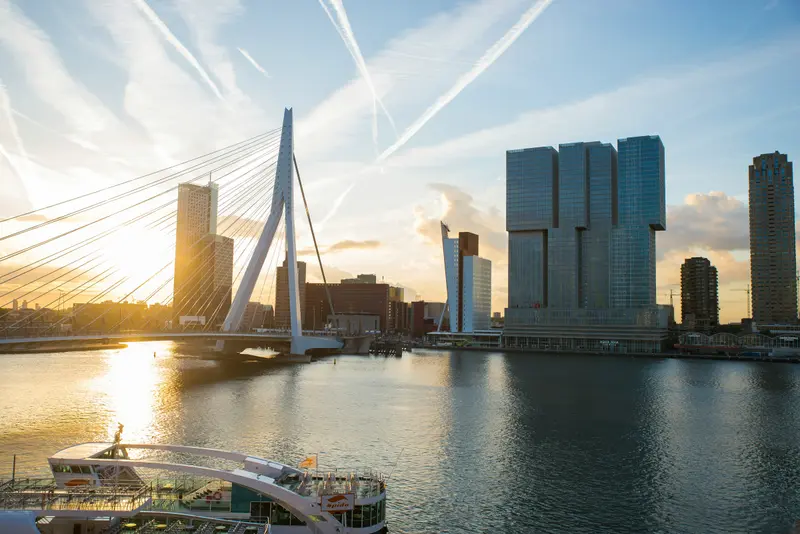
    Rotterdam is the second-largest city in the Netherlands, home to Europe's largest seaport, and the destination for all seeking modern architecture.

    Rotterdam is home to around 671,000 residents, making it the second-largest city in the Netherlands after Amsterdam. The city is located in the Rhine-Meuse Delta, mostly below sea level, and is divided into a north and south part by the Nieuwe Maas.

    Discover
    Delft

    Place 2 of 4

    Delft

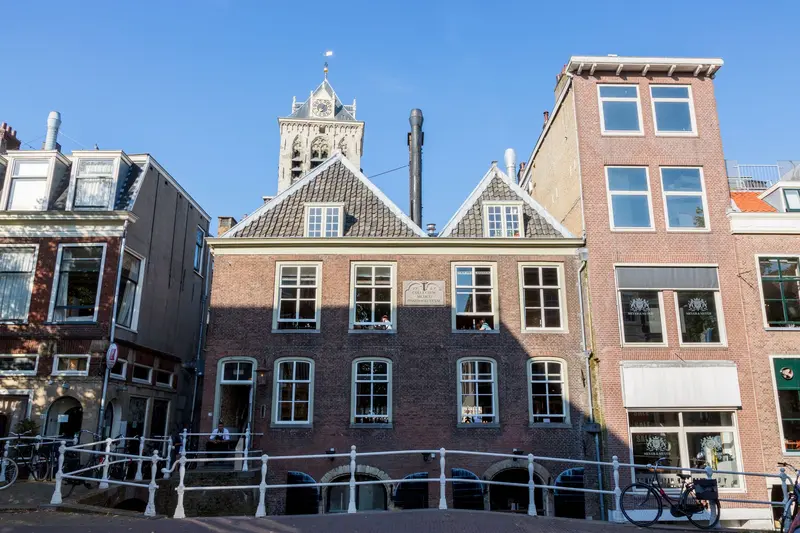
    Delft is located between The Hague and Rotterdam and is known for three things: its blue and white Delft Blue pottery, the painter Jan Vermeer, and the history of the House of Orange.

    Delft has a population of around 110,000 and is situated between The Hague and Rotterdam on the Rhine-Schie Canal, approximately 15 kilometers from the North Sea coast. On the Market Square, the City Hall, built in 1620 by Hendrick de Keyser, and the New Church, with the tombs of the House of Orange, face each other.

    Discover
    Kinderdijk

    Place 3 of 4

    Kinderdijk

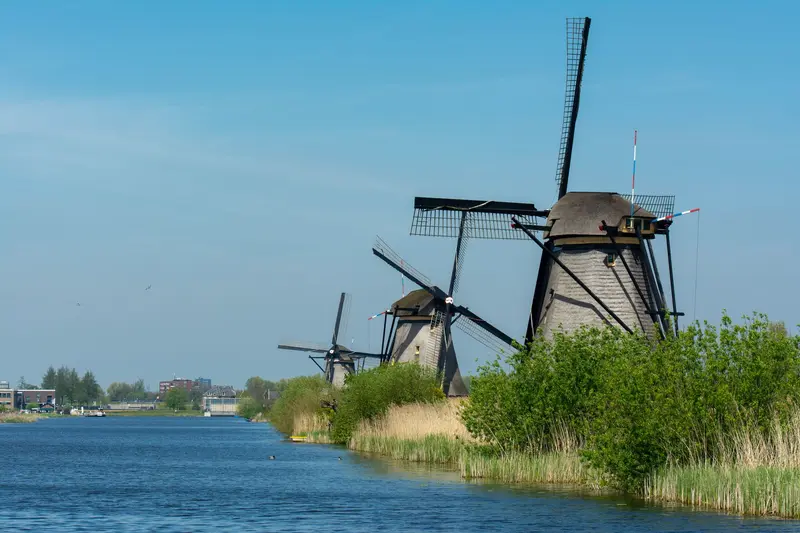
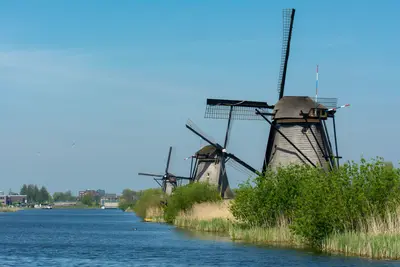
    In Kinderdijk, about 15 kilometres east of Rotterdam, 19 18th-century windmills stand along the canals – an ensemble that has been a UNESCO World Heritage site since 1997. They were built around 1740 to drain the Alblasserwaard polder.

    Kinderdijk, Molenlanden, Zuid-Holland. The windmills form a drainage system keeping the low-lying Alblasserwaard dry: In 1421, the Elisabeth Flood submerged adjacent areas, sparing Alblasserwaard.

    Discover
    Leiden

    Place 4 of 4

    Leiden

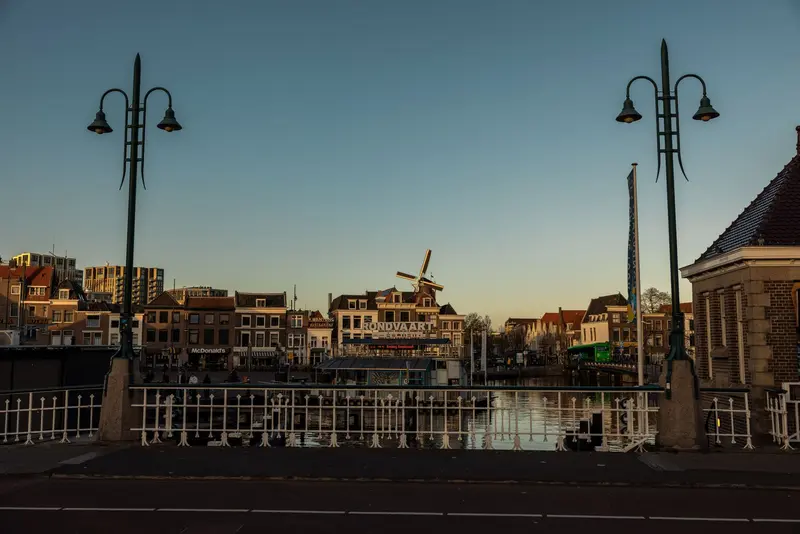
    Leiden is the oldest university city in the Netherlands and Rembrandt's birthplace – a canal city on the Oude Rijn with an unusual density of museums. In the Hortus Botanicus of the university, founded in 1575, the first tulips bloomed on Dutch soil in 1594.

    Leiden has a population of around 130,000 and is located in the north of the province of Zuid-Holland, about 18 kilometers from Den Haag and 45 kilometers from Amsterdam. The Oude Rijn flows through the city.

    Discover

    More places in South Holland

    Den Haag

    Den Haag

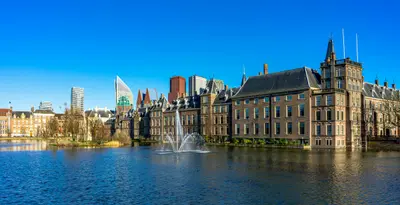
    The Hague is the Netherlands' seat of government and parliament, royal residence, and a city by the sea: The seaside resort of Scheveningen, with its historic Kurhaus, is part of the city. Visitors come for the medieval Binnenhof, for Vermeer and Rembrandt in the Mauritshuis, and for the miniature city of Madurodam.The city, with around 566,000 inhabitants, is capital of Zuid-Holland province; its center lies about six kilometers from the North Sea. As seat of the International Court of Justice, the International Criminal Court, and the Permanent Court of Arbitration, The Hague is also a center for international law.
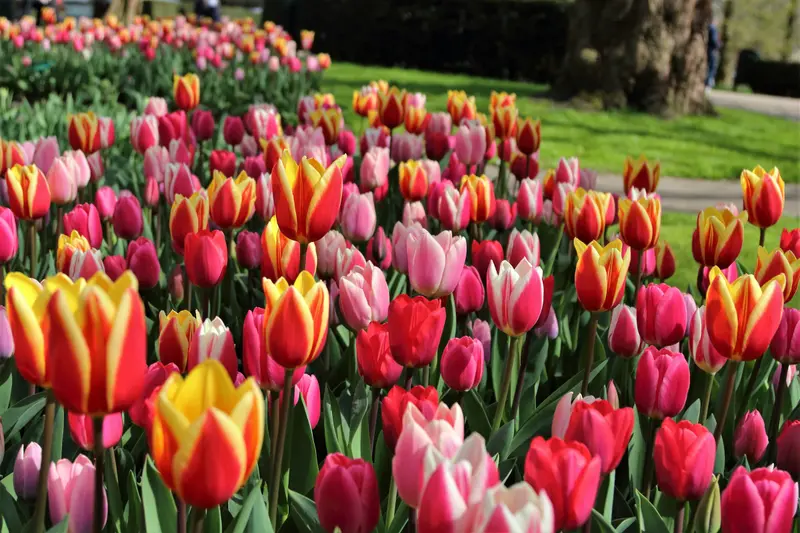
    Lisse & Keukenhof

    Lisse & Keukenhof

    Keukenhof near Lisse is the most famous flower park in the Netherlands: Every spring, 32 hectares bloom with around seven million hand-planted flower bulbs, including 4.5 million tulips in 100 varieties. It is open only eight weeks a year – during this time, around 1.4 million visitors arrive, about 80 percent of them from abroad.The park was established in 1949 as a spring flower show for bulb growers. Its name, 'Küchenhof', dates back to the 15th century, when Jakobäa von Bayern had herbs grown here for the castle kitchen. Lisse is located in the province of Zuid-Holland, in the middle of the flower bulb growing region.
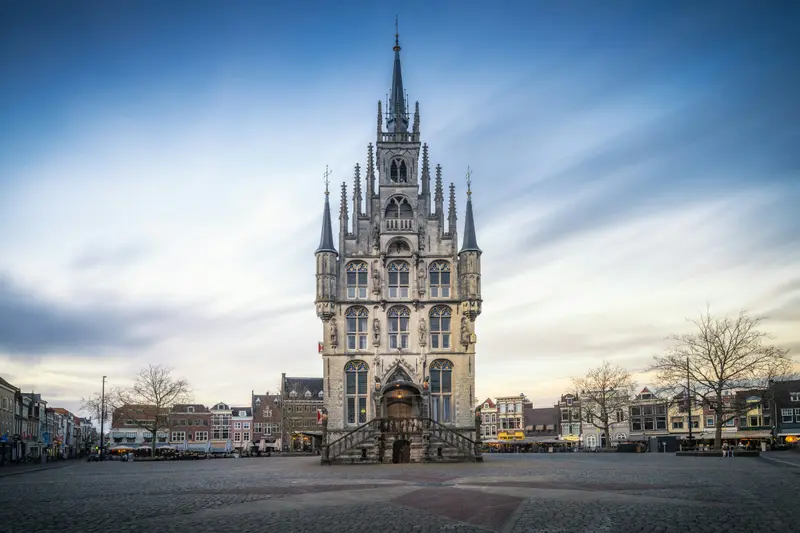
    Gouda

    Gouda

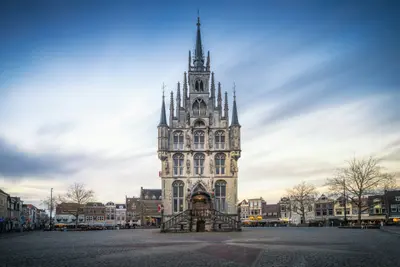
    Gouda gave its name to the Netherlands' most famous cheese: it is produced in the surrounding area and has been traded here for centuries – every Thursday morning from April to August at the cheese market. This city in Zuid-Holland is also the home of the Stroopwafel and was long known for candles and clay pipes.In the middle of the market square stands one of the country's oldest Gothic town halls, built between 1448 and 1450. The Sint-Janskerk, at 123 meters, is the longest cruciform church in the Netherlands and famous for its 70 stained-glass windows. Gouda has around 76,000 inhabitants and is located at the confluence of the Gouwe and Hollandse IJssel.
    Nearby

    Rotterdam

    Rotterdam

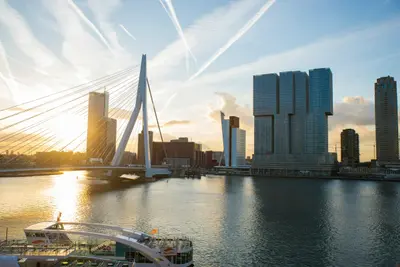
    Rotterdam is the second-largest city in the Netherlands, home to Europe's largest seaport, and the destination for all seeking modern architecture. Because a German air raid on May 14, 1940, almost completely destroyed the city center, the core was rebuilt after the war – with structures like Piet Blom's Cube Houses, the Markthal, and the Erasmus Bridge.The city, with around 671,000 residents, is located in Zuid-Holland province within the Rhine-Meuse Delta. The Nieuwe Maas divides it into northern and southern parts; on the south bank, the former port area Kop van Zuid has grown into a district with skyscrapers, museums, and hotels.
    Delft

    Delft

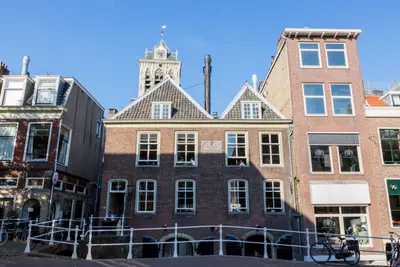
    Delft is located between The Hague and Rotterdam and is known for three things: its blue and white Delft Blue pottery, the painter Jan Vermeer, and the history of the House of Orange. William of Orange was assassinated here in 1584; the royal family's burial place is located in the Nieuwe Kerk on the market square.The city has a population of around 110,000 and is home to a Technical University. Its center, with canals, the 1620 City Hall, and the Oude Kerk with its leaning tower, can be easily explored on foot.
    Gouda

    Gouda

    Gouda gave its name to the Netherlands' most famous cheese: it is produced in the surrounding area and has been traded here for centuries – every Thursday morning from April to August at the cheese market. This city in Zuid-Holland is also the home of the Stroopwafel and was long known for candles and clay pipes.In the middle of the market square stands one of the country's oldest Gothic town halls, built between 1448 and 1450. The Sint-Janskerk, at 123 meters, is the longest cruciform church in the Netherlands and famous for its 70 stained-glass windows. Gouda has around 76,000 inhabitants and is located at the confluence of the Gouwe and Hollandse IJssel.
    Den Haag

    Den Haag

    The Hague is the Netherlands' seat of government and parliament, royal residence, and a city by the sea: The seaside resort of Scheveningen, with its historic Kurhaus, is part of the city. Visitors come for the medieval Binnenhof, for Vermeer and Rembrandt in the Mauritshuis, and for the miniature city of Madurodam.The city, with around 566,000 inhabitants, is capital of Zuid-Holland province; its center lies about six kilometers from the North Sea. As seat of the International Court of Justice, the International Criminal Court, and the Permanent Court of Arbitration, The Hague is also a center for international law.
    Kinderdijk

    Kinderdijk

    In Kinderdijk, about 15 kilometres east of Rotterdam, 19 18th-century windmills stand along the canals – an ensemble that has been a UNESCO World Heritage site since 1997. They were built around 1740 to drain the Alblasserwaard polder.Today, two diesel pumping stations handle most of the work, but some windmills are still operational. The name means “Children's Dike” and refers to a legend from the St. Elizabeth's Flood of 1421: A cradle with a sleeping child is said to have been washed ashore here, kept balanced by a cat.