ExploreTravel GuidesPlan a trip
    de|en
    All Places & RegionsAbout FernwehFAQPrivacy PolicyImprint
    ExploreTravel GuidesPlan a trip
    • Why go
    • Highlights
    • Explore regions
    • Round trips
    • Local food
    • Good to know
    • Best time to visit
    • Travel advice
    Netherlands

    Travel Guide Netherlands

    The Netherlands, often referred to as Holland, presents itself as a country of unique character, shaped by its flat geography and its close relationship with water.

    Contents

    • Why go
    • Highlights
    • Explore regions
    • Round trips
    • Local food
    • Good to know
    • Best time to visit
    • Travel advice

    Why Go To Netherlands?

    In a compact area, the Netherlands combines canal cities, major art museums, and a landscape of polders, dikes, and windmills reclaimed from the sea. The major cities of the Randstad – Amsterdam, Rotterdam, The Hague, and Utrecht – are no more than 77 kilometers apart and can easily be combined into one trip; plus, there are North Sea beaches, the Wadden Islands, and in spring, the flower fields around Lisse. Explore the country by bike on approximately 35,000 kilometers of structurally separate cycle paths.

    Where in Netherlands?

    Pick a region. The highlights, road trips and places below follow your choice.
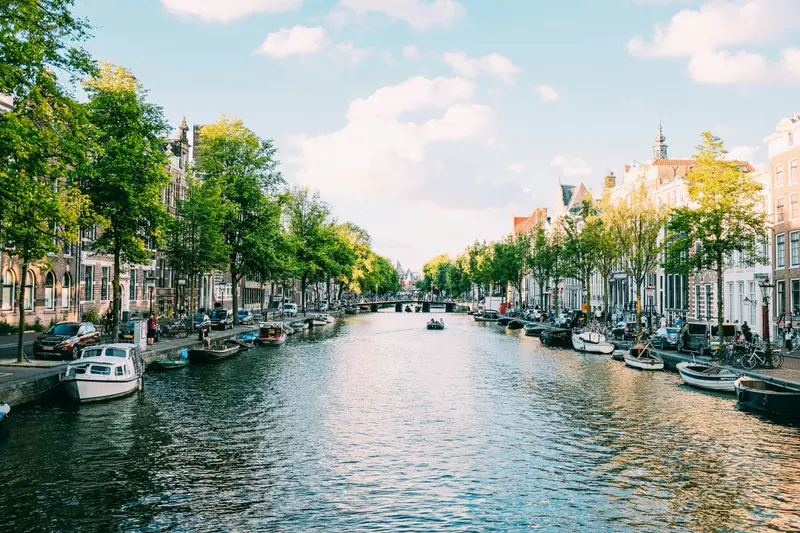
    Amsterdam

    Highlight 1 of 8

    Amsterdam

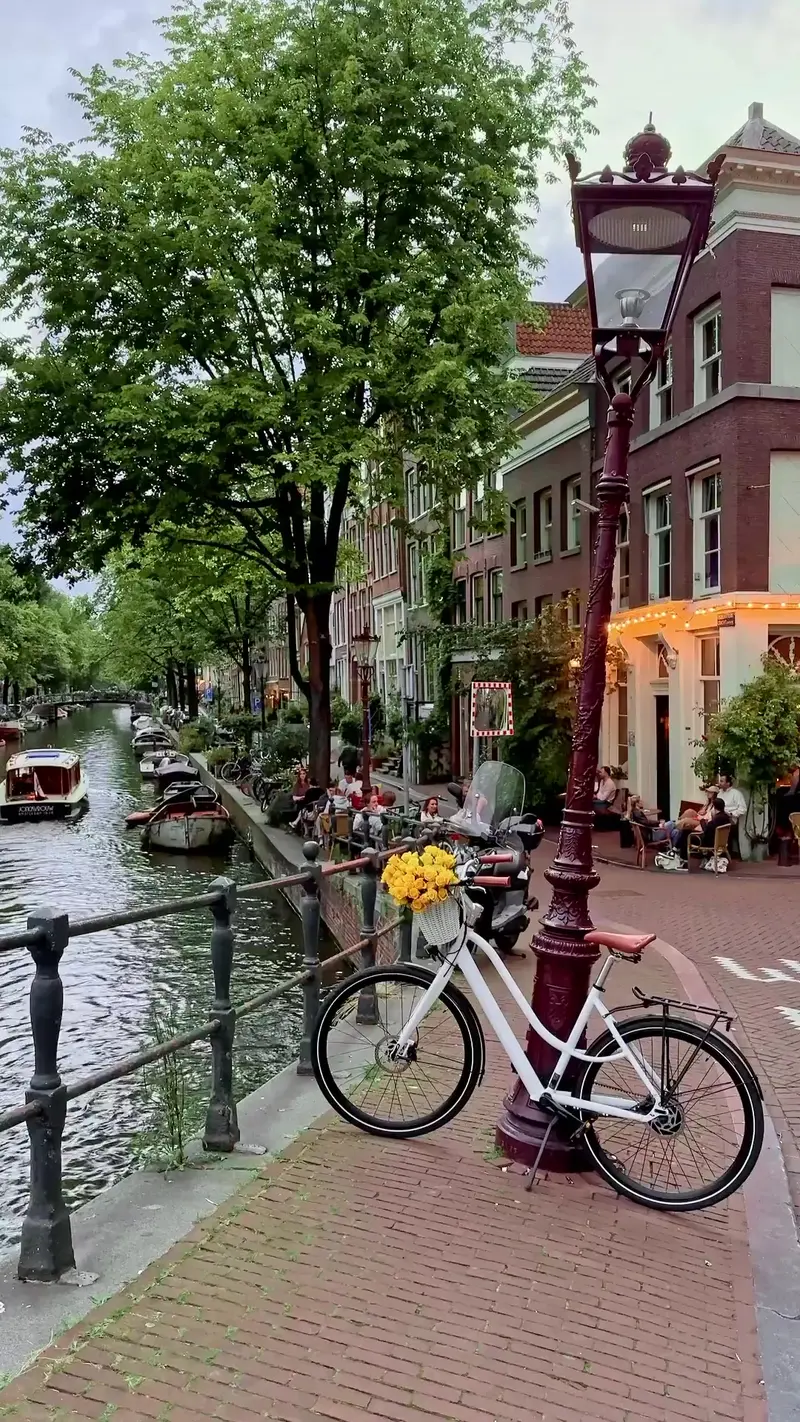
    Amsterdam is the capital of the Netherlands and by far its most visited destination: a city of 165 canals and almost 1,300 bridges, whose 17th-century canal ring has been a UNESCO World Heritage site since 2010.

    Amsterdam has around 936,000 inhabitants and is located in the province of Noord-Holland, along the Amstel river and the IJ, a former sea arm. The historic center is defined by its canal belt, whose waterways once served as transport routes for merchant houses.

    Discover
    Zaanse Schans

    Highlight 2 of 8

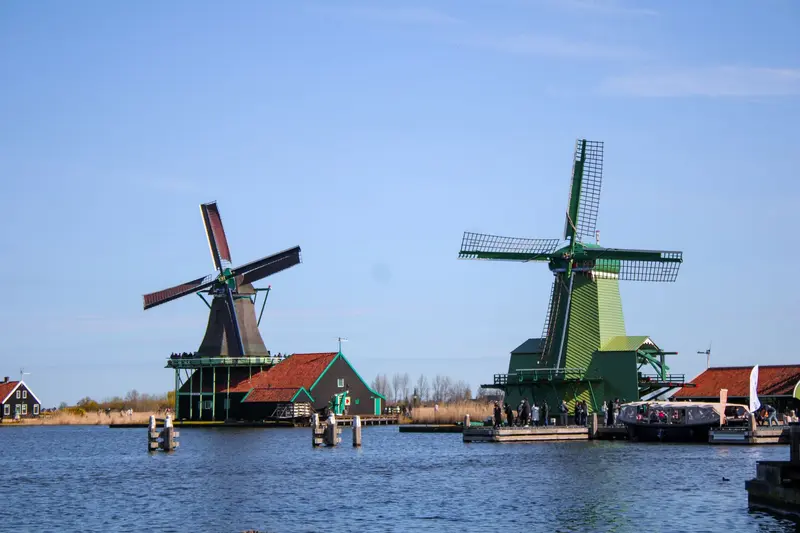
    Zaanse Schans

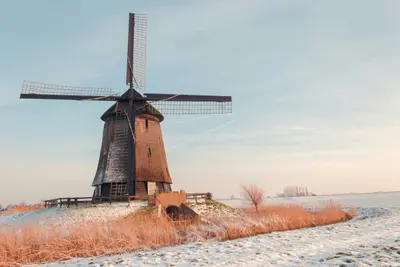
    The Zaanse Schans is a living open-air museum on the River Zaan north of Amsterdam: green wooden houses, craft workshops, and a series of working windmills show what the oldest industrial area of the Netherlands once looked like.

    Zaanse Schans is located in the municipality of Zaanstad on the banks of the Zaan, opposite Zaandijk. Its name dates back to a fortification from 1574.

    Discover
    Lisse & Keukenhof

    Highlight 3 of 8

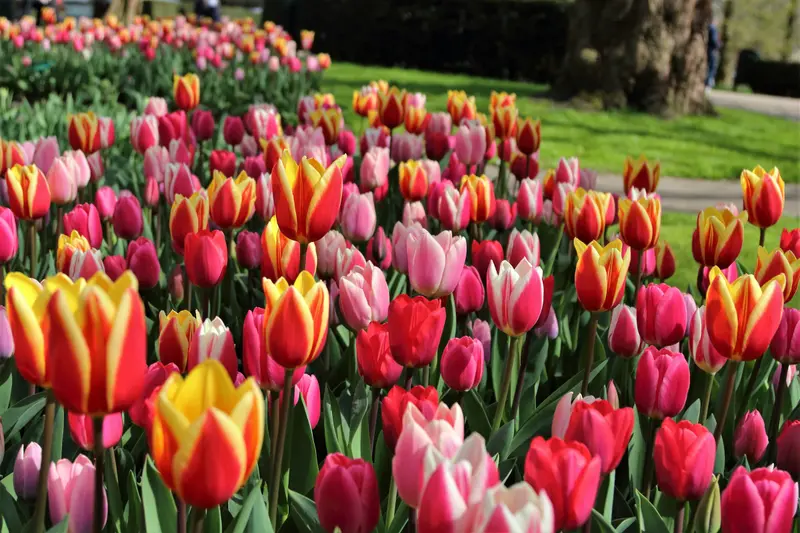
    Lisse & Keukenhof

    Keukenhof near Lisse is the most famous flower park in the Netherlands: Every spring, 32 hectares bloom with around seven million hand-planted flower bulbs, including 4.5 million tulips in 100 varieties.

    Keukenhof is located in the northern municipality of Lisse in the province of South Holland. The park is open only eight weeks a year, usually from mid-March to mid-May; the peak bloom is typically in mid-April, but depends on the weather.

    Discover
    Den Haag

    Highlight 4 of 8

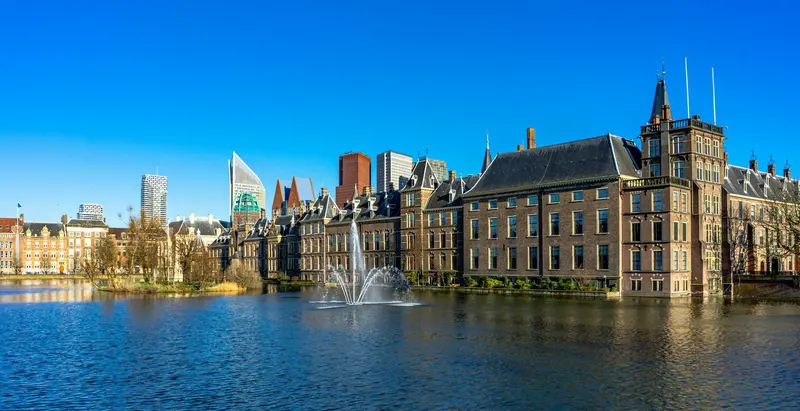
    Den Haag

    The Hague is the Netherlands' seat of government and parliament, royal residence, and a city by the sea: The seaside resort of Scheveningen, with its historic Kurhaus, is part of the city.

    Den Haag has approximately 566,000 inhabitants and is the capital of the province of Zuid-Holland. The Dutch government and parliament are located here, and the Royal House has resided in the city since 1831 – yet Amsterdam remains the country's capital.

    Discover
    Rotterdam

    Highlight 5 of 8

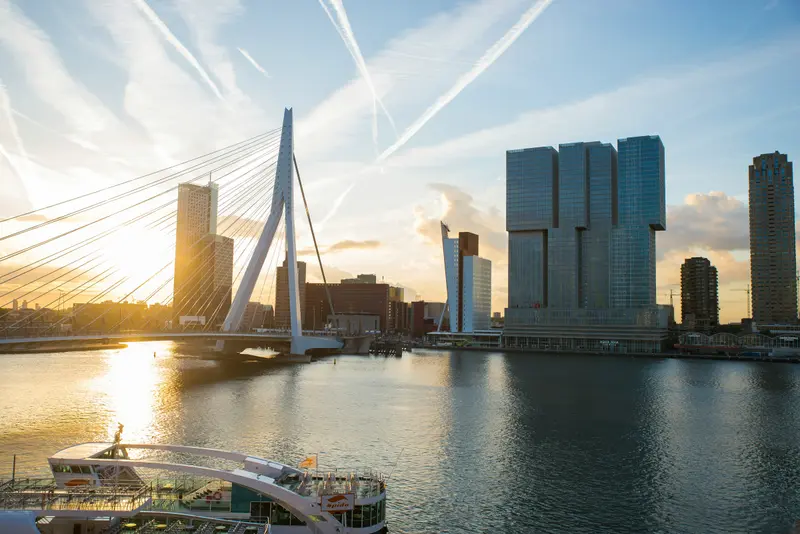
    Rotterdam

    Rotterdam is the second-largest city in the Netherlands, home to Europe's largest seaport, and the destination for all seeking modern architecture.

    Rotterdam is home to around 671,000 residents, making it the second-largest city in the Netherlands after Amsterdam. The city is located in the Rhine-Meuse Delta, mostly below sea level, and is divided into a north and south part by the Nieuwe Maas.

    Discover
    Kinderdijk

    Highlight 6 of 8

    Kinderdijk

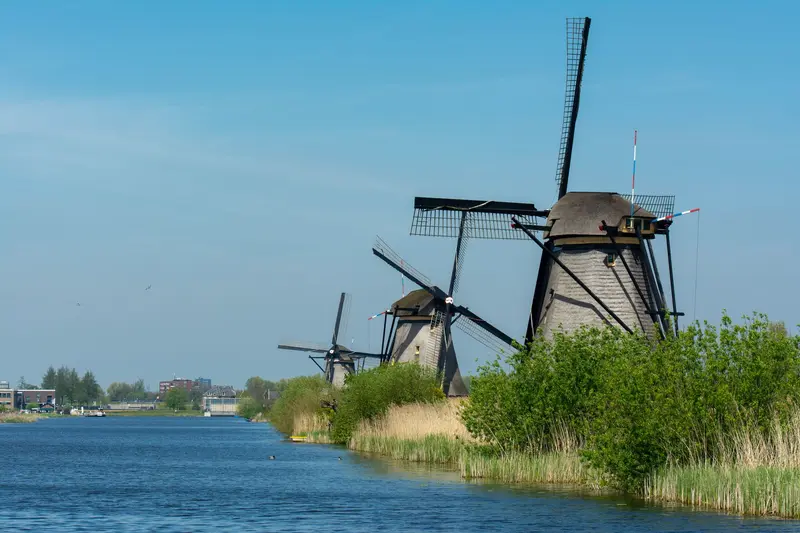
    In Kinderdijk, about 15 kilometres east of Rotterdam, 19 18th-century windmills stand along the canals – an ensemble that has been a UNESCO World Heritage site since 1997. They were built around 1740 to drain the Alblasserwaard polder.

    Kinderdijk, Molenlanden, Zuid-Holland. The windmills form a drainage system keeping the low-lying Alblasserwaard dry: In 1421, the Elisabeth Flood submerged adjacent areas, sparing Alblasserwaard.

    Discover
    Utrecht

    Highlight 7 of 8

    Utrecht

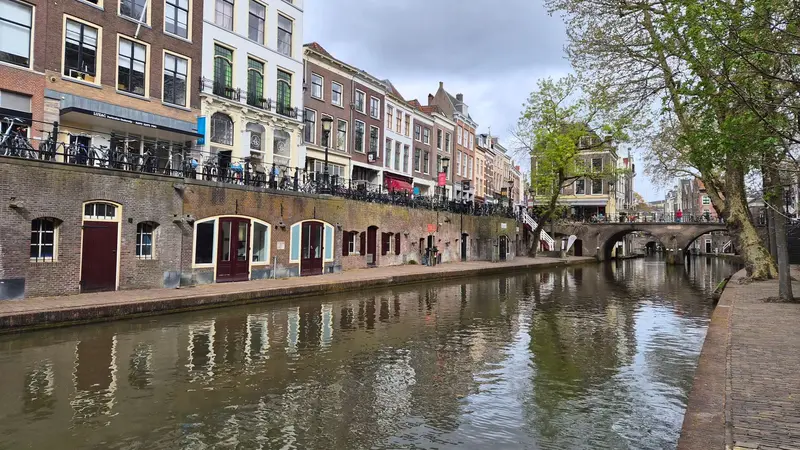
    Utrecht is the fourth-largest city in the Netherlands, centrally located in the country – a university city with canals, whose landmark is the 112.5-meter-high Dom Tower, the tallest church tower in the Netherlands.

    Utrecht has around 376,000 inhabitants and is centrally located in the Netherlands. The Old Town is crisscrossed by the Oudegracht, a canal about two kilometers long, whose quays and cellar vaults lie directly on the water below street level – many of these former storage cellars now house restaurants and cafés.

    Discover
    De Hoge Veluwe National Park

    Highlight 8 of 8

    De Hoge Veluwe National Park

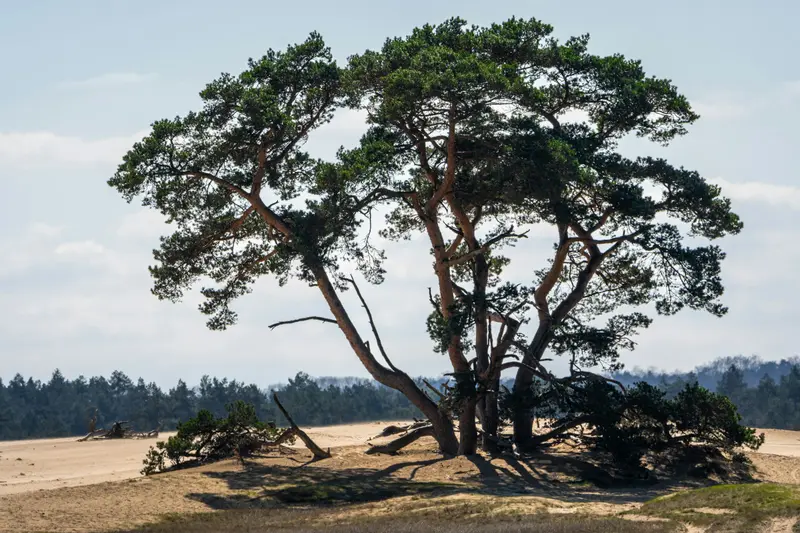
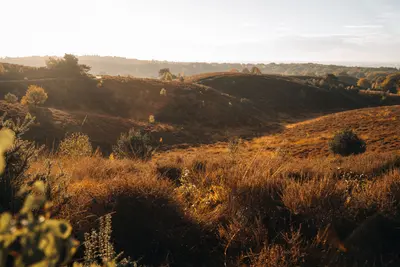
    De Hoge Veluwe National Park is in Gelderland province, eastern Netherlands, northwest of Arnhem, between Ede and Apeldoorn.

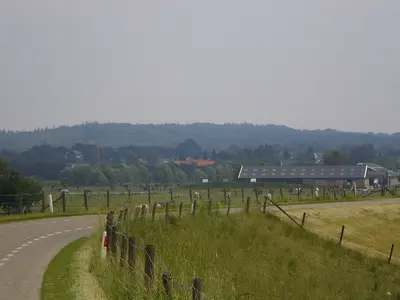
    De Hoge Veluwe National Park is located in the Veluwe forest area in the province of Gelderland, northwest of Arnhem between Ede and Apeldoorn, covering approximately 54.5 square kilometers. Its history began in 1909 when the couple Anton Kröller and Helene Kröller-Müller purchased the area as a hunting ground.

    Discover

    More highlights in Netherlands

    Unique experiences that make Netherlands unforgettable.
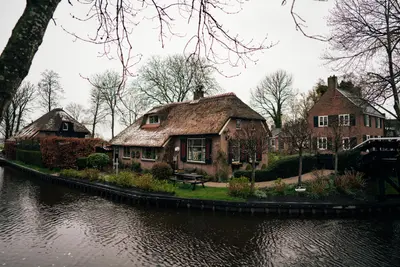
    Giethoorn

    Giethoorn

    Giethoorn ist ein Wasserdorf in der Provinz Overijssel im Nordosten der Niederlande, am Rand des Moorgebiets De Wieden. Du kommst für die Fahrt mit dem Boot: Das Dorf zieht sich rund acht Kilometer an einem Dorfkanal entlang, den zahlreiche Querkanäle und Holzbrücken kreuzen.
    Texel

    Texel

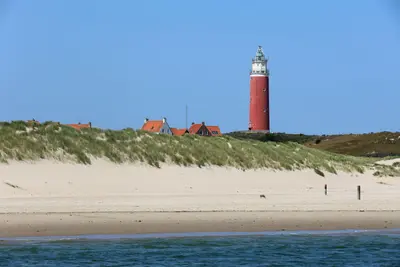
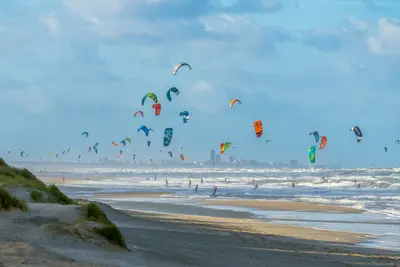
    Texel is the largest of the West Frisian Islands and belongs to the province of Noord-Holland; from Den Helder on the mainland, the car ferry crosses in about 20 minutes. You come for the approximately 30-kilometer-long sandy beach on the west coast, the dune belt of the Duinen van Texel National Park, and bike tours between seven villages.
    Maastricht

    Maastricht

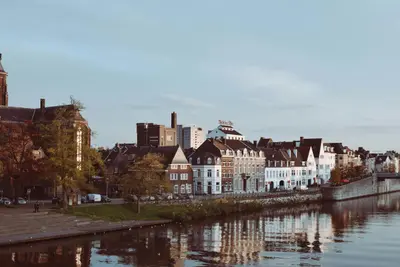
    Maastricht is the capital of the province of Limburg and is located in the far southeast of the Netherlands on both banks of the Maas, between Belgium and Germany. You come for the old town around the Vrijthof with its Romanesque churches, for the remains of the 13th-century city wall, and for the underground passages in the Sint Pietersberg.

    How to plan your trip to Netherlands

    From the guide to the road: here is what comes next.

    1. 1
      1234

      Round trip

      12 days · 4 stops

      Saved

      Pick a route

      Pick a ready-made one or save places and plan your own.

      Browse routes
    2. 2

      Trip to Netherlands

      Live
      • 1Amsterdam3 days
      • 2Zaanse Schans4 days
      • 3Lisse & Keukenhof5 days
      Budget

      Plan your trip

      The planner sorts stops, days and budget. Plan together in real time.

      Go to My Trips
    3. 3
      9:41 No signal
      Available offline

      Use it on the road

      Download the guide to your phone and use it on site, even offline.
    Regions to Discover

    Explore the diverse regions of Netherlands.
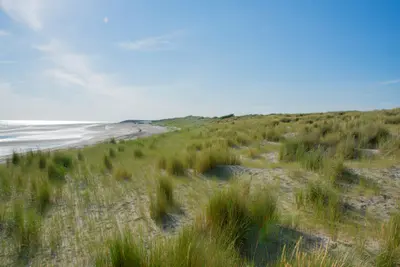
    Zeeland

    Zeeland

    Zeeland, in the southwest of the Netherlands, consists of islands and peninsulas between the Oosterschelde and Westerschelde estuaries, as well as a piece of mainland bordering Belgium. The province is known for its North Sea beaches, the seaside resort of Domburg, and the Delta Works storm surge barriers. Almost all of Zeeland lies below sea level. Following the 1953 storm surge, the Delta Works were constructed from 1960 onwards; its largest structure, the Oosterschelde storm surge barrier, has a visitor centre on the artificial island of Neeltje Jans. Middelburg, the capital, along with Veere, Zierikzee, and Goes, boast…
    Overijssel

    Overijssel

    Overijssel is located in the east of the Netherlands between the IJssel and the German border. In the northwest of the province lies the Weerribben-Wieden National Park, a landscape of fens, lakes, and canals.The capital is Zwolle; other major cities include Deventer, Enschede, Hengelo, and Almelo. The west of the province is called Salland, the east Twente.
    Province Utrecht

    Province Utrecht

    The Province of Utrecht is located in the center of the Netherlands and is the country's smallest. Its center is the eponymous university city of Utrecht, and the province's second-largest city is Amersfoort.The west consists of polderland. In the northeast, the Utrechtse Heuvelrug stretches through the province, a wooded sandy area with hills up to nearly 70 meters high.
    Noord-Brabant

    Noord-Brabant

    Noord-Brabant, in the south of the Netherlands, is home to Efteling theme park and is largely Catholic – Carnival is celebrated here every year. Its capital is ’s-Hertogenbosch, largest city Eindhoven; Tilburg and Breda also feature.Worth seeing are the old towns of ’s-Hertogenbosch and Breda. De Biesbosch National Park is one of Europe's last great wetlands.
    North Holland

    North Holland

    Noord-Holland is the peninsula between the North Sea and the IJsselmeer and, with Amsterdam, the most visited province of the Netherlands. Besides the capital, it features Haarlem, the cheese city Alkmaar, the old port towns Hoorn and Enkhuizen, and the Wadden Island Texel.More than half of the province consists of reclaimed polders. Behind the dunes of Kennemerland stretches flat geestland, north of Amsterdam the watery Waterland, and in the southeast the forests and heathlands of Het Gooi.
    South Holland

    South Holland

    South Holland is the most densely populated province of the Netherlands, uniting two very different major cities: the port city of Rotterdam and the seat of government, The Hague. In between lie the historic centers of Leiden, Delft, Gouda, Dordrecht, and Schiedam.Along the North Sea coast, behind the dunes, are seaside resorts such as Katwijk and Noordwijk. Southeast of Rotterdam stand the windmills of Kinderdijk, a UNESCO World Heritage site. In the south of the province, bridges and dams connect the islands of the Rhine Delta.
    Friesland

    Friesland

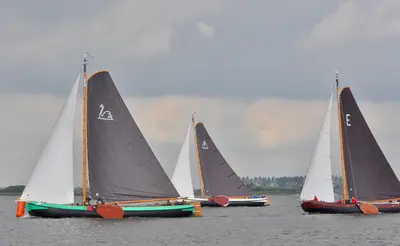
    Friesland in the northern Netherlands, province of lakes, Wadden Sea, and its own language: West Frisian, official alongside Dutch. The Wadden Islands Vlieland, Terschelling, Ameland, Schiermonnikoog belong here.Leeuwarden is the capital. Visitors enjoy watersports on lakes, swimming at the coast and islands, and mudflat hiking. In summer, old sailing cargo ships race in the Skûtsjesilen regatta.
    Limburg

    Limburg

    Limburg is the southernmost tip of the Netherlands, nestled between Germany and Belgium – and the only province located entirely above sea level. The south is a hilly region, home to the capital Maastricht and the popular resort town of Valkenburg.At the Three-Country Point near Vaals, the Vaalserberg reaches 322.7 meters, making it the highest point in the European Netherlands. The Maas river flows through the province from south to north. Regional cuisine features asparagus and Limburger Vlaai, a traditional fruit tart.
    Gelderland

    Gelderland

    Gelderland in the east is the largest province of the Netherlands by area and its most wooded part: In the north lies the Veluwe, the country's largest forest area. The largest cities are Nijmegen, the capital Arnhem, and Apeldoorn.The rivers Nederrijn, Lek, and Waal traverse the province from east to west, and the IJssel flows north to the IJsselmeer. Between these rivers lies the Betuwe, known for its fruit cultivation, and in the southeast, the agricultural Achterhoek.
    Province Groningen

    Province Groningen

    The Province of Groningen is the northeasternmost of the Netherlands and borders the Wadden Sea to the north, and Ostfriesland and Emsland to the east. Its center is the university city of Groningen with its old town.The area surrounding the city, the Ommelande, is flat and expansive. Old villages are located there on *Warften*, artificially raised mounds.

    Recommended Itineraries

    Discover the best routes through Netherlands.
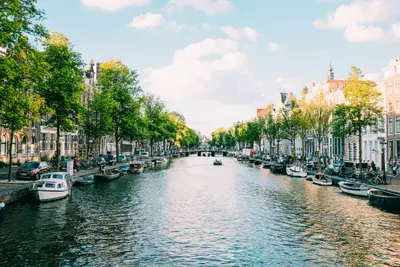
    Randstad Classic: Canal Cities and Windmills

    The route connects Amsterdam, Haarlem, Leiden, The Hague, Delft, Rotterdam, and Utrecht, each only 10 to 40 minutes by train from one another. From Amsterdam, you travel to the windmills of Zaanse Schans; in spring, from Leiden to Keukenhof; and from Rotterdam, reach Kinderdijk in about 30 minutes by WaterShuttle. You don't need a car; train and bike are more practical in the city centers.

    9 Days
    Stops at a glance
    1. 1.Amsterdam
    2. 2.Haarlem
    3. 3.Leiden
    4. 4.Den Haag
    5. 5.Delft
    6. 6.Rotterdam
    7. 7.Utrecht
    View Route Details →

    The North: Cheese Market, Wadden Island and Friesland

    From Amsterdam, you head to Alkmaar with its cheese market, held Fridays from early April to early September, then from Den Helder, a 20-minute ferry ride to Texel. Via the Afsluitdijk, you continue to Leeuwarden and Groningen, and on your return south, to the water village of Giethoorn.
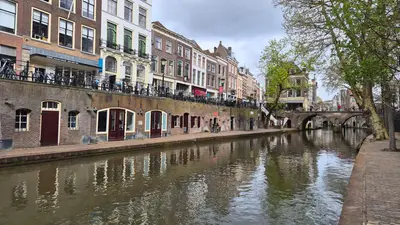
    9 Days
    6 stops

    The South and East: Brabant, Limburg and Veluwe

    From Utrecht, it's on to ’s-Hertogenbosch with its Sint-Janskathedraal and boat trips on the Binnendieze, then to Efteling theme park in Kaatsheuvel, and south to Maastricht on the Maas. On the return journey north, about a two-hour drive, lies De Hoge Veluwe National Park, which you can explore with the free White Bicycles up to the Kröller-Müller Museum.

    7 Days
    5 stops

    What you eat in Netherlands

    Hollandse Nieuwe

    Hollandse Nieuwe

    Only herring caught between May and the end of August may be sold as Hollandse Nieuwe; the industry re-establishes the start of the season each year. You eat it raw, usually with chopped onions – held by the tail, cut into pieces or in a soft roll.
    Bitterballen

    Bitterballen

    The fried, crispy breaded balls with ragout filling are the small variant of the Kroket and belong to the Borrel, the late afternoon get-together. They are served hot with mustard.
    Stamppot

    Stamppot

    For this winter dish, boiled potatoes are mashed with vegetables, the most well-known variant being with kale (boerenkool). Stamppot is served with smoked sausage (rookworst), bacon, gravy, and mustard.
    Pea Potage

    Pea Potage

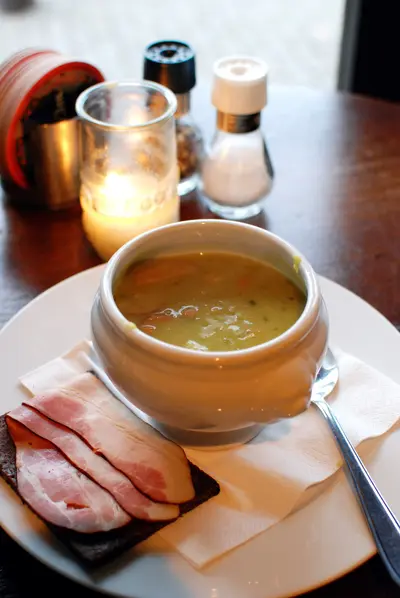
    The very thick pea soup with pork and smoked sausage (rookworst) is traditionally eaten in winter and is more a stew than a soup. It comes with rye bread with butter and smoked bacon (katenspek).
    Stroopwafel

    Stroopwafel

    A thin waffle is sliced horizontally and filled with a layer of syrup. This specialty originates from the city of Gouda and is now available nationwide at markets and in supermarkets.
    Poffertjes

    Poffertjes

    These small, fluffy yeast pancakes are baked in a special dimpled pan. You get them warm with butter and powdered sugar, especially at stalls at festivals and Christmas markets.

    Good to Know

    Essential info for your trip planning.

    Land & People

    The Netherlands, often referred to as Holland, presents itself as a fascinating interplay of innovative landscape…

    History & Society

    The history of the Netherlands is shaped by seafaring, trade, and an early quest for independence.

    Food & Drink

    Discover Dutch CuisineDutch cuisine is down-to-earth, often hearty, and reflects the country's maritime history and…

    Practical Info

    Entry and CustomsAs a citizen of an EU country, you only need a valid ID card or passport for entry into the…

    Getting Around

    Getting to the NetherlandsThe Netherlands is easily accessible from Germany by various routes, and distances within the…

    RV Travel

    The Netherlands is a straightforward RV destination: distances are short, roads flat and well-maintained.

    Traveling with Kids

    Explore the Netherlands with KidsThe Netherlands is an exceptionally child-friendly destination, perfectly suited for…

    Best Time to Visit

    When is the best time for your trip?

    April
    May
    June
    September
    10–17°C·45–70 mm(moderate rain)
    Die Monate April, Mai und Juni bieten angenehme Temperaturen und die höchste Wahrscheinlichkeit für sonniges Wetter, ideal auch für die Tulpenblüte im Frühling. Der September ist ebenfalls empfehlenswert, da das Wetter oft noch mild ist und die Touristenmassen des Hochsommers abgenommen haben.
    Die Niederlande haben ein gemäßigtes maritimes Klima, das stark von der Nordsee beeinflusst wird. Dies führt zu milden Wintern und kühlen bis mäßig warmen Sommern. Extreme Temperaturen sind selten.Niederschlag: Regen ist über das ganze Jahr verteilt, ohne ausgeprägte Trocken- oder Regenzeiten. Die feuchtesten Monate sind tendenziell im Herbst und Frühwinter, während das Frühjahr oft am trockensten ist.Wind: Das Land ist bekannt für seine Winde, insbesondere an der Küste und in offenen Landschaften. Dies kann das gefühlte Wetter kühler machen, als die Thermometerwerte anzeigen.Wetterwechsel: Das Wetter in den Niederlanden kann sehr wechselhaft sein; ein sonniger Morgen kann sich schnell in einen bewölkten oder regnerischen Nachmittag verwandeln. Schichtenkleidung ist daher das ganze Jahr über ratsam.Regionale Unterschiede: Die klimatischen Unterschiede innerhalb der Niederlande sind gering. Küstenregionen erleben tendenziell mildere Winter und kühlere Sommer als das Binnenland, mit etwas mehr Wind und oft mehr Sonnenstunden.Sonnenschein: Die sonnigsten Monate sind Mai, Juni, Juli und August, während die Wintermonate sehr wenig Sonnenschein bieten.

    Seasons

    Jan
    Feb
    Mar
    Apr
    May
    Jun
    Jul
    Aug
    Sep
    Oct
    Nov
    Dec
    Hauptsaison
    Übergangssaison
    Nebensaison
    Best Time to Visit
    ▶Show detailed monthly data
    MonthTemp (°C)Rain (mm)Sun (h)
    January3.0652.0
    February3.0553.0
    March6.0504.0
    April10.0456.0
    May14.0557.0
    June17.0657.0
    July19.0757.0
    August19.0756.0
    September16.0705.0
    October12.0753.0
    November7.0802.0
    December4.0751.0

    Travel advice

    Safety, entry requirements and health: the official, up-to-date advice for Netherlands is published by the UK government on GOV.UK.

    Go to GOV.UK

    Felix at Kuirau Park in Rotorua, New Zealand

    Who's behind Fernweh?

    Hi, I'm Felix.

    I love to travel, and I love planning even more. Fernweh.guide is my attempt at building a really good online travel guide.

    About Fernweh

    All places in Netherlands

    • 's-Hertogenbosch
    • Alkmaar
    • Amsterdam
    • De Hoge Veluwe National Park
    • Delft
    • Den Haag
    • Efteling
    • Friesland
    • Gelderland
    • Giethoorn
    • Gouda
    • Groningen
    • Haarlem
    • Kinderdijk
    • Leeuwarden
    • Leiden
    • Limburg
    • Lisse & Keukenhof
    • Maastricht
    • Middelburg
    • Noord-Brabant
    • North Holland
    • Overijssel
    • Province Groningen
    • Province Utrecht
    • Rotterdam
    • South Holland
    • Texel
    • Utrecht
    • Volendam
    • Zaanse Schans
    • Zeeland

    More about Netherlands

    • Best Time to Visit Netherlands
    • Netherlands with Kids
    • Netherlands by RV