
Fernweh: Home
    ExploreTravel GuidesPlan a tripMy tripLast visited
    de|en
    All Places & RegionsAll highlightsAbout FernwehFAQPrivacy PolicyImprint
    ExploreTravel GuidesPlan a tripMy tripLast visited
    Ston and Pelješac
    Carsten Steger / Wikimedia Commons / CC BY-SA 4.0

    Croatia

    Ston and Pelješac

    Point of Interest

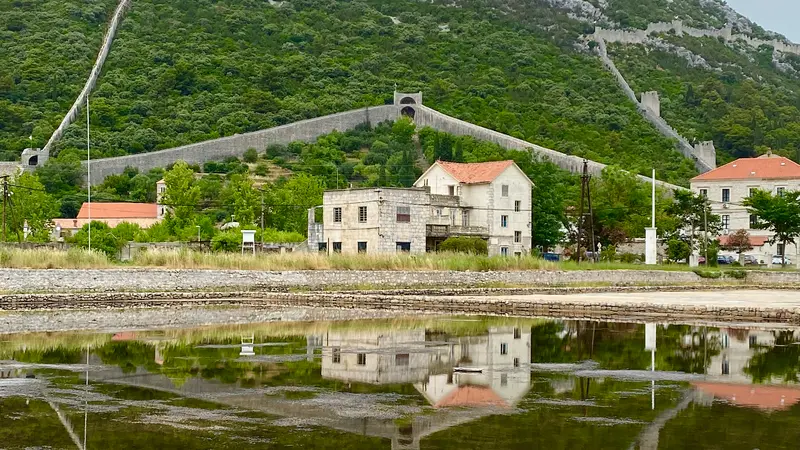
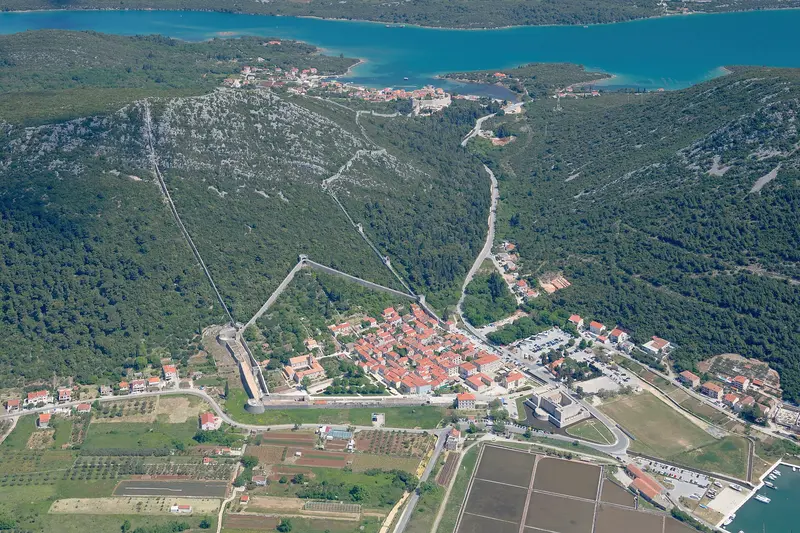
    Ston is located on the isthmus to the Pelješac peninsula northwest of Dubrovnik. The Walls of Ston once protected the salt pans of the Republic of Ragusa and stretch over the hill to Mali Ston, where oysters are cultivated in the bay.

    by Felix Gillen

    1. Home
    2. Destinations
    3. Croatia
    4. Dalmatia S.
    5. Ston and Pelješac
    Ston is located on the isthmus to the Pelješac peninsula northwest of Dubrovnik. The Walls of Ston once protected the salt pans of the Republic of Ragusa and stretch over the hill to Mali Ston, where oysters are cultivated in the bay.

    Sights in Ston and Pelješac

    Discover the most important sights and attractions
    Pelješac Bridge
    Point of Interest

    1Pelješac Bridge

    The 2,404-meter-long bridge opened in July 2022, connecting Pelješac with the mainland.
    Open in Google Maps
    Walls of Ston
    Historic Landmark

    2Walls of Ston

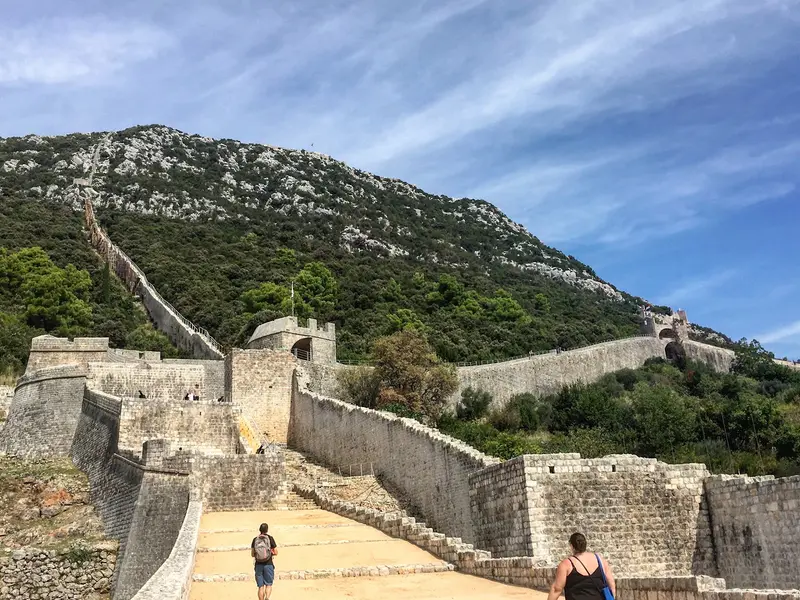
    The 14th and 15th-century fortifications stretch between Ston and Mali Ston over the hill. You can walk a section of the Great Wall.
    Open in Google Maps
    Salt Pans of Ston
    Museum

    3Salt Pans of Ston

    The Ston Saltworks were among the most important sources of revenue for the Republic of Ragusa; the walls were built to protect them.
    Open in Google Maps

    Restaurants in Ston and Pelješac

    1

    Bota Šare Mali Ston restaurant & oyster bar

    Restaurant in an old salt warehouse in Mali Ston with oysters from the bay, listed in the Falstaff Guide 2025.
    Show on Google Maps

    Food and Drinks

    Ston and Pelješac stand for oysters, salt, and red wine.

    Malostonska kamenica

    European Oyster from Mali Ston Bay, with EU Protected Designation of Origin since 2020.

    Salt from Ston

    The salt pans date back to 1333, and some of the salt is still harvested by hand.

    Dingač

    Red wine from Plavac mali, from the southern slopes of Pelješac. Dingač was Croatia's first protected wine region in 1961.

    Walls, Salt and Oysters

    In 1333, Ragusa bought Ston. From 1358, fortifications were built, originally stretching over seven kilometers; today they measure around 5.5 kilometers. These protected the salt pans, which brought high revenues to Dubrovnik. The oysters of Mali Ston have been protected since 1787 and today bear an EU protected designation of origin. On Pelješac, the wines from the Dingač and Postup sites grow.

    Arrival

    Since July 2022, the 2,404-meter-long Pelješac Bridge connects the peninsula to the mainland north of Neum. You can now drive from Split to Dubrovnik without crossing the border into Bosnia and Herzegovina.

    Accommodations in Ston and Pelješac

    Find perfect stay in Ston and Pelješac

    Booking.com* (Affiliate link)
    Search Hotels
    Agoda* (Affiliate link)
    Search Hotels
    Airbnb
    Vacation Rentals

    * Affiliate link: if you book through it, we earn a small commission. The price stays the same for you.

    Campgrounds in Ston and Pelješac

    Find perfect campground in Ston and Pelješac

    Search via Google Maps
    Campgrounds nearby (15km)
    Camping.info
    Find Campgrounds
    Park4Night
    RV Parks & Camping

    Nearby

    Dalmatia S.

    Dalmatia S.

    South Dalmatia is the southernmost part of Croatia, featuring Dubrovnik, Korčula Island, the Pelješac Peninsula, and Mljet National Park. Since 2022, the Pelješac Bridge has directly connected the region with the rest of the country.
    Mljet National Park

    Mljet National Park

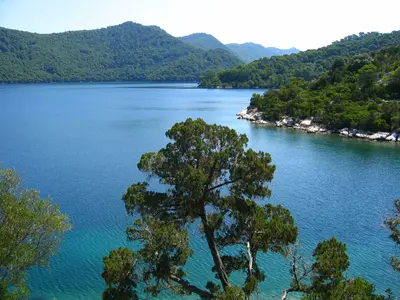
    Mljet National Park protects a part of Mljet Island northwest of Dubrovnik. At its heart are two saltwater lakes, the Great Lake and the Small Lake, and the monastery island of Sveta Marija in the Great Lake.

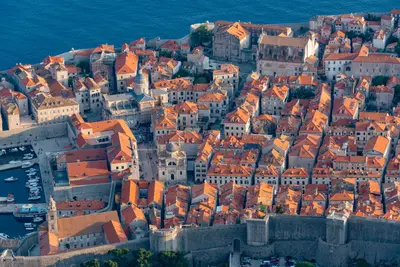
    Dubrovnik is a port city in the very south of Croatia, whose Old Town is entirely enclosed by an almost two-kilometer-long city wall. As the capital of the Republic of Ragusa, it was an independent mercantile republic for centuries and is now the country's most famous travel destination.The Old Town has been on the UNESCO World Heritage List since 1979. In summer, it is very crowded; you'll experience it most peacefully early in the morning and in the evening.
    Korčula

    Korčula

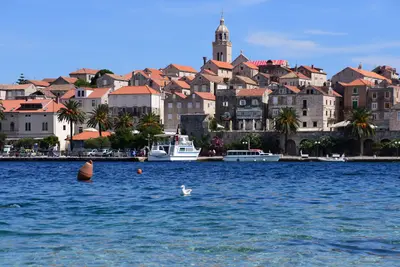
    Korčula is an island in South Dalmatia, its main town lying on a small peninsula, surrounded by walls and towers. In summer, the historical sword dance Moreška is performed there.

    Cavtat is a small harbor town about 15 kilometers south of Dubrovnik. It is quieter than Dubrovnik and is a convenient base near the airport.

    Sources & method

    • Photos: Wikimedia Commons, Google Maps. Each photo carries its credit.
    • Place data such as addresses and ratings comes from Google Maps.
    • The content is based on web research from public, traceable sources. How the content is made · The role of AI