Fernweh: Home
ExploreGuideDestinationsMy tripsMy trip
de|en
All Places & RegionsRound tripsNight trains in EuropeAll highlightsAbout FernwehFAQPrivacy PolicyImprint
Download on the App StoreGet it on Google Play
ExploreGuideDestinationsMy tripsMy trip
    • Places in the region
    • Culture
    • Getting around
    • Nearby
    Friuli-Venezia Giulia

    Photo by Barbara Rubele on Pexels

    Italy

    Friuli-Venezia Giulia

    Region

    Friuli-Venezia Giulia is Italy's northeasternmost region, bordered by Austria to the north, Slovenia to the east, Veneto to the west, and the Adriatic Sea to the south.

    by Felix Gillen

    1. Home
    2. Destinations
    3. Italy
    4. Friuli-Venezia Giulia
    Friuli-Venezia Giulia is Italy's northeasternmost region, bordered by Austria to the north, Slovenia to the east, Veneto to the west, and the Adriatic Sea to the south. Within a compact area lie the Carnic and Julian Alps, the Karst plateau above Trieste, the lagoons of Grado and Marano, and the Collio wine region on the Slovenian border.The capital is the port city of Trieste, which belonged to the Habsburg Empire from 1382 to 1918 and retains a Central European character to this day. The region boasts five UNESCO World Heritage Sites: ancient Aquileia with its early Christian basilica, Cividale del Friuli as part of the Lombard World Heritage, the Venetian fortress town of Palmanova, the Friulian Dolomites, and the pile-dwelling settlement of Palù di Livenza.
    Italy travel guideRound trips in ItalyPlan a trip with Friuli-Venezia Giulia

    Contents

    • Places in the region
    • Culture
    • Getting around
    • Nearby

    More places in Friuli-Venezia Giulia

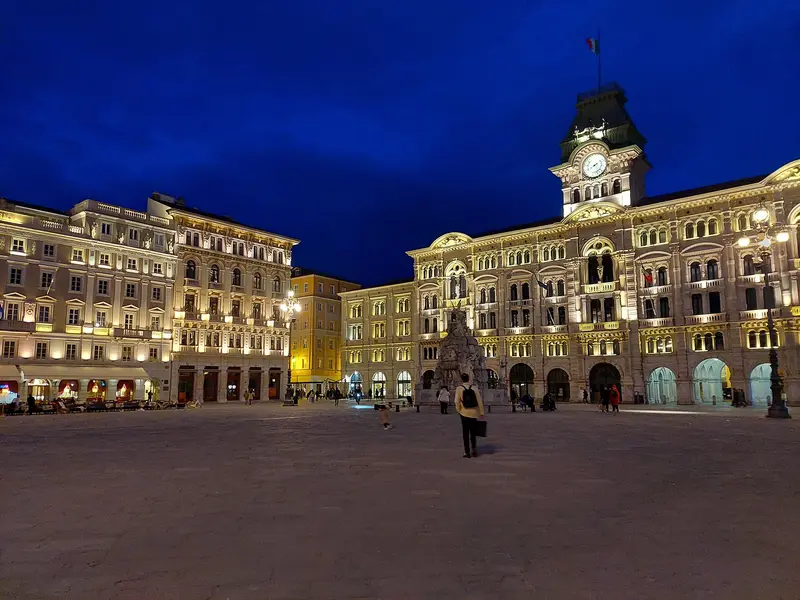
    Trieste

    Meri Valenti (TCI)·CC BY 4.0

    Trieste

    Trieste is the capital of Friuli-Venezia Giulia and is located on the Gulf of Trieste, directly on the Slovenian border. From 1382 to 1918, the city belonged to Habsburg; from 1719, it was its free port, and you can still see this era today in the neoclassical palaces, on the Canal Grande in Borgo Teresiano, and in the traditional coffee houses.The city's heart is Piazza Unità d'Italia, open to the sea. Above it, on San Giusto hill, are the Cathedral, Castle, and Roman Theatre; along the coast is Miramare Castle. The tram to Opicina ascends to the Karst.

    Sights in Friuli-Venezia Giulia

    Discover the most important sights and attractions

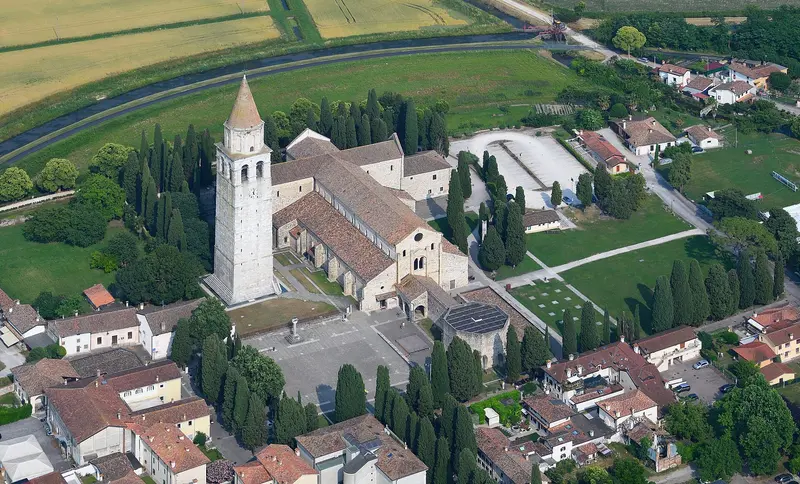
    Basilica of Aquileia

    Carsten Steger / Wikimedia Commons / CC BY-SA 4.0, mod.

    Church

    Basilica of Aquileia

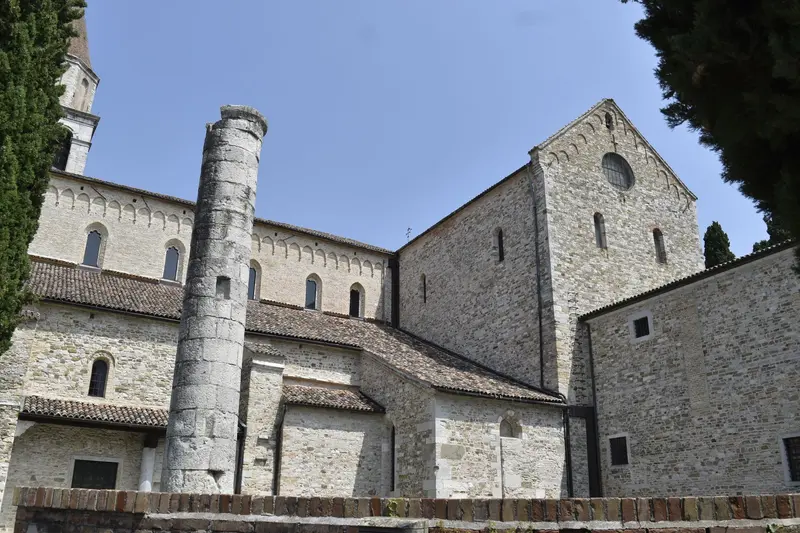
    The Patriarchal Basilica of Santa Maria Assunta is the core of the UNESCO World Heritage site Aquileia (since 1998). Its early 4th-century mosaic floor covers over 760 m², the current church was consecrated in 1031, and the campanile is 73 m high. Surrounding the basilica are the excavations of the Roman colony, founded in 181/180 BC.
    Open in Google Maps
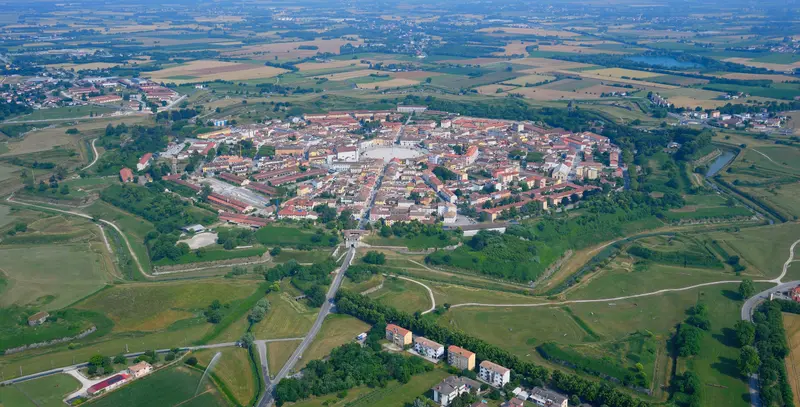
    Palmanova

    Carsten Steger / Wikimedia Commons / CC BY-SA 4.0, mod.

    Attraction

    Palmanova

    The Republic of Venice founded Palmanova on October 7, 1593, as a fortress city in the shape of a nine-pointed star with a hexagonal main square, the Piazza Grande. Since 2017, it has been part of the UNESCO World Heritage of Venetian Defence Works. You best grasp its layout by taking a walk on the ramparts.
    Open in Google Maps
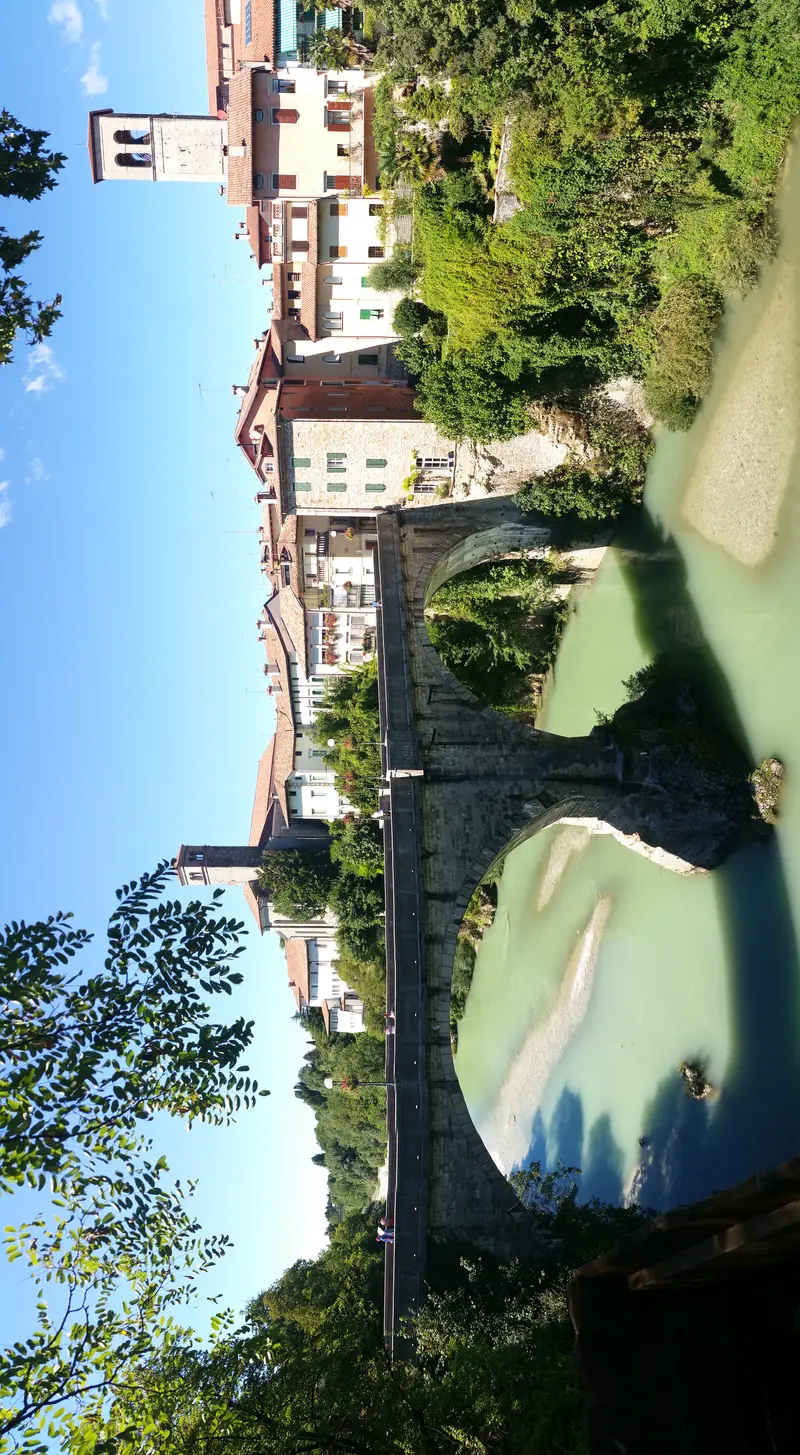
    Cividale del Friuli and Ponte del Diavolo

    Ewgohl / Wikimedia Commons / CC BY-SA 4.0, mod.

    Attraction

    Cividale del Friuli and Ponte del Diavolo

    Cividale, the Roman Forum Iulii, became the seat of the first Lombard duchy in Italy in 568 and has been a UNESCO World Heritage site of the Lombards since 2011. Its landmark is the 15th-century Devil's Bridge over the Natisone, rebuilt in 1918. Just a few minutes away is the Tempietto Longobardo.
    Open in Google Maps
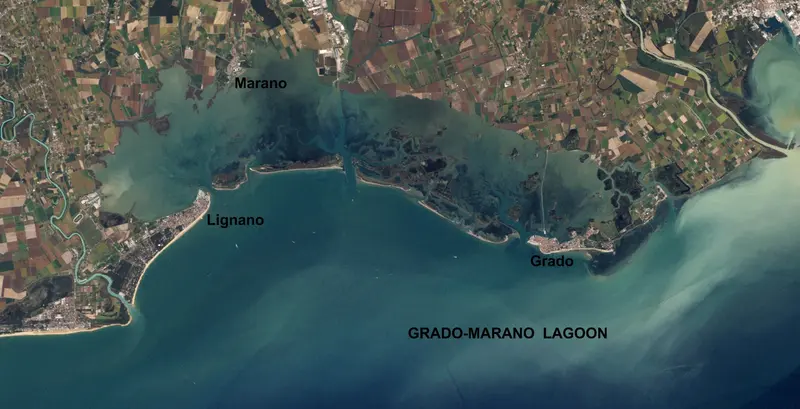
    Lagoon of Grado

    “Gradolagoon” by LagunareG / Wikimedia Commons / CC BY-SA 3.0, mod.

    Natural Feature

    Lagoon of Grado

    The lagoon stretches for around 16,000 hectares and 32 km between the mouths of the Isonzo and Tagliamento. Among about a hundred small islands stand thatched fishermen's huts, the Casoni. By boat, you can reach the pilgrimage island of Barbana, while the Isola della Cona is ideal for birdwatching.
    Open in Google Maps

    Culture and History

    Romans, Lombards, VenetiansAquileia was founded as a Roman colony in 181/180 BC and destroyed by Attila in 452. The basilica's mosaic floor dates from the early 4th century and covers more than 760 m². In Cividale del Friuli, the Roman Forum Iulii which gave the region its name, Italy's first Lombard Duchy was established in 568; the Tempietto Longobardo has been a World Heritage site since 2011. The Republic of Venice founded Palmanova in 1593 as a nine-pointed star fortress, part of the World Heritage of Venetian Works of Defence since 2017.Borderland and AutonomyThe region has held special status with extensive autonomy since 1963. Italian, Friulian, Slovenian, and German characterize the border regions. Trieste was a free port of the Habsburgs from 1719, became part of Italy in 1922, and was a Free Territory under international administration from 1947 to 1954.Wine and CuisineThe Collio, located north of the Province of Gorizia, continues across the border into Slovenia and is renowned primarily for white wines from Friulano, Ribolla Gialla, and Malvasia Istriana.

    Getting There and Around

    Getting ThereThe Trieste Airport in Ronchi dei Legionari has its own train station: Trieste is about 30 minutes away, Udine about 32 minutes. From Venice, you can reach Trieste by Frecciarossa in about 1 hour 40 minutes, or by regional train in about 2 hours.Getting AroundTrieste, Udine, Gorizia, and Palmanova are well connected by train and bus.For Collio, Karst, and the Carnic Alps' mountain valleys, a car is practical.Grado and the Lagoon are a good destination for a day trip from Aquileia.

    Nearby

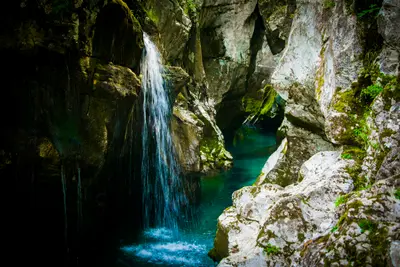
    Soča Valley

    Soča Valley

    The Soča Valley in western Slovenia stretches from Trenta below the Vršič Pass, through Bovec and Kobarid, to Tolmin. Here you'll find the Great Soča Gorge, the Boka Waterfall, the Tolmin Gorges as an entrance to Triglav National Park, and in Kobarid, the Museum of the Isonzo Front of World War I.

    Blaz Erzetic·Unsplash

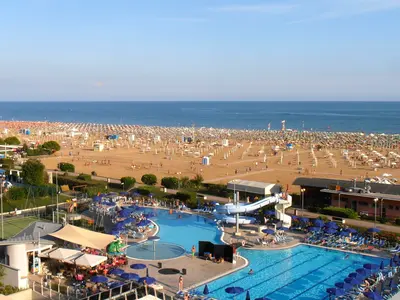
    Bibione

    Bibione

    Bibione is located in the far northeast of the Venetian coast at the mouth of the Tagliamento. Behind the sandy beach stretches a pine forest with fossil dunes, through which cycle paths lead to the lighthouse at the river mouth.From the landing stage on the Tagliamento, pedestrians and cyclists cross over to Lignano Riviera.

    Tiesse·public domain

    Bohinj

    Bohinj

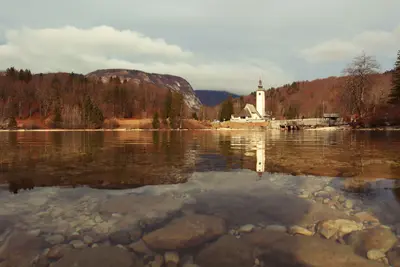
    Lake Bohinj in Triglav National Park is 4.1 km long and up to 45 m deep; according to the Tourist Office, it is Slovenia's largest natural permanent lake. On the eastern shore in Ribčev Laz stands the approximately 700-year-old Church of St. John the Baptist, featuring frescoes from the 13th century onwards, while at its western end, the Savica Waterfall plunges.

    Nikola Tomašić·Pexels

    Caorle

    Caorle

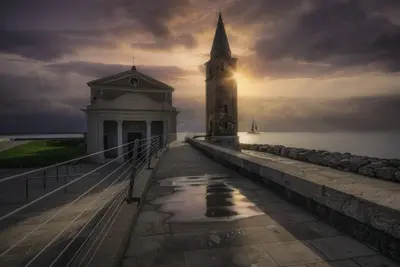
    Caorle, about 65 kilometers from Venice, is a fishing village with a Venetian-influenced old town: colorful facades, narrow alleys, and a still-active fishing port. Its landmarks are the 11th-century Romanesque cathedral with its round, slightly leaning bell tower and the pilgrimage church Madonna dell'Angelo, perched on a promontory in the sea.On both sides of the old town are flat sandy beaches, ideal for families. Inland stretches the Caorle lagoon with its traditional fishing huts, the Casoni.

    Maurizio Fecchio·Pexels

    The Julian Alps

    The Julian Alps

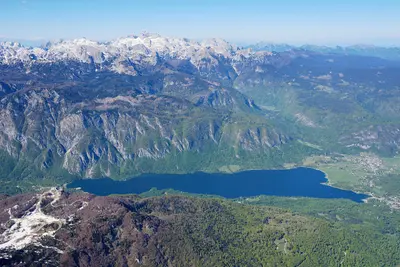
    The Julian Alps in northwestern Slovenia encompass Triglav National Park, the country's only national park, featuring the 2,864 m high Triglav. On its border lie Lake Bled with its church island, the larger Lake Bohinj, and Kranjska Gora, from where the pass road over Vršič leads into the Soča Valley.

    Carsten Steger·CC BY-SA 4.0

    Your next steps

    Friuli-Venezia Giulia is in Italy. Ways to carry on from here.

    • More in Italy

      Highlights, areas, routes and the best time to travel for all of Italy.

      Italy travel guide
    • Round trips in Italy

      Ready-made routes through Italy, with stops, nights and a map.

      See the routes
    • Plan a trip with Friuli-Venezia Giulia

      The Guide asks about season, length and who is coming, and suggests a trip with Friuli-Venezia Giulia.

      Plan the trip

    Sources & method

    • Photos: Wikimedia Commons, Pexels. Each photo carries its credit.
    • Place data such as addresses and ratings comes from Google Maps.
    • The content is based on web research from public, traceable sources. How the content is made · The role of AI