Fernweh: Home
    ExploreTravel GuidesPlan a tripMy tripLast visited
    de|en
    All Places & RegionsAll highlightsAbout FernwehFAQPrivacy PolicyImprint
    ExploreTravel GuidesPlan a tripMy tripLast visited
    Fort & Pettah

    Sri Lanka

    Fort & Pettah

    Other

    Fort and Pettah form the historic heart of Colombo at the northern end of Galle Road.

    by Felix Gillen

    1. Home
    2. Destinations
    3. Sri Lanka
    4. Colombo
    5. Fort & Pettah
    Fort and Pettah form the historic heart of Colombo at the northern end of Galle Road. Here you'll find Dutch and British colonial buildings, the Red Mosque, and narrow market alleys, which together make up the city's most concentrated walking tour.The Fort (Colombo 1) was built on the site where the Portuguese landed in the early 16th century. In 1656, the Dutch East India Company conquered the fortress and rebuilt it; the British largely demolished the walls between 1869 and 1871. Today, the Fort is a business district, home to the President's Palace, the Old Parliament, and the World Trade Centre.Pettah (Colombo 11) lies to its east; the name originates from the Tamil "Pettai" and the Sinhalese "pita-kotuwa," both meaning "outside the Fort." The alleys are sorted by goods and are among the country's most bustling commercial districts.

    Sights in Fort & Pettah

    Discover the most important sights and attractions

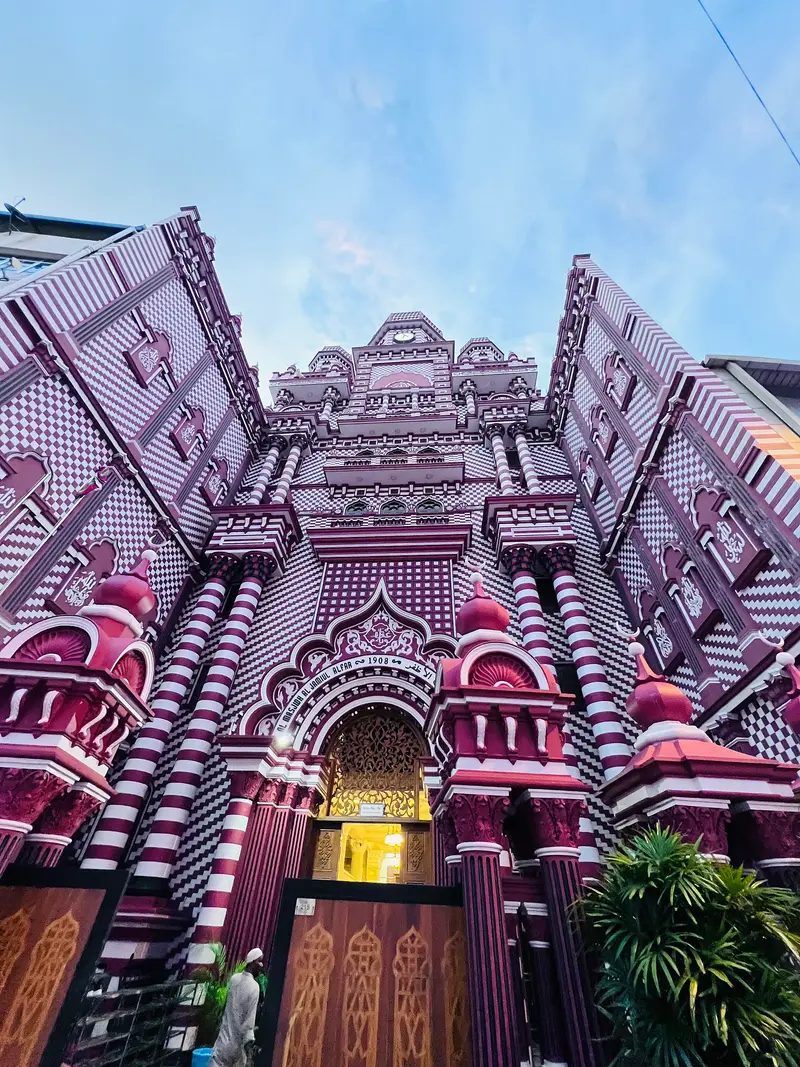
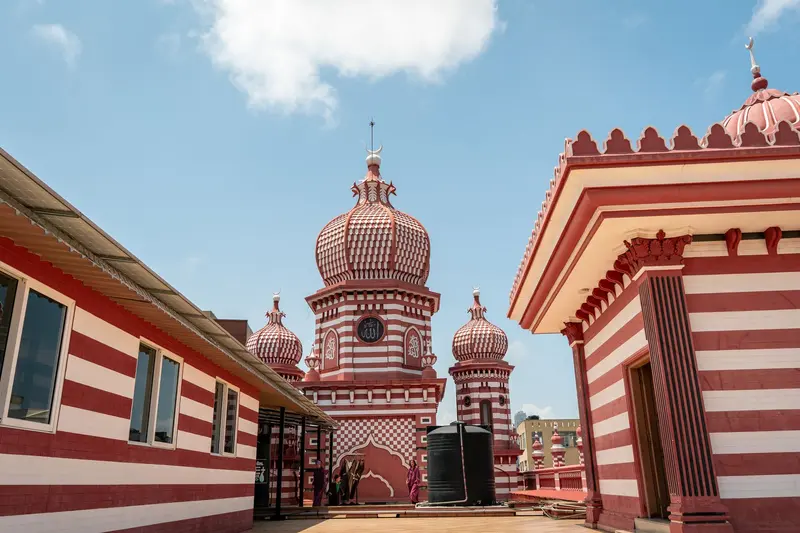
    Jami-Ul-Alfar Mosque (Red Mosque)
    Mosque

    1Jami-Ul-Alfar Mosque (Red Mosque)

    The red-and-white striped mosque in Pettah was built 1908-1909, designed by Habibu Lebbe Saibu Lebbe. The Indo-Saracenic style combines Islamic elements with Neo-Gothic and Classicism.
    Open in Google Maps
    Old Lighthouse (Clock Tower)
    Historic Landmark

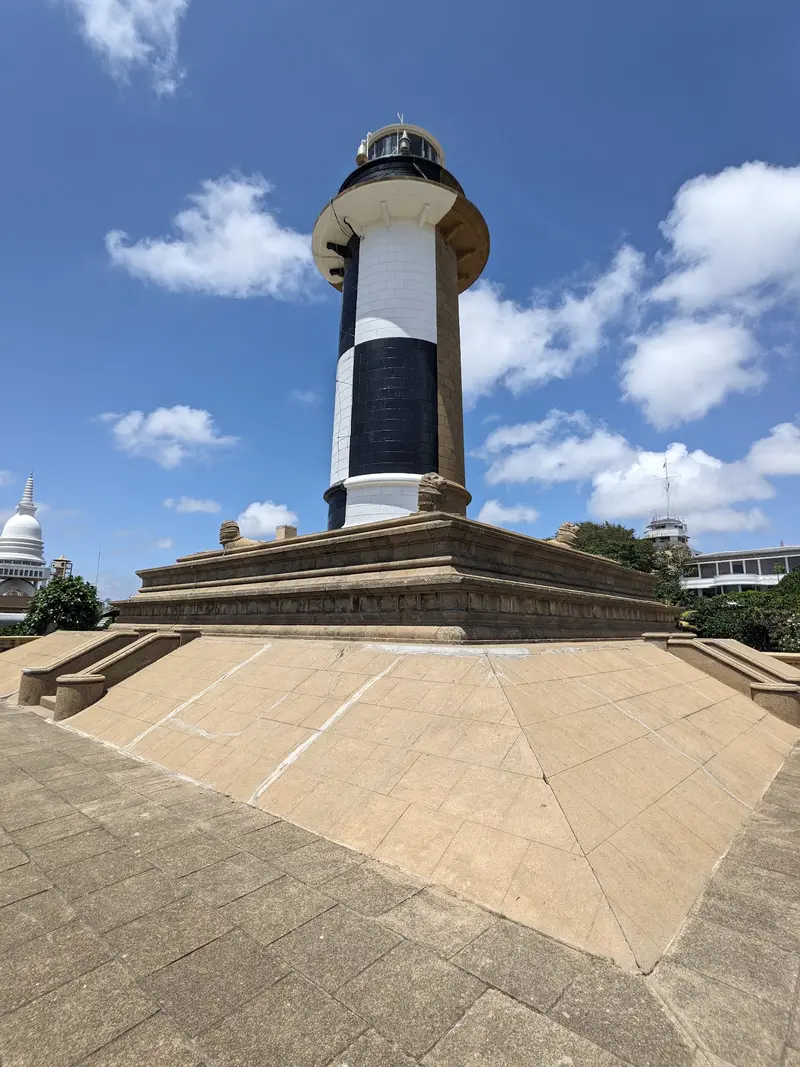
    2Old Lighthouse (Clock Tower)

    The clock tower in the Fort served as a lighthouse in the mid-19th century. It stands at one of the main intersections of the business district.
    Open in Google Maps
    Presidential Palace and Old Parliament
    Attraction

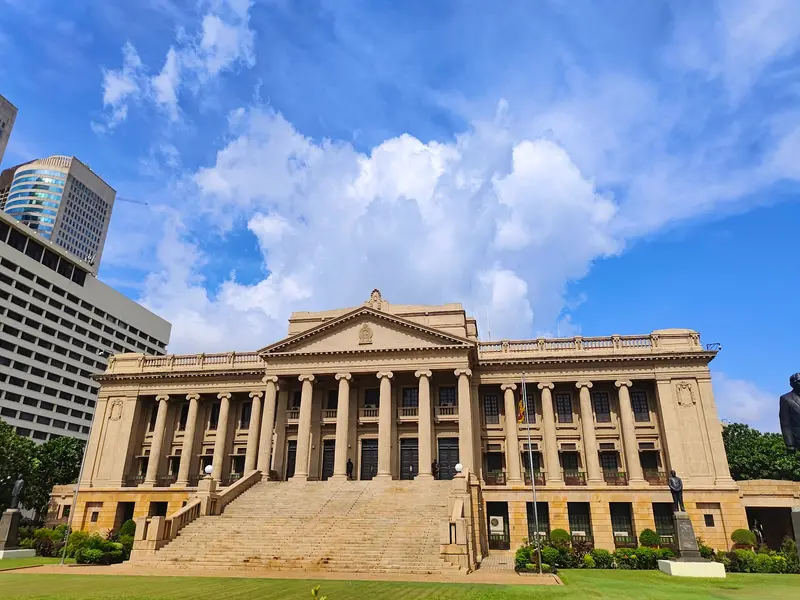
    3Presidential Palace and Old Parliament

    Within the fort stand the Presidential Palace, a building from the Dutch era, which until 1972 was called Queen's House, and the Neo-Baroque old Parliament, today home to the Presidential Secretariat. Both can be seen from the outside.
    Open in Google Maps
    Pettah Markets
    Market

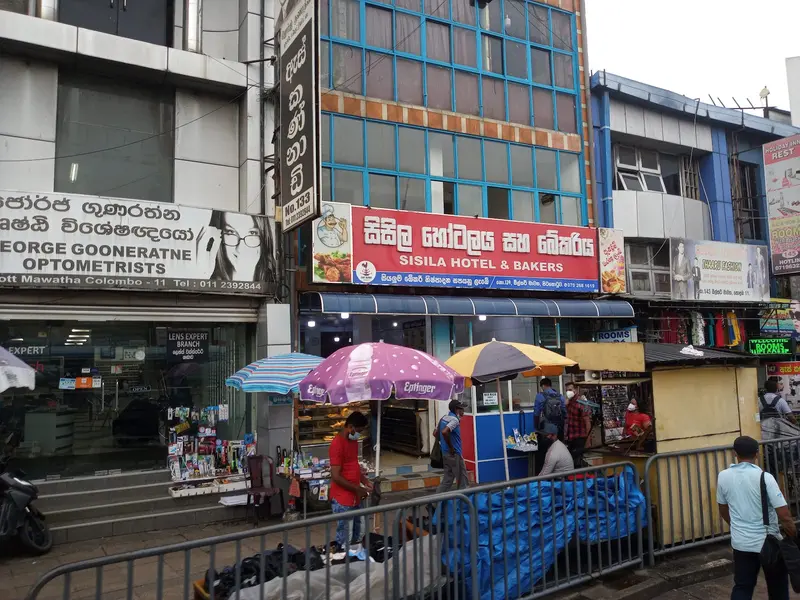
    4Pettah Markets

    Pettah's market streets are among Sri Lanka's busiest commercial districts, many traders are wholesalers. The Khan Clock Tower marks the entrance to the district.
    Open in Google Maps

    Restaurants in Fort & Pettah

    1

    Ministry of Crab

    The Crab Restaurant at the Old Dutch Hospital was founded by cricketers Mahela Jayawardena and Kumar Sangakkara with Chef Dharshan Munidasa. Known for Garlic Chilli Crab, Pepper Crab, and Crab Liver Pâté, in 2025 it was ranked 58th on Asia's 50 Best Restaurants. Reserve two to three weeks in advance.
    Show on Google Maps

    Culture and Visitor Rules

    Religious BuildingsIn Pettah, a mosque, a Dutch church, and Hindu temples stand close together. Cover your shoulders and knees, and remove your shoes before mosques and temples. The Jami-Ul-Alfar Mosque is closed to non-Muslims during prayer times.MarketsPettah is busiest in the mornings and late mornings; the alleys are very crowded then.Many shops are wholesalers; goods are traded by weight or quantity.

    Getting There & Around

    Getting ThereColombo Fort Railway Station and Bastian Mawatha Bus Station are located right on the edge of Pettah. This is where coastal trains and airport buses stop.Getting AroundFort and Pettah are best explored on foot. From the Old Dutch Hospital, it's just a short walk via Chatham Street into Fort and on to Pettah. For the return trip south, tuk-tuks via PickMe or Uber are a good option.
    Accommodations in Fort & Pettah

    Find perfect stay in Fort & Pettah

    Booking.com* (Affiliate link)
    Search Hotels
    Agoda* (Affiliate link)
    Search Hotels
    Airbnb
    Vacation Rentals

    * Affiliate link: if you book through it, we earn a small commission. The price stays the same for you.

    Nearby

    Colombo

    Colombo

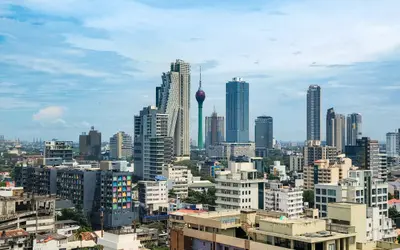
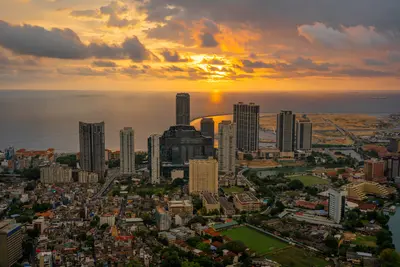
    Colombo, on the west coast, is Sri Lanka's largest city and its economic hub. Visitors to the island almost always arrive here, and the city is worth one or two days for its colonial architecture, markets, temples, and a wide selection of restaurants and rooftop bars.The Portuguese reached the coast in 1505 and began building a fort in 1517; the Dutch took over in 1656, followed by the British in 1796. Since 1978, Parliament has met in neighbouring Sri Jayawardenepura Kotte, and Colombo has since officially been regarded as the commercial capital. At the 2011 census, around 753,000 people lived in the urban area, with an estimated 5.6 million in the greater metropolitan area.The city districts are assigned postal codes: Colombo 1 is the Fort, the business district with colonial buildings; Colombo 11 is the bazaar district of Pettah. South of these are Kollupitiya (Colombo 3) with the Galle Face Green promenade, Bambalapitiya (Colombo 4), Wellawatte (Colombo 6), and the green villa quarter Cinnamon Gardens (Colombo 7) with the National Museum and Viharamahadevi Park. The beach resort of Mount Lavinia lies just south of the city limits.
    Colombo & West Coast

    Colombo & West Coast

    Sri Lanka's west coast extends from Negombo near the international airport, through the capital metropolis Colombo, to the beaches and lagoons around Bentota, about 65 kilometers further south. For most travelers, it marks the first and last section of a tour, and it offers more than just an overnight stay between a flight and the highlands.Colombo blends colonial architecture from Portuguese, Dutch, and British eras with markets, temples, and a vibrant restaurant and bar scene. Along the coast, fishing villages, colonial-era canals, and the gardens of brothers Geoffrey and Bevis Bawa define the scenery.
    Galle Face & Kollupitiya

    Galle Face & Kollupitiya

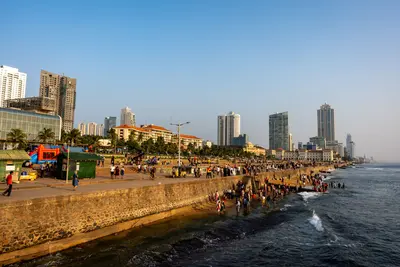
    Galle Face and Kollupitiya lie south of the Fort and, together with Beira Lake and Cinnamon Gardens, form Colombo's green heart. Home to the promenade, Gangaramaya Temple, the city's largest park, and the National Museum.Galle Face Green stretches about 500 meters along the sea and is a popular evening gathering spot. Inland, Kollupitiya (Colombo 3, also Colpetty) is a business district with shopping centers, embassies, and the Prime Minister's residence. By Beira Lake stand the Gangaramaya Temple and the Geoffrey Bawa-designed Seema Malakaya; further east, Cinnamon Gardens (Colombo 7) begins, featuring Viharamahadevi Park and the National Museum.
    Mount Lavinia

    Mount Lavinia

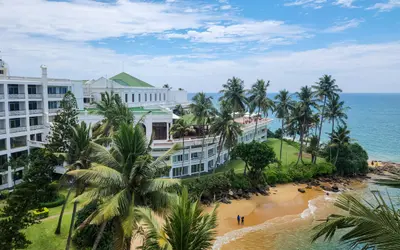
    Mount Lavinia is the coastal suburb south of Colombo, about 14 kilometers from Colombo Fort railway station. Its beach and the historic Mount Lavinia Hotel make it a popular destination for an afternoon by the sea or a sunset dinner.The town borders the urban area of Colombo beyond the Dehiwala Canal, and the coastal railway line towards Matara runs directly along the beach. A legend links its name to Governor Thomas Maitland and the dancer Lovina, though it is not historically proven.
    Negombo

    Negombo

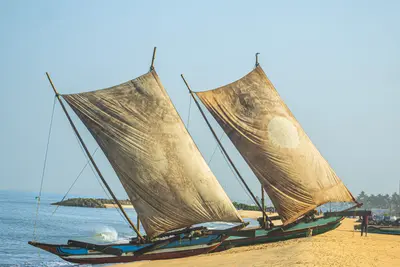
    Negombo, on the west coast, is about 38 kilometers north of Colombo and just 9 kilometers from Bandaranaike International Airport. This makes it the most practical spot for your first or last night, yet with its fish market, canals, and lagoon, it offers plenty for a full day.With its large Catholic population, almost two-thirds of residents, Negombo is known as Punchi Romaya, or Little Rome. Fishermen still venture out in outrigger canoes (Oruvas) and large catamarans, and the Dutch-built Hamilton Canal cuts right through town. Beach hotels and restaurants are mostly found north of the center along the coast, while the old center, with its fort and churches, sits at the lagoon's exit.

    Sources & method

    • Photos: Wikimedia Commons, Pexels, Google Maps. Each photo carries its credit.
    • Place data such as addresses and ratings comes from Google Maps.
    • The content is based on web research from public, traceable sources. How the content is made · The role of AI