Fernweh: Home
ExploreGuideDestinationsMy tripsMy trip
de|en
All Places & RegionsRound tripsNight trains in EuropeAll highlightsAbout FernwehFAQPrivacy PolicyImprint
Download on the App StoreGet it on Google Play
ExploreGuideDestinationsMy tripsMy trip
    • Neighborhoods & highlights
    • Recommendations
    • Walking tours
    • Tours
    • Eat & drink
    • Culture
    • Getting around
    • Accommodation
    • Plan trip
    • Nearby
    Mumbai

    Photo by Frank van Dijk on Pexels

    India

    Mumbai

    City

    Mumbai, the port metropolis on the west coast in the state of Maharashtra, serves as the gateway to India for many travellers.

    by Felix Gillen

    1. Home
    2. Destinations
    3. India
    4. Mumbai
    Mumbai, the port metropolis on the west coast in the state of Maharashtra, serves as the gateway to India for many travellers. A visit is worthwhile for its dense Victorian and Art Deco architecture, no fewer than three UNESCO World Heritage Sites, and a culinary scene that ranges from Parsi cafés to restaurants on the Asia's 50 Best list. The historic centre is located in the south of the peninsula: Around Fort, Kala Ghoda, and Colaba, the train station, courts, university, and museum stand close together, while Marine Drive stretches along the Arabian Sea as a waterfront promenade. Further north are Dhobi Ghat, the open-air laundry, and the Haji Ali Mosque in the sea. Plan at least two full days for South Mumbai, one of them for the boat trip to the Elephanta Caves. The caves are closed on Mondays.
    India travel guidePlan a trip with Mumbai

    Contents

    • Neighborhoods & highlights
    • Recommendations
    • Walking tours
    • Tours
    • Eat & drink
    • Culture
    • Getting around
    • Accommodation
    • Nearby

    Sights in Mumbai

    Discover the most important sights and attractions

    Elephanta Caves

    Vyacheslav Argenberg / Wikimedia Commons / CC BY 4.0, mod.

    Point of Interest

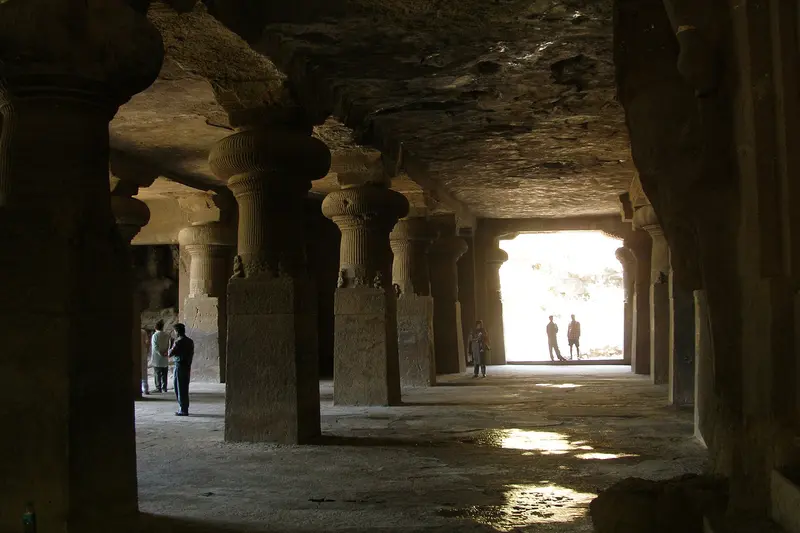
    1Elephanta Caves

    On Elephanta Island in the harbour are seven 6th to 7th-century rock-cut caves dedicated to Shiva. Famous is the colossal Mahesamurti, a three-faced bust of Shiva, plus reliefs like Ardhanarishvara and Nataraja. UNESCO World Heritage site since 1987. Open 9 AM to 5 PM, closed Mondays. Admission for foreigners 600 rupees (online 550), children under 15 free (ASI, as of November 2026). The ferry from Gateway of India takes about an hour; plan your return trip for the late afternoon.
    Open in Google Maps
    Chhatrapati Shivaji Maharaj Terminus (CSMT)

    “Close-up of Chhatrapati Shivaji Terminus” by Joe Ravi / Wikimedia Commons / CC BY-SA 3.0, mod.

    Point of Interest

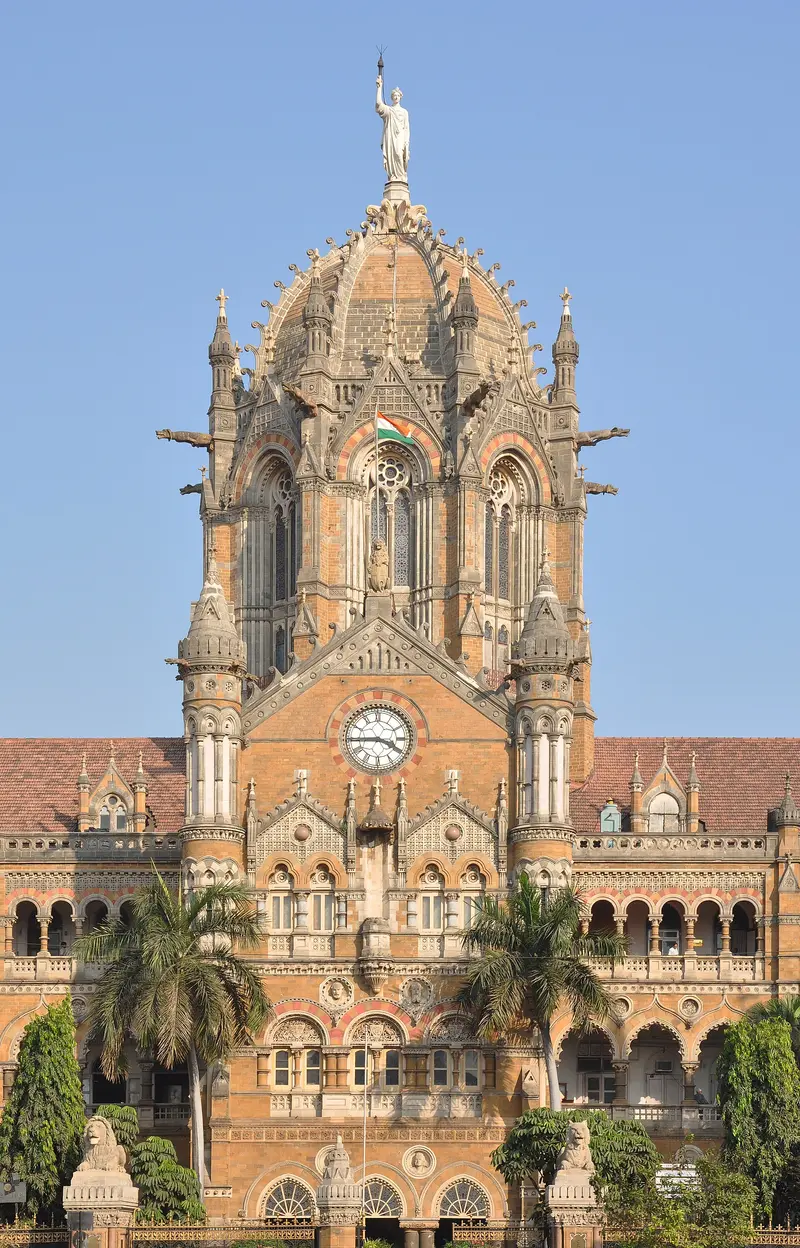
    2Chhatrapati Shivaji Maharaj Terminus (CSMT)

    The former Victoria Terminus was built from 1878 to 1888 to plans by Frederick William Stevens, a masterpiece of Victorian Neo-Gothic with an octagonal ribbed dome. The station is still in operation today and has been a UNESCO World Heritage site since 2004. Tip: The exterior view is always free; it's best to photograph in the early morning from the street opposite.
    Open in Google Maps
    Gateway of India

    Photo by Ketan Saptasagare on Unsplash

    Historic Landmark

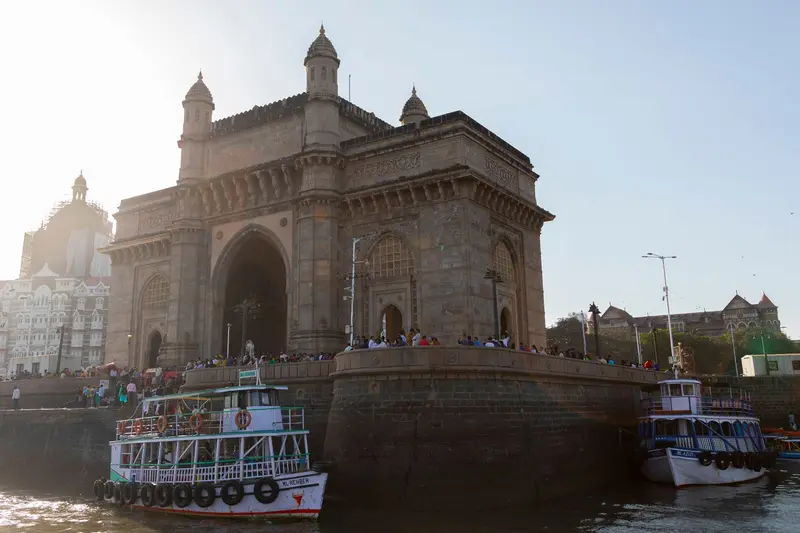
    3Gateway of India

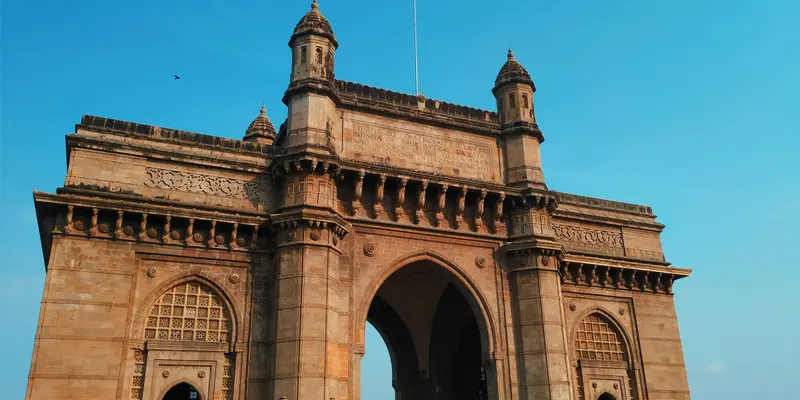
    This roughly 26-meter-tall gateway of yellow basalt commemorates the visit of King George V and Queen Mary. Designed by architect George Wittet, the gate was inaugurated on December 4, 1924. Boats to Elephanta also depart from here. Practical info: Accessible 24/7, free admission.
    Open in Google Maps
    Chhatrapati Shivaji Maharaj Vastu Sangrahalaya (CSMVS)

    Bernard Gagnon / Wikimedia Commons / CC BY-SA 4.0, mod.

    Museum

    4Chhatrapati Shivaji Maharaj Vastu Sangrahalaya (CSMVS)

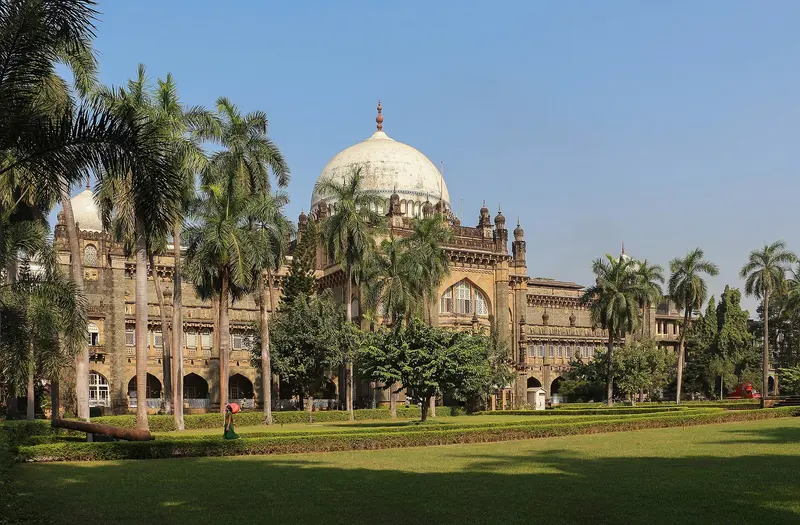
    The former Prince of Wales Museum in Kala Ghoda is the city's most important museum. The foundation stone was laid in 1905 by the later King George V. The Indo-Saracenic-style building, designed by George Wittet, opened in 1922. The collection comprises around 70,000 objects, from Indus finds to sculptures and miniature paintings. Hours: Daily 10:15 AM to 6 PM, ticket counter until 5:45 PM. Admission for foreigners 700 rupees including audioguide, children up to 15 years 200 rupees (as of November 2026). You can find individual closing days on the museum's website.
    Open in Google Maps
    Marine Drive

    Photo by Satyajeet Mazumdar on Unsplash

    Attraction

    5Marine Drive

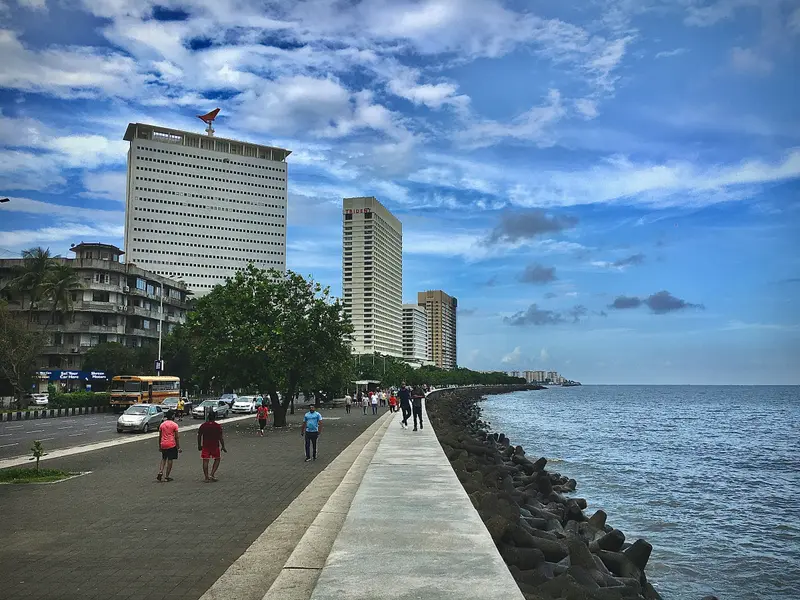
    The 3.6-kilometer-long, C-shaped waterfront road runs from Nariman Point to Chowpatty Beach. Because of its evening string of lights, it's called the Queen's Necklace; Art Deco houses from the 1920s and 1930s line its landward side. Tip: Freely accessible, most beautiful at sunset.
    Open in Google Maps
    Attraction

    6Oval Maidan

    This green space showcases the UNESCO World Heritage Victorian Gothic and Art Deco Ensembles of Mumbai (2018). East: High Court, University (with Rajabai Clock Tower), City Civil and Sessions Court. West: Art Deco residential buildings and Eros Cinema. Access: Free. Buildings mostly viewable only from outside.
    Open in Google Maps

    City walks in Mumbai

    Curated walking tours through the city's highlights, handpicked by experienced travel journalists.

    Fort, Kala Ghoda and Colaba
    From the neo-Gothic station, via the Fort Area, Oval Maidan, and the Kala Ghoda Art District, to the Gateway of India at the harbor. The route connects two UNESCO World Heritage Sites and the city's main museum. The route is approx. 3-4 km long; with a museum visit, you'll need half a day.
    Open in Google Maps
    Stops (8)

    Tours & experiences in Mumbai

    Search tours for Mumbai on GetYourGuide* (Affiliate link)On GetYourGuide, with reviews from other travellers

    * Affiliate link: if you book through it, we earn a small commission. The price stays the same for you.

    Restaurants in Mumbai

    1

    Masque

    Modern Indian tasting menu in a converted textile mill in Mahalaxmi, featuring ingredients and techniques from across India. 15th at Asia's 50 Best Restaurants 2026 and awarded the Art of Hospitality Award; 11th at Condé Nast Traveller India Top Restaurants 2026. Upscale pricing.
    Show on Google Maps
    2

    Trishna

    Known seafood restaurant in Kala Ghoda, famous for butter, pepper and garlic crab and Koliwada prawns. Ranked 35th in Condé Nast Traveller India Top Restaurants 2026. Mid to high price range.
    Show on Google Maps
    3

    The Bombay Canteen

    Playful reinterpretations of Indian classics in Lower Parel, with a tasting menu. Ranked #4 in Condé Nast Traveller India Top Restaurants 2025 and #10 in 2026. Mid to high price range.
    Show on Google Maps
    4

    Britannia & Co.

    1923 Parsi-Irani restaurant in Ballard Estate, known for Berry Pulao, Salli Boti, Dhansak, and mutton chops. Typically local.
    Show on Google Maps
    5

    Swati Snacks

    Vegetarian Gujarati snacks in Tardeo since 1963, famous for Panki, banana leaf steamed rice pancakes, also Sev Puri and Fada ni Khichdi. Typically local.
    Show on Google Maps

    Colonial city, trading port, religious diversity

    From Port to MetropolisSouth Mumbai's cityscape is characterized by British buildings from the 19th and early 20th centuries. Victoria Terminus, today Chhatrapati Shivaji Maharaj Terminus, was built from 1878 to 1888 according to plans by Frederick William Stevens in the Victorian Gothic Revival style. The Gateway of India commemorates the visit of King George V and Queen Mary; it was inaugurated in 1924.Gothic Revival Meets Art DecoAt Oval Maidan, two eras face each other: to the east, Gothic Revival buildings such as the High Court, University, and Rajabai Clock Tower, and to the west, Art Deco residential buildings and the Eros Cinema. UNESCO inscribed the ensemble as a World Heritage site in 2018.Religious SitesThe city's religious diversity is evident in a small area: The Haji Ali Dargah, a Muslim shrine from 1431, stands on an island off Worli. The Banganga Tank on Malabar Hill is a Hindu water tank from the 12th century, and on Elephanta Island are Shiva cave temples dating from the 6th to 7th centuries.

    Getting there and exploring Mumbai

    Getting ThereThe international airport is Chhatrapati Shivaji Maharaj International Airport (BOM). Long-distance trains arrive at Chhatrapati Shivaji Maharaj Terminus and Mumbai Central. Allow plenty of time for the journey from the airport to South Mumbai, as traffic varies.Getting AroundFort, Kala Ghoda, Colaba and Oval Maidan are easily explored on foot. For Marine Drive, Haji Ali, Dhobi Ghat and Banganga, take a taxi or suburban train; Mahalaxmi station is right by Dhobi Ghat.Practical TipsElephanta: Ferries depart from Gateway of India, travel time about one hour each way. The caves are closed Mondays. Take an early boat to beat the midday heat.Timing: Marine Drive in the evening; Haji Ali only at low tide (causeway submerged at high tide).Rain/Monsoon: The CSMVS Museum is the best bad-weather option. Before an Elephanta trip during monsoon, inquire locally about ferry operations.Low Budget/Free: Gateway of India, Marine Drive, Oval Maidan, and the view of Dhobi Ghat from the bridge cost nothing.Safety: For current advisories, check the Federal Foreign Office.

    Accommodations in Mumbai

    Find perfect stay in Mumbai

    Booking.com* (Affiliate link)
    Search Hotels
    Agoda* (Affiliate link)
    Search Hotels
    Airbnb
    Vacation Rentals

    * Affiliate link: if you book through it, we earn a small commission. The price stays the same for you.

    Plan your trip to Mumbai

    Save places, build a route and plan your city trip, all in one place.

    1. 1
      Sunrise over alpine peaks and a sea of clouds
      1234

      Round trip

      12 days · 4 stops

      Saved

      Pick a route

      Pick a ready-made one or save places and plan your own.

      Open bookmarks
    2. 2

      Trip to Mumbai

      Live
      • 1Elephanta Caves3 days
      • 2Chhatrapati Shivaji Maharaj Terminus (CSMT)4 days
      • 3Gateway of India5 days
      Budget

      Plan your trip

      The planner sorts stops, days and budget. Plan together in real time.

      Start trip planning
    3. 3
      9:41 No signal
      Mumbai
      Available offline

      Photo by Frank van Dijk on Pexels

      Use it on the road

      Download the guide to your phone and use it on site, even offline.

    Nearby

    Goa

    Goa

    Goa is India's smallest state, located on the west coast south of Mumbai. It's worth visiting for its beaches, stretching from Arambol in the north to Palolem in the south, and for its Portuguese heritage, evident in the churches of Old Goa and the colorful houses of Panaji. The north, with Anjuna, Vagator, and Arambol, is livelier and was a hippie meeting point from the 1960s. The south, with Palolem, Agonda, and Colva, is quieter; Agonda is considered a secluded bay with limited infrastructure. Inland, you'll find spice farms around Ponda and the Dudhsagar waterfall. During the monsoon, swimming in the sea is prohibited, and red flags are on the beaches. The beach season begins after the monsoon, with many beach shacks and markets only opening then.

    Zoshua Colah·Unsplash

    Karnataka

    Karnataka

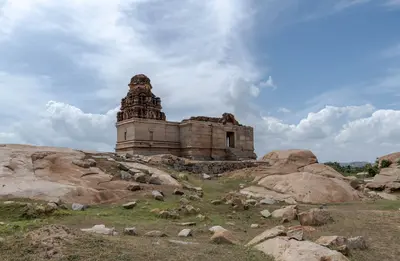
    Karnataka in southwest India, with Bengaluru as the seat of the state parliament, stretches from the Arabian Sea coast to the Deccan highlands. You come for the ruins of Hampi, the palaces of Mysuru, and the Hoysala temples of Belur and Halebidu.According to the Department of Tourism, Karnataka is India's sixth-largest state. Besides the World Heritage Site of Hampi, the Sacred Ensembles of the Hoysalas, with their 12th and 13th-century temples, are also UNESCO World Heritage sites. Additionally, there's the coffee land of Coorg, national parks like Nagarhole and Kabini, and beaches near Gokarna, Udupi, and Maravanthe.

    Roman Saienko·Pexels

    Hampi

    Hampi

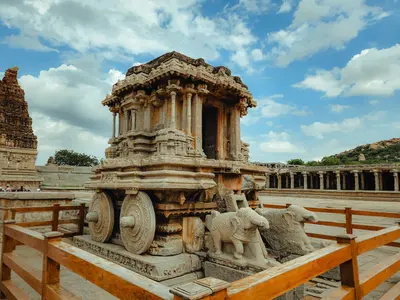
    Hampi, in northern Karnataka, approximately 340 km from Bengaluru, was the capital of the Vijayanagara Empire from the 14th to 16th centuries and is now a vast field of ruins nestled among granite boulders and the Tungabhadra River. You come for its temples, palaces, and water structures, which, since 1986, have been part of the UNESCO World Heritage Site 'Group of Monuments at Hampi', and for the landscape of massive granite boulders along the river.According to UNESCO, the World Heritage area spans over 4,100 hectares. In the north, around Hampi Bazaar and the still-active Virupaksha Temple, lies the sacred centre, further south is the royal centre with Lotus Mahal, Elephant Stables, and Hazara Rama Temple. On the riverbank, you'll find the Vittala Temple with its famous stone chariot.For Hampi, you should plan at least two, preferably three days. The most pleasant travel time is winter, from November to February, as the extensive paths between the ruins can be strenuous in the midday heat.

    Prasang Yadav·Pexels

    Udaipur

    Udaipur

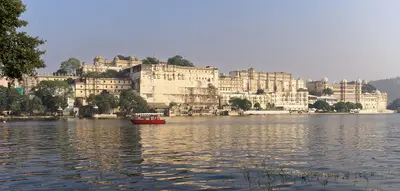
    Udaipur, located in southern Rajasthan amidst the Aravalli Hills and several lakes, was once the capital of the Mewar dynasty. The City Palace overlooking Lake Pichola, the island palaces, and the old town's alleys make this white city the most tranquil of Rajasthan's major destinations.Maharana Udai Singh II started the City Palace in 1559; his successors expanded it into a city within a city until 1949. Surrounding Lake Pichola are ghats, havelis, and temples; to the north lie Fateh Sagar and the Saheliyon ki Bari garden; and on a hill to the west is the Monsoon Palace.Two days are enough for the palace, a boat trip, the old town, and an evening at Bagore ki Haveli; with a third day, Sajjangarh and Shilpgram can be added.

    Jakub Hałun·CC BY-SA 4.0

    Jodhpur

    Jodhpur

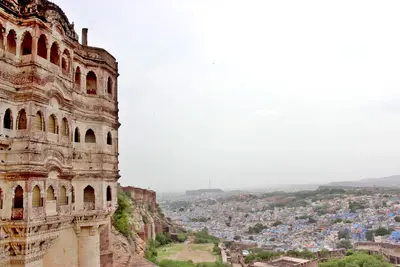
    Jodhpur, in western Rajasthan, on the edge of the Thar Desert, is dominated by Mehrangarh Fort, high on a rock above the blue old city. The fort, with its palaces and the Mehrangarh Museum Trust's museum, makes a worthwhile stop on the way to Jaisalmer.Rao Jodha of the Rathore clan founded the city in 1459, relocating Marwar's capital from nearby Mandore. Beneath the fort are the bazaars around the Clock Tower, the marble cenotaph Jaswant Thada, and the Rao Jodha Desert Rock Park; the 20th-century Umaid Bhawan Palace dominates the city's other end.One and a half to two days are sufficient for the fort, old city, and Mandore. Plan the morning for Mehrangarh and the late afternoon for the Rock Park, when the light softens.

    flashing Moment·Pexels

    Your next steps

    Mumbai is in India. Ways to carry on from here.

    • More in India

      Highlights, areas, routes and the best time to travel for all of India.

      India travel guide

    Sources & method

    • Photos: Wikimedia Commons, Unsplash, Pexels. Each photo carries its credit.
    • Place data such as addresses and ratings comes from Google Maps.
    • The content is based on web research from public, traceable sources. How the content is made · The role of AI