Fernweh: Home
ExploreGuideDestinationsMy tripsMy trip
de|en
All Places & RegionsRound tripsNight trains in EuropeAll highlightsAbout FernwehFAQPrivacy PolicyImprint
Download on the App StoreGet it on Google Play
ExploreGuideDestinationsMy tripsMy trip
    • Places in the region
    • Eat & drink
    • Recommendations
    • Culture
    • Getting around
    • Nearby
    Goa

    Photo by Zoshua Colah on Unsplash

    India

    Goa

    Region

    Goa is India's smallest state, located on the west coast south of Mumbai.

    by Felix Gillen

    1. Home
    2. Destinations
    3. India
    4. Goa
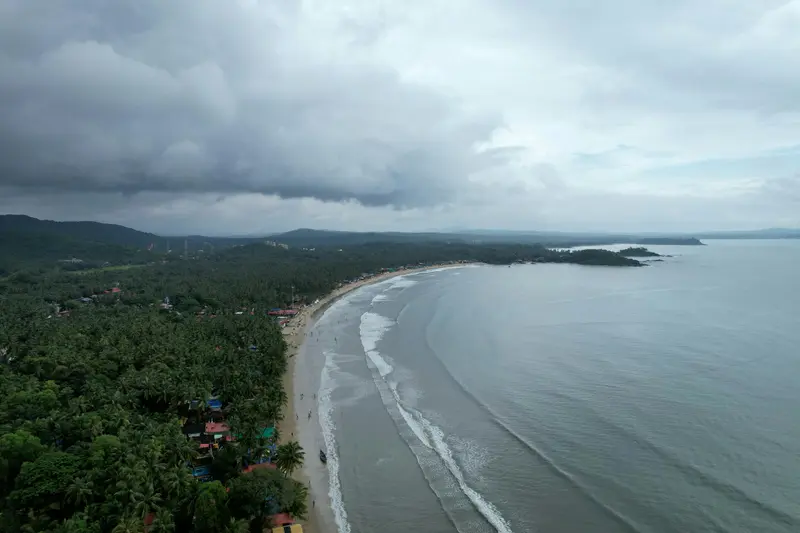
    Goa is India's smallest state, located on the west coast south of Mumbai. It's worth visiting for its beaches, stretching from Arambol in the north to Palolem in the south, and for its Portuguese heritage, evident in the churches of Old Goa and the colorful houses of Panaji. The north, with Anjuna, Vagator, and Arambol, is livelier and was a hippie meeting point from the 1960s. The south, with Palolem, Agonda, and Colva, is quieter; Agonda is considered a secluded bay with limited infrastructure. Inland, you'll find spice farms around Ponda and the Dudhsagar waterfall. During the monsoon, swimming in the sea is prohibited, and red flags are on the beaches. The beach season begins after the monsoon, with many beach shacks and markets only opening then.
    India travel guidePlan a trip with Goa

    Contents

    • Places in the region
    • Eat & drink
    • Recommendations
    • Culture
    • Getting around
    • Nearby

    Sights in Goa

    Discover the most important sights and attractions

    Church

    Sé Cathedral

    The 1652 Cathedral, opposite Bom Jesus, is one of Asia's largest churches. Right next to it is the Church of St. Francis of Assisi; both are UNESCO World Heritage sites. Practical: The Church of St. Francis of Assisi is open from 8 AM to 6 PM; no official times are available for Sé Cathedral.
    Open in Google Maps
    Basilica of Bom Jesus

    iMahesh / Wikimedia Commons / CC BY-SA 4.0, mod.

    Church

    Basilica of Bom Jesus

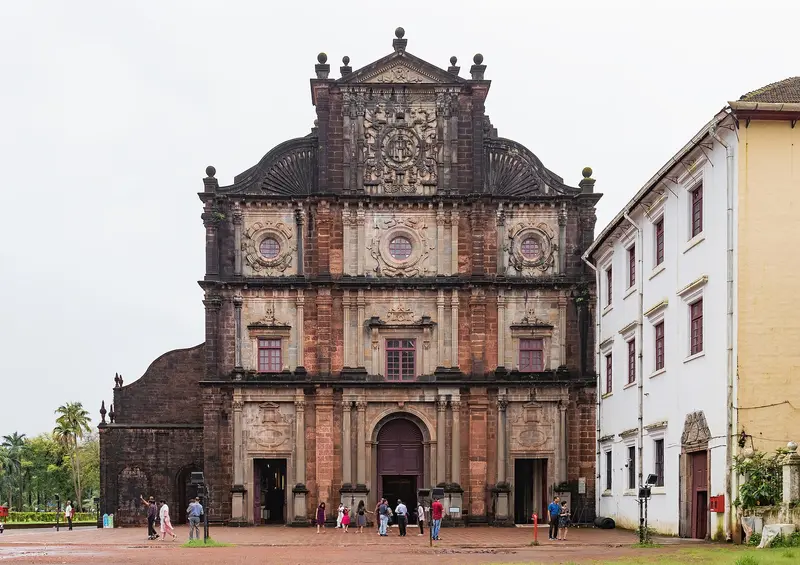
    The Jesuit Church in Old Goa houses the remains of Saint Francis Xavier in a silver, gem-studded shrine. The church dates from 1605 and was elevated to a Basilica in 1946. It is part of the UNESCO World Heritage site Churches and Convents of Goa (1986). Hours: Monday to Saturday 9 AM to 6:30 PM, Sunday 10:30 AM to 6:30 PM (Incredible India, as of November 2026), Free admission.
    Open in Google Maps
    Fontainhas

    iMahesh / Wikimedia Commons / CC BY-SA 4.0, mod.

    Attraction

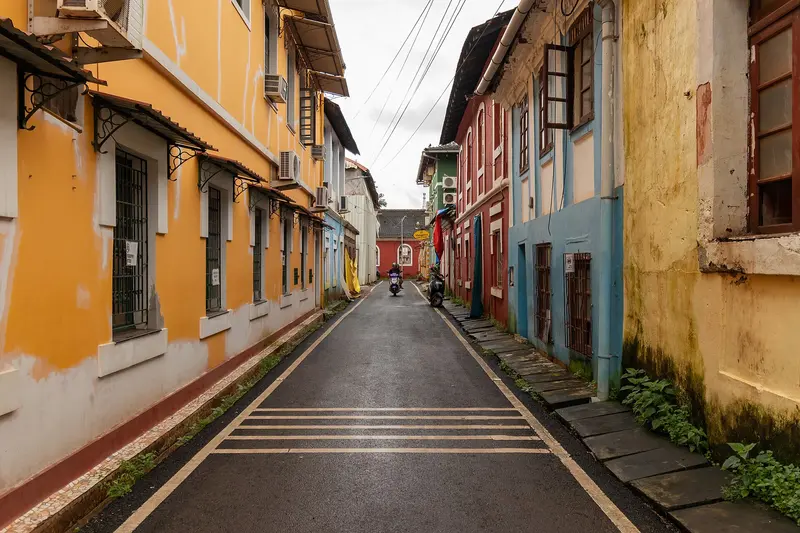
    Fontainhas

    The oldest quarter of Panaji originated in the early 19th century, as Old Goa lost its importance. Typical are blue, yellow, and ocher-painted houses with balconies and Azulejos. The quarter is a protected zone; new buildings are not allowed. Practical tip: Freely accessible, best explored on foot in the morning.
    Open in Google Maps
    Historic Landmark

    Chapora Fort

    The fortress is located on the southern headland of the Chapora estuary above Vagator Beach. It was built by Adil Shah of Bijapur. With its crescent-shaped bay, Vagator is considered Goa's most photographed beach. Tip: Freely accessible, most beautiful at sunset.
    Open in Google Maps
    Fort Aguada

    “Fort Aguada Remote view 25012016” by Nikhilb239 / Wikimedia Commons / CC BY 3.0, mod.

    Attraction

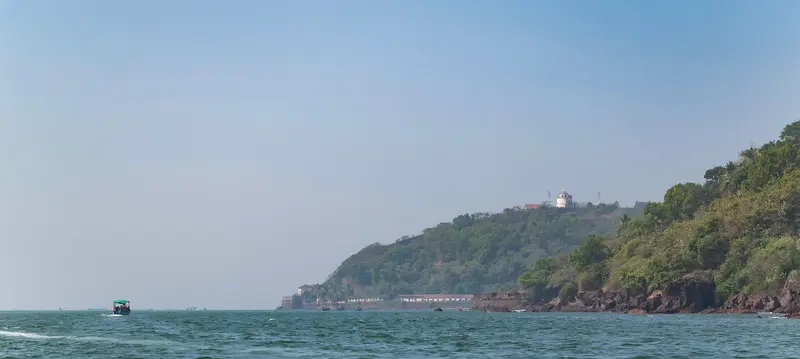
    Fort Aguada

    The Portuguese built the fort from 1609 to 1612 to defend against Marathas and the Dutch. A freshwater spring supplied passing ships and gave the fort its name. An 1864 lighthouse stands inside. Practical: You reach the fort via a 4-kilometer road from Sinquerim Beach or a steep 2-kilometer footpath; official opening hours are not confirmed.
    Open in Google Maps
    Attraction

    Anjuna Beach

    The beach, around 18 km from Panaji, became known as a hippie hangout in the 1960s and early 1970s. Every Wednesday, the Anjuna Flea Market takes place, featuring clothing, jewelry, and handicrafts. The market typically operates Wednesdays during the season, from around 10 AM until sunset.
    Open in Google Maps

    Restaurants in Goa

    1

    Bomras

    Burmese cuisine with ingredients from Goa in Anjuna, featuring dishes like fermented tea leaf salad and tiger prawn ceviche. Ranked 8th in Condé Nast Traveller India Top Restaurants 2026. Upscale pricing.
    Show on Google Maps
    2

    Hosa

    South Indian cuisine from several states in Siolim, such as Toddy Shop prawns and Pineapple Gojju. Ranked 27th in Condé Nast Traveller India Top Restaurants 2026. Mid-range to upscale pricing.
    Show on Google Maps
    3

    Cavatina by Avinash Martins

    A bespoke tasting menu of Goan cuisine in Benaulim, with hand-ground Masalas and Poder-Brot from the village. Named 23rd in Condé Nast Traveller India's Top Restaurants 2026. An elevated price point.
    Show on Google Maps
    4

    Ritz Classic

    Affordable spot in Panaji for Goan Fish Thali and fried King Mackerel. Truly local.
    Show on Google Maps

    Portuguese Heritage and Beach Culture

    450 Years of PortugueseAfonso de Albuquerque conquered Goa in 1510; Portuguese rule lasted around 450 years until 1961. The seven churches and convents, including the Basilica of Bom Jesus and the Sé Cathedral, are UNESCO World Heritage Sites since 1986.Francis XavierIn the Basilica of Bom Jesus, the remains of Jesuit saint Francis Xavier rest in a silver shrine. Grand Duke Ferdinand II of Tuscany had the tomb made in Florence in 1665. The relics are publicly shown every ten years.Latin Quarter and Beach LifeIn Panaji, the Fontainhas quarter, with colorful houses, balconies, and azulejos, showcases its colonial heritage; the area is a protected site. On the north coast, the hippie scene of the 1960s and 1970s shaped places like Anjuna, whose Wednesday market continues today.

    Getting to and around in Goa

    Getting ThereGoa has two airports: Dabolim (GOI) is located about 29 kilometres south of Panaji, while the Manohar International Airport in Mopa (GOX) in the north, about 35 kilometres from the capital, has been operational since January 2023. The Konkan Railway stops in Thivim (north), Karmali (near Panaji and Old Goa), Madgaon (south), and Canacona (for Palolem). The Konkan Kanya Express night train connects Mumbai with Madgaon.Getting AroundFor trips along the coast, taxis and rental scooters are common. Agree on taxi fares beforehand. Local buses are the cheapest option, but usually only run until early evening. From Panaji, it's about 10 kilometres to Old Goa and 22 kilometres to Vagator.Practical TipsRain/Monsoon: Swimming and water sports in the sea are forbidden during monsoon season; red flags mark the beaches. Dudhsagar is closed to visitors during the monsoon.Beach Safety: Lifeguards from the state-appointed agency are on duty at 54 beaches. Follow the instructions and flags on the beach.Churches: Churches in Old Goa are in use; plan your visits outside of mass times.Low Budget: The churches of Old Goa, Fontainhas, and the beaches have no entrance fee.Safety: For current warnings, including those about scams, refer to the Federal Foreign Office.

    Nearby

    Karnataka

    Karnataka

    Karnataka in southwest India, with Bengaluru as the seat of the state parliament, stretches from the Arabian Sea coast to the Deccan highlands. You come for the ruins of Hampi, the palaces of Mysuru, and the Hoysala temples of Belur and Halebidu.According to the Department of Tourism, Karnataka is India's sixth-largest state. Besides the World Heritage Site of Hampi, the Sacred Ensembles of the Hoysalas, with their 12th and 13th-century temples, are also UNESCO World Heritage sites. Additionally, there's the coffee land of Coorg, national parks like Nagarhole and Kabini, and beaches near Gokarna, Udupi, and Maravanthe.

    Roman Saienko·Pexels

    Hampi

    Hampi

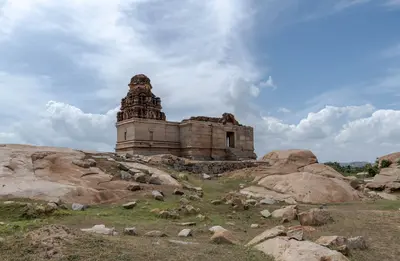
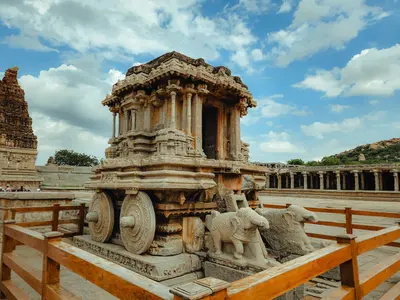
    Hampi, in northern Karnataka, approximately 340 km from Bengaluru, was the capital of the Vijayanagara Empire from the 14th to 16th centuries and is now a vast field of ruins nestled among granite boulders and the Tungabhadra River. You come for its temples, palaces, and water structures, which, since 1986, have been part of the UNESCO World Heritage Site 'Group of Monuments at Hampi', and for the landscape of massive granite boulders along the river.According to UNESCO, the World Heritage area spans over 4,100 hectares. In the north, around Hampi Bazaar and the still-active Virupaksha Temple, lies the sacred centre, further south is the royal centre with Lotus Mahal, Elephant Stables, and Hazara Rama Temple. On the riverbank, you'll find the Vittala Temple with its famous stone chariot.For Hampi, you should plan at least two, preferably three days. The most pleasant travel time is winter, from November to February, as the extensive paths between the ruins can be strenuous in the midday heat.
    Prasang Yadav·Pexels

    Mumbai

    Mumbai

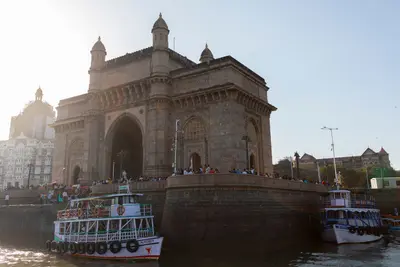
    Mumbai, the port metropolis on the west coast in the state of Maharashtra, serves as the gateway to India for many travellers. A visit is worthwhile for its dense Victorian and Art Deco architecture, no fewer than three UNESCO World Heritage Sites, and a culinary scene that ranges from Parsi cafés to restaurants on the Asia's 50 Best list. The historic centre is located in the south of the peninsula: Around Fort, Kala Ghoda, and Colaba, the train station, courts, university, and museum stand close together, while Marine Drive stretches along the Arabian Sea as a waterfront promenade. Further north are Dhobi Ghat, the open-air laundry, and the Haji Ali Mosque in the sea. Plan at least two full days for South Mumbai, one of them for the boat trip to the Elephanta Caves. The caves are closed on Mondays.

    Frank van Dijk·Pexels

    Mysuru (Mysore)

    Mysuru (Mysore)

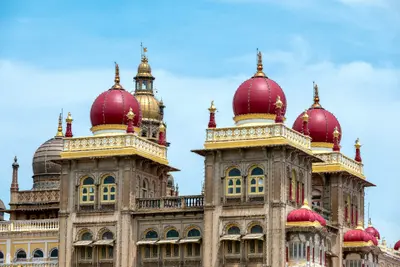
    Mysuru in southern Karnataka, about 150 km southwest of Bengaluru, was for centuries the residence of the Wodeyar kings and is still the City of Palaces. You'll visit for the Mysore Palace, illuminated evenings with nearly 100,000 light bulbs on Sundays and public holidays, for the temple on Chamundi Hill, and for the Dasara festival, which Karnataka celebrates as its state festival (Nada Habba).The city is compact and quieter than Bengaluru. Beyond the palace, highlights include the Devaraja Market with its flowers, spices, and sandalwood, the Neo-Gothic St. Philomena's Cathedral, and in the evening, the musical fountains of the Brindavan Gardens. Srirangapatna, once the capital of Tipu Sultan, lies on a river island in the Kaveri, 15 km away.Mysuru is also culinarily renowned, known for Mysuru Masala Dosa, the sweet Mysuru Pak, and filter coffee.

    Jayanth Muppaneni·Unsplash

    Kochi

    Kochi

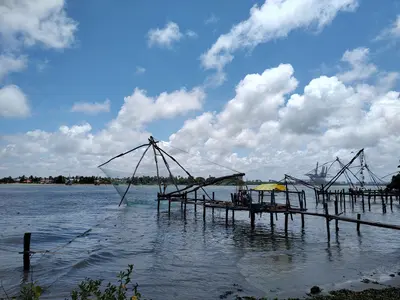
    Kochi is the port city on Central Kerala's coast and, for most travelers, the gateway to the state. The main reason to visit is found on the western peninsulas: Fort Kochi and Mattancherry, where Chinese fishing nets, Portuguese churches, and a 16th-century synagogue are only a few minutes' walk from each other. According to Kerala Tourism, Fort Kochi is about 10 km from Ernakulam, the modern hub on the mainland. The blend of Portuguese, Dutch, and British architecture, along with its cafes and galleries, makes the district an excellent place for leisurely strolls. Every two years, the Kochi-Muziris Biennale transforms warehouses and colonial buildings in Fort Kochi and Mattancherry into exhibition venues. The seventh edition is announced for 2027/2028.

    Gautham Krishna S·Pexels

    Your next steps

    Goa is in India. Ways to carry on from here.

    • More in India

      Highlights, areas, routes and the best time to travel for all of India.

      India travel guide
    • Plan a trip with Goa

      The Guide asks about season, length and who is coming, and suggests a trip with Goa.

      Plan the trip

    Sources & method

    • Photos: Wikimedia Commons, Unsplash. Each photo carries its credit.
    • Place data such as addresses and ratings comes from Google Maps.
    • The content is based on web research from public, traceable sources. How the content is made · The role of AI