Fernweh: Home
ExploreGuideDestinationsMy tripsMy trip
de|en
All Places & RegionsRound tripsNight trains in EuropeAll highlightsAbout FernwehFAQPrivacy PolicyImprint
Download on the App StoreGet it on Google Play
ExploreGuideDestinationsMy tripsMy trip
    • Places in the region
    • Getting around
    • Nearby
    Samaná Peninsula

    Photo by Girish Nayyar on Pexels

    The Dominican Republic

    Samaná Peninsula

    Region

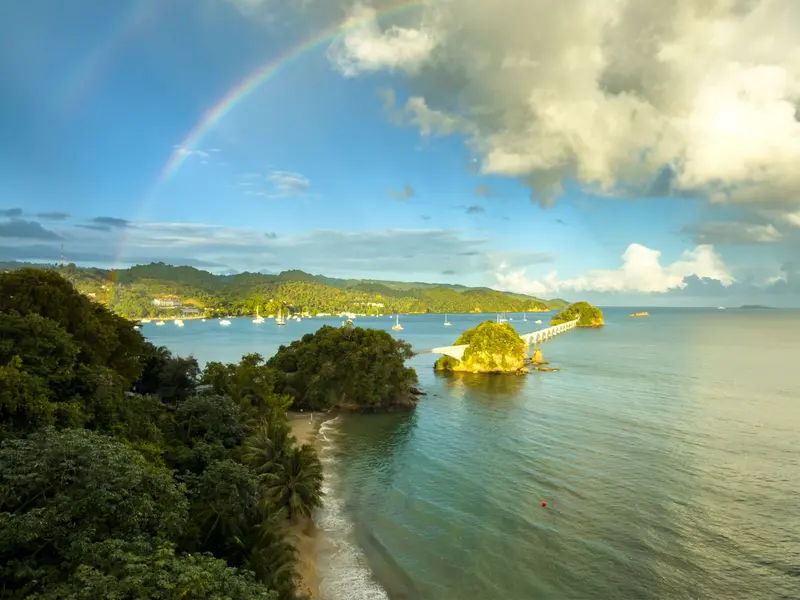
    The green peninsula in the northeast is primarily known for its humpback whales, which come into Samaná Bay from mid-January to late March.

    by Felix Gillen

    1. Home
    2. Destinations
    3. The Dominican Republic
    4. Samaná Peninsula
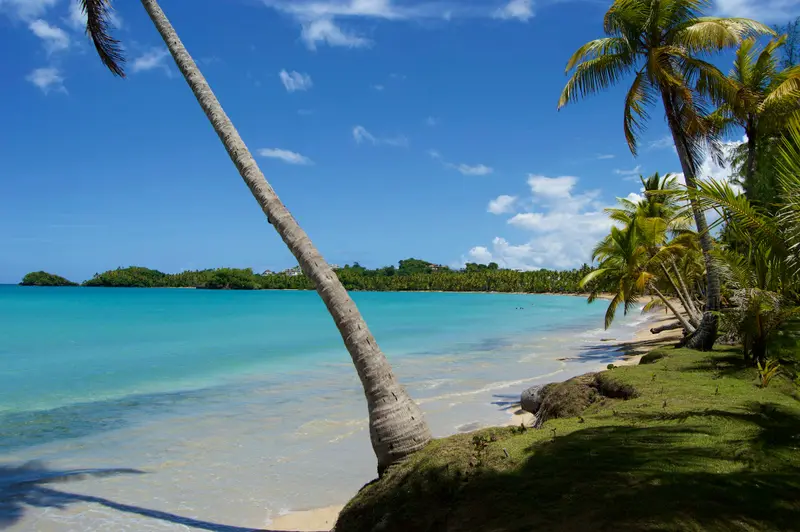
    The green peninsula in the northeast is primarily known for its humpback whales, which come into Samaná Bay from mid-January to late March. In addition, it features palm-fringed beaches around Las Terrenas and Las Galeras, the El Limón waterfall in the hills, and, on the other side of the bay, the karst islands and mangroves of Los Haitises National Park.
    The Dominican Republic travel guideRound trips in The Dominican RepublicPlan a trip with Samaná Peninsula

    Contents

    • Places in the region
    • Getting around
    • Nearby
    Las Terrenas

    Photo by Daniel Bernal on Unsplash

    Place 1 of 4

    Las Terrenas

    Las Terrenas, on Samaná Peninsula's north coast, is the region's liveliest beach resort, featuring small hotels, beachfront restaurants, and long palm-lined beaches.

    Discover
    Samaná

    Laslovarga / Wikimedia Commons / CC BY-SA 4.0, mod.

    Place 2 of 4

    Samaná

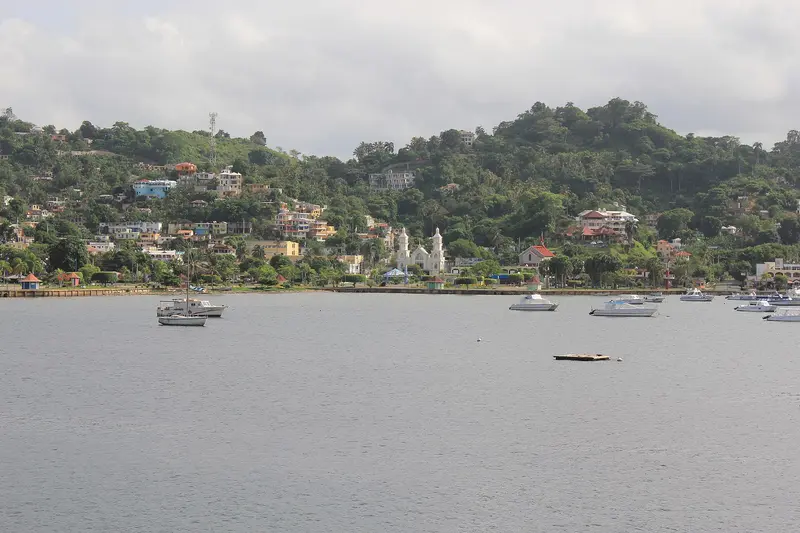
    Santa Bárbara de Samaná, usually just called Samaná, is the peninsula's main town and the hub for whale watching: From mid-January to late March, boats depart from the Malecón to see the humpback whales that give birth to their calves in the Bay of Samaná and…

    Discover
    Las Galeras

    Danu Widjajanto / Wikimedia Commons / CC BY-SA 4.0, mod.

    Place 3 of 4

    Las Galeras

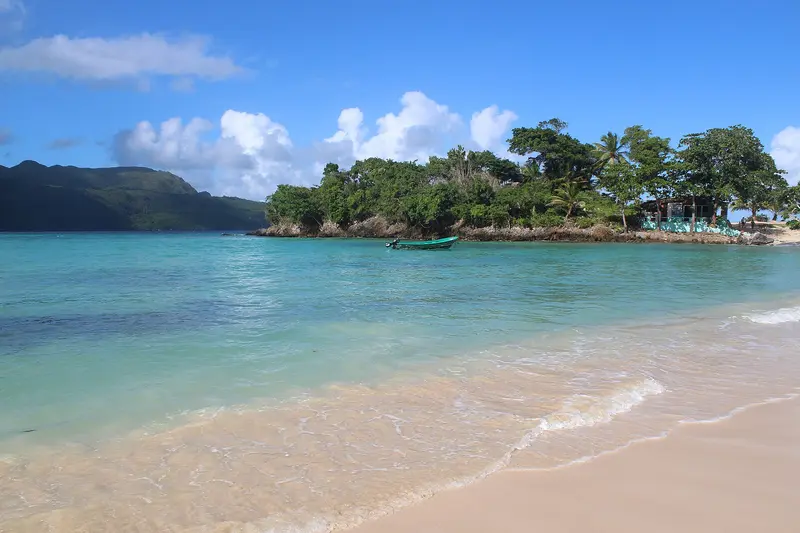
    Las Galeras, at the eastern end of the Samaná Peninsula, is a tranquil village in a horseshoe-shaped bay with white sand and turquoise water.

    Discover
    Los Haitises National Park

    “Los Haitises - río” by Starus / Wikimedia Commons / CC BY-SA 3.0, mod.

    Place 4 of 4

    Los Haitises National Park

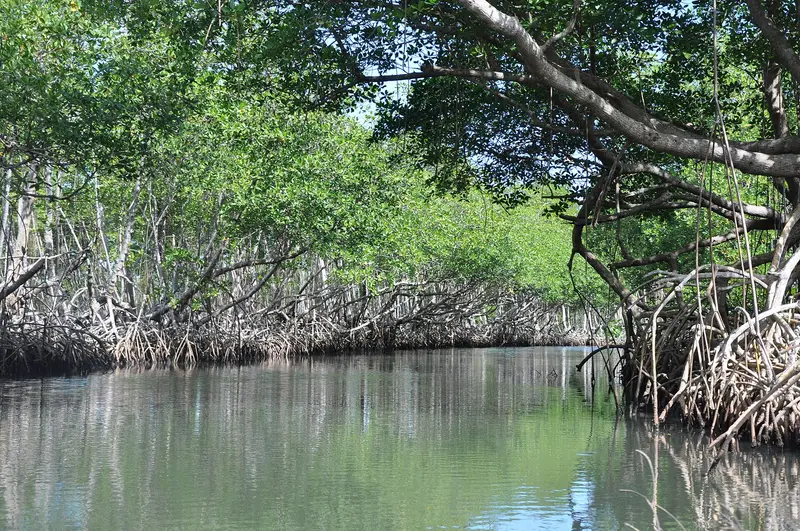
    Parque Nacional Los Haitises, on Samaná Bay's south side, is a karst landscape of forested limestone cones, mangrove estuaries, and caves. Cueva de la Línea and Cueva de San Gabriel preserve Taíno rock paintings: birds, dolphins, human figures, and masks.

    Discover

    Sights in Samaná Peninsula

    Discover the most important sights and attractions

    Salto El Limón

    Thetornado76 / Wikimedia Commons / CC BY-SA 4.0, mod.

    Natural Feature

    Salto El Limón

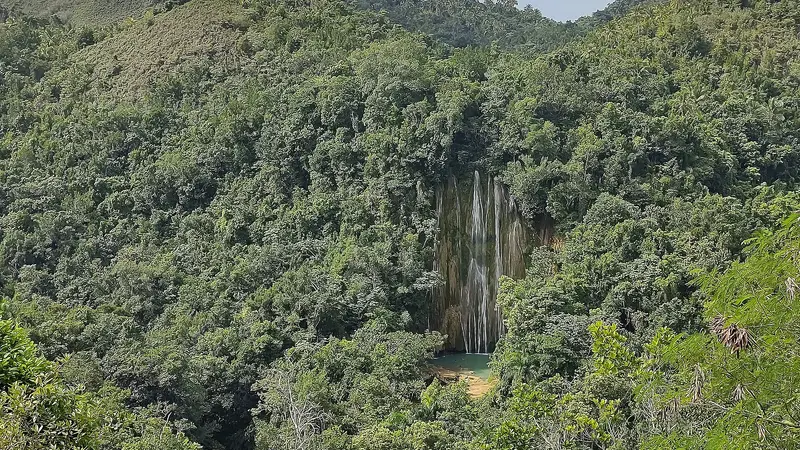
    The waterfall in the Sierra de Samaná is, according to the Ministry of Tourism, about 40 m high; other sources cite around 50 m. A 2.5 km path leads through the forest, on foot or horseback; the round trip takes about three hours, with two river crossings and a steep final descent. Below, you can swim in the natural pool. After heavy rain, the path is muddy and slippery, so sturdy footwear helps.
    Open in Google Maps

    Getting here and around

    Getting ThereFrom Santo Domingo, take the toll road Autopista del Nordeste to the peninsula; Las Terrenas is about 158 km and a good 2 hours away, with five toll stations along the route. Caribe Tours operates regular bus services to Samaná. El Catey Airport (AZS) is located near Sánchez; the small Arroyo Barril Airport offers domestic flights to Punta Cana.On the PeninsulaBetween Samaná, Las Terrenas, and Las Galeras, you travel by rental car, taxi, or guagua. Los Haitises National Park is only accessible by boat from Samaná, Sánchez, or Sabana de la Mar.Whale SeasonThe season is officially opened by the Ministry of Environment each year; in 2026, it runs from January 15 to March 31. Only book boats with the Ministry's permit.

    Nearby

    Santo Domingo

    Santo Domingo

    Santo Domingo, founded in 1496 and relocated to the west bank of the Río Ozama in 1502, is the oldest continuously inhabited European city in the Americas. Its heart is the Zona Colonial, a UNESCO World Heritage site since 1990: here you'll find America's first cathedral, the Viceregal Palace of the Columbus family, and the Fortaleza Ozama. The Old Town is undergoing extensive renovation until the end of 2026, with streets, facades, and museums already renewed.Outside the Old Town, highlights include the seaside Malecón, the Los Tres Ojos cave park, and the monumental Faro a Colón in the east of the city.

    Martin Falbisoner·CC BY-SA 4.0

    Santo Domingo and South Coast

    Santo Domingo and South Coast

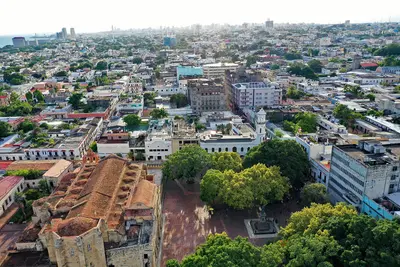
    The capital region on the south coast is the cultural highlight for most travelers. At its heart lies Santo Domingo with the Zona Colonial, a UNESCO World Heritage site since 1990, boasting its Cathedral, Viceroy's Palace, and the oldest European fortress in the Americas. East of the city lie Las Américas Airport and the Los Tres Ojos Cave Park.

    ElRicoBlanco·CC0

    Zona Colonial

    Zona Colonial

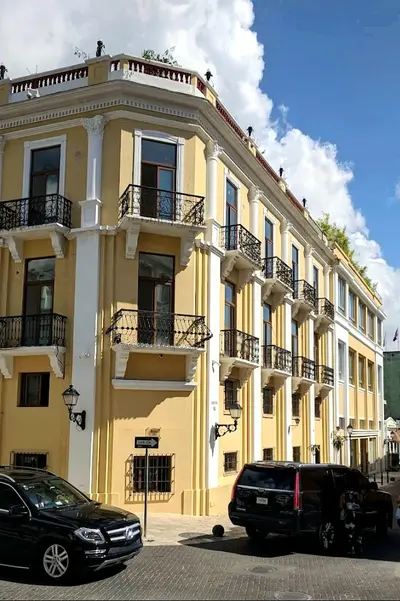
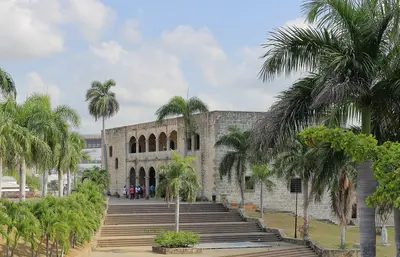
    The Zona Colonial, officially Ciudad Colonial, is Santo Domingo's Old Town on the west bank of the Río Ozama and a UNESCO World Heritage site since 1990. Governor Nicolás de Ovando had it laid out in a grid pattern starting in 1502; Calle Las Damas is considered the New World's first street. Within a few square kilometers stand the Catedral Primada, the Viceroy's Palace Alcázar de Colón, the Fortaleza Ozama, and the ruins of the first Franciscan monastery.The government has been renovating the district for several years with a major program: streets and facades were renewed, over 2,000 colonial-style lanterns installed, and museums modernized. In September 2026, the Alcázar reopened as the Museo Diego Colón Palacio Virreinal; construction is still ongoing on individual houses.

    Mariordo (Mario Durán & German Valverde)·CC BY-SA 4.0

    La Romana and Bayahibe

    La Romana and Bayahibe

    The port city of La Romana and the former fishing village of Bayahibe are the starting point for Isla Saona and Cotubanamá National Park. Above the Río Chavón lies Altos de Chavón, an artists' village built in the late 1970s in the style of a 16th-century Mediterranean town, featuring a church, an archaeological museum, and an amphitheater that Frank Sinatra opened in 1982. West of La Romana, the Cueva de las Maravillas displays hundreds of Taíno rock carvings.

    Cochoncarlos·CC BY-SA 4.0

    The East: Punta Cana and La Romana

    The East: Punta Cana and La Romana

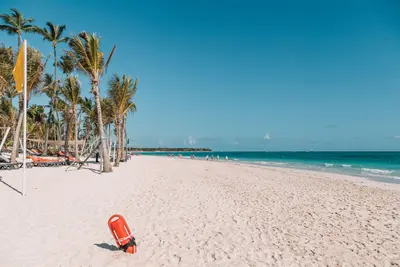
    The eastern provinces of La Altagracia and La Romana are the country's beach hub: Around Punta Cana and Bávaro, resorts line up one after another, and most holiday flights land here. To the south lie the diving village of Bayahibe, Cotubanamá National Park with Isla Saona, and the artists' village of Altos de Chavón. Inland, Higüey features the Basilica of the National Patron Saint Altagracia, while between San Pedro de Macorís and La Romana lies the Cueva de las Maravillas with Taíno rock carvings.

    Leonardo Rossatti·Pexels

    Your next steps

    Samaná Peninsula is in The Dominican Republic. Ways to carry on from here.

    • More in The Dominican Republic

      Highlights, areas, routes and the best time to travel for all of The Dominican Republic.

      The Dominican Republic travel guide
    • Round trips in The Dominican Republic

      Ready-made routes through The Dominican Republic, with stops, nights and a map.

      See the routes
    • Plan a trip with Samaná Peninsula

      The Guide asks about season, length and who is coming, and suggests a trip with Samaná Peninsula.

      Plan the trip

    Sources & method

    • Photos: Wikimedia Commons, Pexels. Each photo carries its credit.
    • The content is based on web research from public, traceable sources. How the content is made · The role of AI