Fernweh: Home
ExploreGuideDestinationsMy tripsMy trip
de|en
All Places & RegionsRound tripsNight trains in EuropeAll highlightsAbout FernwehFAQPrivacy PolicyImprint
Download on the App StoreGet it on Google Play
ExploreGuideDestinationsMy tripsMy trip
    • Neighborhoods & highlights
    • Recommendations
    • Walking tours
    • Tours
    • Eat & drink
    • Culture
    • Getting around
    • Accommodation
    • Plan trip
    • Round trips
    • Nearby
    Xi'an

    Gary Lee Todd, Ph.D. / Wikimedia Commons / CC0

    China

    Xi'an

    CityCultureUNESCO

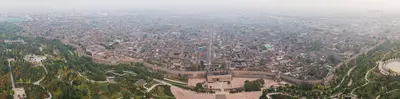
    Xi'an, the capital of Shaanxi Province, is one of China's great ancient capitals: Among others, Western Zhou, Qin, Western Han, Sui, and Tang ruled from here; under the Tang, the city was called Chang'an.

    by Felix Gillen

    1. Home
    2. Destinations
    3. China
    4. Shaanxi and Silk Road
    5. Xi'an
    Xi'an, the capital of Shaanxi Province, is one of China's great ancient capitals: Among others, Western Zhou, Qin, Western Han, Sui, and Tang ruled from here; under the Tang, the city was called Chang'an. Most famous is the Terracotta Army in the mausoleum of the First Emperor, discovered in 1974 and a UNESCO World Heritage site since 1987.The old city is encircled by a fully preserved city wall from the Ming Dynasty, built from 1370 onwards and 13.7 kilometers long. Within the walls are the Bell and Drum Tower, the Muslim Quarter with the Great Mosque and Hui street food, and to the south, the Giant Wild Goose Pagoda from the year 652. Plan at least two full days, one of them for the Terracotta Army.
    China travel guideSee the round tripPlan a trip with Xi'an

    Contents

    • Neighborhoods & highlights
    • Recommendations
    • Walking tours
    • Tours
    • Eat & drink
    • Culture
    • Getting around
    • Accommodation
    • Round trips
    • Nearby

    Sights in Xi'an

    Discover the most important sights and attractions

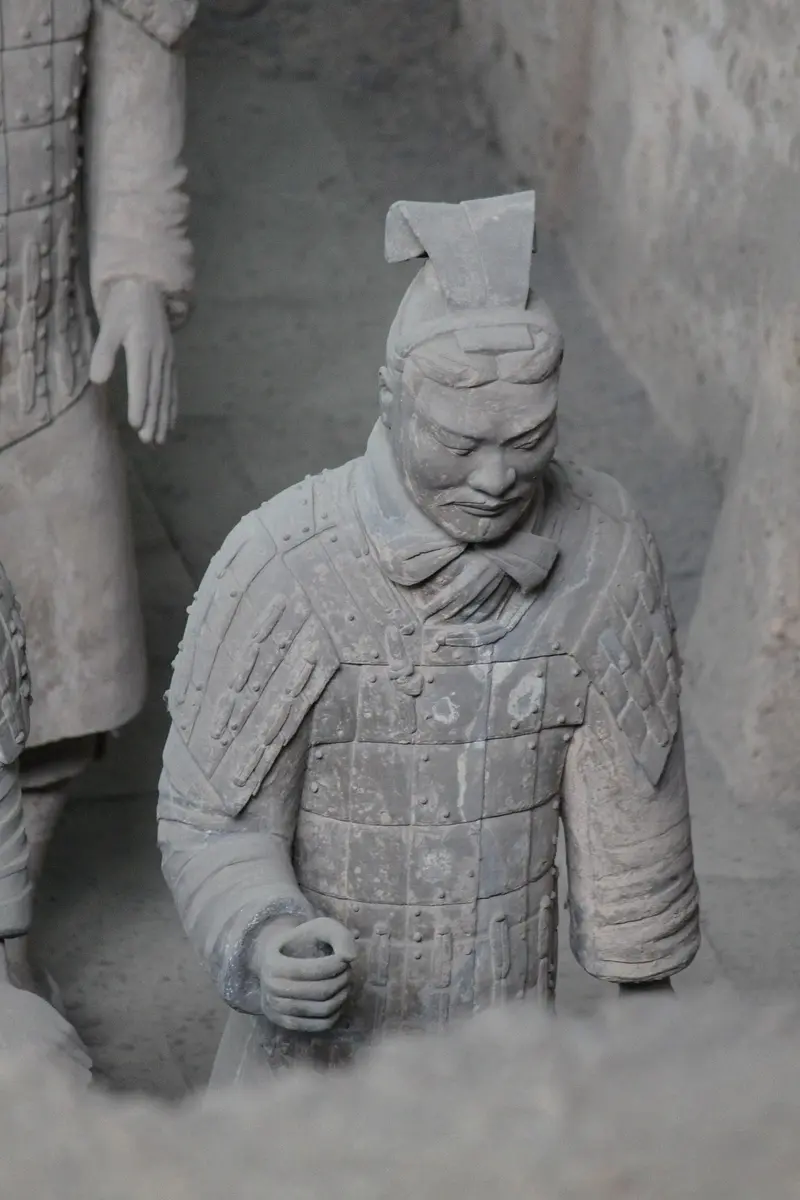
    Terracotta Army (Mausoleum of Qin Shihuang)

    Gary Lee Todd, Ph.D. / Wikimedia Commons / CC0

    Museum

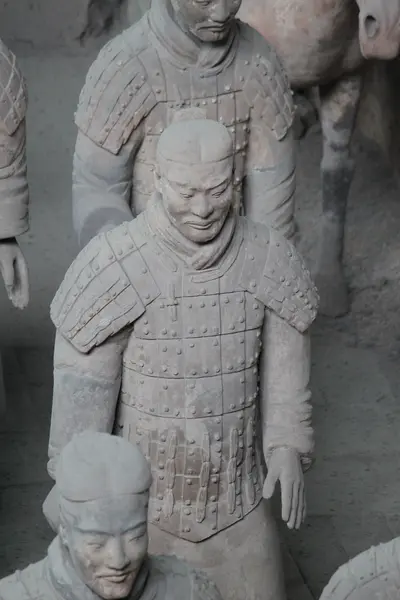
    1Terracotta Army (Mausoleum of Qin Shihuang)

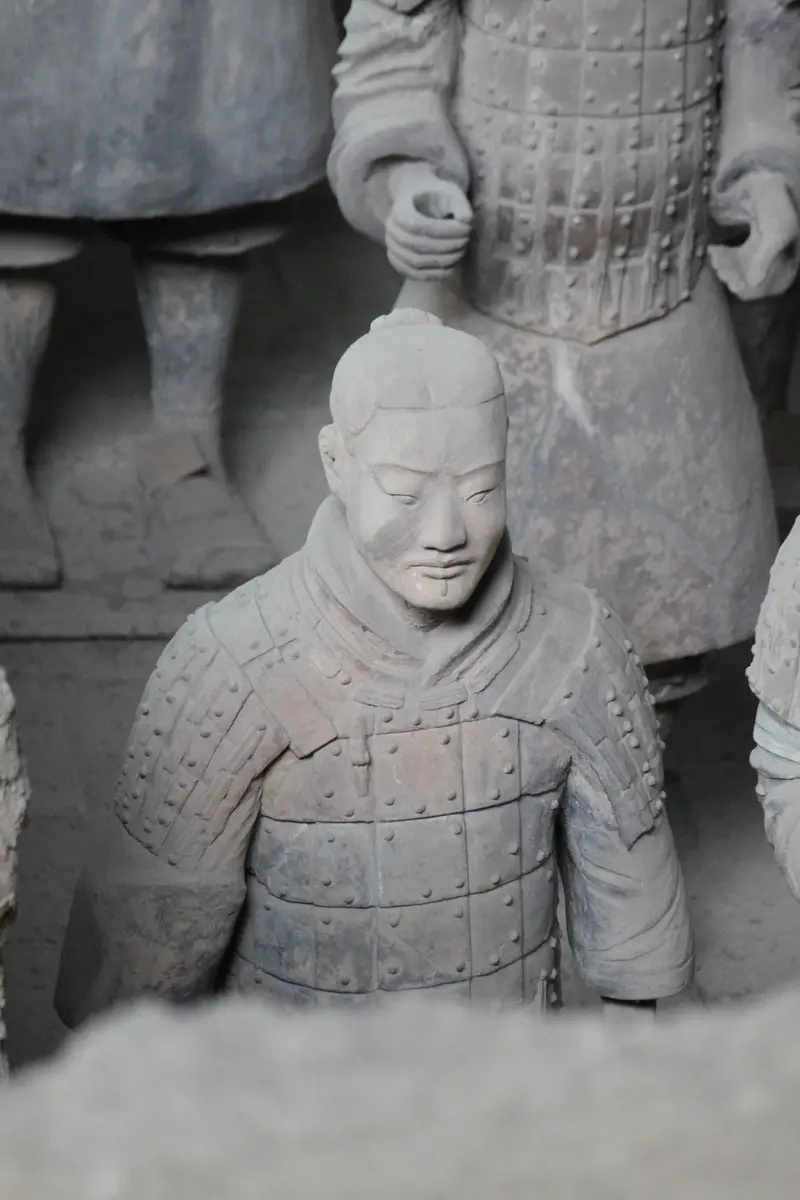
    Approximately 35 kilometers northeast of Xi'an, at the foot of Lishan, lies the burial complex of the first Chinese emperor, a UNESCO World Heritage site since 1987. In 1974, farmers here discovered the first clay figures. Pit 1, measuring 230 by 62 meters, is the largest, displaying over 3,000 warriors in battle formation; Pit 2, featuring archers, is still being excavated; Pit 3 is considered the command post. The ticket costs 120 CNY and includes access to the museum, Lishan Garden, and shuttle. It is issued in your name with passport details, up to seven days in advance; you'll need your passport for multiple on-site checks. Allow two to three hours for the pits alone, or four to five hours with the Lishan Garden. Tickets often sell out early around holidays.
    Open in Google Maps
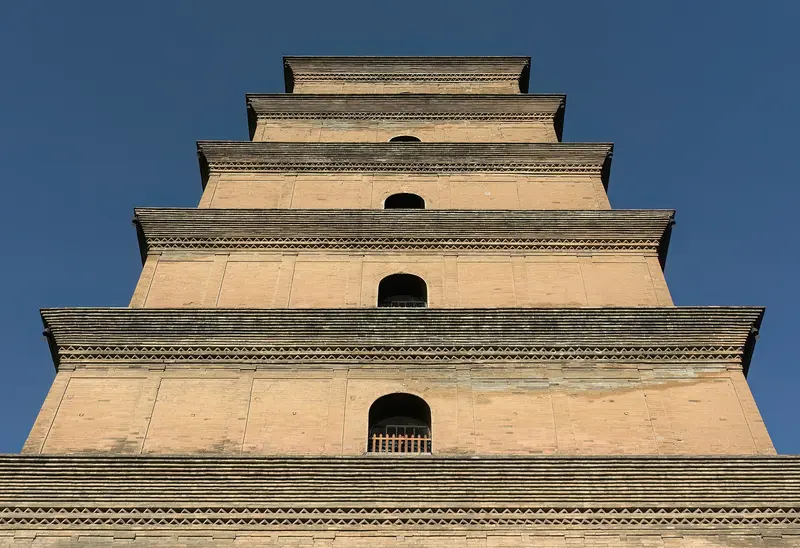
    Big Wild Goose Pagoda

    Alexey Komarov / Wikimedia Commons / CC BY-SA 4.0, mod.

    Place of Worship

    2Big Wild Goose Pagoda

    The approximately 64-meter-high pagoda was built in 652 during the Tang Dynasty to house the scriptures brought from India by the monk Xuanzang. It is part of the UNESCO World Heritage Silk Roads. Admission to the temple complex costs 10 CNY according to China Highlights, with an additional 25 to 30 CNY to climb the pagoda. Plan for one to one and a half hours and arrive early in the morning.
    Open in Google Maps
    City Wall of Xi'an

    Ideophagous / Wikimedia Commons / CC BY-SA 4.0, mod.

    Attraction

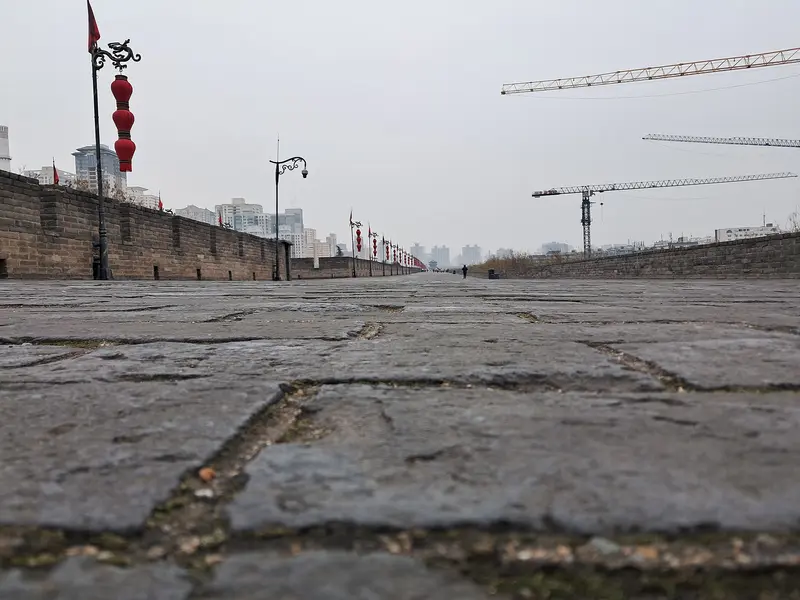
    3City Wall of Xi'an

    The Ming Wall, built from 1370, is fully preserved: 13.7 km long, 12 m high, 12-14 m wide at the top. Eight of the 18 gates serve as visitor access; the South Gate is the most famous. Admission costs 54 CNY. Kids 1.20-1.40 m pay half, smaller ones are free. Bicycles can be rented up top (45 CNY for two hours); a circuit takes about two hours. Evenings (7-9 PM), the South Gate is illuminated.
    Open in Google Maps
    Place of Worship

    4Small Wild Goose Pagoda and Xi'an Museum

    The pagoda in Jianfu Temple, built from 707 to 710, is now approximately 43 meters high: Two of its original 15 stories were lost in the earthquake of 1556. It belongs to the Silk Roads World Heritage, and the Xi'an Museum is right next to it. Admission is free, but you must reserve up to five days in advance. It's just a few minutes' walk from Nanshaomen Metro Station (Lines 2 and 5). Significantly quieter than the Giant Wild Goose Pagoda.
    Open in Google Maps
    Historic Landmark

    5Bell Tower and Drum Tower

    The Bell Tower was built in 1384 and relocated in 1582 to its current intersection of the four main streets in the center of the Old Town. Nearby stands the Drum Tower, and behind it, at Beiyuanmen, the Muslim Quarter begins. A combined ticket for both towers costs 50 CNY according to China Xian Tour. Metro Line 2 stops directly at Bell Tower Station.
    Open in Google Maps
    Point of Interest

    6Muslim Quarter (Huimin Jie)

    The Hui Muslim Quarter spans more than ten alleys, its main entrance on Beiyuanmen near the Bell and Drum Tower. Try Yangrou Paomo, Soup Baozi, cold sesame noodles, and skewers. Alleys are open to all; most stalls open from 6 PM. It's quieter before 10 AM or on weekday afternoons.
    Open in Google Maps

    City walks in Xi'an

    Curated walking tours through the city's highlights, handpicked by experienced travel journalists.

    Xi'an Old Town: from the Bell Tower to the South Wall
    Half-day walk within Ming City Wall, from central Bell Tower via Muslim Quarter to Great Mosque, to Forest of Stone Tablets at South Wall. Conclude by climbing the wall at South Gate; best in early evening when illuminated. Shaanxi History Museum & Small Wild Goose Pagoda need advance booking, are off-route.
    Open in Google Maps
    Stops (5)

    Tours & experiences in Xi'an

    Search tours for Xi'an on GetYourGuide* (Affiliate link)On GetYourGuide, with reviews from other travellers

    * Affiliate link: if you book through it, we earn a small commission. The price stays the same for you.

    Restaurants in Xi'an

    1

    Defachang

    This traditional establishment, founded in 1936 at Bell Tower Square, is known for its Jiaozi banquet, a sequence of usually 10 to 25 different dumplings. According to China Xian Tour, a banquet costs around 200 to 400 CNY per person.
    Show on Google Maps

    Jia San Guantang Baozi

    Halal snack bar in the Muslim Quarter, known for Guantang Baozi, broth-filled dumplings. A typical stop when strolling through Beiguangji Street.
    Show on Google Maps

    Lao Sun Jia

    A traditional house for Yangrou and Niurou Paomo, dating back to 1898. Tear your own flatbread, then it's covered in lamb or beef broth. Its main branch is on Dong Dajie.
    Show on Google Maps

    Silk Road and Hui Culture

    Starting Point of the Silk RoadAs Chang'an, the city was one of Asia's most important metropolises under the Tang and the starting point for trade routes to the West. Five sites in Xi'an are UNESCO Silk Road World Heritage sites, including the Big Wild Goose Pagoda and the Small Wild Goose Pagoda. From 652, the Big Wild Goose Pagoda housed the Buddhist scriptures that the monk Xuanzang brought from India.The Muslim QuarterHui Muslims live in the quarter northwest of the Bell Tower. The Great Mosque combines Chinese wooden halls with Islamic elements and is built without a minaret. In the alleys, Hui cuisine shapes the scene, with dishes like Yangrou Paomo, Soupy Baozi, and skewers.Traditional EateriesLao Sun Jia has been serving Paomo since the late 19th century, while Defachang has been known for its dumpling banquet since 1936.

    Getting There and Around

    Airport and RailXianyang Airport (XIY): approx. 50 km northwest; Metro Line 14 travels via Xi'an North Railway Station into the city.Xi'an North Railway Station: High-speed trains to Beijing (from just over 4 hours), Chengdu (just over 3 hours) and Pingyao (2.5 to 3 hours). Metro Line 2 runs directly to the Bell Tower, approx. 30 minutes.To the Terracotta ArmyThe site is located approx. 35 km northeast. The most economical way is to take Metro Line 9 to Huaqingchi and change to Bus 602 or 613, total approx. 1.5 hours. Alternatively, direct buses are available from the station square (approx. 50 minutes) or a taxi (around one hour).In the CityWithin the city walls, many destinations are close to each other. The Metro connects the Old Town, Wild Goose Pagoda and train stations.

    Accommodations in Xi'an

    Find perfect stay in Xi'an

    Booking.com* (Affiliate link)
    Search Hotels
    Agoda* (Affiliate link)
    Search Hotels
    Airbnb
    Vacation Rentals

    * Affiliate link: if you book through it, we earn a small commission. The price stays the same for you.

    Plan your trip to Xi'an

    Save places, build a route and plan your city trip, all in one place.

    1. 1
      Sunrise over alpine peaks and a sea of clouds
      1234

      Round trip

      12 days · 4 stops

      Saved

      Pick a route

      Pick a ready-made one or save places and plan your own.

      Open bookmarks
    2. 2

      Trip to Xi'an

      Live
      • 1Terracotta Army (Mausoleum of Qin Shihuang)3 days
      • 2Big Wild Goose Pagoda4 days
      • 3City Wall of Xi'an5 days
      Budget

      Plan your trip

      The planner sorts stops, days and budget. Plan together in real time.

      Start trip planning
    3. 3
      9:41 No signal
      Xi'an
      Available offline

      Gary Lee Todd, Ph.D. / Wikimedia Commons / CC0

      Use it on the road

      Download the guide to your phone and use it on site, even offline.

    Round trips with Xi'an

    China Classic: Beijing, Xi'an, Chengdu, Guilin and Shanghai

    China Classic: Beijing, Xi'an, Chengdu, Guilin and Shanghai

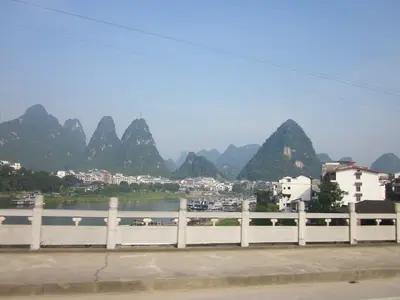
    The classic first China trip links Imperial Beijing, the Great Wall, Xi'an's Terracotta Army, Chengdu's pandas, the Li River's karst landscape, and Yangtze Delta cities. Most legs are by high-speed train; only between Guilin and Shanghai is a domestic flight sensible. Book trains via 12306 using your passport; sales start 15 days before departure.

    19 Days
    7 stops
    Open jaw

    Huangdan2060·CC0

    Nearby

    Shaanxi and Silk Road

    Shaanxi and Silk Road

    Shaanxi Province in central China served for centuries as the seat of emperors: Under the Zhou, Qin, Han, Sui, and Tang dynasties, the capital was located in the area of modern-day Xi'an. This is where the Silk Road begins, and several sites in the city are UNESCO World Heritage Silk Road sites.The main highlight is the mausoleum of the First Emperor with the Terracotta Army, along with the fully preserved city wall and the Muslim Quarter. From Beijing, you can reach Xi'an by high-speed train in just over four hours.

    Gary Lee Todd, Ph.D.·CC0

    Yangtze and Three Gorges

    Yangtze and Three Gorges

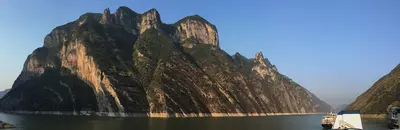
    Between Baidicheng near Fengjie and the Nanjin Pass near Yichang, the Yangtze River cuts through the Three Gorges Qutang, Wu and Xiling for approximately 193 kilometers. According to Travel China Guide, the rock walls rise 700 to 800 meters high, and at its narrowest point, the river is less than 100 meters wide.Most travelers experience the gorges on a river cruise: A downstream journey from Chongqing usually lasts four days and three nights and ends in Yichang near the Three Gorges Dam. Along the way, the ships stop at sites like the ghost city of Fengdu and the Shibaozhai Pagoda. Cruises operate from March to November, with April to May and September to October being the most beautiful.

    Fredlyfish4·CC BY-SA 4.0

    Pingyao

    Pingyao

    Pingyao in Shanxi Province is, according to UNESCO, an exceptionally well-preserved example of a traditional Han Chinese city from the Ming and Qing dynasties and has been a World Heritage Site since 1997. The city wall, built in 1370, is around 12 meters high and encloses an old town of approximately 2.25 square kilometers over more than 6 kilometers.In the 19th and early 20th centuries, Pingyao was a financial center: in 1823, China's first exchange bank, Rishengchang, was founded here. The World Heritage Site also includes the Shuanglin Temple with over 2,000 painted figures and the Zhenguo Temple with a wooden hall dating back to 963. No cars are allowed in the old town; plan for one to two nights.

    Chensiyuan·CC BY-SA 4.0

    Zhangjiajie and Wulingyuan

    Zhangjiajie and Wulingyuan

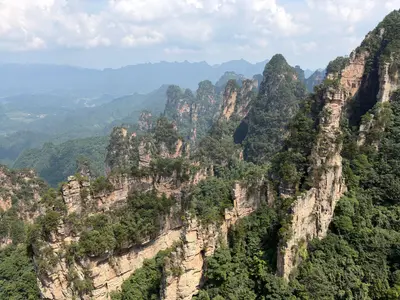
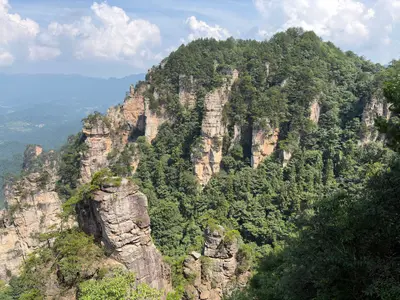
    In the Wulingyuan area, northwest Hunan Province, over 3,000 narrow quartz-sandstone pillars and peaks, many exceeding 200 meters, rise according to UNESCO. A World Heritage site since 1992, the area encompasses Zhangjiajie National Forest Park, Suoxi Valley, Tianzi Shan, and Yangjiajie, along with two large natural bridges and some 40 caves.A pillar near Yuanjiajie was renamed Avatar-Hallelujah Mountain in 2010 because the landscape recalls the film's setting. Outside the park are Tianmen Shan with its cable car and the glass bridge over the Grand Canyon. Plan at least two days for the national park; the combination ticket is valid for four days.

    Guillaume Kremer·Pexels

    Middle South and Yangtze

    Middle South and Yangtze

    Between the Sichuan Basin and Central China lie two of the country's most impressive landscapes. In the northwest of Hunan Province, over 3,000 sandstone pillars rise from the forests in the Wulingyuan area near Zhangjiajie, a UNESCO World Heritage site since 1992.The Yangtze River cuts through the Three Gorges of Qutang, Wu, and Xiling for approximately 193 kilometers between Fengjie and Yichang. Downstream, a cruise from Chongqing usually lasts four days and three nights, ending near the Three Gorges Dam at Yichang.

    Guillaume Kremer·Pexels

    Your next steps

    Xi'an is in China. Ways to carry on from here.

    • More in China

      Highlights, areas, routes and the best time to travel for all of China.

      China travel guide
    • Round trips with Xi'an

      One route passes through Xi'an, with stops, nights and a map.

      See the round trip

    Sources & method

    • Photos: Wikimedia Commons. Each photo carries its credit.
    • Place data such as addresses and ratings comes from Google Maps.
    • The content is based on web research from public, traceable sources. How the content is made · The role of AI