Fernweh: Home
ExploreGuideDestinationsMy tripsMy trip
de|en
All Places & RegionsRound tripsNight trains in EuropeAll highlightsAbout FernwehFAQPrivacy PolicyImprint
Download on the App StoreGet it on Google Play
ExploreGuideDestinationsMy tripsMy trip
    • Places in the region
    • Getting around
    • Round trips
    • Nearby
    S. Shetland Islands

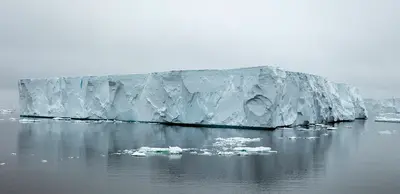
    Hannes Grobe / Wikimedia Commons / CC BY-SA 4.0, mod.

    Antarctica

    S. Shetland Islands

    Region

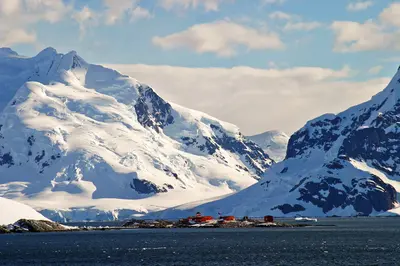
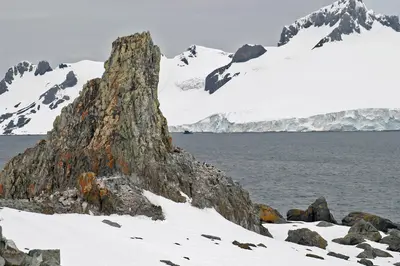
    The South Shetland Islands lie north of the Antarctic Peninsula, often your first land sighting after the Drake Passage. Flights from Punta Arenas land on King George Island.

    by Felix Gillen

    1. Home
    2. Destinations
    3. Antarctica
    4. S. Shetland Islands
    The South Shetland Islands lie north of the Antarctic Peninsula, often your first land sighting after the Drake Passage. Flights from Punta Arenas land on King George Island. Among the most famous landing sites are Half Moon Island, with its chinstrap penguin colony, and Deception Island, a volcanic island with a flooded caldera and remains of a whaling station.
    Antarctica travel guideSee the round tripPlan a trip with S. Shetland Islands

    Contents

    • Places in the region
    • Getting around
    • Round trips
    • Nearby
    Deception Island

    W. Bulach / Wikimedia Commons / CC BY-SA 4.0, mod.
    Place 1 of 2

    Deception Island

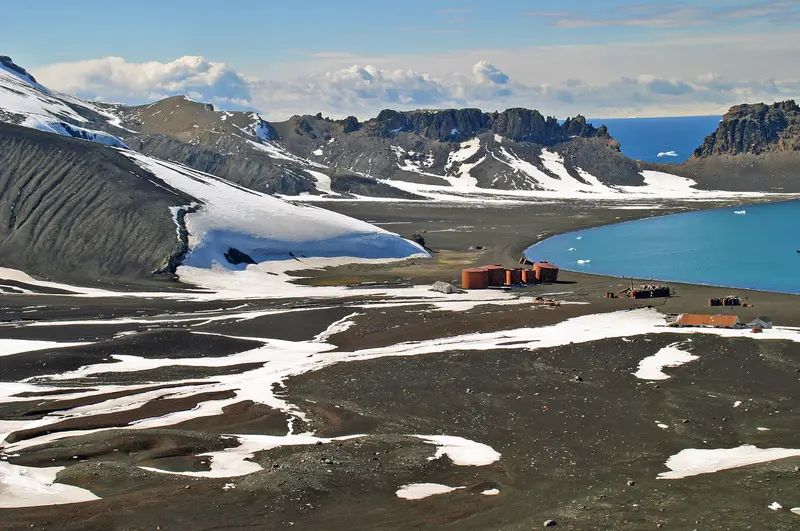
    Deception Island is an active volcano in the South Shetland Islands, its collapsed caldera flooded by the sea.

    Discover
    Half Moon Island

    W. Bulach / Wikimedia Commons / CC BY-SA 4.0, mod.

    Place 2 of 2

    Half Moon Island

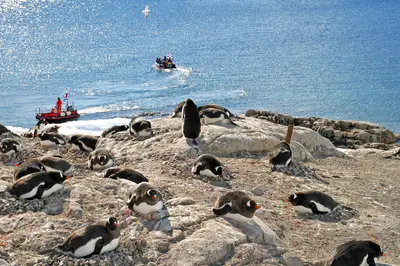
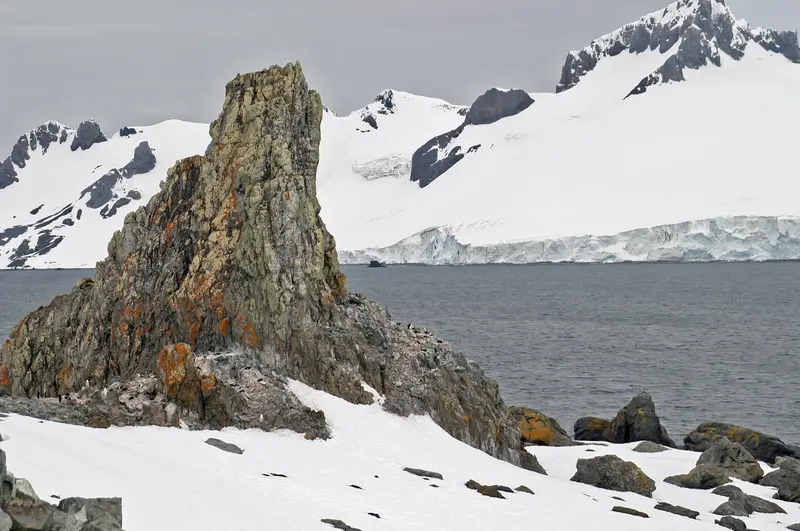
    Half Moon Island is a small, crescent-shaped island in the McFarlane Strait off Livingston Island in the South Shetland Islands. Chinstrap penguins breed on the hill with the navigation tower, while fur seals and Weddell seals lie on the beach.

    Discover

    Arrival and Landings

    By Ship or PlaneExpedition ships from Ushuaia reach the South Shetland Islands after about two days via the Drake Passage. Flights from Punta Arenas land in about two hours at Teniente Marsh airfield near the Chilean Frei Station on King George Island, where guests board.Landing SitesParticularly well-known are the volcanic Deception Island with Whalers Bay, Telefon Bay, and Baily Head, as well as Half Moon Island with its chinstrap penguin colony. Both have their own visitor guidelines, with maximum numbers and restricted areas listed on the location pages.Avian Flu ProtectionDue to avian influenza (HPAI), IAATO's protective rules apply: In animal areas, do not sit, kneel, crouch, or lie down, and do not place backpacks or equipment on the ground or snow. Maintain at least 5 meters distance from all animals.

    Round trips through this region
    Classic Peninsula Expedition from Ushuaia

    Classic Peninsula Expedition from Ushuaia

    Typical 10 to 14-day expedition route: approximately two sea days across the Drake Passage to the South Shetland Islands, then along the west coast of the peninsula to Neko Harbour and Paradise Harbour, continuing to Port Lockroy and through the Lemaire Channel to Pleneau and Petermann Island, with another two sea days for the return. Landings are never guaranteed.

    11 Days
    8 stops

    W. Bulach·CC BY-SA 4.0

    Nearby

    Weddell Sea

    Weddell Sea

    The Weddell Sea, east of the Antarctic Peninsula, is more ice-filled than the west coast and less visited. Travelers reach its edge via the Antarctic Sound at the northern tip of the Peninsula, where Adelie and Gentoo penguins breed on the cliffs of Brown Bluff. Shackleton's ship Endurance sank in the Weddell Sea in 1915, its wreck found in 2022 at 3,008 meters.

    Godot13·CC BY-SA 4.0

    Neko Harbour

    Neko Harbour

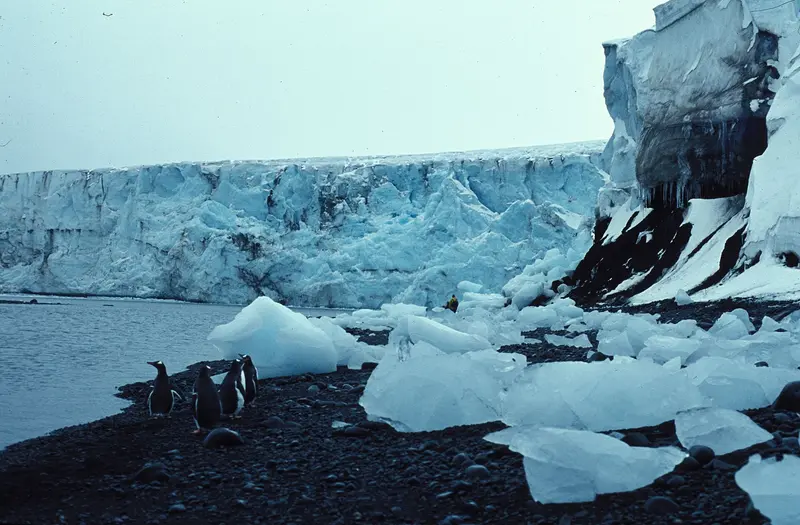
    Neko Harbour is a bay in Andvord Bay on the west coast of the Antarctic Peninsula, making it a landing site on the Antarctic mainland. Gentoo penguins breed above the pebble beach, and behind them, glaciers calve into the water. The bay is named after the whaling ship Neko, which operated here in the early 20th century.

    W. Bulach·CC BY-SA 4.0

    Paradise Harbour

    Paradise Harbour

    Paradise Harbour, also known as Paradise Bay, is a wide bay on the Danco Coast in the west of the Antarctic Peninsula, protected by the offshore islands Lemaire Island and Bryde Island. It was named by whalers, and the name became common around 1920. On its shore lies the Argentine Station Brown, which has been operated as a summer station since 1965.

    W. Bulach·CC BY-SA 4.0

    Antarctic Peninsula

    Antarctic Peninsula

    The Antarctic Peninsula is the main destination for almost all Antarctic voyages. Its west coast is lined with bays, channels, and islands, where Gentoo penguins, Adélie penguins, seals, and whales live. Typical stops include Neko Harbour in Andvord Bay, Paradise Harbour, the Port Lockroy Museum, the Lemaire Channel, as well as Pleneau Island and Petermann Island further south.

    W. Bulach·CC BY-SA 4.0

    Port Lockroy

    Port Lockroy

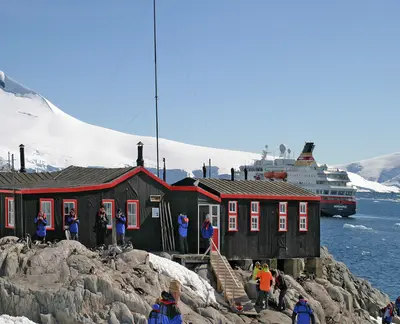
    Port Lockroy is a protected natural harbor off Wiencke Island. On the small island of Goudier Island stands British Base A, founded on February 11, 1944 during Operation Tabarin and today, as Historic Site No. 61, a museum with a shop and post office, managed by the UK Antarctic Heritage Trust. Between the buildings, Gentoo penguins breed; opposite, at Jougla Point, whale bones lie on the shore.

    W. Bulach·CC BY-SA 4.0

    Your next steps

    S. Shetland Islands is in Antarctica. Ways to carry on from here.

    • More in Antarctica

      Highlights, areas, routes and the best time to travel for all of Antarctica.

      Antarctica travel guide
    • Round trips with S. Shetland Islands

      One route passes through S. Shetland Islands, with stops, nights and a map.

      See the round trip
    • Plan a trip with S. Shetland Islands

      The Guide asks about season, length and who is coming, and suggests a trip with S. Shetland Islands.

      Plan the trip

    Sources & method

    • Photos: Wikimedia Commons. Each photo carries its credit.
    • The content is based on web research from public, traceable sources. How the content is made · The role of AI