Fernweh: Home
ExploreGuideDestinationsMy tripsMy trip
de|en
All Places & RegionsRound tripsNight trains in EuropeAll highlightsAbout FernwehFAQPrivacy PolicyImprint
Download on the App StoreGet it on Google Play
ExploreGuideDestinationsMy tripsMy trip
    • Neighborhoods & highlights
    • Tours
    • Eat & drink
    • Culture
    • Getting around
    • Accommodation
    • Plan trip
    • Nearby
    Santiago de Cuba

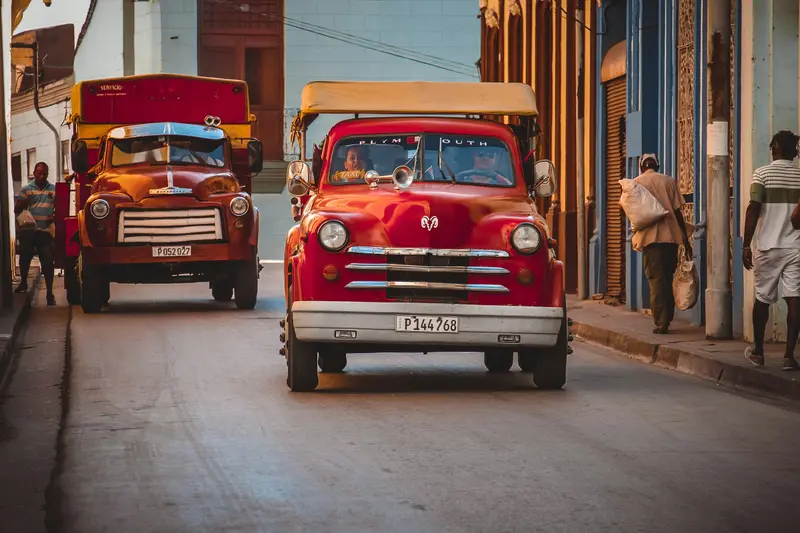
    Photo by Denys on Unsplash

    Cuba

    Santiago de Cuba

    CityCulture

    Santiago de Cuba, in the southeast, is Cuba's second-largest city and a hub of Afro-Caribbean influenced music and festival culture.

    by Felix Gillen

    1. Home
    2. Destinations
    3. Cuba
    4. Santiago de Cuba
    Santiago de Cuba, in the southeast, is Cuba's second-largest city and a hub of Afro-Caribbean influenced music and festival culture. The city was founded in 1515 as the seventh Spanish villa; at Parque Céspedes stands the Casa de Diego Velázquez, built between 1516 and 1530. In July, Santiago celebrates its Carnival and the Festival del Caribe.Guarding the harbor entrance is the Castillo San Pedro de la Roca, a UNESCO World Heritage site since 1997. At Santa Ifigenia cemetery lie José Martí and Fidel Castro. Hurricane Melissa made landfall near Santiago on October 29, 2025, as a Category 3 storm, damaging the El Cobre pilgrimage church among other sites; inquire locally about the current condition.
    Cuba travel guideRound trips in CubaPlan a trip with Santiago de Cuba

    Contents

    • Neighborhoods & highlights
    • Tours
    • Eat & drink
    • Culture
    • Getting around
    • Accommodation
    • Nearby

    Sights in Santiago de Cuba

    Discover the most important sights and attractions

    Castle

    1Castillo San Pedro de la Roca (El Morro)

    The fortress at the bay entrance, 10 km from the city, was designed in 1637 by Giovanni Battista Antonelli and built from 1638; earthquakes damaged it between 1675 and 1692. A UNESCO World Heritage site since 1997, it exemplifies Spanish-American military architecture. Inside, a museum showcases the history of piracy; at sunset, a cannon is fired.
    Open in Google Maps
    Parque Céspedes and Casa de Diego Velázquez

    Maesi64 / Wikimedia Commons / CC0

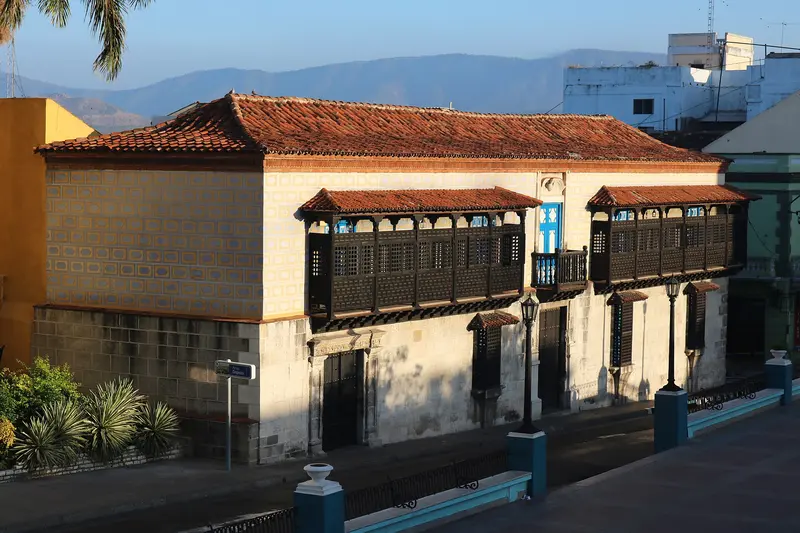
    2Parque Céspedes and Casa de Diego Velázquez

    Parque Céspedes has been the city's founding center since 1515 and a National Monument since October 1978. On its west side stands the Casa de Diego Velázquez, built between 1516 and 1530 with Mudéjar elements; according to the Cuban tourism portal, it is the oldest preserved Spanish residence of its kind in Latin America. Today, it houses the Museo de Ambiente Histórico Cubano.
    Open in Google Maps
    Santa Ifigenia Cemetery

    Sangianense / Wikimedia Commons / CC BY-SA 4.0, mod.

    3Santa Ifigenia Cemetery

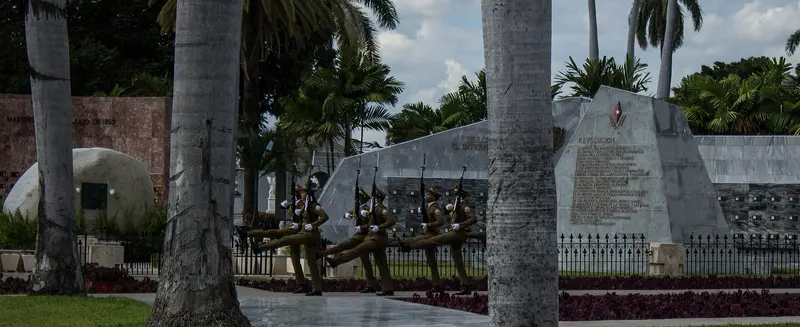
    The cemetery, founded in 1868, holds the graves of major Cuban historical figures. José Martí's 1951 mausoleum sees an honor guard change every 30 minutes. Since Dec 4, 2016, Fidel Castro's ashes have rested here in a rock inscribed 'Fidel'; Carlos Manuel de Céspedes, Emilio Bacardí, and musician Compay Segundo also lie here.
    Open in Google Maps
    Church

    4Basilica of El Cobre

    The pilgrimage church of the Virgen de la Caridad del Cobre is 18 km northwest of the city; on September 8th, a procession is held here, Pope John Paul II visited the site in 1998. Hurricane Melissa damaged the basilica's stained glass and masonry on October 29, 2025, with water ingress. Inquire about the current condition before visiting.
    Open in Google Maps

    Tours & experiences in Santiago de Cuba

    Search tours for Santiago de Cuba on GetYourGuide* (Affiliate link)On GetYourGuide, with reviews from other travellers

    * Affiliate link: if you book through it, we earn a small commission. The price stays the same for you.

    Restaurants in Santiago de Cuba

    Music, Carnival and History

    Carnival in JulyAccording to the Cuban tourism portal, Santiago's Carnival blends Spanish, African, and Franco-Haitian influences; it has had its own Carnival Museum since June 1983. The Festival del Caribe precedes it in the first week of July, with a devil figure burned on its last day.MoncadaOn July 26, 1953, revolutionaries led by Fidel Castro attacked the Moncada Barracks during Carnival. Today, the building serves as a school and museum.

    Arrival and on the way

    ArrivalThe Havana-bus journey is approx. 15 hrs, per Rough Guides; by 2026, long-distance travel is highly restricted due to the fuel crisis; trains run just bi-weekly. Per Directorio Cubano, Havana domestic flights were once weekly in summer 2026; flight status is irregular.ExcursionsCastillo del Morro is located about 10 km outside, on the bay; Basilica El Cobre 18 km northwest. The rock peak Gran Piedra, 1,234 m high (Planetware), is 25 km southeast, reachable via a 12 km access road.

    Accommodations in Santiago de Cuba

    Find perfect stay in Santiago de Cuba

    Booking.com* (Affiliate link)
    Search Hotels
    Agoda* (Affiliate link)
    Search Hotels
    Airbnb
    Vacation Rentals

    * Affiliate link: if you book through it, we earn a small commission. The price stays the same for you.

    Plan your trip to Santiago de Cuba

    Save places, build a route and plan your city trip, all in one place.

    1. 1
      Sunrise over alpine peaks and a sea of clouds
      1234

      Round trip

      12 days · 4 stops

      Saved

      Pick a route

      Pick a ready-made one or save places and plan your own.

      Open bookmarks
    2. 2

      Trip to Santiago de Cuba

      Live
      • 1Castillo San Pedro de la Roca (El Morro)3 days
      • 2Parque Céspedes and Casa de Diego Velázquez4 days
      • 3Santa Ifigenia Cemetery5 days
      Budget

      Plan your trip

      The planner sorts stops, days and budget. Plan together in real time.

      Start trip planning
    3. 3
      9:41 No signal
      Santiago de Cuba
      Available offline

      Photo by Denys on Unsplash

      Use it on the road

      Download the guide to your phone and use it on site, even offline.

    Nearby

    Baracoa

    Baracoa

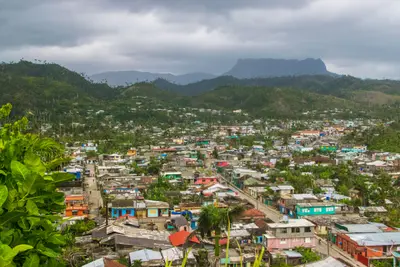
    Baracoa, on the northeast coast, was founded in August 1511 by Diego Velázquez and is thus considered Cuba's first city; Columbus named the place Porto Santo in 1492. For a long time, Baracoa was only accessible by sea; it was not until 1965 that the La Farola pass road opened, connecting the town with Guantánamo, 120 km away.Above the city rises the flat-topped mountain El Yunque (575 m); to its west lies the Alejandro de Humboldt National Park, a UNESCO World Heritage site since 2001. The region is known for cocoa. Hurricane Melissa damaged roads and bridges around Baracoa in October 2025; according to Directorio Cubano, by the end of November 2025, connections to Maisí and Moa were only provisionally passable.

    Will Jephcott·Unsplash

    Port Antonio

    Port Antonio

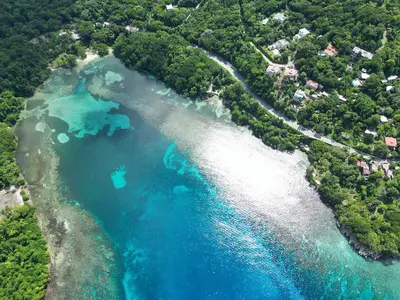
    Port Antonio, the capital of Portland Parish on the northeast coast, is quieter than the major resorts and a starting point for many natural attractions. East of the town are the Blue Lagoon, a spring-fed lagoon over 50 m deep, the bathing cove Frenchman's Cove, Boston Bay with its Jerk stands, and further south the Reach Falls. West of the town, the traditional raft trip on the Rio Grande leads through the rainforest. Portland fared relatively well during Hurricane Melissa; according to the Jamaica Tourist Board, the main attractions are open.

    Layneartz19·CC BY-SA 4.0

    North and East Coast

    North and East Coast

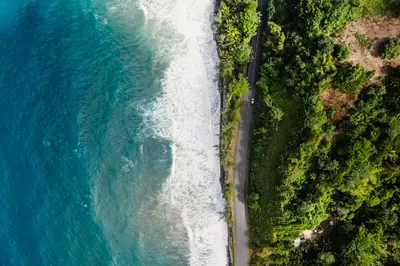
    Between Ocho Rios in St. Ann and Port Antonio in Portland lies a lush coast with rivers and waterfalls. Around Ocho Rios, rivers cascade into the sea, most famously Dunn's River Falls; east of which are Firefly, Noël Coward's estate, and in Portland the Blue Lagoon, Reach Falls, rafting on the Rio Grande, and Boston Bay, where Jerk is said to have originated. According to early 2026 reports, Portland was relatively spared during Hurricane Melissa.

    Aviz Media·Pexels

    Ocho Rios

    Ocho Rios

    Read the current UK FCDO travel advice on crime in Jamaica before you go.Ocho Rios on the north coast in St Ann is a cruise port and excursion hub. Its main attraction is Dunn's River Falls, whose cascades you climb up from the beach; after Hurricane Melissa they reopened in November 2025. In the hills lie further waterfalls such as Island Gully Falls, also called Blue Hole, and Konoko Falls; west towards Discovery Bay are the Green Grotto Caves, and to the east Firefly, Noël Coward's estate. Ian Fleming International Airport is at Boscobel, east of town.

    Amit Shubinsky·Pexels

    Blue Mountains

    Blue Mountains

    The Blue Mountains rise directly behind Kingston, culminating in Blue Mountain Peak, at 2,256 m the highest point in Jamaica. The Blue and John Crow Mountains National Park has been a UNESCO Natural and Cultural World Heritage site since 2015: It served as a refuge for Taíno and Maroons and is home to over 1,300 flowering plants, nearly 300 of which are endemic to Jamaica. Blue Mountain coffee grows on its slopes. A classic is the nocturnal ascent to the summit to see the sunrise.Following Hurricane Melissa, the park administration received UNESCO emergency aid; repairs to Holywell and Portland Gap are planned (as of October 2026). Before visiting, inquire with the Jamaica Conservation and Development Trust about the current trail conditions.

    Sean Witter·Pexels

    Your next steps

    Santiago de Cuba is in Cuba. Ways to carry on from here.

    • More in Cuba

      Highlights, areas, routes and the best time to travel for all of Cuba.

      Cuba travel guide
    • Round trips in Cuba

      Ready-made routes through Cuba, with stops, nights and a map.

      See the routes

    Sources & method

    • Photos: Wikimedia Commons, Unsplash. Each photo carries its credit.
    • Place data such as addresses and ratings comes from Google Maps.
    • The content is based on web research from public, traceable sources. How the content is made · The role of AI