Fernweh: Home
ExploreGuideDestinationsMy tripsMy trip
de|en
All Places & RegionsRound tripsNight trains in EuropeAll highlightsAbout FernwehFAQPrivacy PolicyImprint
Download on the App StoreGet it on Google Play
ExploreGuideDestinationsMy tripsMy trip
    • Places & highlights
    • Recommendations
    • Tours
    • Eat & drink
    • Culture
    • Getting around
    • Accommodation
    • Nearby
    Gauja National Park

    Photo by Margo Evardson on Pexels

    Latvia

    Gauja National Park

    Point of Interest

    The Gauja National Park is the oldest and largest national park in Latvia. Founded in 1973, it protects over 90,000 hectares of the most beautiful section of the Gauja Valley between Valmiera and Murjāņi.

    by Felix Gillen

    1. Home
    2. Destinations
    3. Latvia
    4. Vidzeme
    5. Gauja National Park
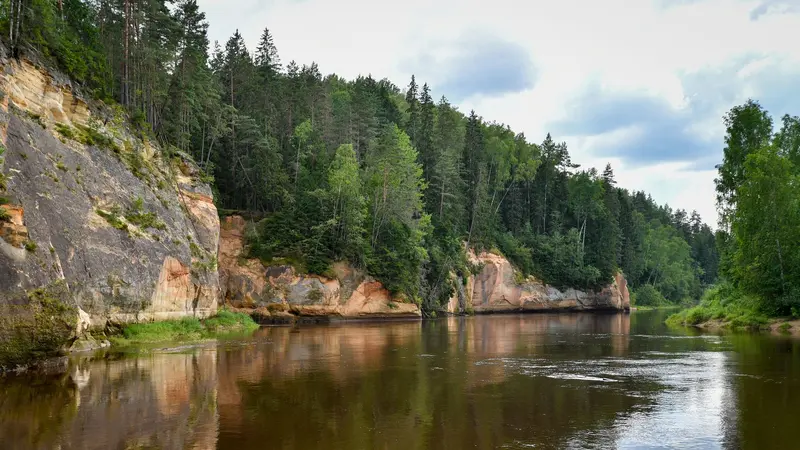
    The Gauja National Park is the oldest and largest national park in Latvia. Founded in 1973, it protects over 90,000 hectares of the most beautiful section of the Gauja Valley between Valmiera and Murjāņi. Reddish sandstone cliffs, caves, and springs line the river, interspersed with castle mounds, medieval castles, manor houses, and the towns of Sigulda and Cēsis. Hiking, cycling, and canoeing on the Gauja are the classic ways to experience the park.
    Latvia travel guideRound trips in LatviaPlan a trip with Gauja National Park

    Contents

    • Places & highlights
    • Recommendations
    • Tours
    • Eat & drink
    • Culture
    • Getting around
    • Accommodation
    • Nearby

    Sights in Gauja National Park

    Discover the most important sights and attractions

    1Ērģeļu klintis (Organ Cliffs)

    One of the longest continuous sandstone walls in the Baltics, around 700 meters long and up to 22 meters high, about 7 kilometers from Cēsis. From the viewpoint at the top, you look north and west over the Gauja Valley. The name is said to come from its organ-like echo. Sandstone blocks can break off at the base of the cliffs, keep clear.
    Open in Google Maps

    2Soviet Bunker Līgatne

    Nine meters below a rehabilitation center, the Soviet authorities had an atomic bunker built during the Cold War for Latvia's communist leadership. So secret was the facility that staff and guests of the center knew nothing of it for 30 years. Visitors can see original equipment, emergency power generators, air filtration systems, and situation maps.
    Open in Google Maps

    3Līgatne Nature Paths

    Since 1975, over 5 km of paths along the Gauja bank wind through wooded gorges, past large enclosures with native wild animals and birds. The round trip takes about 2 to 2.5 hours. Dogs, even leashed, are not allowed; feeding forbidden. Good excursion for children.
    Open in Google Maps

    4Seeburg Āraiši

    In the Āraiši Archaeology Park south of Cēsis, on an island in the lake, is the reconstruction of a fortified wooden settlement from the 9th and 10th centuries, according to the Tourist Board, the only one of its kind in Europe. It was inhabited by the ancient Latgalians. On the shore are the ruins of a medieval castle, and nearby, the Āraiši Church and windmill.
    Open in Google Maps

    5Zvārte Cliff

    The rock on the bank of the Amata is one of the striking sandstone and dolomite outcrops in Gauja National Park. Together with the neighboring rock faces along the Amata, it is a destination for hikes away from the popular towns of Sigulda and Cēsis.
    Open in Google Maps

    Tours & experiences in Gauja National Park

    Search tours for Gauja National Park on GetYourGuide* (Affiliate link)On GetYourGuide, with reviews from other travellers

    * Affiliate link: if you book through it, we earn a small commission. The price stays the same for you.

    Restaurants in Gauja National Park

    1

    Chefs' House

    The "Kochhaus" in Līgatne serves a menu of local produce and forest fruits amidst the National Park's nature. It's in the Guide Michelin Latvia, holding the Green Star for sustainable gastronomy since 2023; Sommelier Juris Semjonovs received the Sommelier Award 2027.
    Show on Google Maps

    Nature and History in the Gauja Valley

    Sandstone, Caves and SpringsThe valley's reddish, yellow, and grey sandstones are 350 to 370 million years old. Along the Gauja and its tributaries, rock faces like Ērģeļu klintis, Kuku and Līcu-Langu-Felsen rise, and on the Amata, Zvārtes iezis. Also, caves like Gutmannshöhle, the largest grotto in the Baltics, and numerous springs.Castles and Cultural HeritageOver 500 cultural and historical monuments stand in the park, including 19 castle mounds, six medieval castles, and three towns: Straupe, Sigulda, and Cēsis. A 9th- and 10th-century lake castle is reconstructed near Āraiši, and in Līgatne, a bunker recalls the Cold War.Getting ActiveHiking trails, cycle routes, and above all the Gauja itself make the park a destination for active visitors. Boaters complete the stretch from Cēsis to the Līgatne ferry in one day, and to Sigulda beach in two. MARCO POLO recommends canoeing through the national park.

    Arrival and Guide

    Getting ThereSigulda and Cēsis can be reached by train from Riga, Sigulda in about an hour. The direct Tallinn–Riga train stops at both locations.For remote destinations like Āraiši, Līgatne, or the Amata Cliffs, a car or bicycle is practical.TipsAccording to the Latvian Tourism Authority, one day is not enough to fully experience the park; plan several days with overnight stays in Sigulda or Cēsis.At the foot of the sandstone cliffs, rockfalls can occur, so keep your distance.On the Līgatne nature trails, dogs are not allowed, and feeding animals is prohibited.

    Accommodations in Gauja National Park

    Find perfect stay in Gauja National Park

    Booking.com* (Affiliate link)
    Search Hotels
    Agoda* (Affiliate link)
    Search Hotels
    Airbnb
    Vacation Rentals

    * Affiliate link: if you book through it, we earn a small commission. The price stays the same for you.

    Campgrounds in Gauja National Park

    Find perfect campground in Gauja National Park

    Search via Google Maps
    Campgrounds nearby (15km)
    Camping.info
    Find Campgrounds
    Park4Night
    RV Parks & Camping

    Nearby

    Vidzeme

    Vidzeme

    Vidzeme, historic Livland, lies northeast of Riga. Its highlight is the Gauja Valley, home to the oldest and largest national park: sandstone cliffs, caves, pine forests, and medieval castles of Sigulda, Turaida, and Cēsis. Canoeing and hiking its steep banks make it the most popular nature destination near the capital.

    Margo Evardson·Pexels

    Cēsis

    Cēsis

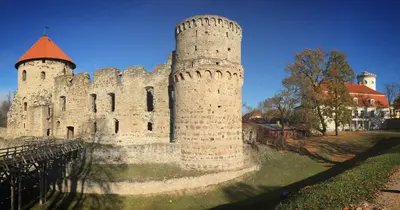
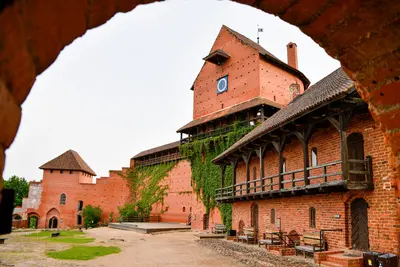
    Founded in 1206, Cēsis is considered one of the best-preserved medieval towns in the Baltics. In the heart of the town stand the mighty ruins of the castle, one of the Livonian Order's most important seats from 1237 to 1561, alongside the New Castle and a park. Cobblestone streets, red tiled roofs, and the Gothic St. John's Church define the Old Town, while all around begins the Gauja National Park with its sandstone cliffs and hiking trails. MARCO POLO ranks Cēsis among the top highlights of the Baltics.

    Sergei Gussev·Unsplash

    Sigulda

    Sigulda

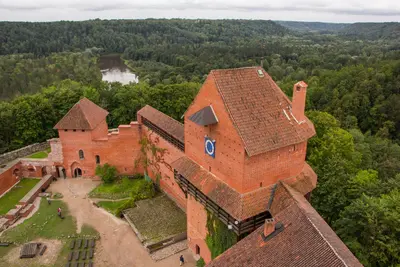
    Sigulda is located about an hour by train northeast of Riga on the edge of the Gauja Valley and is the most visited excursion destination in Gauja National Park. In a compact area, three castles are found here: Sigulda Castle, Turaida Castle on the other side of the valley, and Krimulda. Between them are the Gutmanis Cave, the cable car across the valley, and the bobsleigh and luge track, where you can ride yourself in summer and winter. In autumn, the deciduous forests on the steep slopes display particularly impressive colors.

    Alexey Baikov·Pexels

    Art Nouveau Quarter Riga

    Art Nouveau Quarter Riga

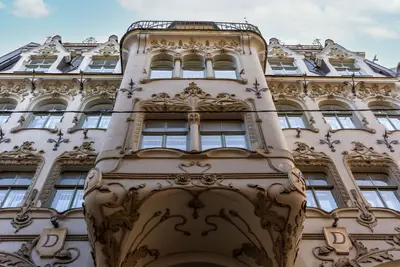
    The Art Nouveau Quarter, located in the so-called Quiet Centre north of the Old Town, boasts the densest concentration of Art Nouveau buildings in Riga. Approximately one third of the buildings in the centre date from this era; the most famous street is Alberta iela, with houses built between 1901 and 1908, many designed by Michail Eisenstein. The Riga Art Nouveau Centre displays a faithfully furnished apartment from 1903. MARCO POLO considers the quarter one of the top highlights of the Baltics.

    Anastasiya Badun·Pexels

    Riga

    Riga

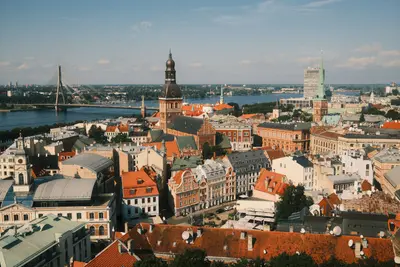
    Riga is the largest of the Baltic capitals and one of the most vibrant cities in Northern Europe. Situated on the Daugava River, just a few kilometers before it flows into Riga Bay, lies the medieval Old Town with its church spires, guild houses, and cobblestone streets. Right next to it, the city center begins, boasting around 800 Art Nouveau buildings – one of the richest collections of this style worldwide. The historic center has been a UNESCO World Heritage site since 1997, and the Central Market, housed in former Zeppelin hangars, is also part of it. Riga is easily explored on foot, and beaches and forests are reachable within half an hour.

    Boris K.·Pexels

    Your next steps

    Gauja National Park is in Latvia. Ways to carry on from here.

    • More in Latvia

      Highlights, areas, routes and the best time to travel for all of Latvia.

      Latvia travel guide
    • Round trips in Latvia

      Ready-made routes through Latvia, with stops, nights and a map.

      See the routes
    • Plan a trip with Gauja National Park

      The Guide asks about season, length and who is coming, and suggests a trip with Gauja National Park.

      Plan the trip

    Sources & method

    • Photos: Pexels. Each photo carries its credit.
    • The content is based on web research from public, traceable sources. How the content is made · The role of AI