Fernweh: Home
    ExploreTravel GuidesPlan a tripMy tripLast visited
    de|en
    All Places & RegionsAll highlightsAbout FernwehFAQPrivacy PolicyImprint
    ExploreTravel GuidesPlan a tripMy tripLast visited
    • Overview
    • Places in the region
    • Round trips
    • Nearby
    Innsbruck & Region

    Austria

    Innsbruck & Region

    Region

    The Tyrolean state capital lies in the Inn Valley directly in front of the mountains. In the Old Town stand the Golden Roof with its copper shingles and the Hofburg; mountain railways lead from the city's edge into the high mountains.

    by Felix Gillen

    1. Home
    2. Destinations
    3. Austria
    4. Innsbruck & Region
    The Tyrolean state capital lies in the Inn Valley directly in front of the mountains. In the Old Town stand the Golden Roof with its copper shingles and the Hofburg; mountain railways lead from the city's edge into the high mountains.
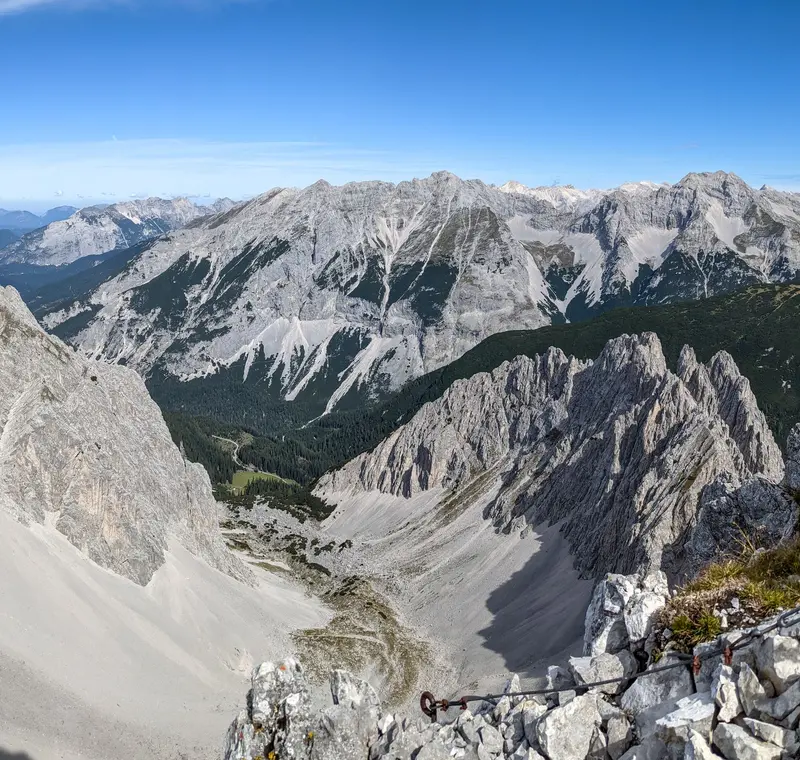
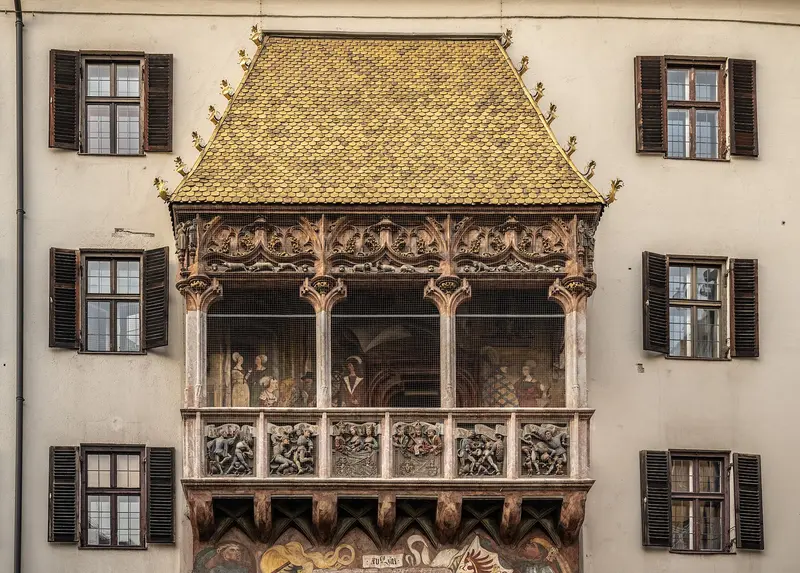
    Alpine City in the Inn ValleyInnsbruck is located in the North Tyrolean Inn Valley, at the confluence of the Inn and Sill rivers, where the Wipptal branches off towards the Brenner Pass. To the north, the city is bordered by the Nordkette range of the Karwendel mountains, while the Patscherkofel stands to the south. Innsbruck hosted the Olympic Winter Games twice, in 1964 and 1976.Old Town and ArchitectureThe landmark of the old Tyrolean capital is the Golden Roof, dating back to around 1500. A modern accent is set by the Bergisel Ski Jump, which was rebuilt in 2001 following a design by Zaha Hadid.From the City to the MountainThe Nordkettenbahn takes you directly from the city into the hiking, climbing, and skiing area of the Nordkette.From the Hafelekarspitze at 2,334 meters, you can gaze over the entire Inn Valley.

    More places in Innsbruck & Region
    Innsbruck

    Innsbruck

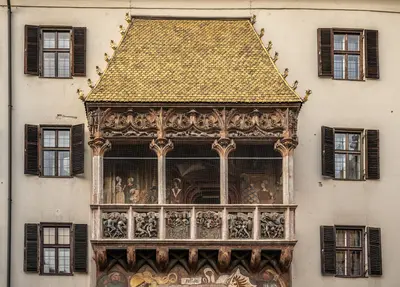
    The capital of Tyrol is located in western Austria right in front of the Alps. In the Old Town, the Golden Roof shines with its 2,657 gilded copper shingles; from there, the Hungerburgbahn, designed by Zaha Hadid, takes you up to the Nordkette.
    Round trips through this region

    Austria Classic: Vienna to Innsbruck

    Austria Classic: Vienna to Innsbruck

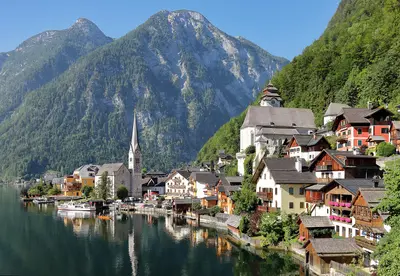
    After three days in Vienna, you head to the Wachau to explore Melk Abbey and Krems from Dürnstein. Continue to Salzburg and Hallstatt in the Salzkammergut, with a side trip to Bad Ischl. Lastly, you reach Innsbruck in the Inn Valley. A rental car is best for Wachau and Salzkammergut; Vienna, Salzburg, and Innsbruck are connected by Westbahn.

    12 Days
    5 stops
    Open jaw

    Nearby

    Innsbruck

    Innsbruck

    The capital of Tyrol is located in western Austria right in front of the Alps. In the Old Town, the Golden Roof shines with its 2,657 gilded copper shingles; from there, the Hungerburgbahn, designed by Zaha Hadid, takes you up to the Nordkette.
    Zugspitze

    Zugspitze

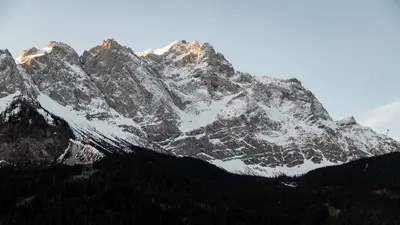
    The Zugspitze, at 2962 meters on its eastern peak, is Germany's highest mountain; the border with Austria runs over its western peak. A 4.88-meter-high summit cross stands on the peak, and below, on the Zugspitzplatt, lies the Nördliche Schneeferner, Germany's largest glacier.You can reach the top in two ways: The Bayerische Zugspitzbahn starts in Garmisch-Partenkirchen and reaches the glacier station at 2588 meters after approximately 45 minutes; the Seilbahn Zugspitze, opened in 2017, soars from Eibsee at 1000 meters directly to the summit.
    Linderhof Palace

    Linderhof Palace

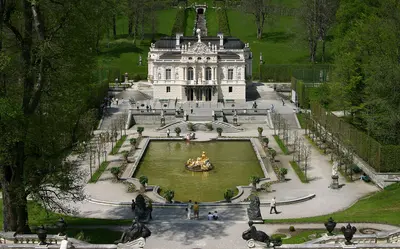
    Linderhof Palace, located in the Graswangtal valley near Ettal, is the smallest of King Ludwig II's three palaces and the only one completed during his lifetime. The palace, built in the Neo-Rococo style, was constructed from 1870 to 1886, with the park created from 1874 to 1880. Since July 2025, Linderhof has been a UNESCO World Heritage site.Surrounding the palace is a formal garden in the French style, whose fountain rises up to 22 meters high, solely powered by natural gradient. The artificial Venus Grotto, alluding to Wagner's "Tannhäuser," is again accessible since the 2026 season, following extensive restoration.
    Allgäu & King's Castles

    Allgäu & King's Castles

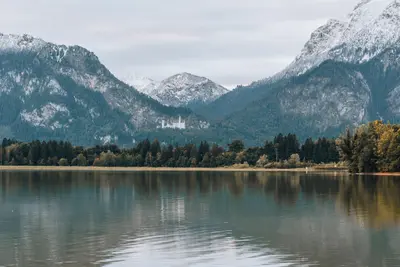
    Here stands Neuschwanstein Castle, which King Ludwig II had built from 1869 onwards above Hohenschwangau. Since July 2025, it has been part of the UNESCO World Heritage together with Linderhof, Herrenchiemsee, and the Königshaus am Schachen. Opposite lies Hohenschwangau Castle, where Ludwig II spent his childhood.Nearby Füssen on the Lech, at 808 meters, is Bavaria's highest town and the end point of the Romantic Road. From Garmisch-Partenkirchen, the Bayerische Zugspitzbahn ascends to the Zugspitze, Germany's highest mountain at 2962 meters, and in the Graswangtal near Ettal lies Linderhof Castle, the only castle Ludwig II saw completed during his lifetime.
    Neuschwanstein Castle

    Neuschwanstein Castle

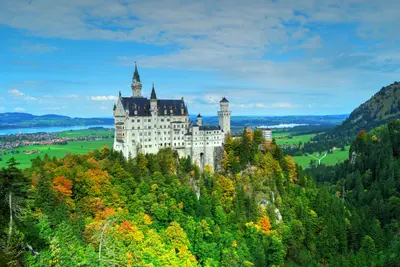
    King Ludwig II had Neuschwanstein Castle built from 1869 in southern Bavaria on a rocky ridge above Hohenschwangau; the Pöllat Gorge lies to its south. Of the more than 200 rooms planned, only about 15 were completed, including the Singers' Hall and the Throne Room. Six weeks after the King's death in 1886, the castle opened to visitors; today, around 1.4 to 1.5 million people come annually. Since July 2025, it has been a UNESCO World Heritage site.You can only see the interiors during an approximately 30-minute guided tour. Tickets for 2026 are sold online subject to availability; a daily remaining contingent is available at the Ticket Center in Hohenschwangau. The restoration of the magnificent rooms, for which the Free State spent around 40 million Euros, ran parallel to visitor operations and was largely completed by August 2024.

    Sources & method

    • Photos: Pexels. Each photo carries its credit.
    • The content is based on web research from public, traceable sources. How the content is made · The role of AI