Fernweh: Home
ExploreGuideDestinationsMy tripsMy trip
de|en
All Places & RegionsRound tripsNight trains in EuropeAll highlightsAbout FernwehFAQPrivacy PolicyImprint
Download on the App StoreGet it on Google Play
ExploreGuideDestinationsMy tripsMy trip
    • Neighborhoods & highlights
    • Eat & drink
    • Getting around
    • Accommodation
    • Plan trip
    • Nearby
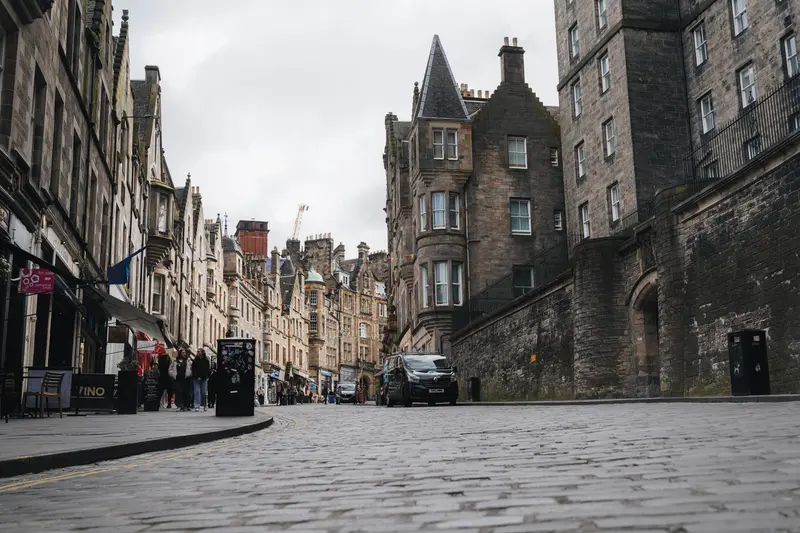
    Old Town

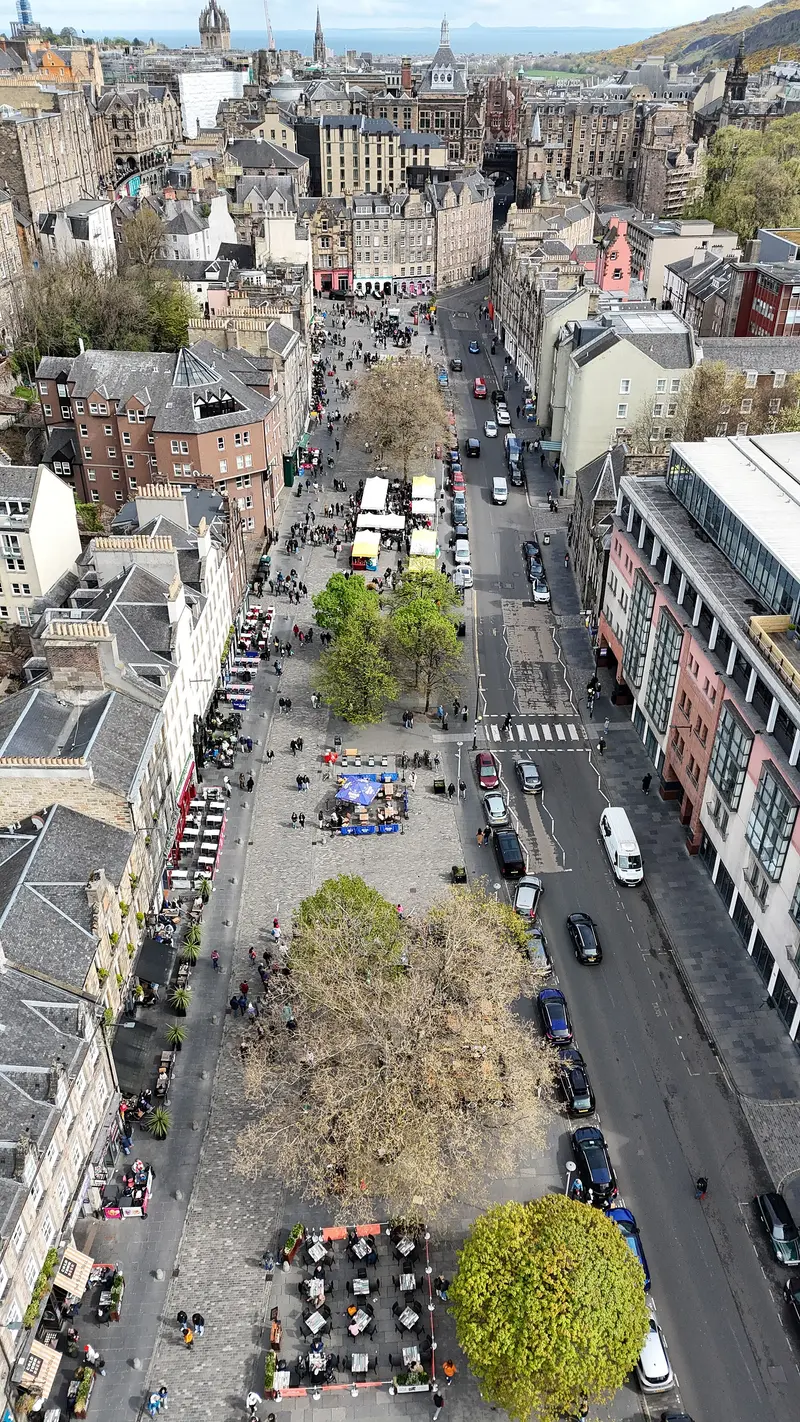
    Photo by Duna Jbara on Pexels

    Great Britain

    Old Town

    City

    Edinburgh's Old Town has preserved its medieval layout and many buildings from the Reformation era.

    by Felix Gillen

    1. Home
    2. Destinations
    3. Great Britain
    4. Edinburgh
    5. Old Town
    Edinburgh's Old Town has preserved its medieval layout and many buildings from the Reformation era. Its backbone is the Royal Mile, which leads downhill from Edinburgh Castle to Holyrood Palace; on both sides, narrow alleys, known as Closes, drop steeply. Since 1995, the Old Town, together with the New Town, has been a UNESCO World Heritage site. Sturdy shoes help, as the cobblestones are slippery when wet.
    Great Britain travel guideRound trips in Great BritainPlan a trip with Old Town

    Contents

    • Neighborhoods & highlights
    • Eat & drink
    • Getting around
    • Accommodation
    • Nearby

    Sights in Old Town

    Discover the most important sights and attractions

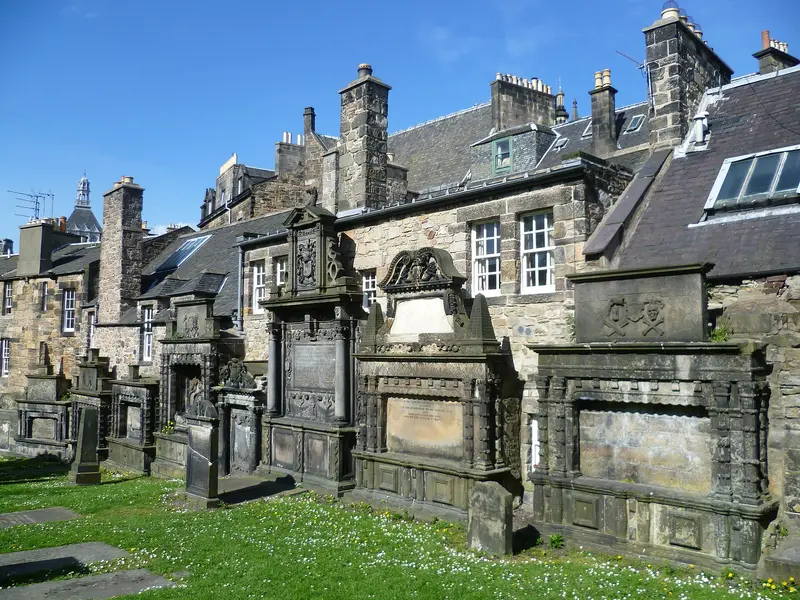
    Greyfriars Kirkyard

    “Greyfriars Kirkyard, east wall” by Kim Traynor / Wikimedia Commons / CC BY-SA 3.0, mod.

    Historic Landmark

    1Greyfriars Kirkyard

    The cemetery was established in 1562 as a replacement for St Giles' churchyard; in the adjacent Greyfriars Kirk, the National Covenant was signed on February 28, 1638. The site is famous for Greyfriars Bobby, a dog who, according to legend, guarded his master's grave. A 1981 gravestone at the entrance commemorates him; his statue stands opposite the gate.
    Open in Google Maps
    Historic Landmark

    2The Real Mary King's Close

    Beneath the City Chambers on the Royal Mile lies a 17th-century close, named after the merchant Mary King; it was partially demolished and built over in 1753 during the Royal Exchange's construction. You can explore it on a one-hour English guided tour; for other languages, free audioguides are available via an app. Entry is allowed from five years of age; only cashless payment is accepted.
    Open in Google Maps
    Grassmarket

    瑞丽江的河水 / Wikimedia Commons / CC BY-SA 4.0, mod.

    3Grassmarket

    The elongated square at the southwest foot of the Castle Rock has been one of the city's most important market squares since 1477, formerly also for horses and cattle. Public executions took place here; a 1937 monument commemorates over 100 Covenanters who were hanged between 1661 and 1688. Today, pubs define the square, and from here you look up to the Castle.
    Open in Google Maps

    Restaurants in Old Town

    1

    The Witchery by the Castle

    James Thomson founded the restaurant in 1979 in Boswell's Court, a listed building from 1595 directly below the Burgesplanade. You dine in a darkly magnificent hall with oak paneling or in the “Secret Garden,” added in 1989. The cuisine is Scottish and upscale, prices are commensurate; reserve for dinner.
    Show on Google Maps
    2

    The Devil's Advocate

    Whisky bar with bistro in Advocate's Close, one of the steep alleys branching off the Royal Mile. The establishment is set in a converted historic utility building, with stone and brick walls preserved. Alongside a vast whisky selection, seasonal Scottish dishes are served. Food is available until 9:30 PM; book online.
    Show on Google Maps
    3

    Oink

    The small shop on winding Victoria Street, between Grassmarket and George IV Bridge, sells only hog roast rolls in three sizes, with crackling, apple sauce or Haggis. It is run by a farming family from the Scottish Borders. Open daily from 11 am until sold out; ideal for a quick, affordable snack.
    Show on Google Maps

    Getting There & Around

    On FootExplore the Old Town on foot. From Waverley Station in the valley, steep stairs and alleys lead up to the Royal Mile; between Grassmarket and Royal Mile, there's a height difference of about 30 metres, many routes are stairs. Sturdy shoes help; the cobblestones of the Closes are slippery when wet.Bus and TramLothian Buses run over the Bridges and North Bridge to the edge of the Old Town; payment is contactless or exact cash. The nearest tram stops are Princes Street and St Andrew Square in the New Town.

    Accommodations in Old Town

    Find perfect stay in Old Town

    Booking.com* (Affiliate link)
    Search Hotels
    Agoda* (Affiliate link)
    Search Hotels
    Airbnb
    Vacation Rentals

    * Affiliate link: if you book through it, we earn a small commission. The price stays the same for you.

    Campgrounds in Old Town

    Find perfect campground in Old Town

    Search via Google Maps
    Campgrounds nearby (15km)
    Camping.info
    Find Campgrounds
    Park4Night
    RV Parks & Camping

    Plan your trip to Old Town

    Save places, build a route and plan your city trip, all in one place.

    1. 1
      Sunrise over alpine peaks and a sea of clouds
      1234

      Round trip

      12 days · 4 stops

      Saved

      Pick a route

      Pick a ready-made one or save places and plan your own.

      Open bookmarks
    2. 2

      Trip to Old Town

      Live
      • 1Greyfriars Kirkyard3 days
      • 2The Real Mary King's Close4 days
      • 3Grassmarket5 days
      Budget

      Plan your trip

      The planner sorts stops, days and budget. Plan together in real time.

      Start trip planning
    3. 3
      9:41 No signal
      Old Town
      Available offline

      Photo by Duna Jbara on Pexels

      Use it on the road

      Download the guide to your phone and use it on site, even offline.

    Nearby

    Edinburgh

    Edinburgh

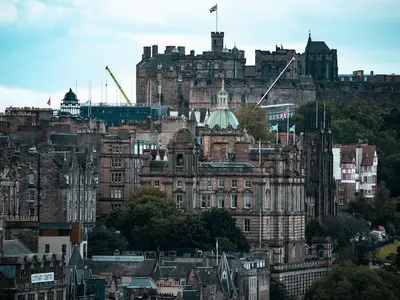
    Edinburgh is the capital of Scotland and is located on the east coast on the Firth of Forth. With its castle perched on a rock, the medieval Old Town along the Royal Mile, and the Georgian New Town, it boasts one of Europe's most complete historic cityscapes.The city is built on extinct volcanic rock. A glacier carved its way around the hard basalt plug where the castle stands today, leaving a long ridge behind it. The Royal Mile lies on this ridge, and this geology explains the layout of the Old Town: The narrow alleyways, known as Closes, fall steeply away on both sides.The Old Town is densely medieval, with tenement buildings up to eleven storeys high, which were among Europe's tallest buildings in the 17th century. To its north, the New Town was developed from 1767 following the grid plan of the then 26-year-old James Craig and is considered the world's largest contiguous Georgian urban quarter. Both together have been on the World Heritage list since 1995.In August, Edinburgh transforms itself through the Fringe, the world's largest arts festival, into a completely different city: The population doubles, every space becomes a stage, and accommodation costs many times more. Those who wish to experience the city more quietly should visit in May or September.

    Gavin Young·Pexels

    New Town

    New Town

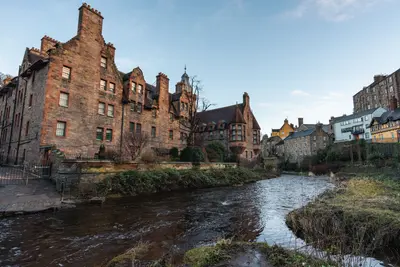
    The New Town originates from a 1766 competition, won by the then 26-year-old James Craig with a clear grid plan; construction began in 1767 and continued in several sections until around 1850. The Georgian streetscapes around Princes Street, George Street and Queen Street are largely preserved, with Charlotte Square by Robert Adam considered the most uniform part. The New Town has been a UNESCO World Heritage site since 1995.

    Sonny Vermeer·Pexels

    Stirling

    Stirling

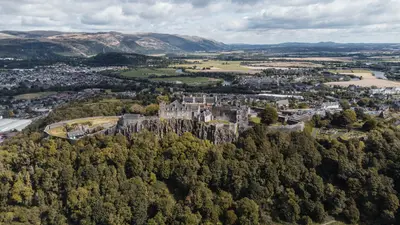
    Stirling lies on the Forth between Edinburgh and Glasgow, about 45 minutes by train from Edinburgh and just under half an hour from Glasgow, and is considered the gateway to the Highlands. Two decisive battles of the Scottish Wars of Independence took place here: in 1297, William Wallace and Andrew Moray triumphed at Stirling Bridge; in 1314, Robert the Bruce at Bannockburn.Stirling Castle, where Mary, Queen of Scots was crowned in 1543, dominates the old town; opposite, on Abbey Craig, the National Wallace Monument commemorates the freedom fighter.

    Clément Proust·Pexels

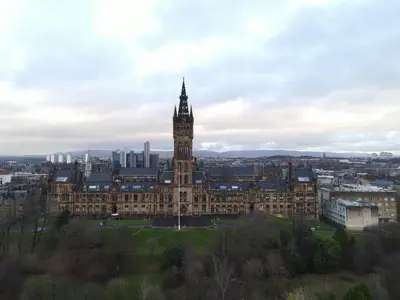
    Glasgow

    Glasgow

    Glasgow is Scotland's largest city and the counterpart to Edinburgh: less pretty, significantly louder, with a self-confidence rooted in its industrial history. In the 19th century, about a fifth of all ships in the world were built on the Clyde. The decline from the 1960s onwards hit the city hard.What remained is a substance of red and blonde sandstone, showcasing its Victorian wealth, and a cultural scene that emerged from the structural upheaval. Since 2008, Glasgow has held the UNESCO title City of Music; on some evenings, over a hundred live concerts take place. Charles Rennie Mackintosh is influential for the cityscape, his Art Nouveau buildings blending Scottish, Japanese, and modern influences.The local dialect, the Glasgow Patter, is a challenge even for experienced English speakers. The city is considered Britain's friendliest, which visitors usually notice right at the train station.

    Lewis Ashton·Pexels

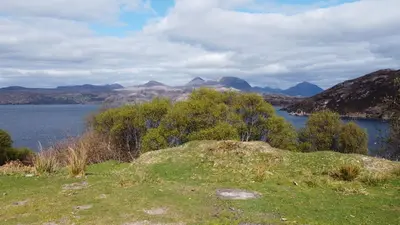
    Scotland

    Scotland

    Scotland occupies the northern third of the island of Great Britain and has been united with England since 1707, but it has its own legal system, its own education system, its own banknotes, and since 1999, its own parliament. Those coming from England will notice the difference in language alone: Besides English, Scots and, in the northwest, Scottish Gaelic are spoken.Three LandscapesThe south consists of the gentle Southern Uplands with their sheep pastures and ruined abbeys. Above that lies the Central Belt, the densely populated band between Edinburgh and Glasgow, home to three-quarters of the population. North of the Highland Boundary Fault begin the Highlands: glaciated valleys, long narrow lochs, and mountains that, despite their modest height, offer alpine conditions because the treeline here is at around 600 meters. Additionally, there are almost 800 islands, about 90 of which are inhabited.Weather, Not ClimateThe Gulf Stream keeps winters mild, while the Atlantic ensures changeable weather. On the west coast, some places receive over 3,000 millimeters of rainfall annually, while on the east coast around Aberdeen, it's only about 800. The best time for the Highlands is May and June, as well as September: long days, comparatively dry weather, and fewer midges in May and September. The Midges, tiny biting gnats, turn windless evenings between June and August in the west into a test of patience.Access to LandThe Land Reform Act of 2003 grants you extensive access rights to undeveloped land, including wild camping with a small tent for two to three nights in one spot. This right does not apply to vehicles. This fundamentally distinguishes Scotland from England and Wales. It is linked to the Scottish Outdoor Access Code, which requires responsible conduct: no fires on peatland, keep distance from houses, take everything with you.
    E Stephen·Pexels

    Your next steps

    Old Town is in Great Britain. Ways to carry on from here.

    • More in Great Britain

      Highlights, areas, routes and the best time to travel for all of Great Britain.

      Great Britain travel guide
    • Round trips in Great Britain

      Ready-made routes through Great Britain, with stops, nights and a map.

      See the routes

    Sources & method

    • Photos: Wikimedia Commons, Pexels. Each photo carries its credit.
    • Place data such as addresses and ratings comes from Google Maps.
    • The content is based on web research from public, traceable sources. How the content is made · The role of AI