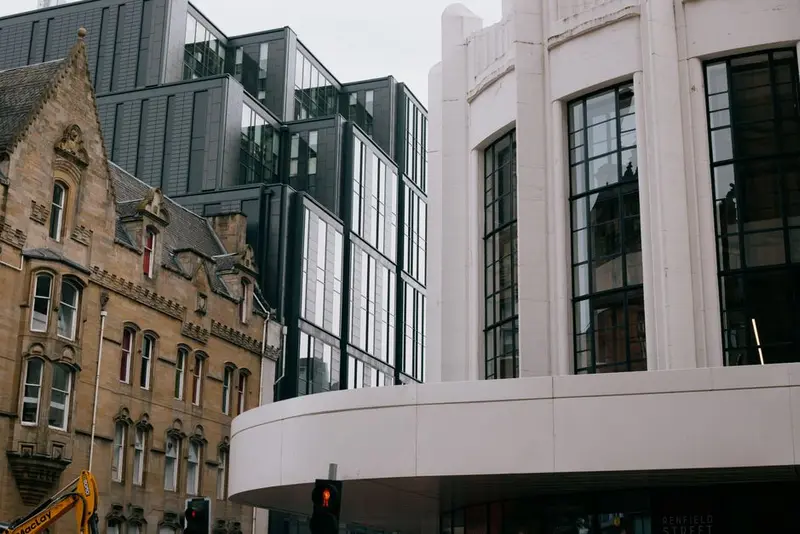
Glasgow is Scotland's largest city and the counterpart to Edinburgh: less pretty, significantly louder, with a self-confidence rooted in its industrial history. In the 19th century, about a fifth of all ships in the world were built on the Clyde. The decline from the 1960s onwards hit the city hard.What remained is a substance of red and blonde sandstone, showcasing its Victorian wealth, and a cultural scene that emerged from the structural upheaval. Since 2008, Glasgow has held the UNESCO title City of Music; on some evenings, over a hundred live concerts take place. Charles Rennie Mackintosh is influential for the cityscape, his Art Nouveau buildings blending Scottish, Japanese, and modern influences.The local dialect, the Glasgow Patter, is a challenge even for experienced English speakers. The city is considered Britain's friendliest, which visitors usually notice right at the train station.
Places in Glasgow
Discover the most important sights and attractions
Sights in Glasgow
1Kelvingrove Art Gallery and Museum
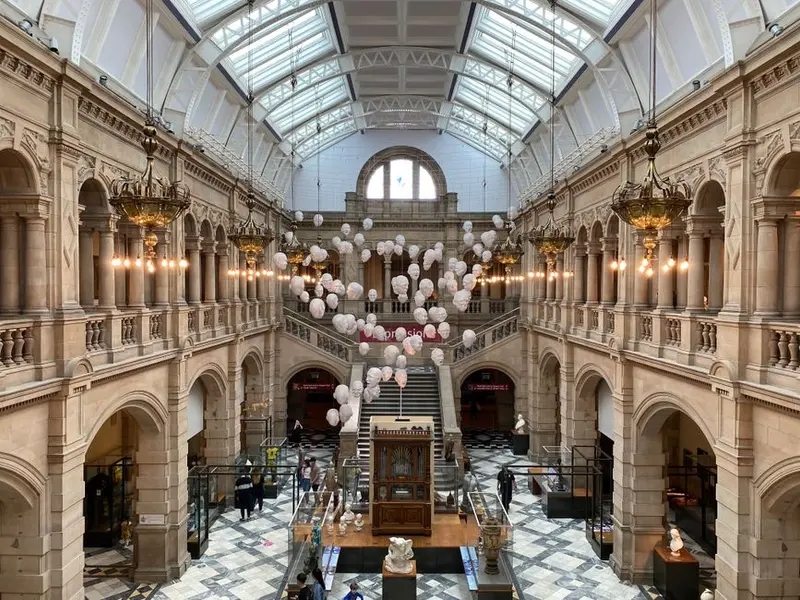
The Kelvingrove Art Gallery and Museum is Scotland's most visited museum and a building of red Dumfries sandstone, which opened in 1901 for the World's Fair. The persistent legend that the architect jumped from the tower because the building was accidentally built the wrong way around is demonstrably false, but remains popular in Glasgow.The collection deliberately mixes genres and eras: Salvador Dalí's Christ of Saint John of the Cross hangs here, as does a Spitfire suspended from the ceiling of the West Hall, along with works by the Glasgow Boys, French Impressionists, and furniture by Charles Rennie Mackintosh. In the Central Hall, there is a concert organ played daily. Admission is free.
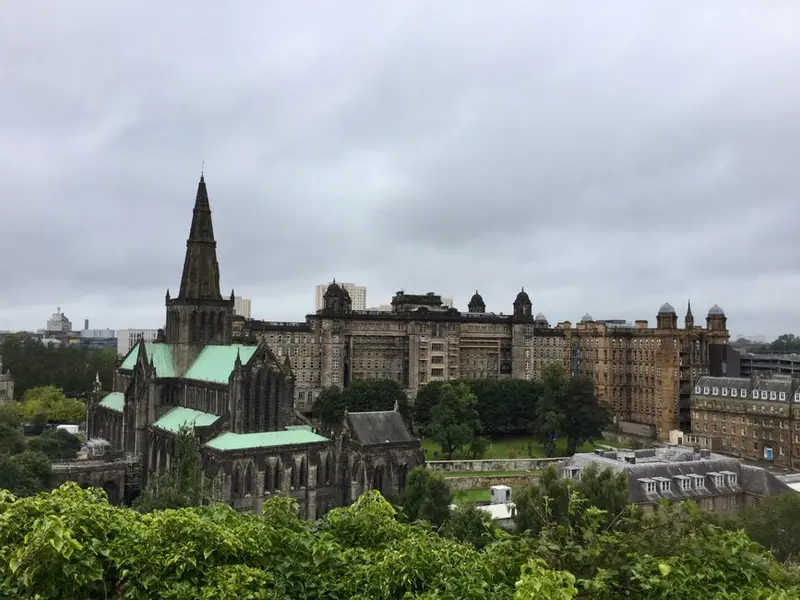
The Glasgow Cathedral is the only medieval cathedral on the Scottish mainland that survived the Reformation undamaged because the city's craft guilds defended it. The building predominantly dates from the 13th century and stands over the grave of Saint Mungo, the city's founder, whose crypt lies beneath the choir.Its two-level construction, which compensates for the sloping ground, is unusual. Behind it, on the hill, extends the Necropolis, a cemetery established in 1833, modelled after Père-Lachaise, with around 3,500 monuments for the city's industrialists. From the top, you get a good overview of eastern Glasgow.
The **Riverside Museum** on the Clyde is Glasgow's transport museum and is housed in a building by Zaha Hadid, whose zigzag roof echoes the waves of the river and the silhouette of old shipyard buildings. The hall is glazed at both ends, opening views from the Kelvin to the Clyde.More than 3,000 objects are on display, including Glasgow trams, locally produced steam locomotives, bicycles, and a recreated 1900 street with walk-through shops. Moored directly at the quay is the *Glenlee*, a three-masted sailing ship built in Port Glasgow in 1896, which can be visited. Together, both make the city's shipbuilding history more tangible than any text panel.
The Willow Tea Rooms on Sauchiehall Street are the only surviving tea room that Charles Rennie Mackintosh completely designed for entrepreneur Catherine Cranston in 1903, from the facade to the furniture and cutlery.The commission was part of a movement at the time: Cranston's tea rooms offered women spaces where they could socialize without male accompaniment. The Salon de Luxe on the first floor, with its silver furniture and coloured glass panels, is considered Mackintosh's most uncompromising interior work. The building was extensively restored until 2018 and operates again as a tea room. The Glasgow School of Art, his main work, is still under reconstruction and not accessible after two fires in 2014 and 2018.
These places are nearby — perfect for additional days or a day trip.
Edinburgh
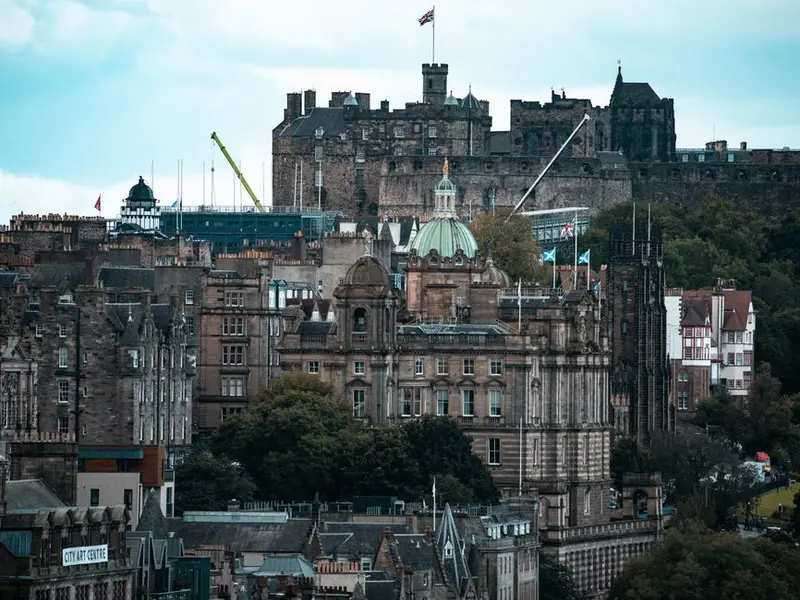
Edinburgh is built on extinct volcanic rock. A glacier scoured the hard basalt plug, upon which the castle now stands, leaving behind an elongated ridge. The Royal Mile lies precisely on this ridge, and this geology explains the entire layout of the Old Town: The lanes, the *Closes*, descend steeply on both sides.The city is divided into two contrasting halves. The Old Town is densely medieval, with tenements up to eleven stories high, which were among the tallest buildings in Europe in the 17th century. North of it, the New Town was developed from 1767 onwards, following the grid plan of the then 26-year-old James Craig, and is considered the world's largest contiguous Georgian quarter. Together, both have been on the World Heritage list since 1995.In August, Edinburgh transforms into an entirely different city thanks to the Fringe, the world's largest cultural festival: The population doubles, every space becomes a stage, and accommodation costs multiply. Those who want to experience the city more peacefully should visit in May or September.
Scotland
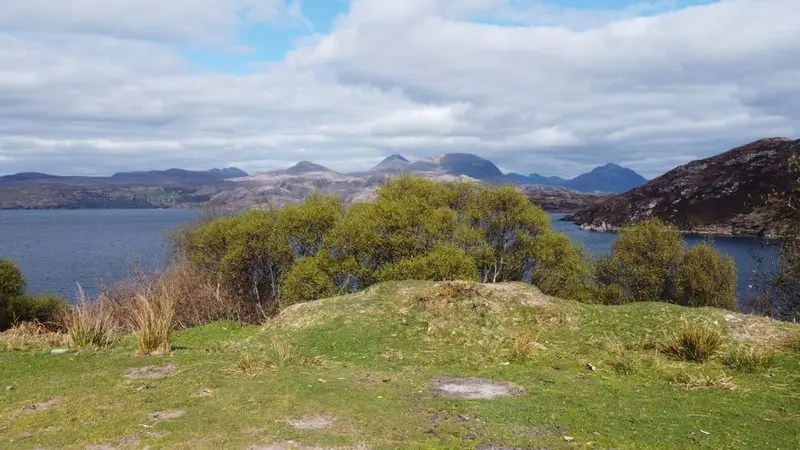
Scotland occupies the northern third of the island of Great Britain and has been united with England since 1707, yet it retains its own legal system, education system, banknotes, and, since 1999, its own Parliament. Those arriving from England will notice the difference in language immediately: besides English, Scots and, in the northwest, Scottish Gaelic are spoken.Three LandscapesThe south comprises the gentle Southern Uplands, characterized by sheep pastures and ruined abbeys. Above this lies the Central Belt, a densely populated strip between Edinburgh and Glasgow, home to three-quarters of the population. North of the Highland Boundary Fault begin the Highlands: valleys sculpted by glaciers, long narrow lochs, and mountains that, despite their modest height, offer alpine conditions because the tree line here is around 600 meters. Additionally, there are almost 800 islands, about 90 of which are inhabited.Weather, Not ClimateThe Gulf Stream keeps winters mild, while the Atlantic ensures changeable weather. On the west coast, some areas receive over 3,000 millimeters of rainfall annually, while in the east around Aberdeen, it's less than 700. The best time for the Highlands is May and June, as well as September: long days, comparatively dry weather, and no midges. The Midges, tiny biting gnats, make calm evenings between June and August in the west a test of patience.Access to the LandThe Land Reform Act of 2003 grants you extensive access rights to undeveloped land, including wild camping for one to two nights. This fundamentally distinguishes Scotland from England and Wales. It is linked to the Scottish Outdoor Access Code, which demands responsible behavior: no fires on peatland, keep a distance from houses, and take all your litter with you.
Glencoe & Fort William
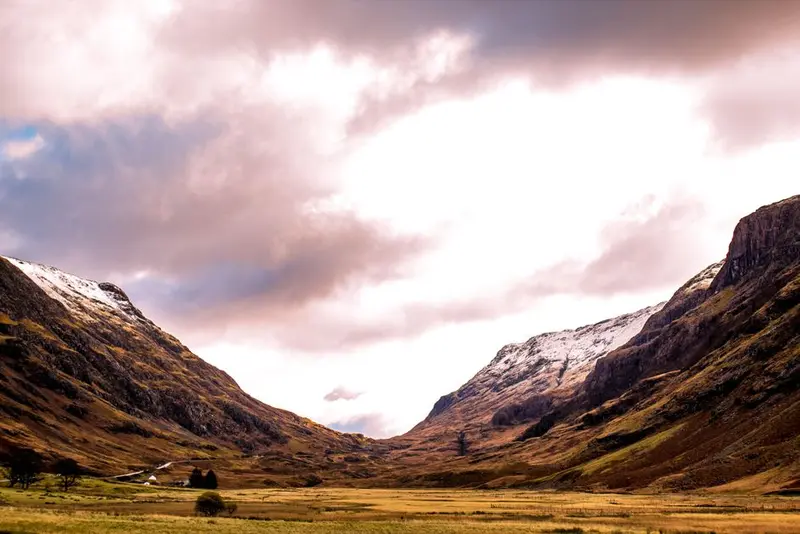
Glencoe is the most famous valley in the Highlands, a trough carved out by glaciers, with flanks that rise almost vertically. The subsoil is the remains of a collapsed Devonian volcano, and the Three Sisters on the south side are remnants of its crater rim. The A82 runs straight through, making the valley accessible even without hiking.In Scotland, the name is inextricably linked to the 1692 Massacre, when soldiers of the Campbells killed 38 members of the MacDonald clan after being billeted with them for twelve days. The breach of hospitality weighed heavier than the act itself and shapes the memory to this day.Fort William, at the north end of the valley, is the region's practical base: the end point of the West Highland Way, a starting point for Ben Nevis, and a station on the railway line to Mallaig, which crosses the Glenfinnan Viaduct. The town itself is functional, not beautiful.
Cairngorms National Park
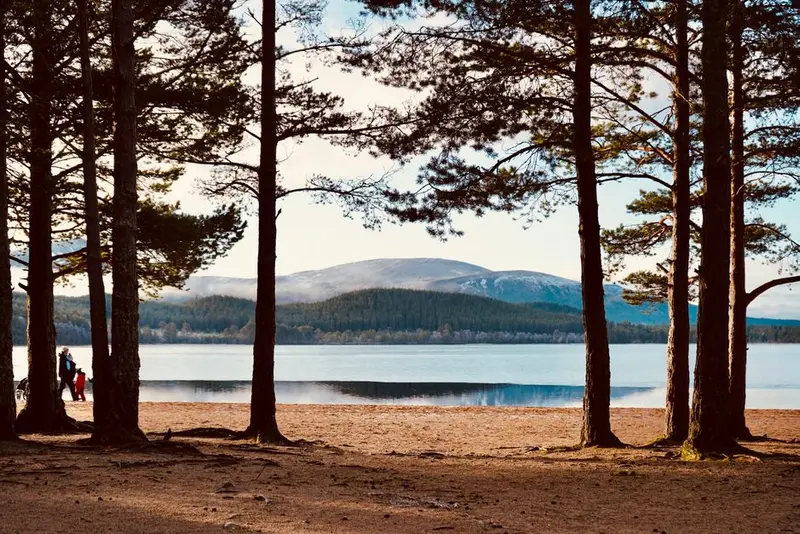
The Cairngorms National Park, covering 4,528 square kilometers, is Britain's largest national park, roughly twice the size of the Saarland. Its core is a granite plateau, home to five of Scotland's six highest mountains. The high plateau features subarctic tundra, the only significant area of its kind in the British Isles, with snow lingering in sheltered hollows in some places until mid-summer.On its fringes lie the last major remnants of the Caledonian Forest, the original Scottish pine forest that once covered vast areas of the Highlands and has now shrunk to just a few percent of its former extent. Here live capercaillie, ptarmigan, Scottish crossbill, and Britain's only wild reindeer herd, which was reintroduced in 1952.The weather on the plateau is the country's harshest; wind speeds exceeding 280 km/h have been recorded on Cairn Gorm. Anyone heading up needs winter gear and navigation skills, even in spring. In the valleys, however, the park is straightforward: Aviemore, Braemar, and Speyside with its whisky distilleries are easily accessible year-round.
Keswick
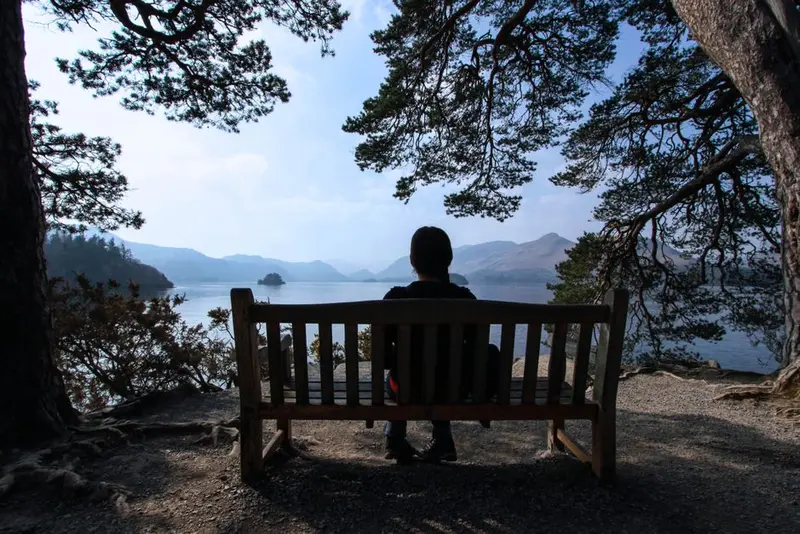
Keswick, a vibrant market town in the heart of the Lake District, is the ideal base from which to explore the dramatic landscape of Northwest England. Here you'll find a rich history, reflected in its Victorian architecture and the historic Moot Hall, the hub of the traditional weekly market. The town lies directly on the shore of the picturesque Derwentwater Lake, which is perfect for boat trips and lakeside strolls. For hikers, the nearby Catbells summit offers a moderate challenge with spectacular views over the lake and the surrounding fells. Culturally, it is shaped by the Theatre by the Lake and its literary connection to the Lake Poets, whose works were inspired by this unique natural beauty. Be sure to visit the prehistoric Castlerigg Stone Circle east of the town to gain insight into the region's long history of settlement. The best months for outdoor activities are May to September, with an early morning start ensuring you'll experience the most popular trails with greater tranquility.