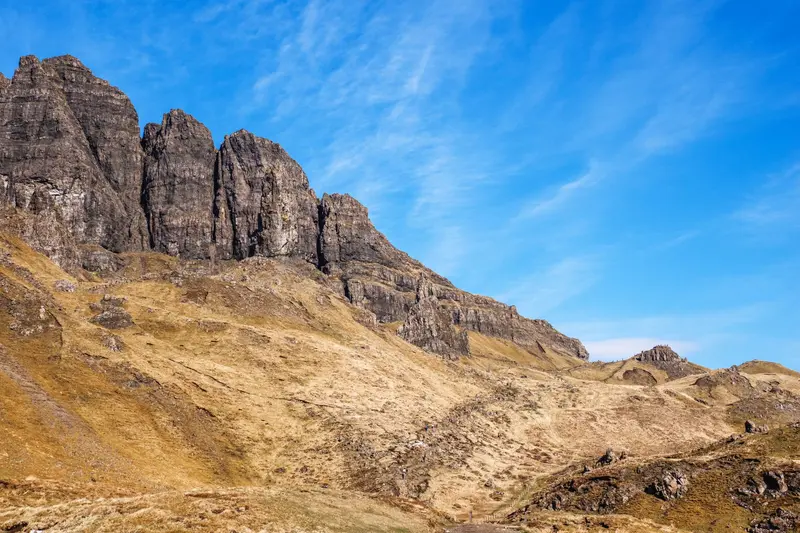
Photo by Rino Adamo on Pexels
Round trip · Great Britain
Scotland: Highlands and Isle of Skye
by Felix Gillen
- 12 Days / 11 Nights
- Edinburgh → Glasgow
From Edinburgh, you travel via the Cairngorms and Glencoe to the Isle of Skye, finishing via Loch Lomond in Glasgow. Distances are short, but driving times are long: On the A82 and Skye's single-track roads with Passing Places, you'll barely average over 50 km/h. Accommodation on Skye should be booked months in advance.
At a glance
- Duration
- 12 Days / 11 Nights
- Stops
- 5 · Edinburgh → Glasgow
- Arrival
- Flight · Edinburgh (EDI)
- Departure
- Flight · Glasgow (GLA)
- Best Time to Go
- May–June and September
5 stops
Why This Route?
For self-drivers and RVers who want to experience Scotland's city, moorland, and Atlantic coast in just under two weeks.
Hidden Gems
- Claigan Coral Beach near Dunvegan on Skye, a bright beach of calcareous algae
- Loch an Eilein near Aviemore with the castle ruin on an island
- Dean Village on the Water of Leith in Edinburgh
Getting there and back
Open jaw: start and end are in different places
- Arrival
- Flight · Edinburgh (EDI)Direct flights from Germany and North America to Edinburgh aren't always available and are often seasonal; you'll usually connect in London or Amsterdam. From the airport, the tram takes about 35 minutes to St Andrew Square in the New Town.
- Departure
- Flight · Glasgow (GLA)You return your rental car at Glasgow Airport. Without a car, the Glasgow Airport Express (Line 500) runs 24/7 from the city centre, taking about 15 minutes. Direct flights to Germany are only seasonal, and to North America mostly only in summer; otherwise, you'll fly via Amsterdam or London.
Itinerary
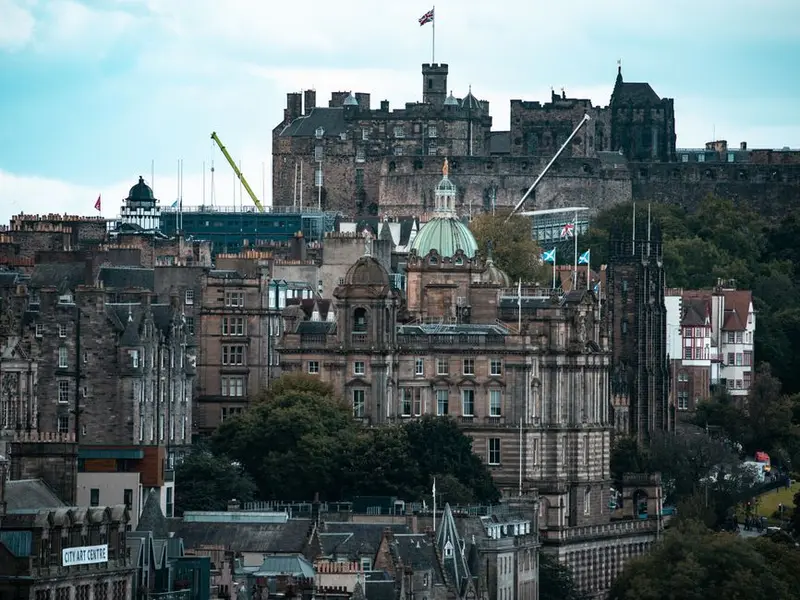
Edinburgh
Edinburgh is the capital of Scotland and is located on the east coast on the Firth of Forth. With its castle perched on a rock, the medieval Old Town along the Royal Mile, and the Georgian New Town, it boasts one of Europe's most complete historic cityscapes.The city is built on extinct volcanic rock. A glacier carved its way around the hard basalt plug where the castle stands today, leaving a long ridge behind it. The Royal Mile lies on this ridge, and this geology explains the layout of the Old Town: The narrow alleyways, known as Closes, fall steeply away on both sides.The Old Town is densely medieval, with tenement buildings up to eleven storeys high, which were among Europe's tallest buildings in the 17th century. To its north, the New Town was developed from 1767 following the grid plan of the then 26-year-old James Craig and is considered the world's largest contiguous Georgian urban quarter. Both together have been on the World Heritage list since 1995.In August, Edinburgh transforms itself through the Fringe, the world's largest arts festival, into a completely different city: The population doubles, every space becomes a stage, and accommodation costs many times more. Those who wish to experience the city more quietly should visit in May or September.
The castle, the Royal Mile, Arthur's Seat and the New Town fill a good three days including the arrival day. Pick up the rental car only when you leave; parking in the Old Town is difficult.
9 Sights
7 Restaurants
Ethos
Edinburgh was the center of the Scottish Enlightenment, and that's no mere footnote: In the second half of the 18th century, David Hume, Adam Smith, the geologist James Hutton, and the chemist Joseph Black lived simultaneously in a city of then around 50,000 inhabitants. The University, founded in 1583, and its Medical Faculty made Edinburgh one of Europe's leading centers.Its literary lineage extends from Walter Scott, Robert Louis Stevenson, Muriel Spark, and Irvine Welsh; in 2004, Edinburgh became the first city ever designated a UNESCO City of Literature. The Scott Monument on Princes Street, at 61 meters, is the second largest monument to a writer worldwide.The National Galleries on the Mound and the Scottish National Gallery of Modern Art are free of charge, as is the National Museum of Scotland on Chambers Street, whose Victorian Grand Gallery alone is worth a visit. In August, the festival scene dominates everything: Alongside the Fringe, the International Festival, the Book Festival, and the Military Tattoo run parallel on the Castle Esplanade.
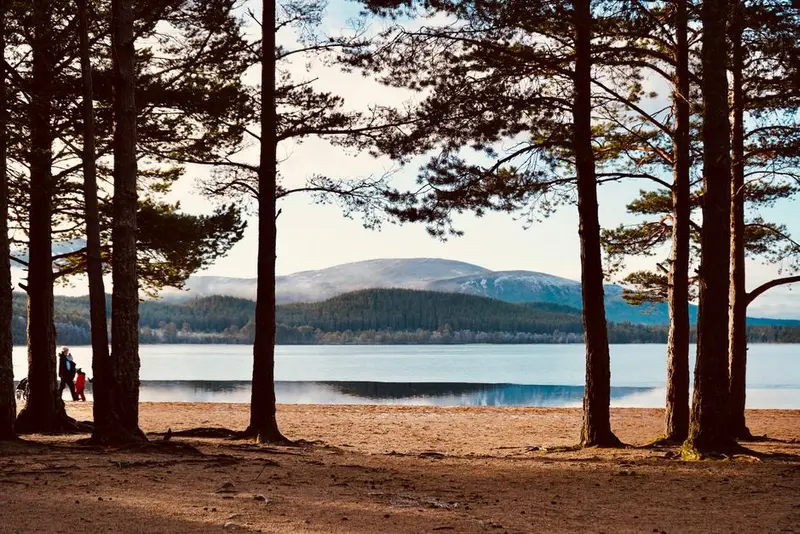
Cairngorms National Park
The Cairngorms National Park, covering 4,528 square kilometres, is Britain's largest national park, approximately twice the size of the Saarland. Its core is a granite plateau, home to five of Scotland's six highest mountains. The high plateau features subarctic tundra, the only significant area of its kind in the British Isles, and in sheltered hollows, snow sometimes persists until late summer.At its edges lie the last significant remnants of the Caledonian Forest, the original Scottish pine forest that once covered vast areas of the Highlands and has now shrunk to just a few percent of its former extent. Here live capercaillie, ptarmigan, Scottish crossbill, and Britain's only wild reindeer herd, which was reintroduced in 1952.The weather on the plateau is the harshest in the country; wind speeds over 280 km/h have been measured on Cairn Gorm. Anyone wishing to ascend needs winter equipment and navigation skills, even in spring. In the valleys, however, the park is straightforward: Aviemore, Braemar, and Speyside with its whisky distilleries are easily accessible year-round.
Via Perth to Aviemore. One day for Cairn Gorm and the reindeer herd, one day for Loch an Eilein and the Speyside distilleries.
3 Sights
3 Restaurants
Custom
Highland Games in BraemarThe Braemar Gathering on the first Saturday in September is one of the most traditional Highland Games, regularly attended by the Royal Family since Queen Victoria. The programme includes caber tossing, tug-of-war, Highland Dancing, and Pipe Bands.Royal DeesideSince Prince Albert bought Balmoral in 1852, the upper Dee valley has carried the epithet Royal Deeside. The towns of Ballater and Braemar still thrive on this connection today; many shops display Royal Warrant holder crests.Whisky in SpeysideOn the northern edge of the park begins Speyside, the whisky region with the highest density of distilleries. The Malt Whisky Trail connects several distilleries offering tours, including Glenlivet, which, like Tomintoul, is located on the park's edge.
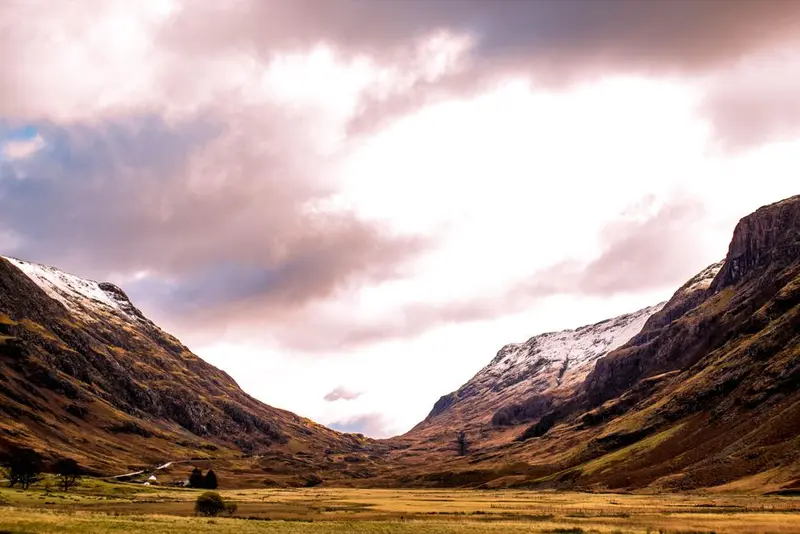
Glencoe & Fort William
Glencoe is the most famous glen in the Highlands, a trough carved by glaciers, its flanks rising almost vertically. Its bedrock is the remnant of a collapsed Devonian volcano, with the Three Sisters on its south side being parts of its crater rim. The A82 runs straight through, making the glen accessible even without a hike.In Scotland, the name is inextricably linked to the 1692 massacre, when Campbell soldiers killed 38 members of Clan MacDonald after being billeted with them for twelve days. The breach of hospitality weighed more heavily than the deed itself and shapes the memory to this day.Fort William, around 25 kilometres north on Loch Linnhe, is the practical base for the region: the end point of the West Highland Way, a starting point for Ben Nevis, and a station on the line to Mallaig, which crosses the Glenfinnan Viaduct. The town itself is functional, not beautiful.
The drive across Rannoch Moor to Glencoe is one of the most striking routes in the country. Once there, you hike into the Lost Valley and through Glen Nevis to Steall Falls.
3 Sights
3 Restaurants
History and Culture
The Glencoe MassacreOn February 13, 1692, government soldiers led by Robert Campbell of Glenlyon killed 38 members of the MacDonald clan; others died fleeing in the snow. The reason was the clan chief's delayed oath of allegiance to William III. A monument in Glencoe village commemorates this; the Glencoe Visitor Centre of the National Trust for Scotland explains the background and the valley's geology.Clans and GaelicMany place and mountain names are Gaelic, describing form or color: Buachaille Etive Mòr means 'great herdsman of Etive', Bidean nam Bian 'peak of the mountains'. The region long belonged to the Camerons, whose seat, Achnacarry, is north of Fort William.Film and Mountain SportsGlencoe and Glen Nevis are frequent filming locations, from Braveheart and Skyfall to Harry Potter. Fort William is known as the Outdoor Capital of the UK: It hosts annual Mountain Bike World Cup races on Aonach Mòr, and the region is the hub of Scottish winter mountaineering.
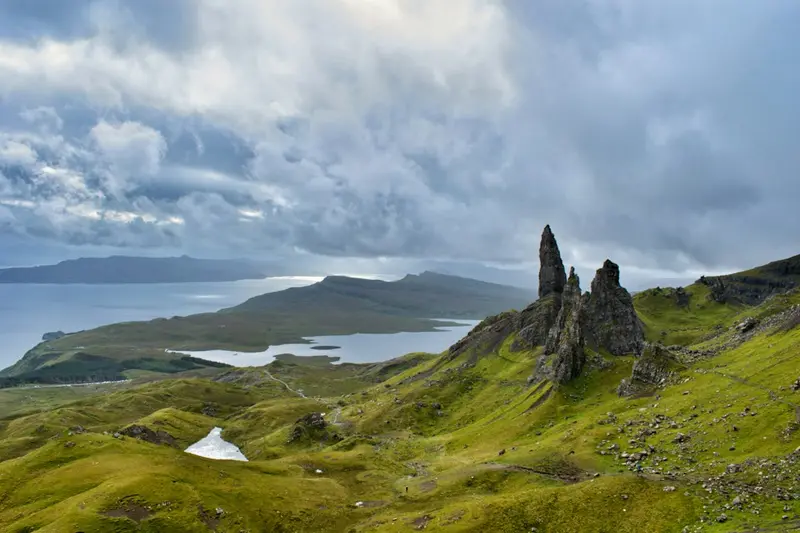
Isle of Skye
The Isle of Skye is the largest island of the Inner Hebrides off Scotland's west coast, connected to the mainland by a bridge since 1995. Visitors come for its jagged Cuillin mountains, the rock pinnacles of the Old Man of Storr, and a coastline of cliffs, bays, and long peninsulas.Geologically, Skye is divided into two parts. The Black Cuillin in the south are made of gabbro, a rough, magnetic rock that has created the most jagged mountain formations in Britain; the ridge is considered the island's most challenging mountain tour and is not for the inexperienced. The north, with the Trotternish Peninsula, is composed of basalt layers lying over softer ground, which have been sliding for millennia. This has formed the rock pinnacles of the Old Man of Storr and the terraces of the Quiraing, Britain's largest active landslide.Skye is overcrowded in summer and its infrastructure is at its limit. Visitors arriving in July or August should book accommodation and rental cars long in advance and head to parking areas at popular spots early in the day.
Via the Skye Bridge or by ferry from Mallaig. Four nights for Trotternish in the north, the Cuillin in the south and Neist Point in the west; book accommodation months in advance.
6 Sights
3 Restaurants
Culture
Gaelic LanguageSkye is one of the centres of the Gaelic language. In Sleat, you'll find Sabhal Mòr Ostaig, a college that teaches exclusively in Gaelic. Road signs are bilingual, and in pubs, you'll hear the language more frequently than on the mainland.Clans and CastlesThe island was divided between the MacLeod and MacDonald clans. Dunvegan Castle has been the seat of the MacLeods for around 800 years, making it one of Scotland's longest continuously inhabited castles by a single family. It houses the Fairy Flag, a silk banner shrouded in legend.The ClearancesIn the 19th century, landowners evicted many tenant farmers to make way for sheep. On Skye, in 1882, Crofters resisted forced evictions in the Battle of the Braes, which contributed to an act that gave Crofters secured tenancy rights from 1886. The Skye Museum of Island Life near Kilmuir shows how they lived.
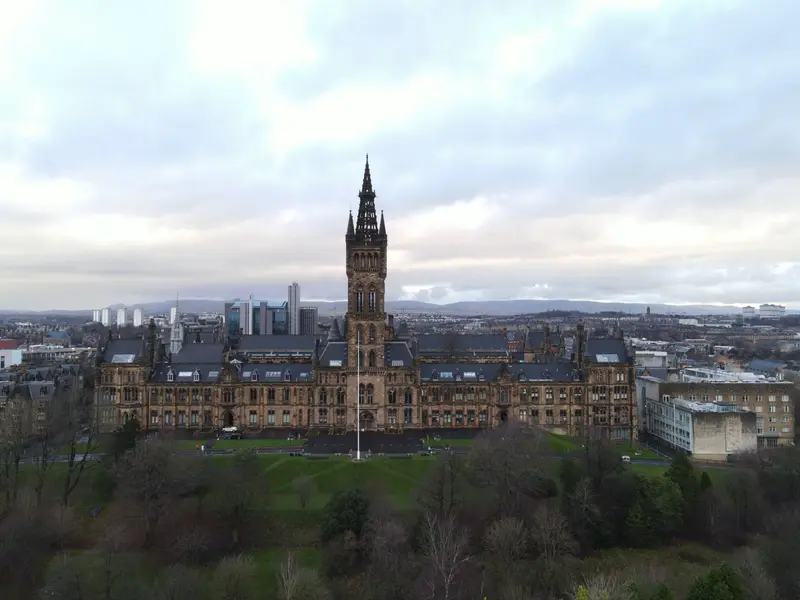
Glasgow
Glasgow is Scotland's largest city and the counterpart to Edinburgh: less pretty, significantly louder, with a self-confidence rooted in its industrial history. In the 19th century, about a fifth of all ships in the world were built on the Clyde. The decline from the 1960s onwards hit the city hard.What remained is a substance of red and blonde sandstone, showcasing its Victorian wealth, and a cultural scene that emerged from the structural upheaval. Since 2008, Glasgow has held the UNESCO title City of Music; on some evenings, over a hundred live concerts take place. Charles Rennie Mackintosh is influential for the cityscape, his Art Nouveau buildings blending Scottish, Japanese, and modern influences.The local dialect, the Glasgow Patter, is a challenge even for experienced English speakers. The city is considered Britain's friendliest, which visitors usually notice right at the train station.
Drive back via Loch Lomond for a last evening in Glasgow with Kelvingrove and a concert before heading to the airport.
4 Sights
4 Restaurants
Culture
Glasgow is a city that has been reinvented twice. In the 19th century, it was the second city of the Empire: a significant portion of the world's shipbuilding was launched on the Clyde, and the wealth from this is still visible today as sandstone architecture in the city centre. With the decline of shipbuilding after the Second World War, the city lost almost half of its inhabitants. Its designation as European Capital of Culture in 1990 marked the turning point.Charles Rennie Mackintosh is a defining figure, whose Glasgow Style around 1900 was a distinct response to Art Nouveau and Secession. His masterpiece, the Glasgow School of Art, burned down in 2014 and again in 2018 and is not accessible until further notice; preserved are The Mackintosh House, Mackintosh at the Willow on Sauchiehall Street, and the Scotland Street School.Admission to the major museums is free: Kelvingrove with Dalí's Christ of Saint John of the Cross, the Burrell Collection in Pollok Country Park, and the Riverside Museum by Zaha Hadid. In 2008, Glasgow was designated a UNESCO City of Music — on any given evening, over a hundred concerts are on the calendar, from the Barrowland Ballroom to King Tut's Wah Wah Hut, where Oasis were signed in 1993.
Plan this route as your trip
All stops, trains and nights go into your trip planner. You adjust dates and places to stay afterwards.
This route is a suggestion from our research. Please check timetables, times in port, opening hours and prices before you book – what your tour operator or carrier says is what counts.
Fernweh is a free travel guide and trip planner: routes researched by people, taken over in one click, used day by day on the road. More about Fernweh
5 stops
Route Summary
Duration12 Days
Stops5 Places
TypeAdventure