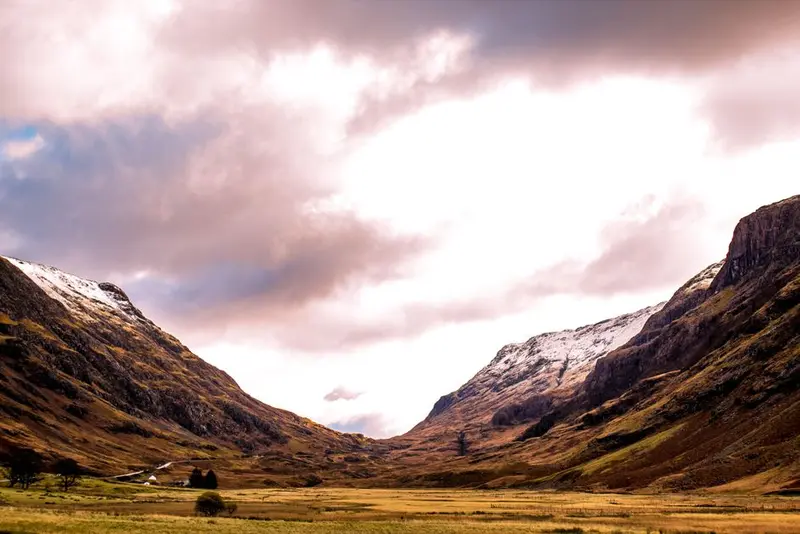
Glencoe is the most famous valley in the Highlands, a trough carved out by glaciers, with flanks that rise almost vertically. The subsoil is the remains of a collapsed Devonian volcano, and the Three Sisters on the south side are remnants of its crater rim. The A82 runs straight through, making the valley accessible even without hiking.In Scotland, the name is inextricably linked to the 1692 Massacre, when soldiers of the Campbells killed 38 members of the MacDonald clan after being billeted with them for twelve days. The breach of hospitality weighed heavier than the act itself and shapes the memory to this day.Fort William, at the north end of the valley, is the region's practical base: the end point of the West Highland Way, a starting point for Ben Nevis, and a station on the railway line to Mallaig, which crosses the Glenfinnan Viaduct. The town itself is functional, not beautiful.
Sights in Glencoe & Fort William
Discover the most important sights and attractions
1Three Sisters of Glencoe
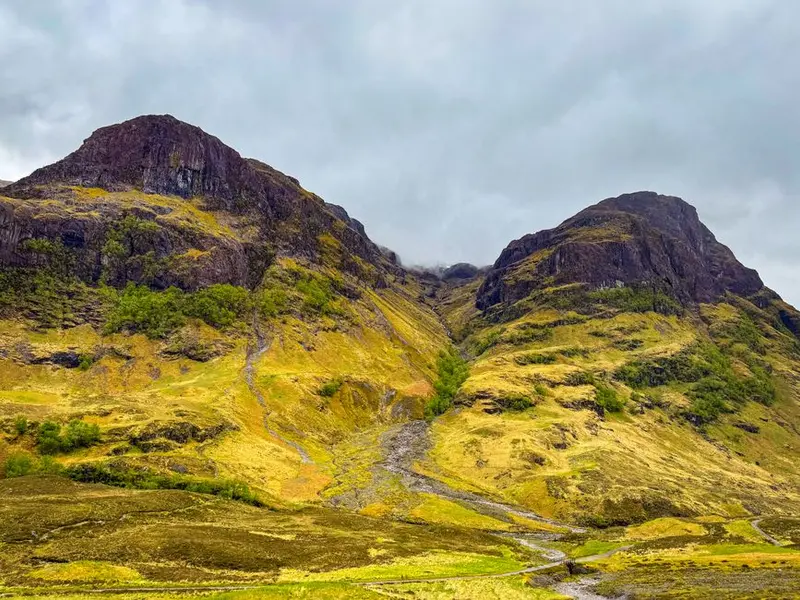
The Three Sisters are three distinctive mountain ridges that jut out from the Bidean nam Bian massif into the Glencoe Valley: Gearr Aonach, Aonach Dubh, and Beinn Fhada. They are the remaining ribs between side valleys that a glacier carved out.The viewpoint on the A82 offers the most famous view, but it's just a roadside car park. For those wanting more, hike into the Lost Valley between Gearr Aonach and Beinn Fhada, where the Clan MacDonald hid stolen cattle. The path there is short but stony and requires a stream crossing. At the top, a flat valley floor enclosed by walls opens up, which is impossible to guess from the outside.
Glen Nevis stretches southeast of Fort William, nestled between Ben Nevis and the Mamores, and is considered one of Scotland's most beautiful valleys. The road ends at a car park, from where a path leads through the narrow, wooded Nevis Gorge, where the river cascades over boulders.After about 40 minutes, a flat, green valley floor suddenly opens up, at the end of which the Steall Falls plunges freely for around 120 meters, making it Britain's third-highest waterfall. To reach the foot of the falls, a wire rope bridge made of three taut steel cables spans the river, and crossing it requires nerves of steel. The valley served as a filming location for several movies, including Braveheart and Harry Potter.
The West Highland Museum on Cameron Square in Fort William has existed since 1922 and is an old-school museum: cramped rooms, full display cases, handwritten signs. Exactly that makes it worth seeing.The focus is on the Jacobite Risings. The most famous piece is the Secret Portrait, a seemingly chaotic smudge of paint on a tray, which only reveals the face of Charles Edward Stuart as a reflection on a polished cylinder. After the defeat of Culloden, possession of his image was punishable, so his supporters resorted to this technique. Alongside this are weapons, tartans, and objects relating to the history of the Clearances. Admission is free.
These places are nearby — perfect for additional days or a day trip.
Scotland
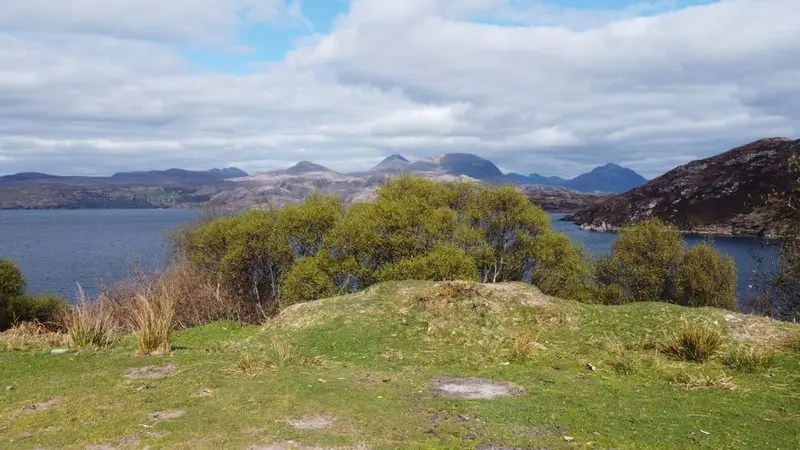
Scotland occupies the northern third of the island of Great Britain and has been united with England since 1707, yet it retains its own legal system, education system, banknotes, and, since 1999, its own Parliament. Those arriving from England will notice the difference in language immediately: besides English, Scots and, in the northwest, Scottish Gaelic are spoken.Three LandscapesThe south comprises the gentle Southern Uplands, characterized by sheep pastures and ruined abbeys. Above this lies the Central Belt, a densely populated strip between Edinburgh and Glasgow, home to three-quarters of the population. North of the Highland Boundary Fault begin the Highlands: valleys sculpted by glaciers, long narrow lochs, and mountains that, despite their modest height, offer alpine conditions because the tree line here is around 600 meters. Additionally, there are almost 800 islands, about 90 of which are inhabited.Weather, Not ClimateThe Gulf Stream keeps winters mild, while the Atlantic ensures changeable weather. On the west coast, some areas receive over 3,000 millimeters of rainfall annually, while in the east around Aberdeen, it's less than 700. The best time for the Highlands is May and June, as well as September: long days, comparatively dry weather, and no midges. The Midges, tiny biting gnats, make calm evenings between June and August in the west a test of patience.Access to the LandThe Land Reform Act of 2003 grants you extensive access rights to undeveloped land, including wild camping for one to two nights. This fundamentally distinguishes Scotland from England and Wales. It is linked to the Scottish Outdoor Access Code, which demands responsible behavior: no fires on peatland, keep a distance from houses, and take all your litter with you.
Isle of Skye
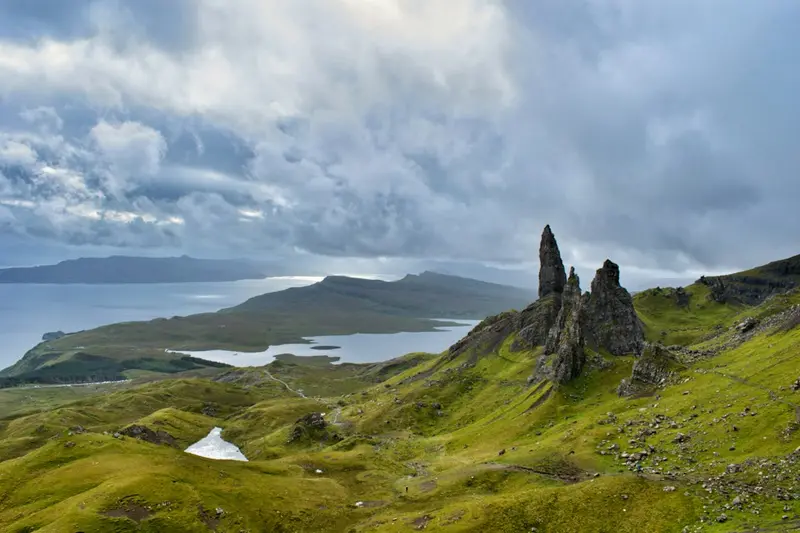
The Isle of Skye is the largest island of the Inner Hebrides and has been connected to the mainland since 1995 via the Skye Bridge. Its Gaelic name An t-Eilean Sgitheanach is usually interpreted as the winged isle, which describes its rugged shape with long peninsulas.Geologically, Skye is divided into two parts. The Black Cuillin in the south are made of Gabbro, a rough, magnetic rock that has created Britain's most jagged mountain forms; the ridge is considered the island's most challenging mountain tour and is not for the inexperienced. The north, with the Trotternish Peninsula, is built from basalt layers that lie on softer ground and have therefore been sliding for millennia. From this, the rock pinnacles of the Old Man of Storr and the terraces of the Quiraing have emerged, forming Britain's largest active landslide.Skye is overcrowded in summer, with its infrastructure pushed to the limit. Those visiting in July or August should book accommodation and rental cars well in advance, and aim for parking at popular spots early in the day.
Cairngorms National Park
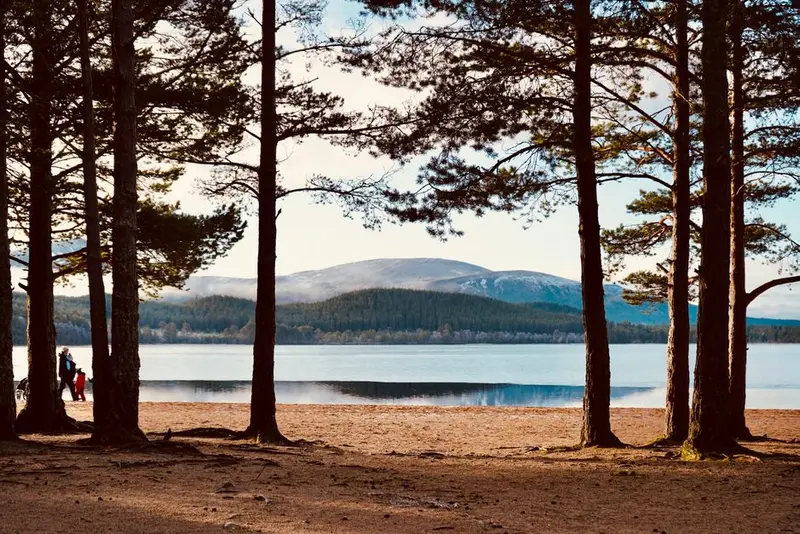
The Cairngorms National Park, covering 4,528 square kilometers, is Britain's largest national park, roughly twice the size of the Saarland. Its core is a granite plateau, home to five of Scotland's six highest mountains. The high plateau features subarctic tundra, the only significant area of its kind in the British Isles, with snow lingering in sheltered hollows in some places until mid-summer.On its fringes lie the last major remnants of the Caledonian Forest, the original Scottish pine forest that once covered vast areas of the Highlands and has now shrunk to just a few percent of its former extent. Here live capercaillie, ptarmigan, Scottish crossbill, and Britain's only wild reindeer herd, which was reintroduced in 1952.The weather on the plateau is the country's harshest; wind speeds exceeding 280 km/h have been recorded on Cairn Gorm. Anyone heading up needs winter gear and navigation skills, even in spring. In the valleys, however, the park is straightforward: Aviemore, Braemar, and Speyside with its whisky distilleries are easily accessible year-round.
Glasgow
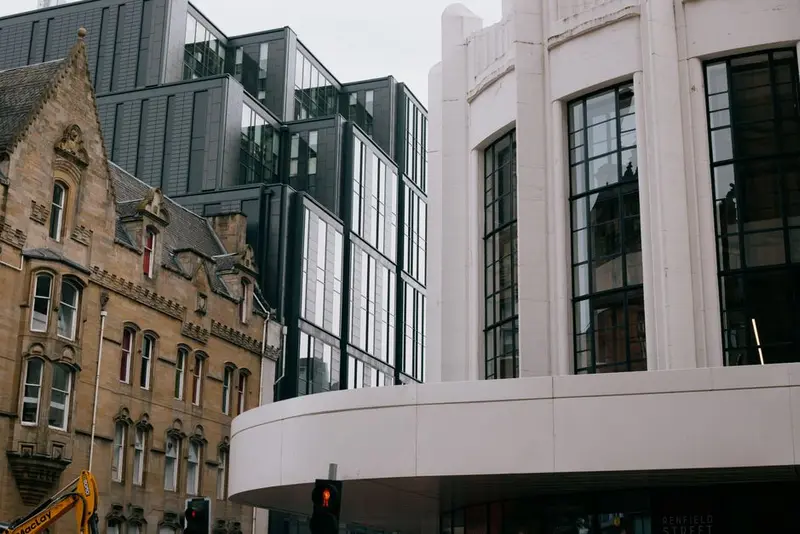
Glasgow is Scotland's largest city and the counterpart to Edinburgh: less pretty, significantly louder, with a self-confidence rooted in its industrial history. In the 19th century, about a fifth of all ships in the world were built on the Clyde. The decline from the 1960s onwards hit the city hard.What remained is a substance of red and blonde sandstone, showcasing its Victorian wealth, and a cultural scene that emerged from the structural upheaval. Since 2008, Glasgow has held the UNESCO title City of Music; on some evenings, over a hundred live concerts take place. Charles Rennie Mackintosh is influential for the cityscape, his Art Nouveau buildings blending Scottish, Japanese, and modern influences.The local dialect, the Glasgow Patter, is a challenge even for experienced English speakers. The city is considered Britain's friendliest, which visitors usually notice right at the train station.
Edinburgh
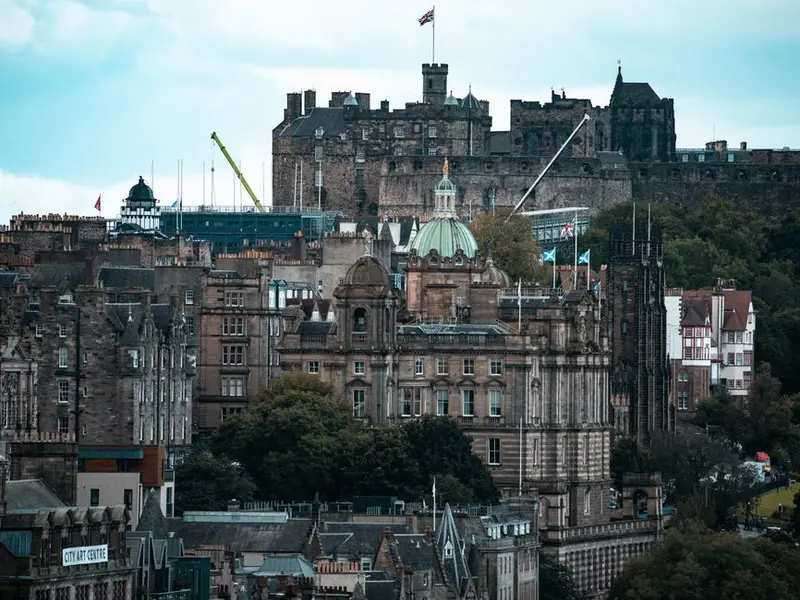
Edinburgh is built on extinct volcanic rock. A glacier scoured the hard basalt plug, upon which the castle now stands, leaving behind an elongated ridge. The Royal Mile lies precisely on this ridge, and this geology explains the entire layout of the Old Town: The lanes, the *Closes*, descend steeply on both sides.The city is divided into two contrasting halves. The Old Town is densely medieval, with tenements up to eleven stories high, which were among the tallest buildings in Europe in the 17th century. North of it, the New Town was developed from 1767 onwards, following the grid plan of the then 26-year-old James Craig, and is considered the world's largest contiguous Georgian quarter. Together, both have been on the World Heritage list since 1995.In August, Edinburgh transforms into an entirely different city thanks to the Fringe, the world's largest cultural festival: The population doubles, every space becomes a stage, and accommodation costs multiply. Those who want to experience the city more peacefully should visit in May or September.