ExploreTravel GuidesMy Trips
    de|en
    All Places & RegionsAbout FernwehFAQPrivacy PolicyImprint
    ExploreTravel GuidesMy Trips
    • Overview
    • Places in the region
    • Best travel time
    • Culture
    • Getting around
    • Nearby
    North Sumatra
    Region

    North Sumatra

    North Sumatra combines the vast crater lake Toba, Batak culture, active volcanoes, and Gunung Leuser National Park's orangutan-filled rainforest. Most trips begin in the metropolis Medan.

    More
    1. Home
    2. Destinations
    3. Indonesia
    4. North Sumatra
    North Sumatra combines the vast crater lake Toba, Batak culture, active volcanoes, and Gunung Leuser National Park's orangutan-filled rainforest. Most trips begin in the metropolis Medan.
    North Sumatra has around 15 million inhabitants; its capital is Medan. The classic route takes you from Medan to Bukit Lawang for the orangutans, then into the Karo Highlands to Berastagi with the volcanoes Sibayak and Sinabung, and finally to Lake Toba with Samosir Island. This circuit typically requires about a week. The roads are winding and often slow; most travelers use shared taxis, minibuses, or a car with a driver. Further south are West Sumatra with Bukittinggi and the Mentawai Islands.
    Lake Toba and Samosir

    Place 1 of 4

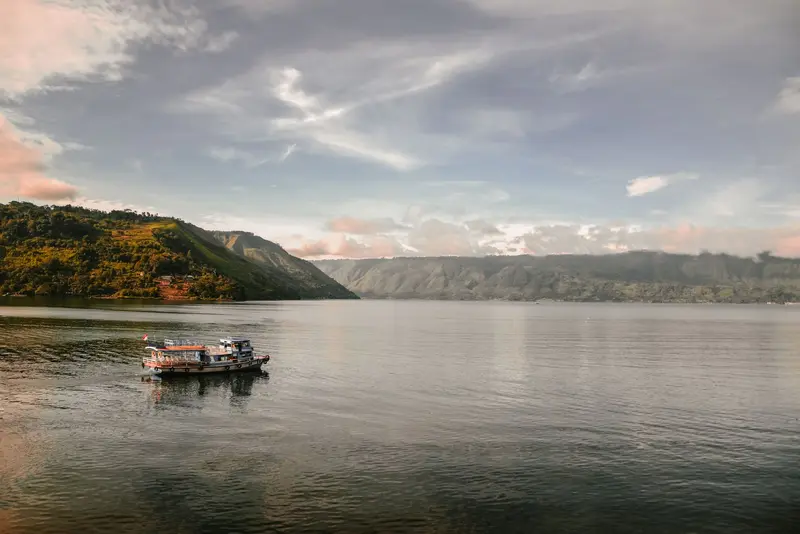
    Lake Toba and Samosir

    Lake Toba fills the caldera of a supervolcano whose eruption approximately 74,000 years ago is among the largest in Earth's history.

    Lake Toba is around 100 km long and the largest lake in Indonesia. It fills a caldera formed by a massive volcanic eruption approximately 74,000 years ago.

    Discover
    Medan

    Place 2 of 4

    Medan

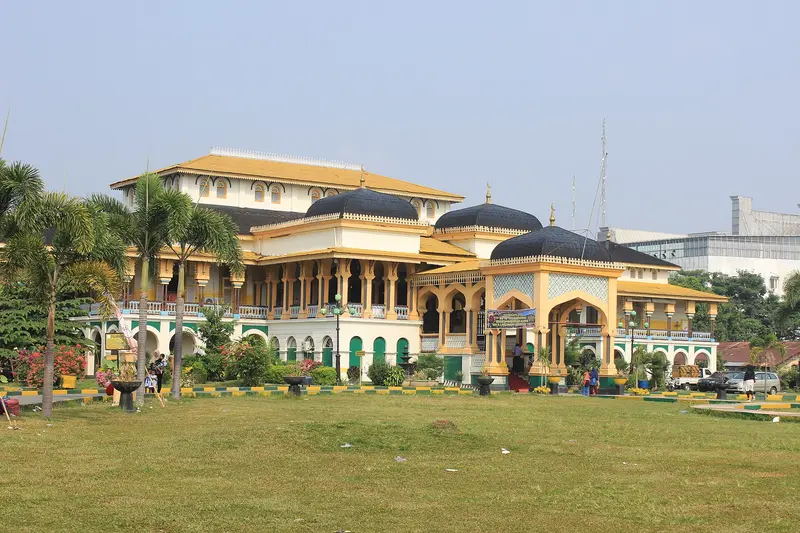
    Medan is Sumatra's largest city and the transportation hub of the north. The Sultan of Deli's Maimun Palace, the Great Mosque, colonial buildings from the tobacco era, and diverse street food make for a worthwhile stopover.

    Medan, with over two million inhabitants, is Sumatra's largest city and the capital of North Sumatra. It became wealthy in the 19th century through tobacco and rubber plantations.

    Discover
    Bukit Lawang

    Place 3 of 4

    Bukit Lawang

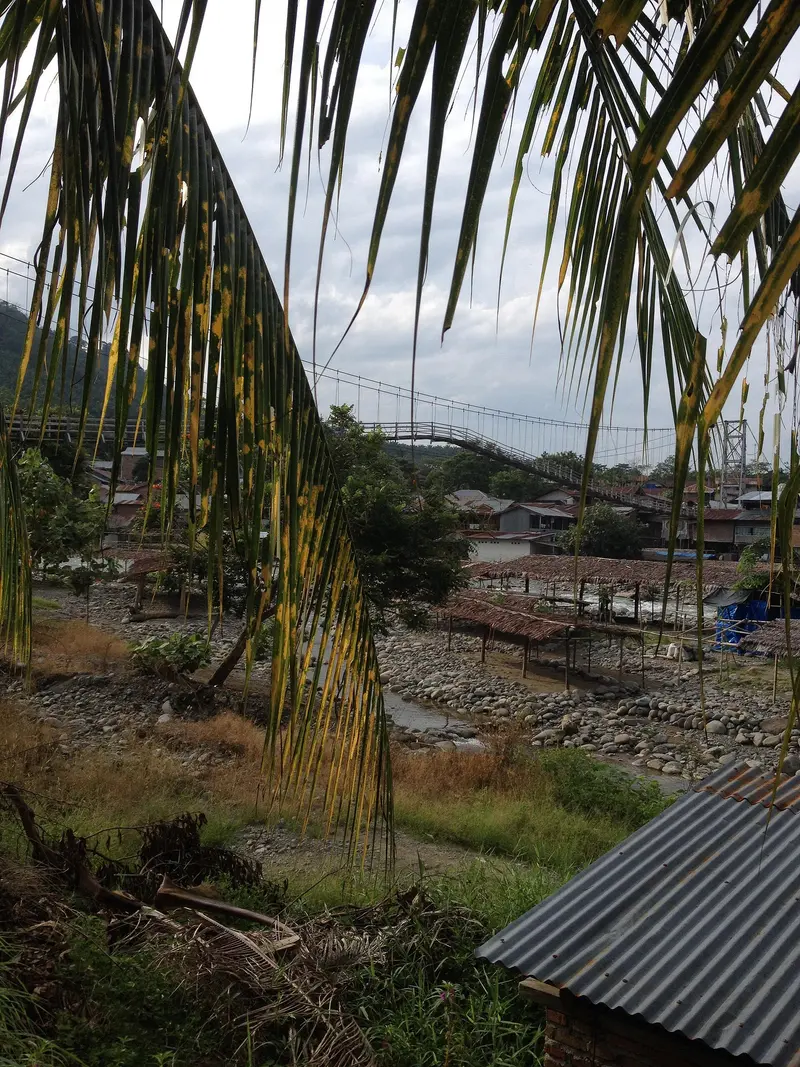
    Bukit Lawang on the Bohorok River is the best-known gateway to Gunung Leuser National Park. Guided jungle treks lead to semi-wild and wild Sumatra orangutans, and the return journey is often by tubing on the river.

    Bukit Lawang is located on the Bohorok River on the eastern edge of the Gunung Leuser National Park, about three to four hours west of Medan. An orangutan rehabilitation centre was founded here in 1973, and many local animals are descended from its residents.

    Discover
    Berastagi

    Place 4 of 4

    Berastagi

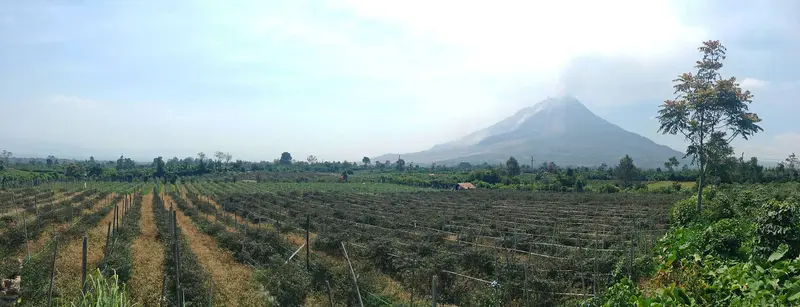
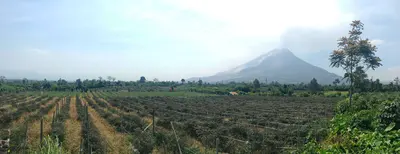
    Berastagi in the Karo Highlands is a market town at around 1,300 meters, surrounded by vegetable and fruit fields. The volcanoes Sibayak and Sinabung dominate the landscape, and traditional Karo-Batak longhouses stand in the surroundings.

    Berastagi is located at around 1,300 m elevation in the Karo Highlands, about two hours southwest of Medan. The small town is a market center for fruit, vegetables, and flowers.

    Discover

    Best Time to Visit

    When is the best time for your trip?

    February
    March
    June
    July
    27–27°C·90–135 mm(heavy rain)
    North Sumatra does not have a distinct dry season. Rainfall is usually lowest in February and March, and in June and July, and most from September to December.
    The values apply to Medan at sea level. At Lake Toba (approx. 900m) and Berastagi (approx. 1,300m), it's noticeably cooler, with nights often under 18°C.

    Seasons

    Jan
    Feb
    Mar
    Apr
    May
    Jun
    Jul
    Aug
    Sep
    Oct
    Nov
    Dec
    The Drier Months
    Months with most rain
    Crossing
    Best Time to Visit
    ▶Show detailed monthly data
    MonthTemp (°C)Rain (mm)Sun (h)
    January26.01405.0
    February27.0906.0
    March27.01056.0
    April27.01306.0
    May28.01756.0
    June27.01306.0
    July27.01356.0
    August27.01755.0
    September27.02105.0
    October26.02604.0
    November26.02404.0
    December26.02204.0

    Culture

    The Batak live in the highlands, comprising groups like Toba, Karo, Simalungun, Mandailing, each with unique dialects and architecture. Many Toba-Batak are Protestant; Mandailing are mostly Muslim in the south. Large houses with curved saddle roofs are typical, as is the woven Ulos cloth, for weddings and funerals. The coast and Medan are shaped by Malays, Chinese, Indians, and Javanese.

    Arrival and On the Go

    Kualanamu Airport near Medan offers international flights and a train link to the center. Alternatively, fly to Silangit, south of Lake Toba. Shared taxis and tourist shuttles run between Medan, Bukit Lawang, Berastagi, and Parapat. Ferries connect Parapat and Ajibata with Samosir.
    Nearby

    Lake Toba and Samosir
    Chapsorini / Wikimedia Commons / CC BY-SA 4.0

    Lake Toba and Samosir

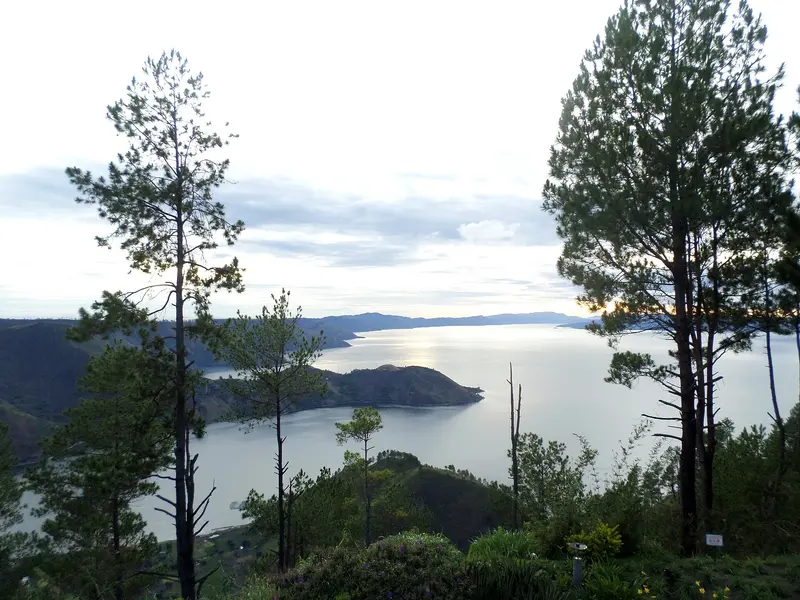
    Lake Toba fills the caldera of a supervolcano whose eruption approximately 74,000 years ago is among the largest in Earth's history. It is the largest lake in Southeast Asia, and at its center lies Samosir Island, home to villages, tombs, and royal houses of the Toba Batak.
    Berastagi
    Christian Advs Sltg / Wikimedia Commons / CC BY-SA 4.0

    Berastagi

    Berastagi in the Karo Highlands is a market town at around 1,300 meters, surrounded by vegetable and fruit fields. The volcanoes Sibayak and Sinabung dominate the landscape, and traditional Karo-Batak longhouses stand in the surroundings.
    Medan
    Mimihitam / Wikimedia Commons / CC BY-SA 4.0

    Medan

    Medan is Sumatra's largest city and the transportation hub of the north. The Sultan of Deli's Maimun Palace, the Great Mosque, colonial buildings from the tobacco era, and diverse street food make for a worthwhile stopover.
    Bukit Lawang
    VanuitVoorburg / Wikimedia Commons / CC BY-SA 4.0

    Bukit Lawang

    Bukit Lawang on the Bohorok River is the best-known gateway to Gunung Leuser National Park. Guided jungle treks lead to semi-wild and wild Sumatra orangutans, and the return journey is often by tubing on the river.

    Ipoh

    The capital of the state of Perak grew rich through tin mining in the Kinta Valley. This legacy is visible in the old town's colonial buildings and shophouses, now home to cafes, murals, and historic coffee houses. Surrounding the city are towering limestone cliffs, with Buddhist temples nestled within their caves. Ipoh is also known for White Coffee and Tauge Ayam.