Fernweh
    ExploreTravel GuidesMy Trips
    de|en
    About FernwehImprintFAQPrivacy Policy
    ExploreTravel GuidesMy Trips
    Barrio Lastarria

    Barrio Lastarria

    DistrictCulture
    1. Home
    2. Destinations
    3. Chile
    4. Santiago de Chile
    5. Barrio Lastarria
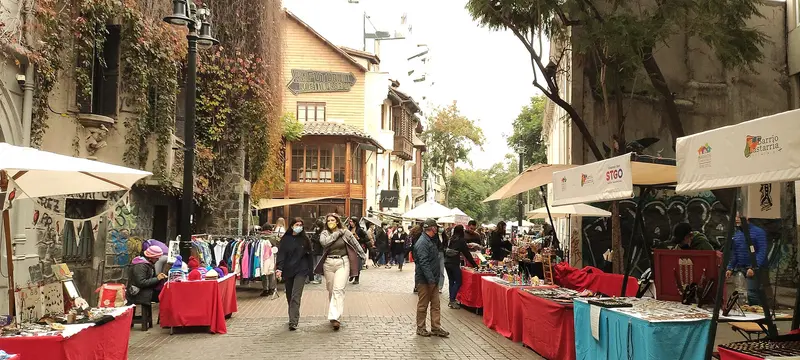
    A chic, relaxed artist district offering independent boutiques, charming cafés, restaurants, and cultural venues, perfect for a stroll.

    Sehenswürdigkeiten

    Discover the most important sights and attractions

    Virgin of the Immaculate Conception

    The **Virgen de la Inmaculada Concepción**, located high above Cerro San Cristóbal, is an iconic landmark of Santiago and a significant religious symbol of Chile. Inaugurated in 1908, the statue depicting the Virgin Mary was blessed by Pope Pius XI and has since been an important pilgrimage site. From its elevated position, it offers unparalleled panoramic views of the entire city of Santiago and the surrounding Andes mountain range, making it a popular destination for locals and tourists alike.At the foot of the statue, you'll find a small chapel, often used for services, creating an atmosphere of reflection. The ascent to the summit can be made comfortably by either the historic funicular (Funicular) or the modern cable car (Teleférico), which is an experience in itself. Our Tip: Visit the statue in the early morning to enjoy the tranquility and best views before the haze rises and the crowds arrive. For impressive photos of the city with the statue in the foreground, a viewpoint slightly below the summit is recommended.
    Open in Google Maps

    Museo de la Memoria y los Derechos Humanos

    The Museo de la Memoria y los Derechos Humanos in Santiago is a central institution for coming to terms with the Chilean military dictatorship (1973-1990). It opened in 2010 and serves to commemorate victims of human rights violations and promote democracy and respect for human rights. During your visit, you delve deep into Chile's recent history, starting with the military coup, through the years of repression, torture, and exile, up to the struggle for justice and truth. The exhibitions present powerful testimonies, personal stories, documents, photographs, and audiovisual materials that unflinchingly portray the regime's brutality and the suffering of those affected. It is a place of quiet reflection that will emotionally move you and conveys a deep understanding of the importance of freedom and human dignity. Our Tip: Plan at least two to three hours for your visit to adequately absorb the extensive information. To experience the atmosphere in peace, we recommend a visit during the week in the morning. Admission is free.
    Open in Google Maps

    Municipal Theatre of Santiago

    The Teatro Municipal de Santiago, opened in 1857, is one of Chile's oldest and most significant cultural institutions, located in the heart of the vibrant Barrio Lastarria. This edifice serves as the main venue for opera, ballet, and classical concerts, housing the Philharmonic Orchestra and the National Ballet of Chile. Its magnificent neoclassical architecture, with an imposing facade and opulent interiors, testifies to its long history. Even without a performance, the sight of the building is impressive. Our Tip: Check the schedule in advance. For an unobstructed photo of the facade, morning is recommended before the area gets busier.
    Open in Google Maps

    Museo Nacional de Historia Natural

    The Museo Nacional de Historia Natural, founded in 1830, is one of South America's oldest natural history museums and a key venue for exploring and showcasing Chilean natural and cultural history. You'll find it in the picturesque Quinta Normal Park, an ideal spot for a leisurely stroll before or after your visit. The museum houses impressive collections, ranging from Chile's rich biodiversity to paleontological finds. A particular highlight is the replica of the Chilesaurus diegosuarezi, a unique dinosaur discovered in Chile.Beyond its natural science exhibits, the museum also offers fascinating insights into Chile's ethnography, including artifacts from the Mapuche and Rapa Nui cultures. The building's architecture itself, a neoclassical structure, is also worth seeing. Our Tip: Visit the museum on a weekday morning to avoid the largest crowds and explore the exhibits at your leisure. Plan at least two to three hours to fully appreciate the diversity of the exhibitions. For a special photo opportunity, the museum's historic facade, nestled in the park's green surroundings, makes for a great shot.
    Open in Google Maps

    Museum of National History of Chile

    The National Historical Museum of Chile, located in the heart of the vibrant Barrio Lastarria, offers you a comprehensive insight into the country's rich and often turbulent history. You'll find it in the Palacio de la Real Audiencia, an impressive colonial building that has itself witnessed many historical events. The exhibitions guide you chronologically through Chile's past, starting from pre-Columbian cultures, through the Spanish conquest and colonial era, up to independence and the challenges of the 20th century. You'll see artifacts, documents, and artworks that illustrate the development of Chilean society and politics. Particularly noteworthy are the collections on the independence movement and the Republican era, which provide you with a deep understanding of Chile's identity. Our tip: Plan your visit for the morning to avoid the biggest crowds and to be able to view the exhibits at your leisure. After your museum visit, the surrounding Barrio Lastarria invites you to linger with its cafés and bookstores. Pay attention to the architectural details of the building itself, which are often overlooked but reveal much about the colonial period.
    Open in Google Maps

    Centro Cultural Matucana 100

    The Centro Cultural Matucana 100, or M100 for short, is one of Santiago and Chile's most important cultural institutions. It is located on the site of a former railway workshop of Ferrocarriles del Estado, whose industrial architecture remains distinctive to this day. This historical transformation from a technical to a cultural center makes the venue unique. Here you'll find a diverse mix of contemporary art, theater, dance, music, and film.Since its opening in 2001, M100 has established itself as a dynamic space for presenting national and international artists. Its spacious halls and galleries offer ample room for large-scale exhibitions and innovative productions. It's a place where you can experience Chile's vibrant art scene firsthand.Our Tip: Before your visit, check M100’s official website to view the current program of exhibitions, performances, and film screenings. Opening hours vary depending on the event. For a comprehensive cultural experience, combine your visit with a stroll through the nearby Parque Quinta Normal, which also houses the Museo Nacional de Historia Natural and the Museo de Ciencia y Tecnología. Plan at least two to three hours for M100 to explore the different areas at your leisure.
    Open in Google Maps

    Essen & Trinken

    Accommodations in Barrio Lastarria

    Accommodations in Barrio Lastarria

    Find perfect stay in Barrio Lastarria

    Booking.com
    Search Hotels
    Agoda
    Search Hotels
    Airbnb
    Vacation Rentals
    Hotels.com
    Hotels Worldwide
    Hostelworld
    Hostels

    Locations nearby

    These places are nearby — perfect for additional days or a day trip.

    Historic Center

    Historic Center

    Santiago's vibrant heart houses iconic landmarks, government buildings, and significant historical sites that tell the city's rich history.
    Bellavista

    Bellavista

    This bohemian district is known for its colorful houses, vibrant street art, and a lively nightlife that will keep you entertained until the early hours.
    Providencia

    Providencia

    This upscale and modern district offers a perfect mix of shopping, business centers, green parks, and a diverse culinary scene.
    Santiago de Chile

    Santiago de Chile

    Santiago de Chile, nestled amidst the majestic backdrop of the Andes, is a vibrant metropolis that will enchant you with its unique blend of colonial charm and modern flair.Discover the diverse facets of this South American capital, from historic squares to lively artist districts and an exquisite culinary scene that makes every visit unforgettable.
    Maipo Vale

    Maipo Vale

    The Maipo Valley, located southeast of Santiago, is considered Chile's oldest and most renowned wine region. Here you'll find a high concentration of wineries, particularly known for their excellent Cabernet Sauvignon wines. Numerous bodegas, including Concha y Toro and Santa Rita, offer informative tours and tastings, providing insights into traditional winemaking. The region is characterized by rolling hills and vast vineyards, with the Andes serving as a picturesque backdrop. Culturally, the Maipo Valley is deeply rooted in Chilean winemaking history, dating back to the 19th century. For a visit, spring (October to December) or autumn (March to May) is recommended to experience the mild climate and harvest season. It's best to explore the wineries as part of an organized tour from Santiago.