Fernweh: Home
    ExploreTravel GuidesPlan a tripMy tripLast visited
    de|en
    All Places & RegionsAll highlightsAbout FernwehFAQPrivacy PolicyImprint
    ExploreTravel GuidesPlan a tripMy tripLast visited
    Ostia Antica

    Italy

    Ostia Antica

    Point of InterestCulture

    The ruins of Rome's ancient port city lie at the former Tiber mouth, on the Via Ostiense that led here from Rome.

    by Felix Gillen

    1. Home
    2. Destinations
    3. Italy
    4. Latium
    5. Ostia Antica
    The ruins of Rome's ancient port city lie at the former Tiber mouth, on the Via Ostiense that led here from Rome. Preserved are entire street blocks with residential buildings, baths, warehouses, shops, and mosaics, which reveal much about daily life in a Roman city.

    Places of Interest

    Discover the most important sights and attractions

    Excavations of Ostia Antica
    Park

    1Excavations of Ostia Antica

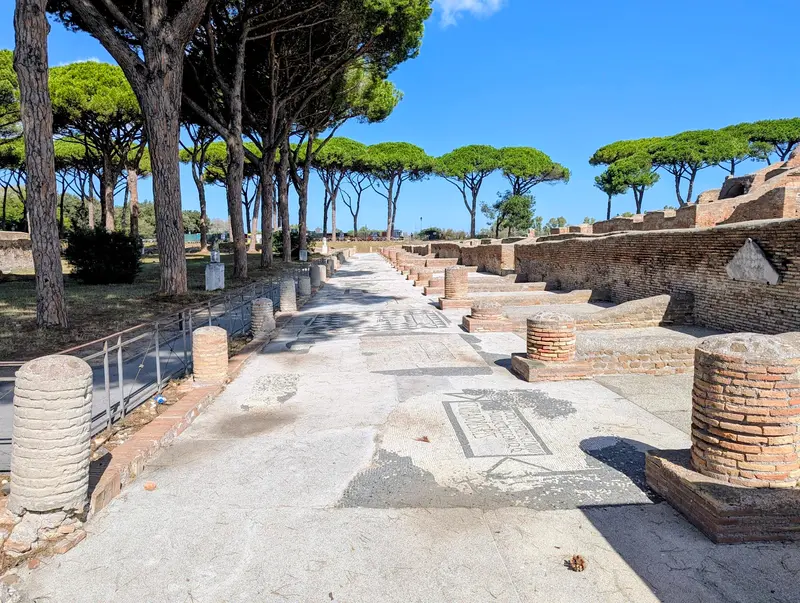
    Rome's ancient port city at the Tiber estuary flourished in the 2nd century AD, then home to an estimated 50,000 inhabitants. On the extensive site, you walk along the main street, Decumanus Maximus, past residential blocks, baths, temples, and warehouses. Allow ample time; the site has a weekly closing day, usually Mondays.
    Open in Google Maps
    Theater of Ostia
    Historic Landmark

    2Theater of Ostia

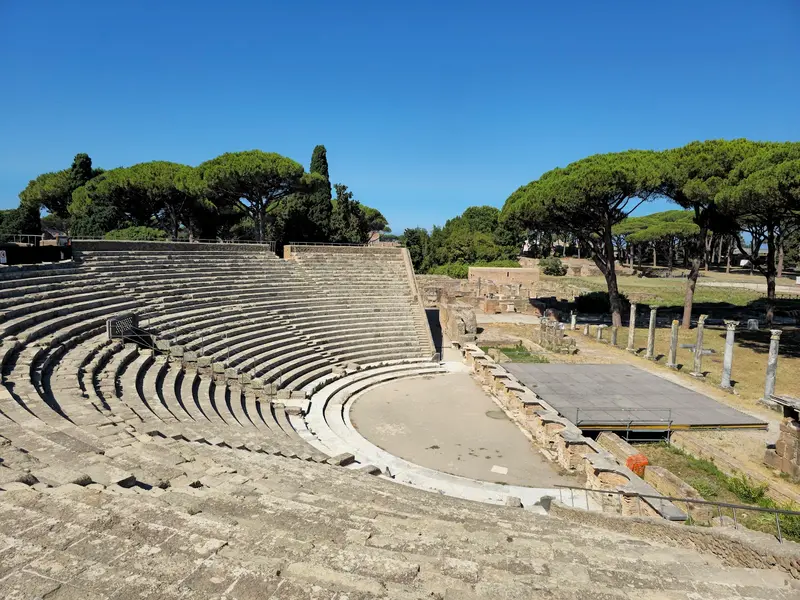
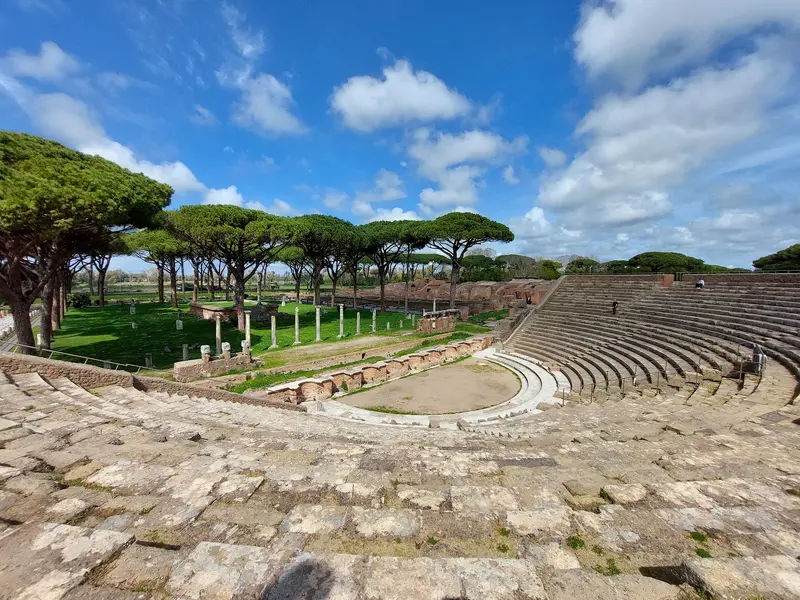
    Agrippa had the theatre built between 18 and 12 BC under Augustus; it was restored during the Severan period. Behind the theatre, separated by a row of columns, lies the Piazzale delle Corporazioni.
    Open in Google Maps
    Piazzale delle Corporazioni
    Historic Landmark

    3Piazzale delle Corporazioni

    The square behind the theatre was built during the Augustan era. Beneath the double colonnade were small offices, presumably used by shipowners and merchants as their agencies. Dating from the 2nd century AD, the black-and-white floor mosaics identify shipowners and merchants and feature dolphins, ships, and the lighthouse of Portus. A temple stood in the center.
    Open in Google Maps
    Capitolium
    Historic Landmark

    4Capitolium

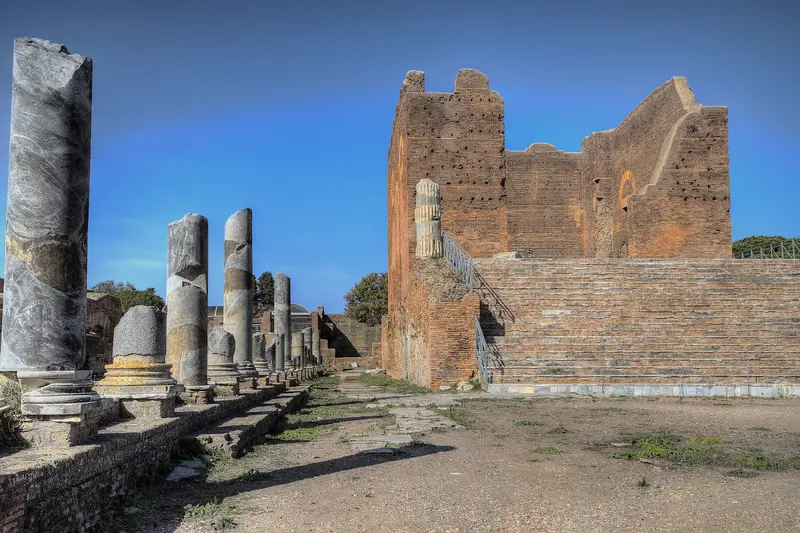
    The Capitolium, the temple to Jupiter, Juno, and Minerva, built under Hadrian, dominates one end of the elongated forum. Opposite it stands the temple to Roma and Augustus, built under Tiberius, and on the west side lay the Basilica and Curia.
    Open in Google Maps
    Castle of Julius II
    Castle

    5Castle of Julius II

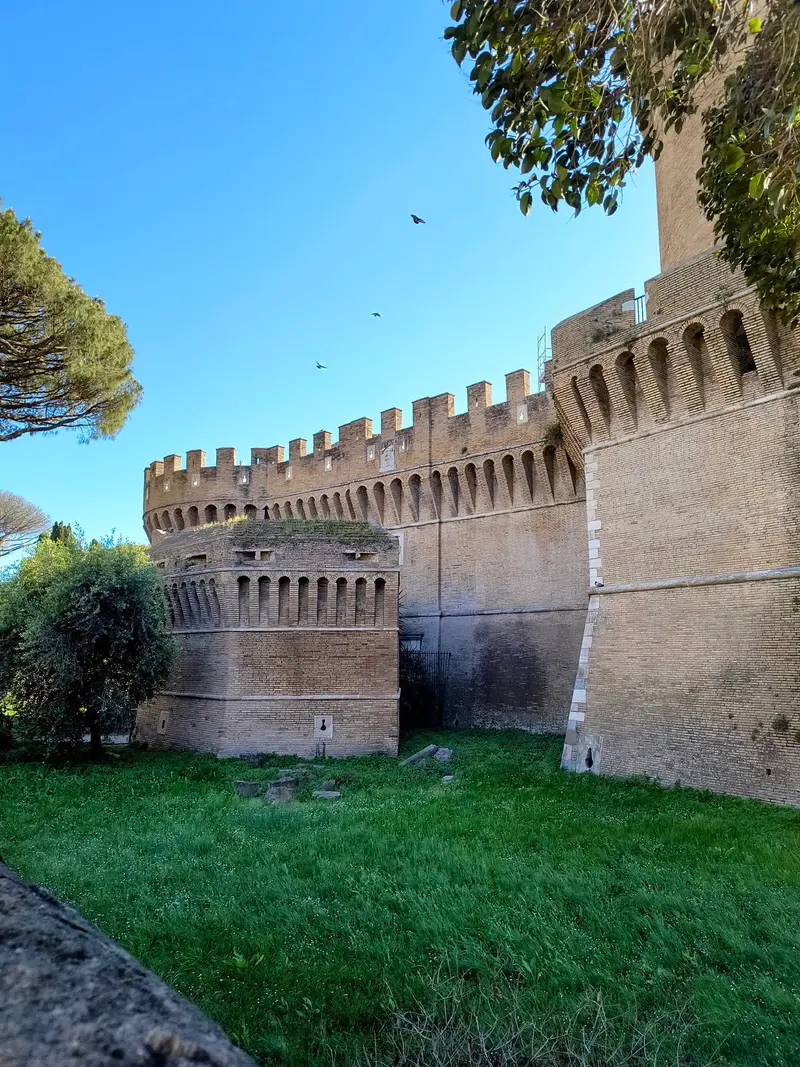
    The fortress in the medieval Borgo of Ostia Antica was built by Cardinal Giuliano della Rovere, later Pope Julius II., from 1483 to 1486 to protect the coast near Rome and secure the city's supply. Baccio Pontelli is likely considered its architect. The fortress is part of the Parco archeologico di Ostia antica and can be visited.
    Open in Google Maps

    Food and Drink

    1

    Ristorante Monumento

    The restaurant on the Piazza in the Borgo of Ostia Antica claims to have existed since 1884. It serves Roman classics and fish from the nearby sea – convenient for lunch after visiting the excavations.
    Show on Google Maps
    2

    At Aeneas' Landing

    Restaurant and pizzeria directly on the access road to the excavations, with a large garden. The menu features fish dishes, Roman pasta, and pizza.
    Show on Google Maps

    The History of Ostia

    Port of the CapitalFor centuries, Ostia served as Rome's gateway to the sea and the administrative hub for grain supply. The offices at the Piazzale delle Corporazioni illustrate the vital importance of maritime trade. As Ostia's harbour was too small, Claudius had the Portus harbour built further north at the Tiber estuary, which Trajan expanded with a hexagonal basin by 113 AD. In the 2nd century AD, Ostia had an estimated population of around 50,000.Decline and RediscoveryThe city was abandoned in the 9th century, with the remaining inhabitants moving to nearby Gregoriopolis. For centuries, the ruins served as a marble quarry for Rome. Under Pope Pius VII, excavations for sculptures began, and large parts were uncovered between 1939 and 1942.

    Arrival and Visit

    By Train from RomeThe suburban train Roma–Lido, also known as Metromare, departs from Porta San Paolo station in Rome to Ostia Antica station.On SiteBring comfortable shoes, water, and sun protectionThe excavation site has a weekly closing day, usually Mondays; check current opening hours in advance

    Accommodations in Ostia Antica

    Find perfect stay in Ostia Antica

    Booking.com* (Affiliate link)
    Search Hotels
    Agoda* (Affiliate link)
    Search Hotels
    Airbnb
    Vacation Rentals

    * Affiliate link: if you book through it, we earn a small commission. The price stays the same for you.

    Campgrounds in Ostia Antica

    Find perfect campground in Ostia Antica

    Search via Google Maps
    Campgrounds nearby (15km)
    Camping.info
    Find Campgrounds
    Park4Night
    RV Parks & Camping

    Nearby

    Latium

    Latium

    Latium stretches from the Tyrrhenian Sea to the Apennines, with Rome as its capital. Around the capital, you'll find the villas of Tivoli, volcanic lakes like Bolsena, Vico, and Bracciano, Etruscan necropolises, and towns like Civita di Bagnoregio perched on a tufa rock.
    Rome

    Rome

    Rome was traditionally founded in 753 BC, and every era has left its mark: the Colosseum and Roman Forum from antiquity, churches and palaces from the Renaissance, fountains and squares from the Baroque. In the heart of the city lies the Vatican with St. Peter's Basilica and the Sistine Chapel.
    Castelli Romani

    Castelli Romani

    The Castelli Romani are a cluster of towns at the foot of the Alban Hills southeast of Rome. This fertile volcanic landscape, with its two crater lakes of Albano and Nemi, was popular in ancient times with aristocratic Romans due to its cooler summer climate, and later with popes and cardinals, who built villas here and established their summer residence in Castel Gandolfo.
    Viterbo

    Viterbo

    Viterbo was the seat of the Popes for around two decades in the 13th century, and its old town is one of the best-preserved medieval city centers in Central Italy. Stone houses, medieval fountains, and the Papal Palace define its appearance; thermal springs, used by Etruscans and Romans, lie to the west of the city.
    Orvieto

    Orvieto

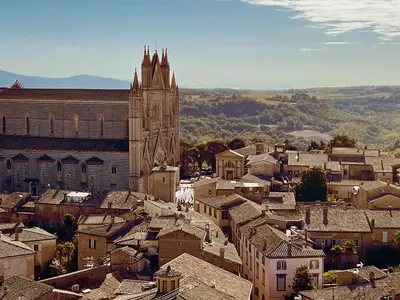
    Orvieto is located in southwestern Umbria on a volcanic tuff plateau overlooking the Paglia Valley. The city dates back to an Etruscan settlement. It is known for its Gothic cathedral with a mosaic facade and frescoes by Luca Signorelli, the Pozzo di San Patrizio, and the many caves carved into the tuff beneath the city. The train station is at the foot of the rock, approximately 125 rail kilometers from Rome.

    Sources & method

    • Photos: Unsplash, Google Maps. Each photo carries its credit.
    • Place data such as addresses and ratings comes from Google Maps.
    • The content is based on web research from public, traceable sources. How the content is made · The role of AI