Fernweh: Home
    ExploreTravel GuidesPlan a tripMy tripLast visited
    de|en
    All Places & RegionsAll highlightsAbout FernwehFAQPrivacy PolicyImprint
    ExploreTravel GuidesPlan a tripMy tripLast visited
    • Neighborhoods & highlights
    • Walking tours
    • Eat & drink
    • Food culture
    • Culture
    • Getting around
    • Accommodation
    • Plan trip
    • Nearby
    Orvieto

    Italy

    Orvieto

    CityCulture

    Orvieto is located in southwestern Umbria on a volcanic tuff plateau overlooking the Paglia Valley. The city dates back to an Etruscan settlement.

    by Felix Gillen

    1. Home
    2. Destinations
    3. Italy
    4. Umbria
    5. Orvieto
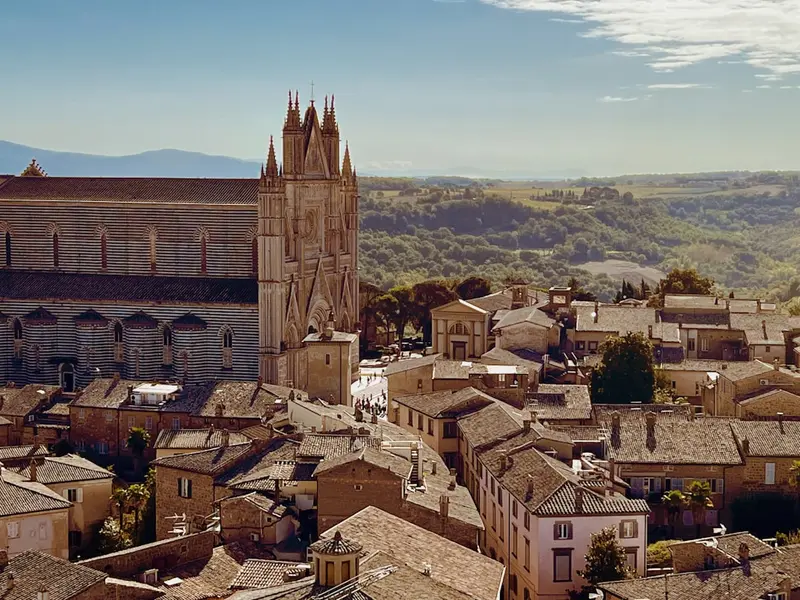
    Orvieto is located in southwestern Umbria on a volcanic tuff plateau overlooking the Paglia Valley. The city dates back to an Etruscan settlement. It is known for its Gothic cathedral with a mosaic facade and frescoes by Luca Signorelli, the Pozzo di San Patrizio, and the many caves carved into the tuff beneath the city. The train station is at the foot of the rock, approximately 125 rail kilometers from Rome.

    Sights in Orvieto

    Discover the most important sights and attractions

    Orvieto's Duomo
    Church

    1Orvieto's Duomo

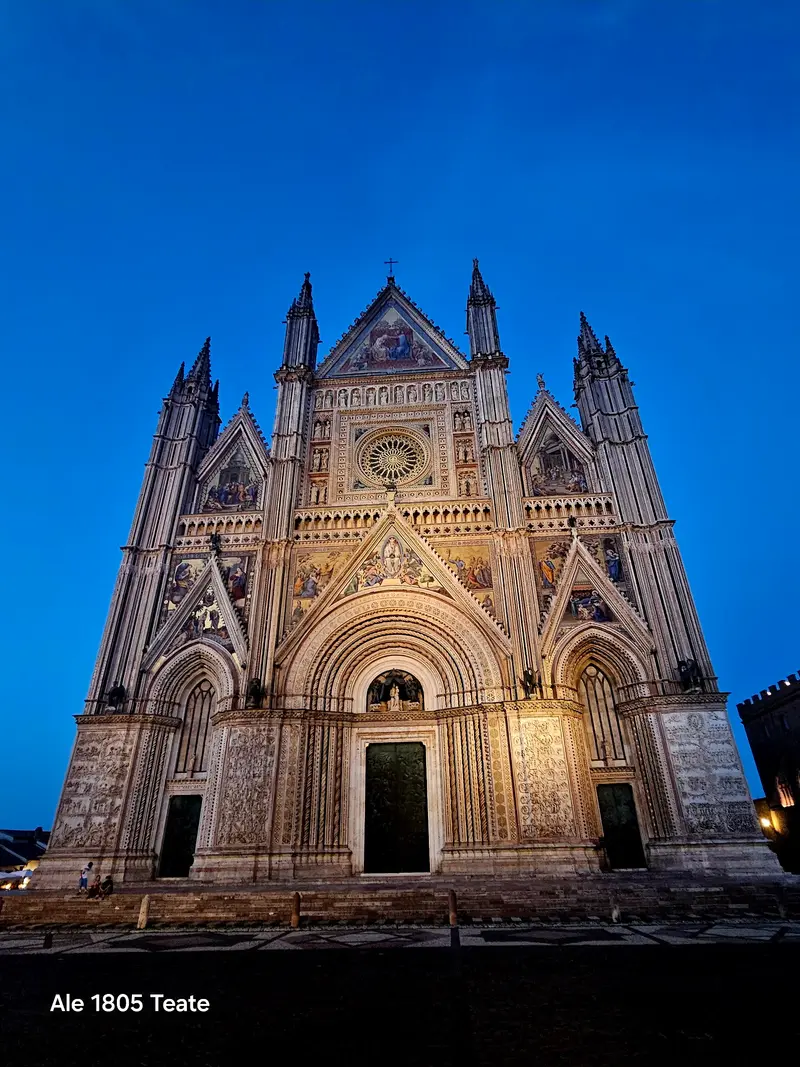
    Pope Nicholas IV laid the cornerstone on November 13, 1290. The reason for its construction was the Corporale of Bolsena, a cloth from which blood is said to have dripped from the Host during a mass in 1263; it is kept in the Cappella del Corporale. Lorenzo Maitani began the three-gabled facade around 1310, Orcagna created the rose window, and reliefs on the pillars and mosaics were added. In the Cappella di San Brizio, Luca Signorelli painted a fresco cycle depicting the Apocalypse and the Last Judgment starting in 1499. Admission is charged for the cathedral and chapel.
    Open in Google Maps
    Pozzo di San Patrizio
    Historic Landmark

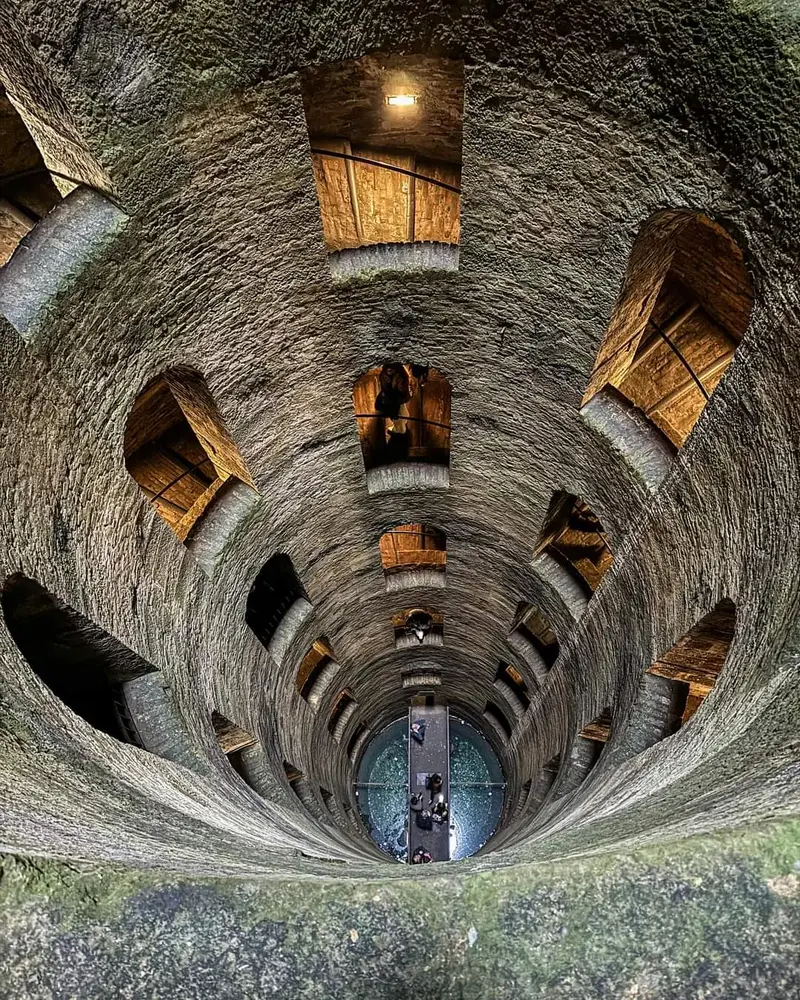
    2Pozzo di San Patrizio

    Pope Clement VII commissioned Antonio da Sangallo the Younger to build the well starting in 1527, after the Sack of Rome, ensuring the city had water during a siege. It was completed in 1537. The shaft is 54 meters deep. Two separate spiral ramps, with a total of 248 steps, lead down and up in one-way directions, so that mules could transport water without encountering each other. The well is located near the Albornoz Fortress.
    Open in Google Maps
    Orvieto Underground
    Historic Landmark

    3Orvieto Underground

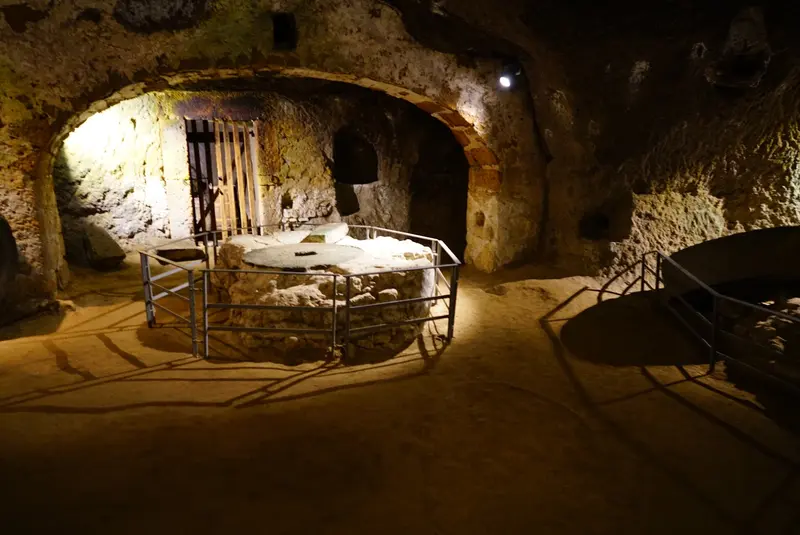
    Beneath the city lie approximately 1,200 caves, wells, and passages carved into the tuff, serving as cisterns, cellars, quarries, and dovecotes. On guided tours, you'll see a part of them, including rooms with niches for pigeons and the Pozzolana quarries.
    Open in Google Maps
    Torre del Moro
    Historic Landmark

    4Torre del Moro

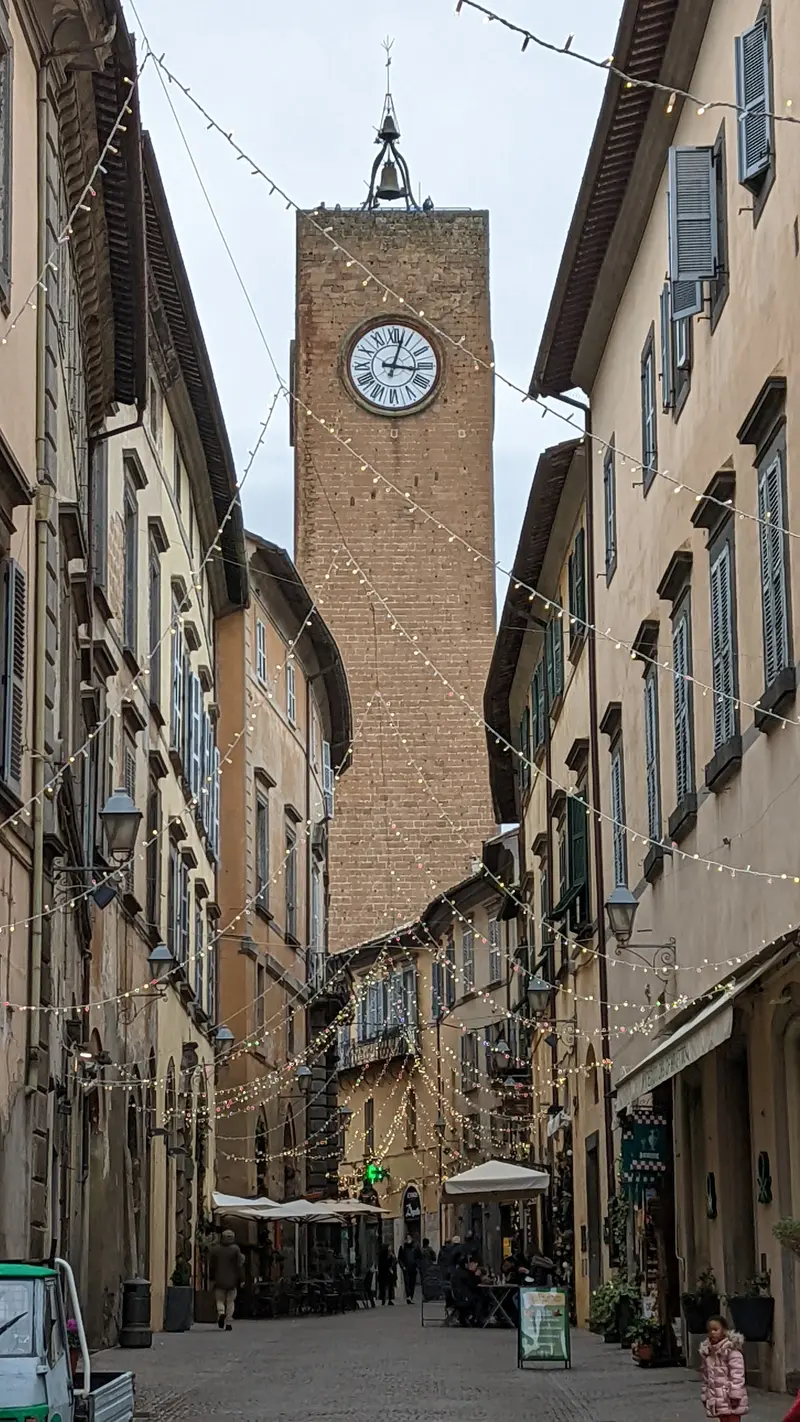
    The 47-meter-high tower in the old town dates from the late 13th century and was given its current name in the 16th century. The clock with dials on all sides was installed in 1875.
    Open in Google Maps

    City walks in Orvieto

    Curated walking tours through the city's highlights, handpicked by experienced travel journalists.

    Orvieto Compact: Gothic Splendor & Ancient Secrets

    Discover Orvieto's timeless beauty on this two-hour tour. From breathtaking panoramic views to the cathedral masterpiece and fascinating underground wonders, immerse yourself in the rich history of this Etruscan hill town. An unforgettable experience full of art, culture and charming lanes.

    ~2 Std.
    Open in Google Maps
    Stops (6)

    Dining & Drinks

    1

    Ristorante Il Giardino da Giovanni

    Restaurant near Piazza del Popolo with a garden for outdoor summer seating. The cuisine is Umbrian with pasta, grilled meats, and evening pizza.
    Show on Google Maps
    2

    Enoteca La Loggia

    Enoteca on Corso Cavour with wines from Orvieto and Umbria, plus bruschetta, charcuterie/cheese platters, and simple warm dishes. Ideal for a wine tasting with light bites.
    Show on Google Maps
    3

    Trattoria del Moro Aronne

    Family-run trattoria on Via San Leonardo near the Torre del Moro. Serving Umbrian classics like Umbrichelli, a hand-rolled pasta, wild boar, and truffle dishes. Reservations are recommended in the evenings.
    Show on Google Maps

    Food and Drink

    Orvieto's cuisine is Umbrian with influences from nearby Lazio.

    Orvieto Classico

    A white wine named after the city and one of Umbria's first DOC wines. Some wine cellars in the old town are dug into the tuff.

    Umbrichelli

    Pasta made solely from flour and water, originating in the Orvieto area, served all'arrabbiata or with black truffle.

    Porchetta

    Whole pig, stuffed with offal, fennel, and herbs, roasted, often served in a bun.

    Truffle

    It's considered a typical regional product and often served with pasta.

    Culture and History

    Etruscan CityOn the rock lay the Etruscan city of Velzna, one of the twelve cities of the Etruscan League. In 264 BC, the Romans destroyed it, settling the survivors near Lake Bolsena. On the northern slope of the rock lies the Necropolis of Crocifisso del Tufo, with cube-shaped tombs from the 8th to 3rd century BC. The Museo Claudio Faina in the Piazza del Duomo showcases Etruscan finds.Papal CityDuring the Middle Ages, several popes resided with their court in Orvieto, Martin IV, for instance, from 1281 to 1284. Clement VII fled here in 1527 during the Sack of Rome and subsequently had the Pozzo di San Patrizio dug.Corpus ChristiOn August 11, 1264, Pope Urban IV, from Orvieto, introduced the Feast of Corpus Christi for the entire church. On Corpus Christi, a historical parade with some 400 costumed participants accompanies the procession.

    Traveling in Orvieto

    Funicular and BusThe funicular connects the train station with the Old Town. From Piazza Cahen at the top station, city buses run to Cathedral Square.TrainOrvieto has regional connections to Rome and Florence, as well as ÖBB night trains to Munich and Vienna. Check current schedules in advance.CarCheck the access rules for the Old Town before your arrival. An alternative is to park at the station below and take the funicular.

    Accommodations in Orvieto

    Find perfect stay in Orvieto

    Booking.com* (Affiliate link)
    Search Hotels
    Agoda* (Affiliate link)
    Search Hotels
    Airbnb
    Vacation Rentals

    * Affiliate link: if you book through it, we earn a small commission. The price stays the same for you.

    Campgrounds in Orvieto

    Find perfect campground in Orvieto

    Search via Google Maps
    Campgrounds nearby (15km)
    Camping.info
    Find Campgrounds
    Park4Night
    RV Parks & Camping

    Plan your trip to Orvieto

    Save places, build a route and plan your city trip, all in one place.

    1. 1
      Sunrise over alpine peaks and a sea of clouds
      1234

      Round trip

      12 days · 4 stops

      Saved

      Pick a route

      Pick a ready-made one or save places and plan your own.

      Open bookmarks
    2. 2

      Trip to Orvieto

      Live
      • 1Orvieto's Duomo3 days
      • 2Pozzo di San Patrizio4 days
      • 3Orvieto Underground5 days
      Budget

      Plan your trip

      The planner sorts stops, days and budget. Plan together in real time.

      Start trip planning
    3. 3
      9:41 No signal
      Orvieto
      Available offline

      Use it on the road

      Download the guide to your phone and use it on site, even offline.

    Nearby

    Viterbo

    Viterbo

    Viterbo was the seat of the Popes for around two decades in the 13th century, and its old town is one of the best-preserved medieval city centers in Central Italy. Stone houses, medieval fountains, and the Papal Palace define its appearance; thermal springs, used by Etruscans and Romans, lie to the west of the city.
    Perugia

    Perugia

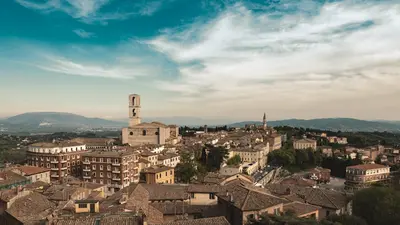
    Perugia is the capital of Umbria and stretches across several hills. The city dates back to the Etruscan Phersna; a city gate and fountain from that era are preserved. At its center are the Piazza IV Novembre with the Fontana Maggiore, the Cathedral, and the Palazzo dei Priori with the Galleria Nazionale dell'Umbria. Perugia is home to the University of Perugia.
    Umbria

    Umbria

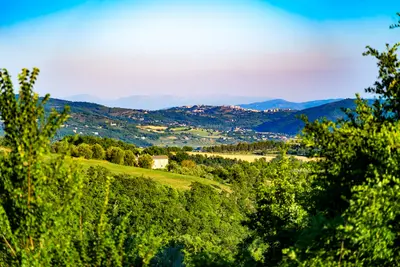
    Umbria in central Italy is the Apennine Peninsula's only landlocked region. Around 850,000 people live here; Perugia is its capital. The landscape shifts between hills, the Tiber Valley, Lake Trasimeno, and the mountains bordering Marche, where Monte Vettore, at 2,476 meters, is the highest peak. Numerous towns sit on hills, retaining their medieval character, including Assisi, Orvieto, Gubbio, Todi, and Spoleto.
    Montepulciano

    Montepulciano

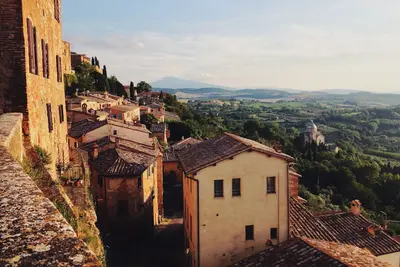
    Montepulciano sits in the south of Siena province on a roughly 605-meter limestone ridge. Its medieval and Renaissance old town culminates in Piazza Grande, home to the Town Hall and Cathedral. The city is famed for its Vino Nobile di Montepulciano red wine, with many cellars nestled directly beneath the old town's palaces.
    Spoleto

    Spoleto

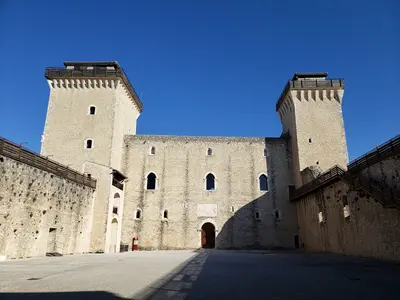
    Spoleto is located in Umbria on a hillside below the Rocca Albornoziana. The city was a Roman colony and, under the Lombards, the capital of a duchy. Among its most famous buildings are the Cathedral with frescoes by Filippo Lippi, the Ponte delle Torri, and the Roman Theatre. Every summer, it hosts the Festival dei Due Mondi.

    Sources & method

    • Photos: Unsplash, Google Maps. Each photo carries its credit.
    • Place data such as addresses and ratings comes from Google Maps.
    • The content is based on web research from public, traceable sources. How the content is made · The role of AI