Fernweh: Home
    ExploreTravel GuidesPlan a tripMy tripLast visited
    de|en
    All Places & RegionsAll highlightsAbout FernwehFAQPrivacy PolicyImprint
    ExploreTravel GuidesPlan a tripMy tripLast visited
    • Neighborhoods & highlights
    • Walking tours
    • Eat & drink
    • Food culture
    • Culture
    • Nightlife
    • Getting around
    • Accommodation
    • Plan trip
    • Nearby
    Perugia

    Italy

    Perugia

    CityCulture

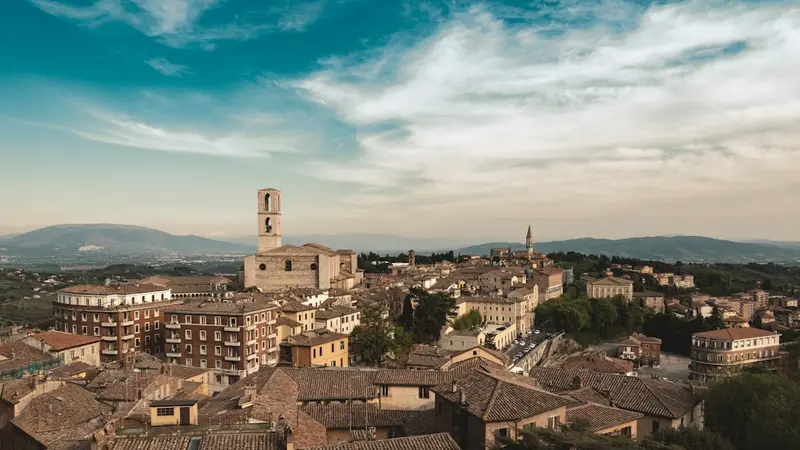
    Perugia is the capital of Umbria and stretches across several hills. The city dates back to the Etruscan Phersna; a city gate and fountain from that era are preserved.

    by Felix Gillen

    1. Home
    2. Destinations
    3. Italy
    4. Umbria
    5. Perugia
    Perugia is the capital of Umbria and stretches across several hills. The city dates back to the Etruscan Phersna; a city gate and fountain from that era are preserved. At its center are the Piazza IV Novembre with the Fontana Maggiore, the Cathedral, and the Palazzo dei Priori with the Galleria Nazionale dell'Umbria. Perugia is home to the University of Perugia.

    Sights in Perugia

    Discover the most important sights and attractions

    Tempio di Sant'Angelo
    Church

    1Tempio di Sant'Angelo

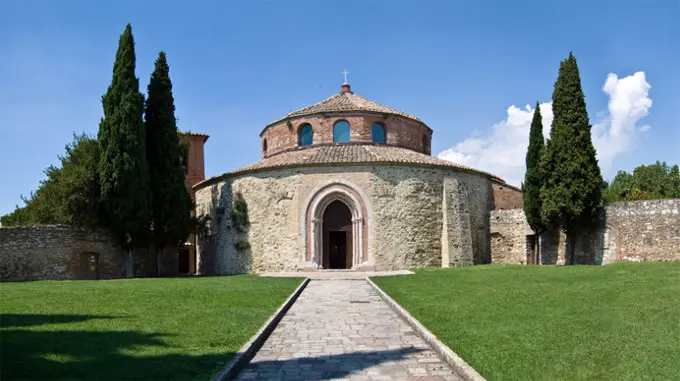
    The early Christian round church of San Michele Arcangelo stands at the end of Corso Garibaldi near the Cassero di Porta Sant'Angelo. It is considered the oldest church building in Perugia and one of the oldest in Italy. Next to the city gate, a circular path about one kilometer long begins along the medieval wall.
    Open in Google Maps
    Chiesa del Gesù
    Church

    2Chiesa del Gesù

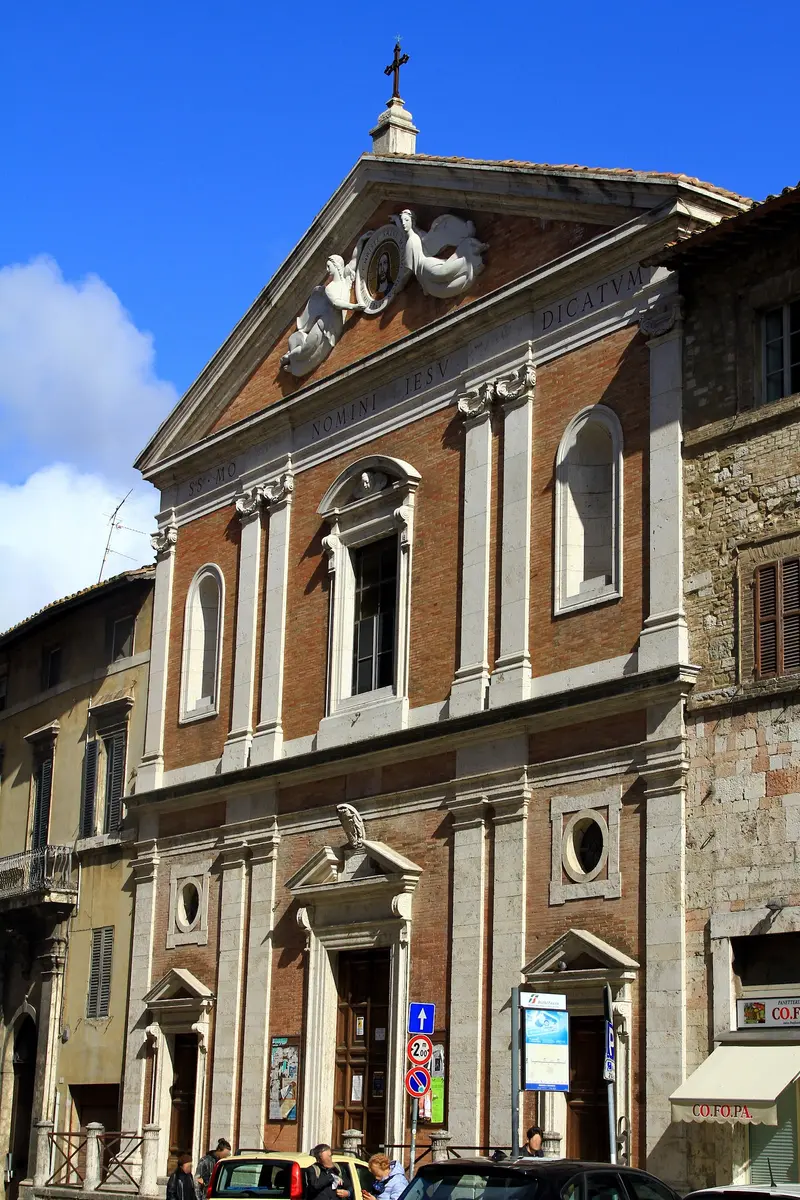
    The foundation stone of the Jesuit Church was laid in 1562, though the facade was only completed in 1934. The gilded wooden ceiling from 1576 was restored with original fragments after a fire in 1989. Beneath the apse lie three superimposed oratories, built between 1586 and 1603.
    Open in Google Maps
    Rocca Paolina
    Historic Landmark

    3Rocca Paolina

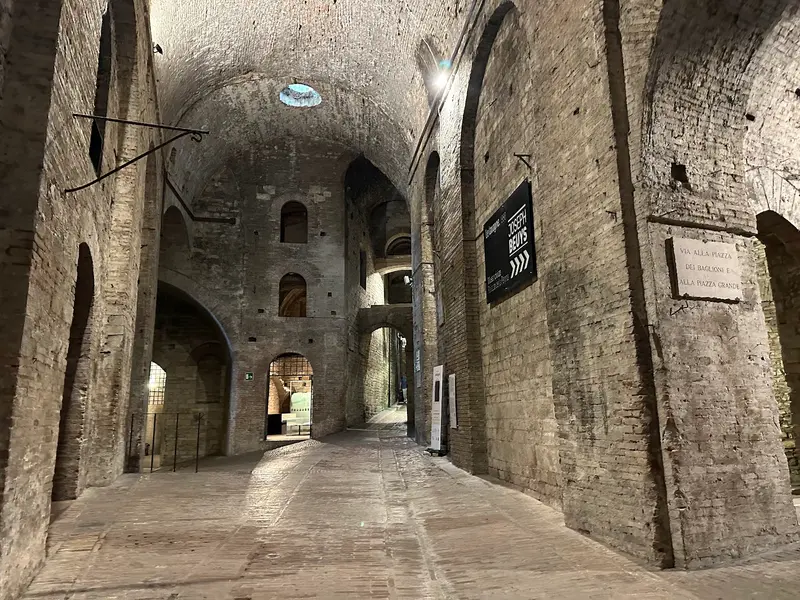
    After the Salt War, Pope Paul III had the fortress built from 1540 by Antonio da Sangallo the Younger, incorporating medieval structures that today lie like a buried city beneath vaults. During the uprisings of 1848 and 1861, it was stormed and partially demolished. Since 1983, escalators lead from Piazza Partigiani through the underground sections up to Piazza Italia. The Etruscan gate Porta Marzia is preserved in the fortress wall.
    Open in Google Maps
    Fontana Maggiore
    Historic Landmark

    4Fontana Maggiore

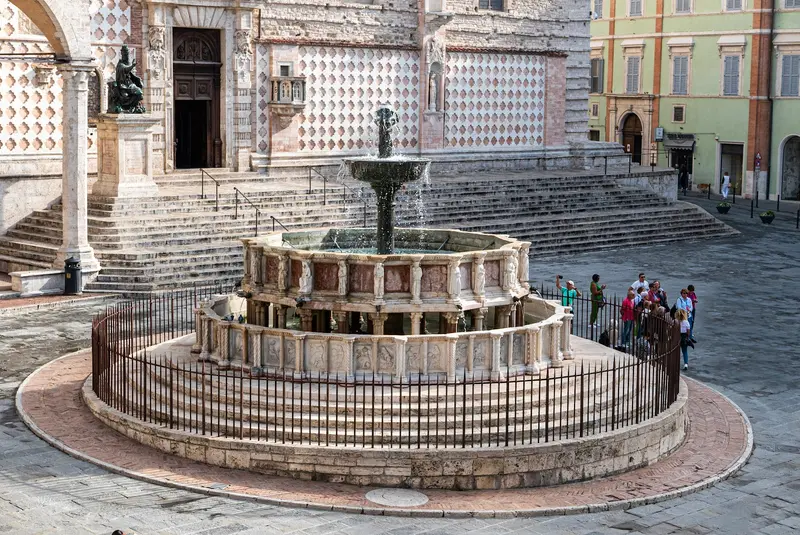
    The fountain in Piazza IV Novembre originated in the 13th century, with construction on it beginning in 1278. Fra Bevignate directed the work, and the 50 reliefs on the lower basin are by Nicola and Giovanni Pisano. They depict months with zodiac signs, the liberal arts, scenes from the Old Testament, the founding of Rome, and two Aesop's fables. On the upper basin stand 24 figures made of Carrara marble, which are connected with the city's history.
    Open in Google Maps
    National Gallery of Umbria
    Museum

    5National Gallery of Umbria

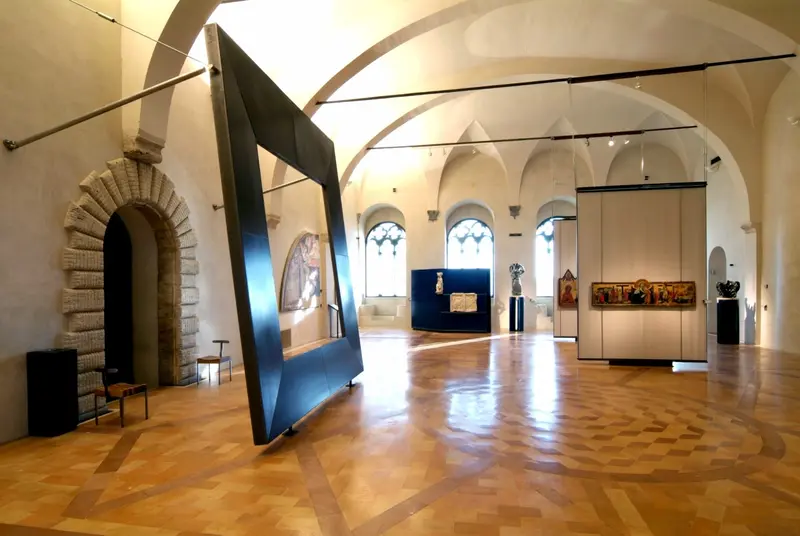
    The museum in the Palazzo dei Priori showcases art from the Middle Ages to the 18th century, including works by Piero della Francesca, Benozzo Gozzoli, Fra Angelico, Pinturicchio, and Perugino. The palace was built between the late 13th and mid-15th centuries. The same building houses the Sala dei Notari and the Collegio del Cambio, with Perugino's renowned fresco cycle.
    Open in Google Maps
    Dom San Lorenzo
    Church

    6Dom San Lorenzo

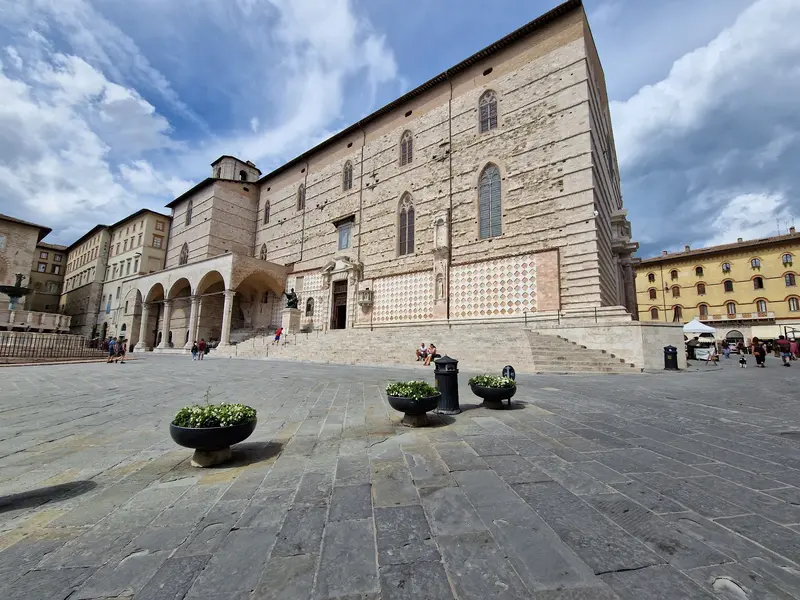
    The Cathedral on Piazza IV Novembre stands above the Etruscan-Roman forum. It was never fully completed: The facade is plain, and on the side facing the square, the white and red marble cladding stops halfway up, with a statue of Pope Julius III standing in front of it. Braccio Fortebracci had the Loggia di Braccio built in 1423. A ring, revered as Mary's wedding ring, is kept in the cathedral. Through the Chapter Museum in the cloister, you reach the underground excavations.
    Open in Google Maps

    City walks in Perugia

    Curated walking tours through the city's highlights, handpicked by experienced travel journalists.

    Perugia: Historic City Walk Through Lanes & Eras

    Discover Perugia on a two-hour walk through its fascinating history. From ancient Etruscan gates through medieval squares to a unique underground city, immerse yourself in the heart of Umbria and enjoy spectacular views.

    ~1 Std. 50 Min.
    Open in Google Maps
    Stops (6)

    Dining & Drinks

    1

    Pizzeria 'O SOLE MIO

    Simple pizzeria on Corso Cavour in the Borno XX Giugno district, south of the center and popular with students. Besides pizza, it offers pasta and appetizers at affordable prices.
    Show on Google Maps
    2

    La Taverna

    Restaurant in an alley near Corso Vannucci offering Umbrian cuisine, such as truffle pasta, grilled meats, and seasonal dishes. The rooms are rustic with vaulted ceilings; reservations are recommended in the evening.
    Show on Google Maps
    3

    Osteria a Priori

    Osteria and delicatessen on Via dei Priori, working with small producers from Umbria. The menu features seasonal dishes, cheeses, cured meats, and wines from the region. Open for lunch and dinner, seating is limited.
    Show on Google Maps

    Foods and Drinks

    In Perugia, you eat Umbrian, with many affordable places for students.

    Torta al testo

    Flatbread, baked on a hot stone slab and filled with ham, sausage, or herbs. The name is especially common around Perugia and Lake Trasimeno.

    Porchetta

    Whole pig, stuffed and roasted with offal, fennel and herbs, often served in a bun.

    Baci Perugina

    Hazelnut chocolate praline, created in 1922 by Luisa Spagnoli for Perugina. Each praline is wrapped with a love note.

    Torciglione

    Traditional pastry from Perugia.

    Culture and History

    Etruscan CityFrom the 7th and 6th centuries BC, Perugia developed into one of the most important Etruscan cities. In the Perusine War of 41 BC, a fire destroyed large parts of the city, after which Augustus had buildings such as the Arco Etrusco restored with the inscription “Augusta Perusia”.Free Commune and Papal StatesFrom the 11th century, Perugia was a free commune. A salt tax imposed by Pope Paul III triggered the Salt War; after its defeat in 1540, the city came under papal rule again, and Paul III had the Rocca Paolina built. In 1860, Perugia became part of the Kingdom of Italy. A fresco cycle by Perugino is preserved in the Collegio del Cambio.Festivals and ChocolateEvery year in July, the Umbria Jazz Festival, founded in 1973, takes place for about ten days, and in October, the Eurochocolate fair. The Perugina chocolate factory has its roots in Perugia, and its Baci were invented in 1922 by Luisa Spagnoli.

    Nightlife

    1

    Opera Lounge & Bar

    Lounge bar on Via del Circo south of Rocca Paolina with cocktails, aperitivo, and DJ music on some evenings.
    Show on Google Maps
    2

    Kosmo Beer Shop

    Craft beer bar on Piazza Danti, behind the Cathedral, offering rotating Italian and international tap beers. A popular student evening spot.
    Show on Google Maps
    3

    Quei Bravi Ragazzi

    Pub on Corso Cavour in the Borgo XX Giugno district with beer, cocktails, and street tables. The crowd is young, prices are moderate.
    Show on Google Maps
    4

    Dempsey's Perugia

    Bar on Piazza Danti next to the Cathedral, with cocktails and beer, open until late. The Piazza and Cathedral steps are a popular evening meeting spot for the city.
    Show on Google Maps

    On the go in Perugia

    On FootThe Old Town is hilly, but easy to explore on foot. Stairs and alleyways lead steeply to the outlying districts.Minimetrò and EscalatorsThe Minimetrò cabin lift, designed by Jean Nouvel, runs from the Pian di Massiano car park via Fontivegge train station to Pincetto station in the Old Town. Escalators lead from Piazza Partigiani through Rocca Paolina to Piazza Italia.Train and AirportFrom Fontivegge train station, trains depart for destinations including Florence and Rome. Perugia Airport is located about 12 kilometers from the city center in Sant'Egidio and has only a few connections.CarThe Old Town has a ZTL with varying hours. It's practical to park at Pian di Massiano car park and take the Minimetrò up.

    Accommodations in Perugia

    Find perfect stay in Perugia

    Booking.com* (Affiliate link)
    Search Hotels
    Agoda* (Affiliate link)
    Search Hotels
    Airbnb
    Vacation Rentals

    * Affiliate link: if you book through it, we earn a small commission. The price stays the same for you.

    Campgrounds in Perugia

    Find perfect campground in Perugia

    Search via Google Maps
    Campgrounds nearby (15km)
    Camping.info
    Find Campgrounds
    Park4Night
    RV Parks & Camping

    Plan your trip to Perugia

    Save places, build a route and plan your city trip, all in one place.

    1. 1
      Sunrise over alpine peaks and a sea of clouds
      1234

      Round trip

      12 days · 4 stops

      Saved

      Pick a route

      Pick a ready-made one or save places and plan your own.

      Open bookmarks
    2. 2

      Trip to Perugia

      Live
      • 1Tempio di Sant'Angelo3 days
      • 2Chiesa del Gesù4 days
      • 3Rocca Paolina5 days
      Budget

      Plan your trip

      The planner sorts stops, days and budget. Plan together in real time.

      Start trip planning
    3. 3
      9:41 No signal
      Perugia
      Available offline

      Use it on the road

      Download the guide to your phone and use it on site, even offline.

    Nearby

    Umbria

    Umbria

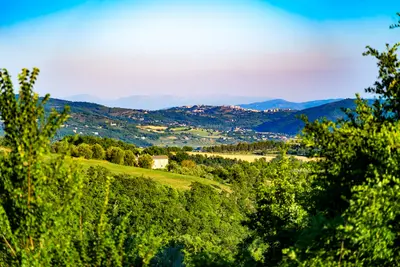
    Umbria in central Italy is the Apennine Peninsula's only landlocked region. Around 850,000 people live here; Perugia is its capital. The landscape shifts between hills, the Tiber Valley, Lake Trasimeno, and the mountains bordering Marche, where Monte Vettore, at 2,476 meters, is the highest peak. Numerous towns sit on hills, retaining their medieval character, including Assisi, Orvieto, Gubbio, Todi, and Spoleto.
    Assisi

    Assisi

    Assisi is on Monte Subasio's west slope, above the Umbrian Plain. It's the birthplace of St. Francis and St. Clare, and a major Italian pilgrimage site. The Basilica of San Francesco and other Franciscan sites have been UNESCO World Heritage since 2000. The Old Town runs along the slope between the western Basilica and Santa Chiara in the east.
    Orvieto

    Orvieto

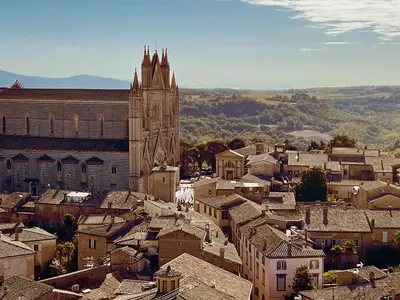
    Orvieto is located in southwestern Umbria on a volcanic tuff plateau overlooking the Paglia Valley. The city dates back to an Etruscan settlement. It is known for its Gothic cathedral with a mosaic facade and frescoes by Luca Signorelli, the Pozzo di San Patrizio, and the many caves carved into the tuff beneath the city. The train station is at the foot of the rock, approximately 125 rail kilometers from Rome.
    Montepulciano

    Montepulciano

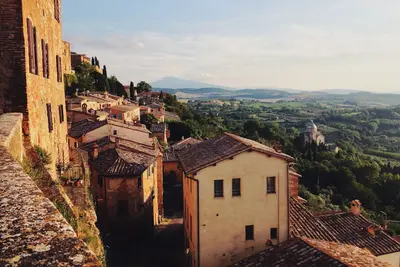
    Montepulciano sits in the south of Siena province on a roughly 605-meter limestone ridge. Its medieval and Renaissance old town culminates in Piazza Grande, home to the Town Hall and Cathedral. The city is famed for its Vino Nobile di Montepulciano red wine, with many cellars nestled directly beneath the old town's palaces.
    Spoleto

    Spoleto

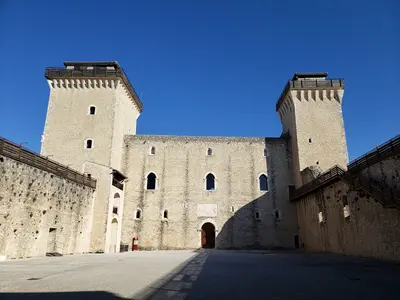
    Spoleto is located in Umbria on a hillside below the Rocca Albornoziana. The city was a Roman colony and, under the Lombards, the capital of a duchy. Among its most famous buildings are the Cathedral with frescoes by Filippo Lippi, the Ponte delle Torri, and the Roman Theatre. Every summer, it hosts the Festival dei Due Mondi.

    Sources & method

    • Photos: Unsplash, Google Maps. Each photo carries its credit.
    • Place data such as addresses and ratings comes from Google Maps.
    • The content is based on web research from public, traceable sources. How the content is made · The role of AI