Fernweh: Home
    ExploreTravel GuidesPlan a tripMy tripLast visited
    de|en
    All Places & RegionsAll highlightsAbout FernwehFAQPrivacy PolicyImprint
    ExploreTravel GuidesPlan a tripMy tripLast visited
    • Neighborhoods & highlights
    • Walking tours
    • Eat & drink
    • Food culture
    • Culture
    • Getting around
    • Accommodation
    • Plan trip
    • Nearby
    Spoleto

    Italy

    Spoleto

    CityCulture

    Spoleto is located in Umbria on a hillside below the Rocca Albornoziana. The city was a Roman colony and, under the Lombards, the capital of a duchy.

    by Felix Gillen

    1. Home
    2. Destinations
    3. Italy
    4. Umbria
    5. Spoleto
    Spoleto is located in Umbria on a hillside below the Rocca Albornoziana. The city was a Roman colony and, under the Lombards, the capital of a duchy. Among its most famous buildings are the Cathedral with frescoes by Filippo Lippi, the Ponte delle Torri, and the Roman Theatre. Every summer, it hosts the Festival dei Due Mondi.

    Sights in Spoleto

    Discover the most important sights and attractions

    Duomo Santa Maria Assunta
    Church

    1Duomo Santa Maria Assunta

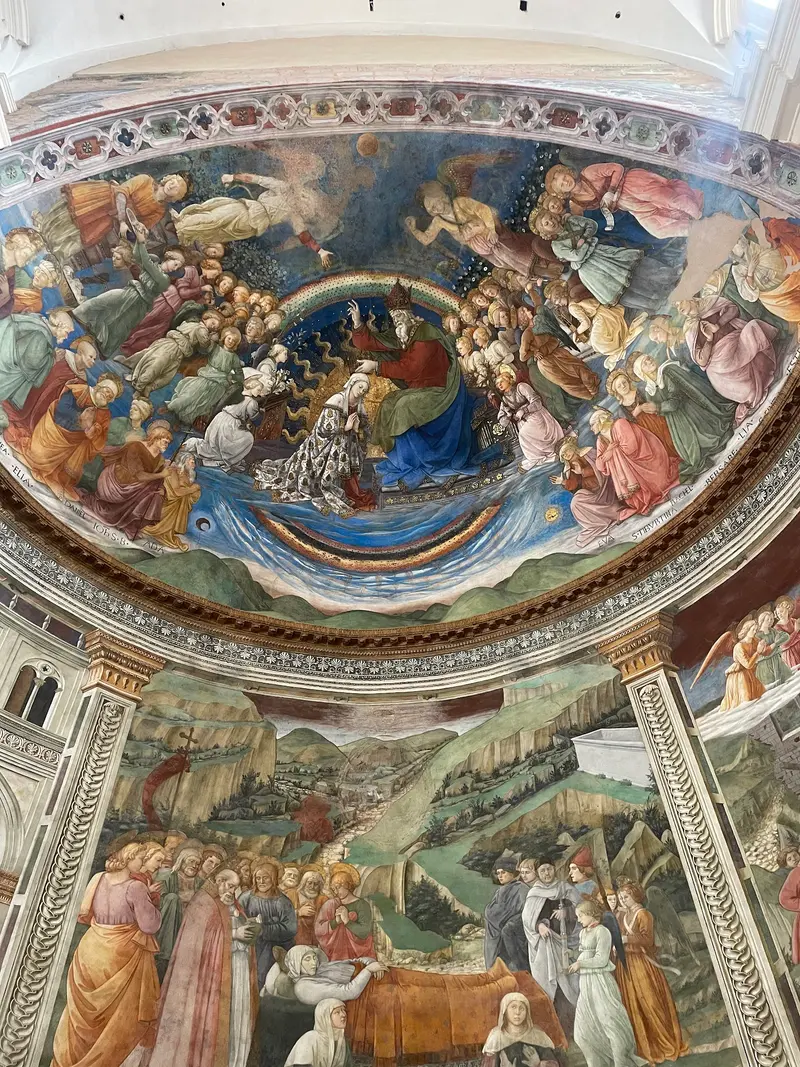
    The Romanesque Cathedral of Santa Maria Assunta features a facade with eight rosettes and a 1207 mosaic depicting Christ between Mary and John. In the apse, Filippo Lippi painted scenes from the Life of the Virgin from 1467 to 1469; his tomb monument, commissioned by Lorenzo de' Medici, stands within the cathedral. In the Cappella delle Reliquie, an autograph letter from St. Francis to Brother Leo from 1222 is preserved. In the entrance area, frescoes by Pinturicchio from 1497 are preserved.
    Open in Google Maps
    San Ponziano, Spoleto
    Church

    2San Ponziano, Spoleto

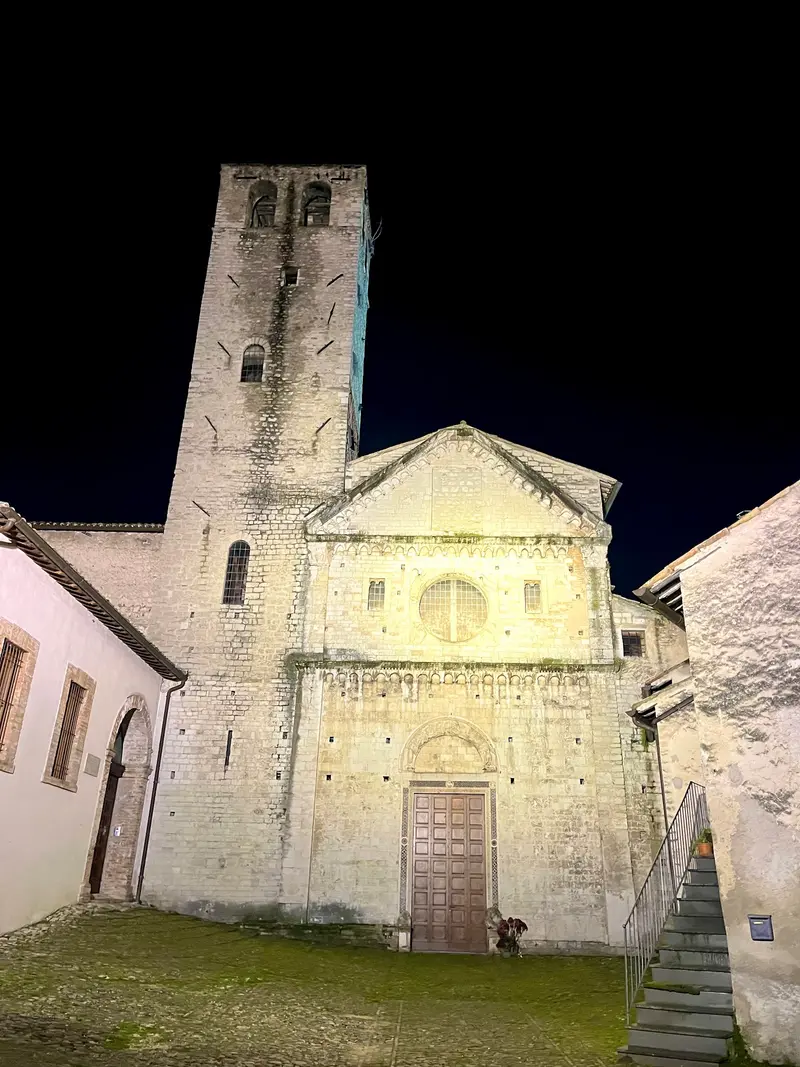
    The Church of the city patron Pontianus lies outside the city walls on the Via della Basilica di San Salvatore. Valadier's 1788 renovation largely preserved the Romanesque façade, featuring a round window encircled by the symbols of the four Evangelists. The crypt houses 14th and 15th-century frescoes and a sarcophagus from the Lombard era. Annually on January 14, the saint's relics are carried in a procession to the cathedral.
    Open in Google Maps
    San Gregorio Maggiore
    Church

    3San Gregorio Maggiore

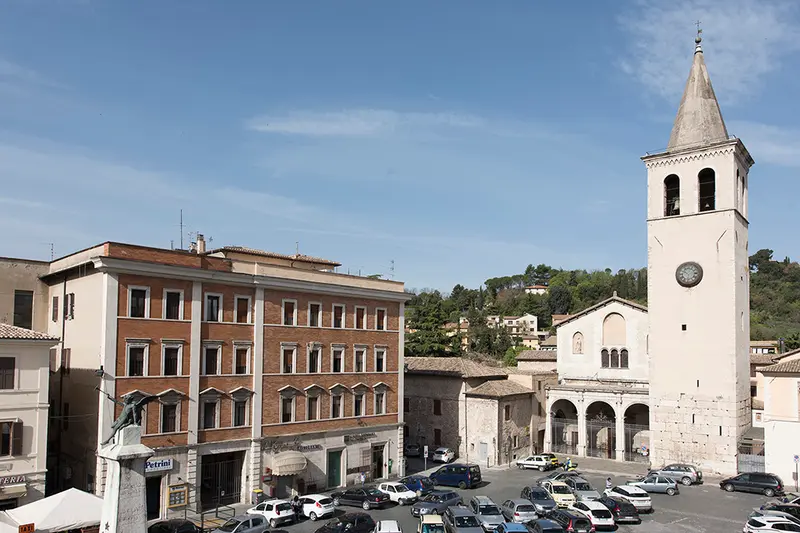
    The Romanesque church from the 11th century is located on Piazza Garibaldi in the old town.
    Open in Google Maps
    Rocca Albornoziana
    Museum

    4Rocca Albornoziana

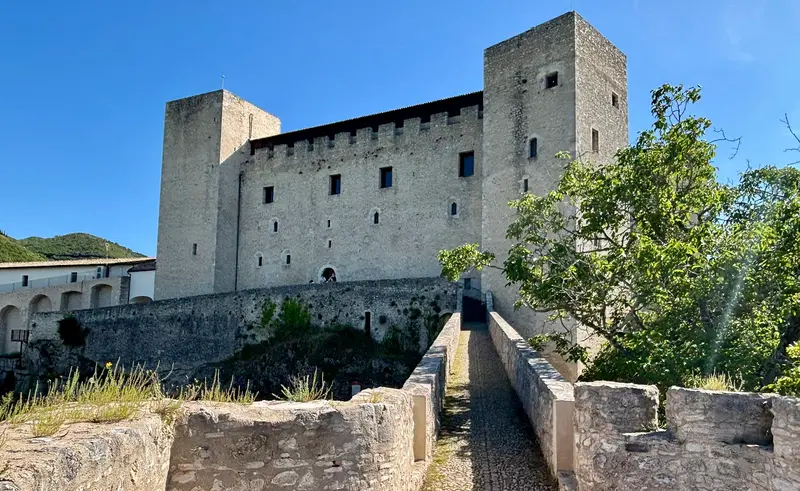
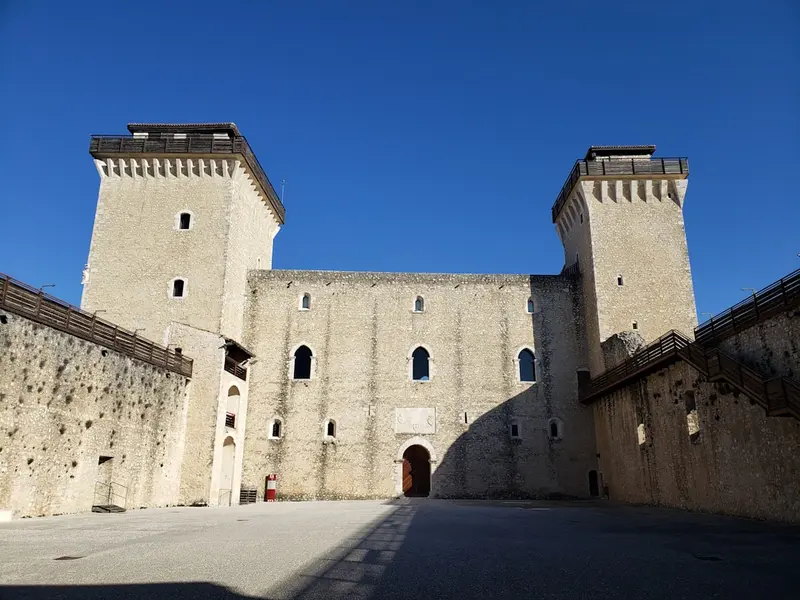
    The fortress on the hill above the city was built in the 14th century under Cardinal Egidio Albornoz according to plans by Matteo Gattapone. From 1817 to 1982, it served as a prison. Since 2007, it has housed the National Museum of the Duchy of Spoleto. The Ponte delle Torri begins at the Rocca.
    Open in Google Maps
    Ponte delle Torri
    Historic Landmark

    5Ponte delle Torri

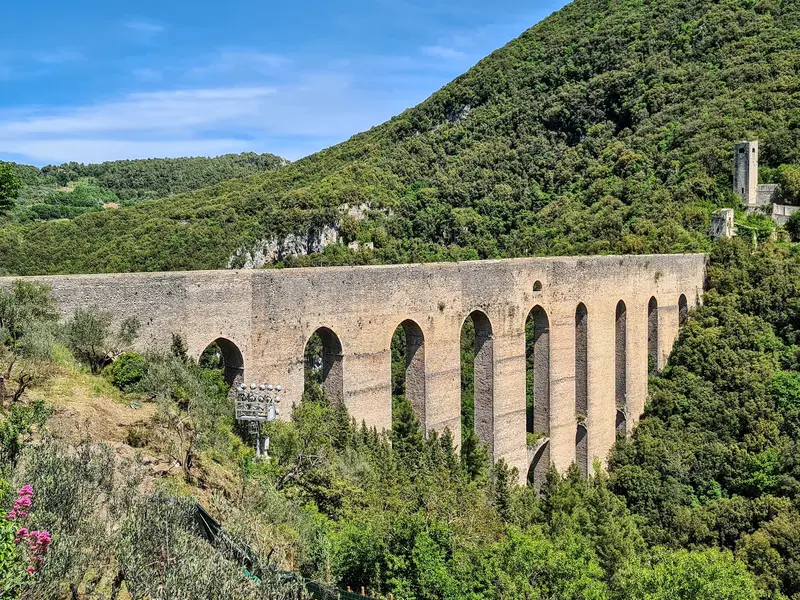
    The approximately 230-meter long and about 80-meter high bridge connects the city hill with Monteluco, with the Rocca Albornoziana and the Fortilizio dei Mulini standing at its ends. It also served as an aqueduct, and its current form likely dates from the late Middle Ages. Goethe mentions it in his Italienische Reise. After the 2016 earthquake, it was closed for eight years; since December 2024, it has been accessible again, and since April 2025, it has also been open at night. Before your visit, please check for any new closures.
    Open in Google Maps
    Roman Theater and Archaeological Museum
    Museum

    6Roman Theater and Archaeological Museum

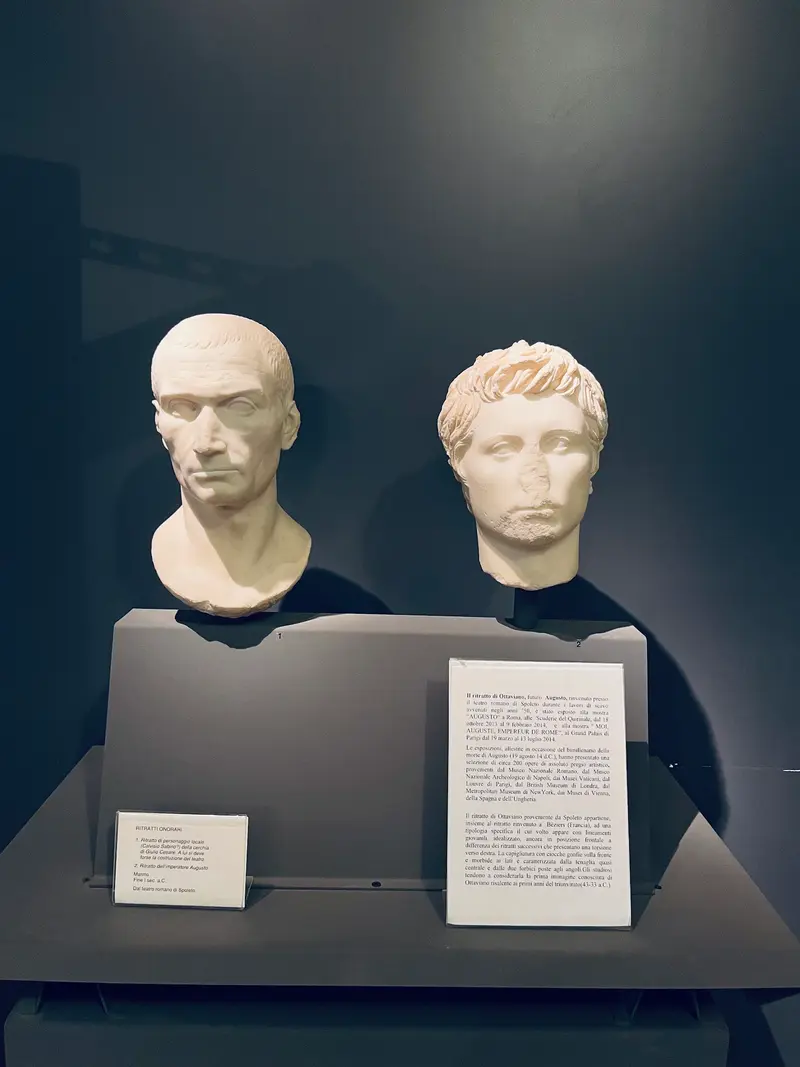
    The Roman Theater dates from around or shortly after Augustus. It was only identified in 1891, with major excavations taking place between 1954 and 1960. Today, it hosts performances, especially ballet during the Festival dei Due Mondi. The National Archaeological Museum, in the former Sant'Agata monastery right by the theater, displays local finds.
    Open in Google Maps

    City walks in Spoleto

    Curated walking tours through the city's highlights, handpicked by experienced travel journalists.

    Spoleto: A Journey Through Millennia

    Experience Spoleto on a charming 2-hour walk. From ancient ruins to the majestic cathedral and the imposing fortress, enjoy the rich history and breathtaking views of this Umbrian pearl as you stroll through its winding lanes.

    ~2 Std. 10 Min.
    Open in Google Maps
    Stops (6)

    Dining & Drinks

    1

    Il Tempio Del Gusto

    Restaurant at Arco di Druso, near Piazza del Mercato. Modern Umbrian dishes, with regional truffle, game, and vegetables. Upscale prices.
    Show on Google Maps
    2

    La Torretta

    Central trattoria on Via Filitteria with Umbrian home cooking, including Strangozzi with truffle or tomato sauce, and meat dishes. Prices are moderate.
    Show on Google Maps
    3

    Pizzeria dell'Orologio da BÌBÌ

    Pizzeria on Piazza del Mercato, the lively square in the heart of the Old Town. Wood-fired pizza and tables on the square.
    Show on Google Maps

    Food and Drink

    The cuisine around Spoleto is rustic and truffle-rich.

    Strangozzi

    Pasta without eggs, which is known by this name in the area of Foligno and Spoleto, traditionally served with black truffle.

    Truffle

    Black truffle from nearby Norcia is primarily served with pasta.

    Palomba alla ghiotta

    Wild pigeon, a traditional dish of Spoleto cuisine.

    Attorta

    Spirally rolled pastry, the Spoleto variant of Rocciata, which is only baked at Christmas.

    Culture and History

    Romans and LombardsSpoletium became a Roman colony in 241 BC. From this period date the Arch of Drusus from AD 23, the theatre, and a Roman house from the 1st century AD. Under the Lombards, Spoleto was the capital of a duchy. Since 2011, the city has been part of the serial UNESCO World Heritage site "The Lombards in Italy. Places of Power."Festival dei Due MondiThe composer Gian Carlo Menotti founded the Festival of Two Worlds in 1958, featuring opera, theatre, dance, and concerts. It usually begins on the last Friday in June and lasts around 17 days. Performances take place, among other locations, in Piazza del Duomo, the Roman theatre, and the courtyard of the Rocca.

    On the Road in Spoleto

    On Foot and by EscalatorThe old town is steep. Mechanical pathways, for instance, lead from Ponzianina up to Rocca and from Spoletosfera to the Roman Theatre.TrainThe station is on the Rome–Ancona line. For Assisi and Perugia, change in Foligno, where the route branches off via Perugia to Lake Trasimeno.CyclingThe Spoleto–Norcia railway line, disused since 1968, is a roughly 45-kilometer cycle and hiking path with 19 tunnels and 24 bridges and viaducts. Following the 2016 earthquakes, only certain sections are accessible; check the current status beforehand.

    Accommodations in Spoleto

    Find perfect stay in Spoleto

    Booking.com* (Affiliate link)
    Search Hotels
    Agoda* (Affiliate link)
    Search Hotels
    Airbnb
    Vacation Rentals

    * Affiliate link: if you book through it, we earn a small commission. The price stays the same for you.

    Campgrounds in Spoleto

    Find perfect campground in Spoleto

    Search via Google Maps
    Campgrounds nearby (15km)
    Camping.info
    Find Campgrounds
    Park4Night
    RV Parks & Camping

    Plan your trip to Spoleto

    Save places, build a route and plan your city trip, all in one place.

    1. 1
      Sunrise over alpine peaks and a sea of clouds
      1234

      Round trip

      12 days · 4 stops

      Saved

      Pick a route

      Pick a ready-made one or save places and plan your own.

      Open bookmarks
    2. 2

      Trip to Spoleto

      Live
      • 1Duomo Santa Maria Assunta3 days
      • 2San Ponziano, Spoleto4 days
      • 3San Gregorio Maggiore5 days
      Budget

      Plan your trip

      The planner sorts stops, days and budget. Plan together in real time.

      Start trip planning
    3. 3
      9:41 No signal
      Spoleto
      Available offline

      Use it on the road

      Download the guide to your phone and use it on site, even offline.

    Nearby

    Assisi

    Assisi

    Assisi is on Monte Subasio's west slope, above the Umbrian Plain. It's the birthplace of St. Francis and St. Clare, and a major Italian pilgrimage site. The Basilica of San Francesco and other Franciscan sites have been UNESCO World Heritage since 2000. The Old Town runs along the slope between the western Basilica and Santa Chiara in the east.
    Perugia

    Perugia

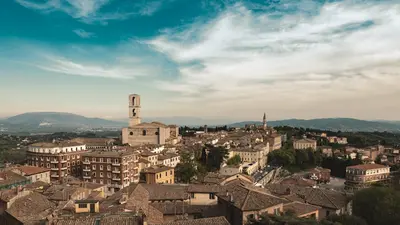
    Perugia is the capital of Umbria and stretches across several hills. The city dates back to the Etruscan Phersna; a city gate and fountain from that era are preserved. At its center are the Piazza IV Novembre with the Fontana Maggiore, the Cathedral, and the Palazzo dei Priori with the Galleria Nazionale dell'Umbria. Perugia is home to the University of Perugia.
    Umbria

    Umbria

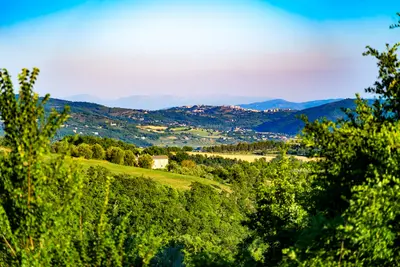
    Umbria in central Italy is the Apennine Peninsula's only landlocked region. Around 850,000 people live here; Perugia is its capital. The landscape shifts between hills, the Tiber Valley, Lake Trasimeno, and the mountains bordering Marche, where Monte Vettore, at 2,476 meters, is the highest peak. Numerous towns sit on hills, retaining their medieval character, including Assisi, Orvieto, Gubbio, Todi, and Spoleto.
    Orvieto

    Orvieto

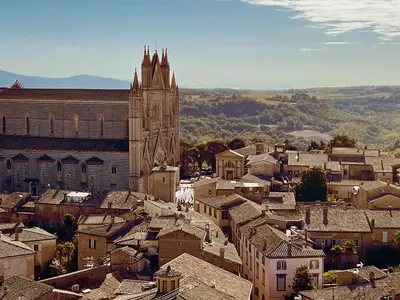
    Orvieto is located in southwestern Umbria on a volcanic tuff plateau overlooking the Paglia Valley. The city dates back to an Etruscan settlement. It is known for its Gothic cathedral with a mosaic facade and frescoes by Luca Signorelli, the Pozzo di San Patrizio, and the many caves carved into the tuff beneath the city. The train station is at the foot of the rock, approximately 125 rail kilometers from Rome.
    Viterbo

    Viterbo

    Viterbo was the seat of the Popes for around two decades in the 13th century, and its old town is one of the best-preserved medieval city centers in Central Italy. Stone houses, medieval fountains, and the Papal Palace define its appearance; thermal springs, used by Etruscans and Romans, lie to the west of the city.

    Sources & method

    • Photos: Unsplash, Google Maps. Each photo carries its credit.
    • Place data such as addresses and ratings comes from Google Maps.
    • The content is based on web research from public, traceable sources. How the content is made · The role of AI