Fernweh
    ExploreTravel GuidesMy Trips
    de|en
    About FernwehImprintFAQPrivacy Policy
    ExploreTravel GuidesMy Trips
    Assisi

    Assisi

    CityCulture
    1. Home
    2. Destinations
    3. Italy
    4. Umbria
    5. Assisi
    Assisi, a picturesque medieval town in Umbria, is inextricably linked to Saint Francis and emanates a deep spiritual tranquility. Its centerpiece is the impressive Basilica di San Francesco, a UNESCO World Heritage site, which captivates with frescoes by Giotto and Cimabue. You'll also discover the Rocca Maggiore, an imposing fortress with panoramic views, and the central Piazza del Comune with the Roman Temple of Minerva. The narrow, winding streets lead you to further Franciscan sites such as the Chiesa Nuova and the Basilica Santa Chiara, the tomb of Saint Clare. To experience the special atmosphere without larger crowds, a visit in the early morning hours or during the off-season is recommended. Wear comfortable shoes to easily explore the city's steep paths and cobblestone streets.
    • Neighborhoods & highlights
    • Walking tours
    • Eat & drink
    • Culture
    • Getting around
    • Accommodation
    • Plan trip
    • Nearby
    • Neighborhoods & highlights
    • Walking tours
    • Eat & drink
    • Culture
    • Getting around
    • Accommodation
    • Plan trip
    • Nearby

    Overview

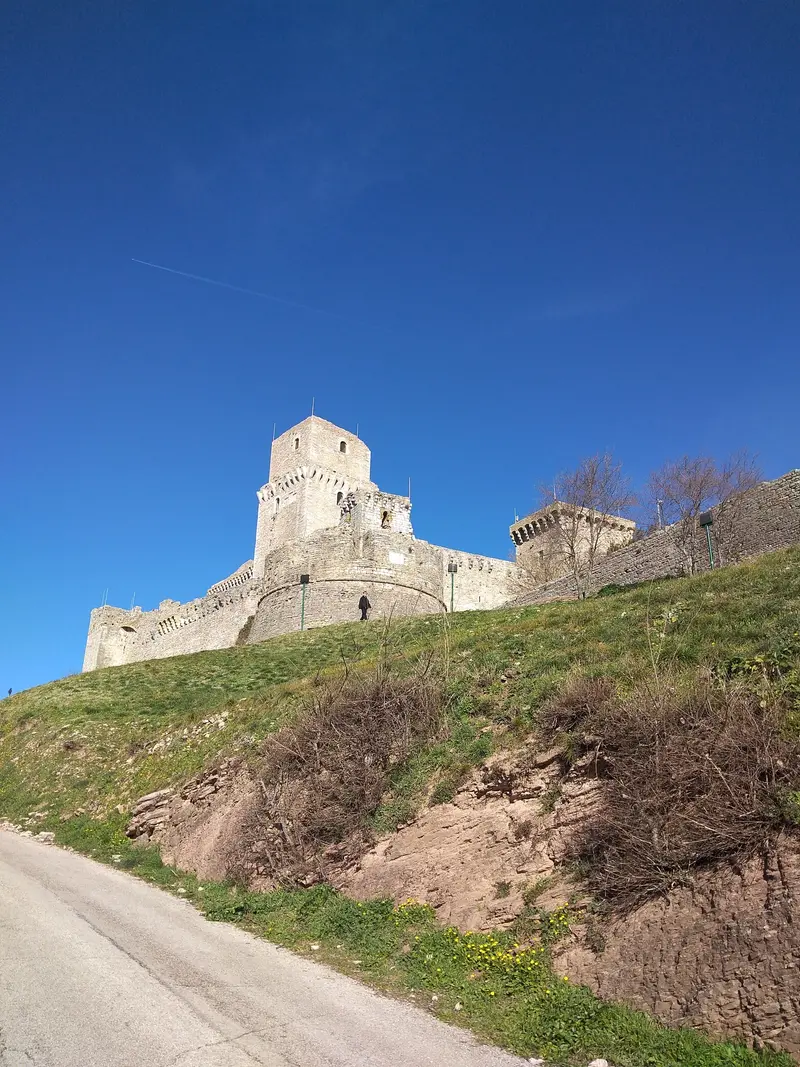
    Assisi, a medieval town in Umbria, is deeply connected to the spirituality of Saint Francis and exudes a unique tranquility. Its heart is the Basilica di San Francesco, a UNESCO World Heritage site, whose frescoes by Giotto and Cimabue impressively narrate the life story of Saint Francis. You'll also discover the imposing fortress Rocca Maggiore, offering sweeping views over the Valle Umbra, and the central Piazza del Comune with the Roman Temple of Minerva. Its winding streets lead you to further Franciscan sites like the Chiesa Nuova and the Basilica Santa Chiara, the tomb of Saint Clare. To experience its unique atmosphere without large crowds, a visit in the early morning hours or during the low season is recommended. Due to the steep paths and cobblestone streets, comfortable shoes are essential for exploring the city.

    Places in Assisi

    Discover the most important sights and attractions

    Sights in Assisi

    Basilika San Francesco

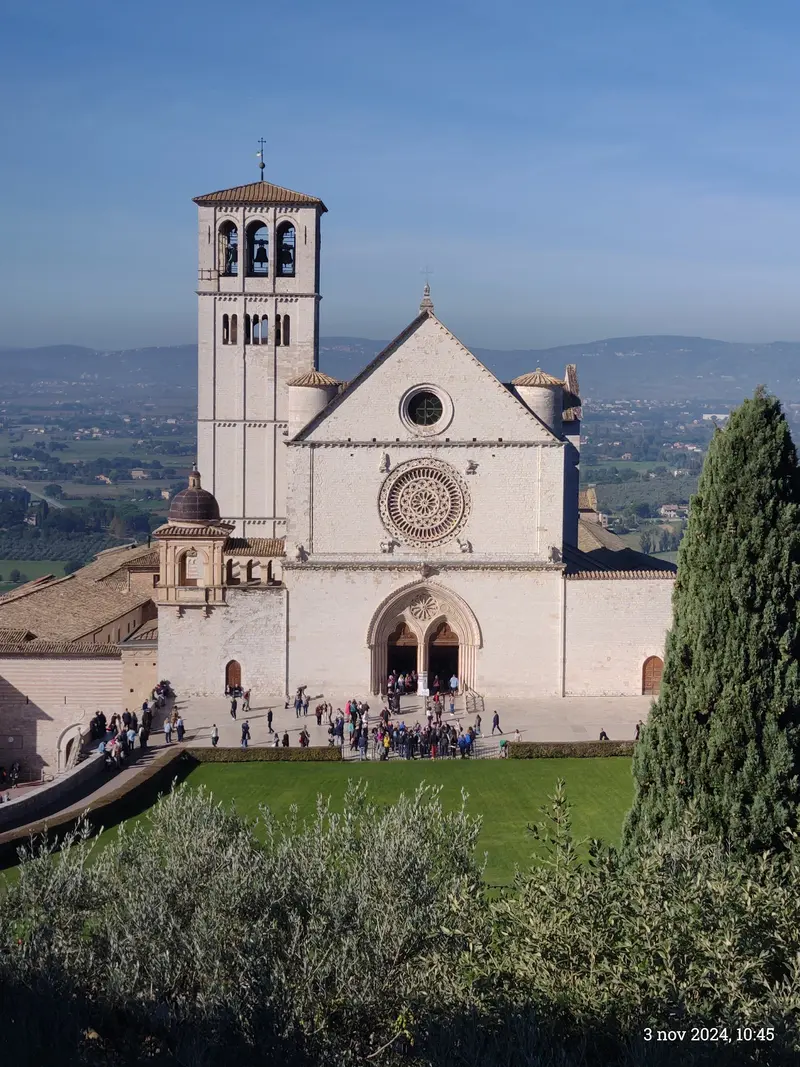
    The Basilica of San Francesco in Assisi is not only an architectural masterpiece but also the spiritual heart of the Franciscan Order and one of Italy's most important pilgrimage sites. Here you will find the tomb of Saint Francis, the founder of the Order, which gives the site deep historical and religious significance. The Basilica, a UNESCO World Heritage site, consists of two superimposed churches, the Upper Church and the Lower Church, both richly adorned with frescoes. In the Upper Church, you can admire Giotto's famous fresco cycles, which depict scenes from the life of Saint Francis and are considered a turning point in European painting. The Lower Church, on the other hand, darker and more mystical, houses works by Cimabue and other significant artists of the 13th and 14th centuries. Our Tip: The best time to visit the Basilica is right after opening in the morning to admire the impressive artworks in peace and avoid the largest crowds. For an unobstructed photo of the entire complex, the viewpoint from Rocca Maggiore is ideal.
    Open in Google Maps

    San Damiano

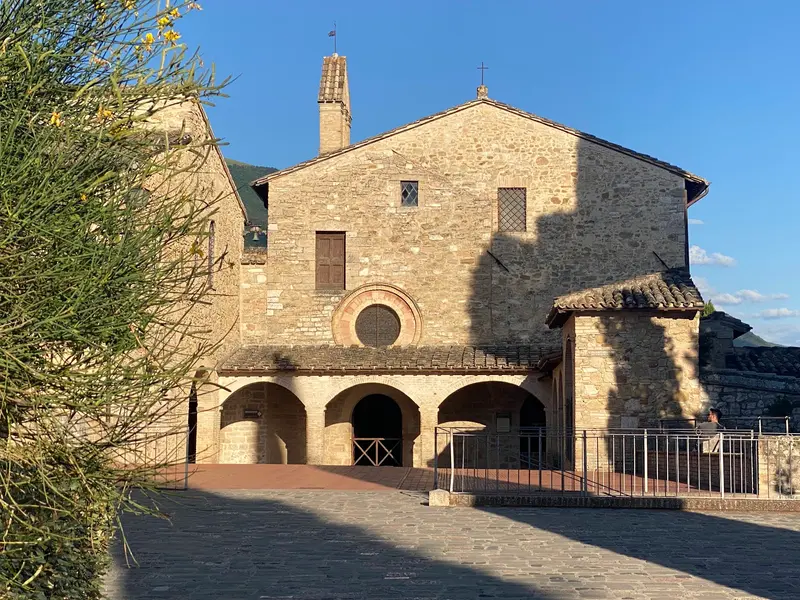
    The Monastery of San Damiano in Assisi is a place of central importance for the history of the Franciscan Order. Here, in 1205, Saint Francis received the divine command from the crucifix to rebuild his church, marking the beginning of his spiritual transformation. You'll discover a simple yet profound chapel that authentically reflects the original character of the early Franciscan movement. Later, San Damiano became the first community of the Poor Clares, where Saint Clare lived and worked until her death in 1253. The architecture is modest and functional, typical of early Franciscan buildings, and conveys a deep atmosphere of contemplation. You can visit the preserved cells of the Poor Clares and the small cloister. Our Tip: Visit San Damiano early in the morning or late in the afternoon to fully experience the unique tranquility of the place and avoid the largest crowds. Take your time to linger in the adjacent garden, which offers a beautiful view of the Umbrian landscape and invites reflection.
    Open in Google Maps

    Assisi Diocesan Museum

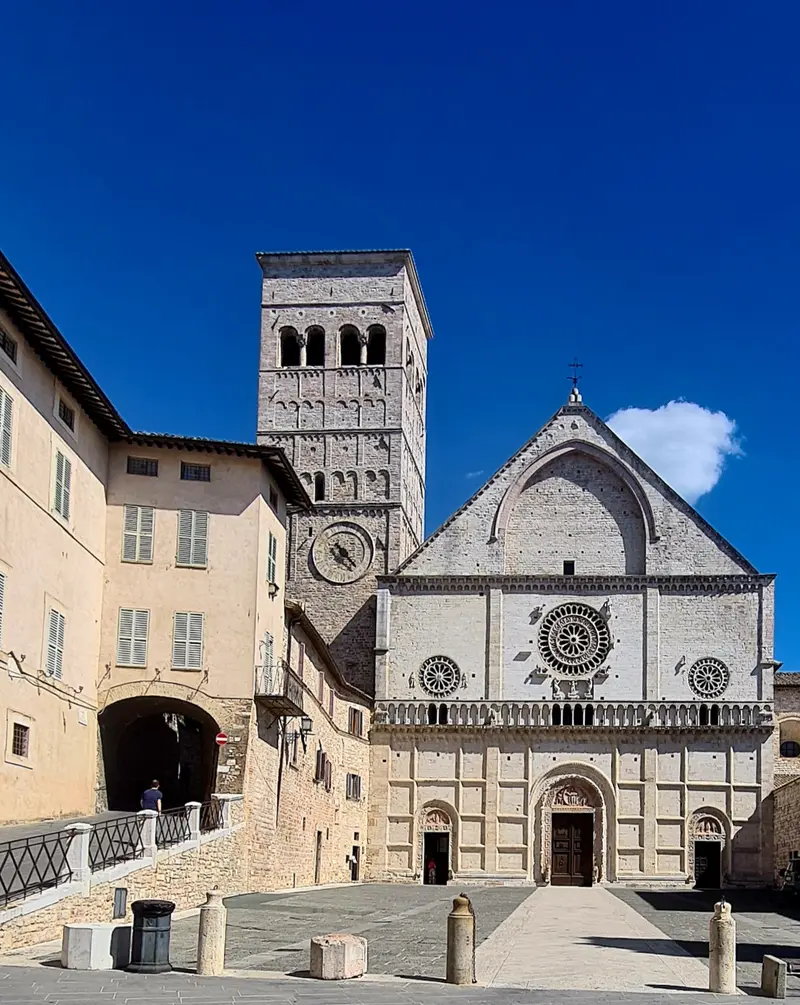
    The Diocesan Museum of Assisi, also known as Museo Diocesano e Cripta di San Rufino, is located in the heart of the city, right next to San Rufino Cathedral. It offers you a deep insight into the region's religious and artistic history. Here you'll discover an impressive collection of sacred artworks, gathered over centuries from the churches and monasteries of the diocese. These include paintings, sculptures, liturgical vestments, and goldsmith works from the 13th to the 18th century. Particularly noteworthy are 12th-century fresco fragments that once adorned the cathedral, as well as works by artists such as Niccolò di Liberatore, known as L'Alunno. The cathedral's crypt, dedicated to Saint Rufinus, is also part of the museum and displays Roman and early Christian foundations. These exhibits tell not only the history of Christianity in Assisi but also the development of Umbrian art, which shapes the city's identity. Our Tip: Visit the museum in the morning to enjoy the tranquility of the exhibition rooms and avoid crowds. Combine your visit with the adjacent San Rufino Cathedral, whose facade and interior are also of great historical significance.
    Open in Google Maps

    Santa Maria degli Angeli

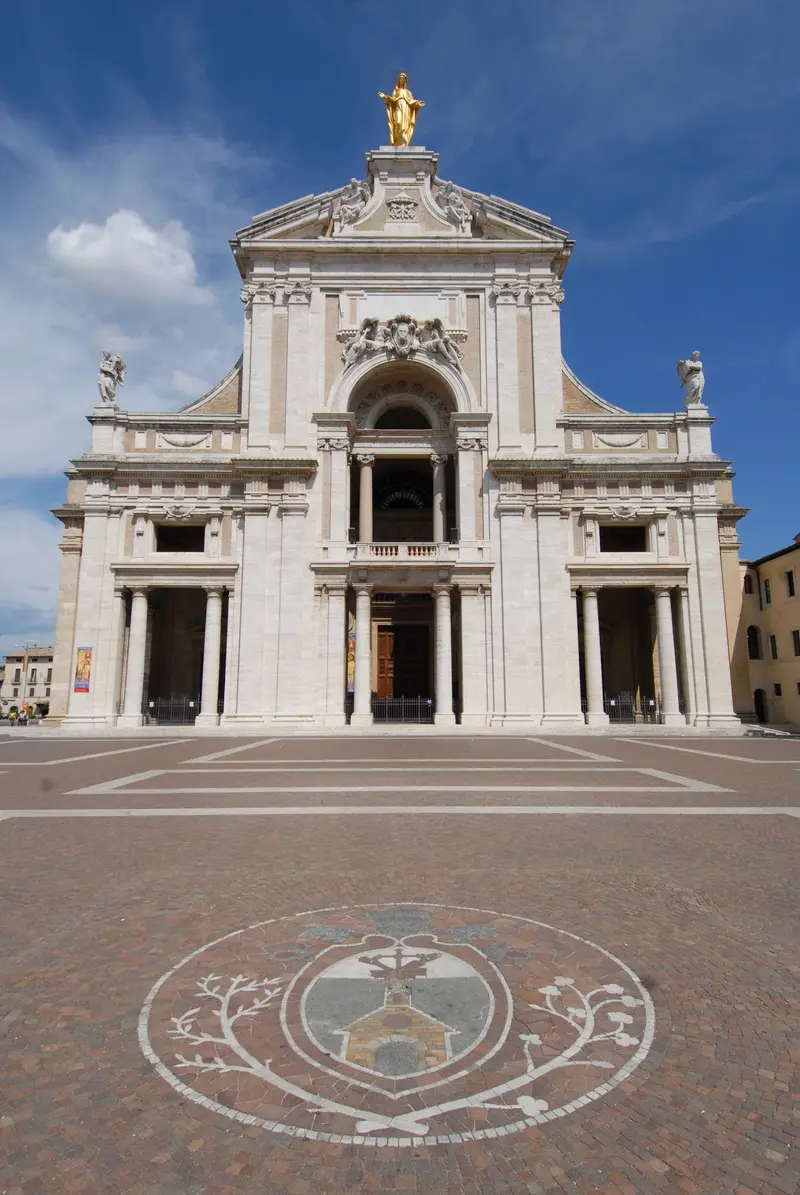
    The Basilica of Santa Maria degli Angeli, located on the plain below Assisi, is a central pilgrimage site and of immense importance to the Franciscan Order. It was built between 1569 and 1679 around the Porziuncola, a small chapel that forms the heart of early Franciscanism. Here, Saint Francis founded his Order, and here he spent his final hours. You will notice how the simple, original chapel within the colossal basilica creates a profound contrast to the Baroque splendor of the surrounding structure. Besides the Porziuncola, the basilica also houses the Cappella del Transito, where Francis died in 1226. A visit allows you to directly experience the humble beginnings of the Order. Plan enough time to also visit the small museum, which displays artifacts from the life of Saint Francis. Our Tip: Visit the basilica early in the morning to experience the spiritual atmosphere without the largest crowds. For a special perspective on the Porziuncola inside the grand church, a moment of silent contemplation is recommended.
    Open in Google Maps

    Basilika Santa Chiara

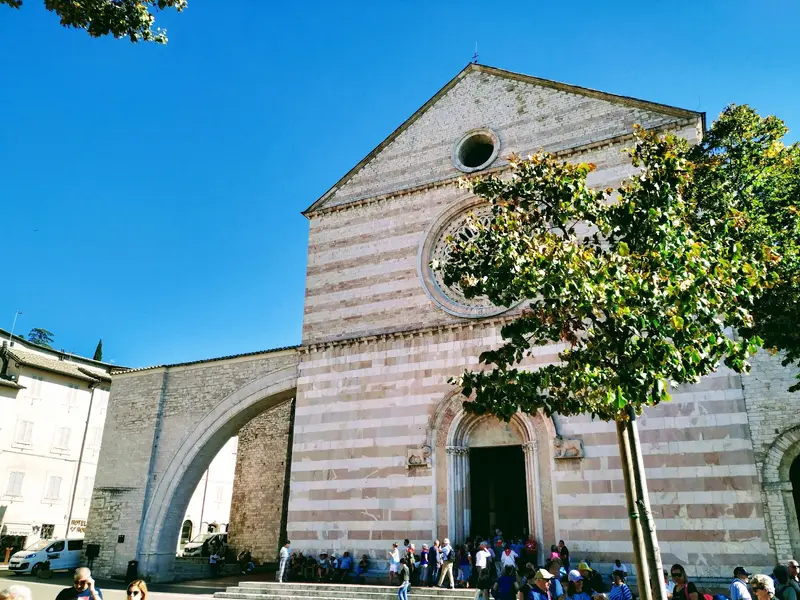
    The Basilica of Santa Chiara in Assisi is a central pilgrimage site dedicated to Saint Clare of Assisi, founder of the Order of Poor Clares and a close companion of Saint Francis. Here you will find her mortal remains in the crypt, which holds deep spiritual significance. Architecturally, the basilica captivates with its striking facade of pink and white stone, a typical feature of Umbrian Gothic, which you can particularly admire in the sunshine.Inside, the church houses an invaluable relic: the original San Damiano Cross. According to tradition, this Byzantine crucifix spoke to Saint Francis and is a powerful symbol of the beginnings of the Franciscan Order. Take your time to let the silence and spiritual atmosphere wash over you.For your visit, we recommend the early morning hours or late afternoon to avoid the largest crowds and experience the basilica in peace. Please wear appropriate clothing, as it is an active place of worship. An excellent photo spot for the impressive facade is the square in front of the church, from which you also have a beautiful view of the surrounding landscape.
    Open in Google Maps

    City walks in Assisi

    Curated walking tours through the city's highlights — handpicked by experienced travel journalists.

    Stille Pfade am Monte Subasio: Franziskus' Rückzugsort

    Dieser Spaziergang führt Sie hoch über Assisi zu den Eremo delle Carceri, einem Ort tiefer Stille und Naturverbundenheit. Entdecken Sie die Höhlen und Wälder, wo der Heilige Franziskus meditierte und betete, und genießen Sie atemberaubende Ausblicke auf die umbrische Landschaft. Ein Pfad, der zur inneren Einkehr einlädt und die weniger bekannte, naturverbundene Seite des Ordensgründers beleuchtet.

    ~2 Std. 30 Min.
    In Google Maps öffnen
    Stopps (7)

    Food and Drink

    Assisi's Cultural Heritage and Art Treasures

    Assisi, eingebettet in die umbrische Landschaft, ist primär als Geburtsort des Heiligen Franziskus und der Heiligen Klara bekannt. Ihre Geschichte reicht jedoch bis in die römische Antike zurück, sichtbar am gut erhaltenen Minerva-Tempel, der heute in die Kirche Santa Maria sopra Minerva integriert ist.Das mittelalterliche Stadtbild, geprägt von engen Gassen und Steinhäusern, zeugt von Assisis Entwicklung vom römischen Municipium zur freien Kommune. Die Basilica di San Francesco ist das architektonische und künstlerische Herz der Stadt, ein Meisterwerk der Gotik und Romanik.Ihre beiden Kirchenebenen und die Krypta mit dem Grab des Heiligen Franziskus ziehen jährlich Millionen Pilger an. Die Wände der Basilika sind mit Fresken von Giotto, Cimabue, Pietro Lorenzetti und Simone Martini geschmückt, die Szenen aus dem Leben des Heiligen Franziskus darstellen und als Schlüsselwerke der italienischen Frührenaissance gelten.Neben der tief verwurzelten religiösen Bedeutung prägen lokale Traditionen wie das farbenprächtige Fest Calendimaggio im Mai, das den Frühling begrüßt und mittelalterliche Bräuche wiederaufleben lässt, das kulturelle Leben Assisis. Die Stadt ist ein UNESCO-Weltkulturerbe, nicht nur wegen ihrer Baudenkmäler, sondern auch als Symbol für den Frieden und die franziskanische Bewegung.

    On Local Transport

    Assisi, a city full of charm, is best explored on foot to truly experience its medieval alleys and steep paths. The historic city center is largely traffic-calmed and perfect for strolling, but beware: the cobblestones can be slippery and the elevation changes are considerable. There is no subway or tram in Assisi; instead, the bus is the most important public transport, especially for the connection from Santa Maria degli Angeli train station to the old town.Local buses from Umbria Mobilità cover the most important points; tickets are available in tobacco shops (Tabaccherie) or kiosks and should be purchased before boarding. Taxi services are available, but ride-sharing providers are hardly widespread in this region. For longer distances outside the center or for fewer inclines, e-bikes could be an option, but within the old town, they are only conditionally practical due to the topography and narrow alleys. Plan your explorations well and wear comfortable shoes to enjoy Assisi's beauty without restrictions.

    Accommodations in Assisi

    Accommodations in Assisi

    Find perfect stay in Assisi

    Booking.com
    Search Hotels
    Agoda
    Search Hotels
    Airbnb
    Vacation Rentals
    Hotels.com
    Hotels Worldwide
    Hostelworld
    Hostels

    Campgrounds in Assisi

    Find perfect campground in Assisi

    Search via Google Maps
    Campgrounds nearby (15km)
    Camping.info
    Find Campgrounds
    Park4Night
    RV Parks & Camping

    Plan your trip to Assisi

    Save places, build a route and plan your city trip — all in one place.

    Save places

    Bookmark sights, restaurants and neighborhoods you're interested in.

    Build your route

    Turn your bookmarks into a route — define order, days and budget.

    Refine with AI

    Let Mein Fernweh suggest experiences and put together a tailored daily plan.

    Start trip planningOpen bookmarks

    Locations nearby

    These places are nearby — perfect for additional days or a day trip.

    Perugia

    Perugia

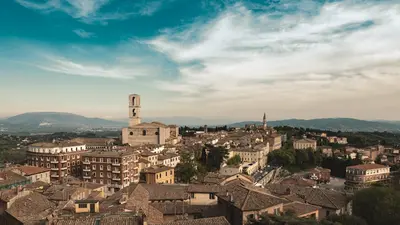
    As the vibrant capital of Umbria, Perugia offers a fascinating combination of its Etruscan roots, medieval architecture, artistic treasures, and a pulsating modern life.
    Umbria

    Umbria

    Umbria, the 'Green Heart of Italy', enchants with its gentle hills, medieval hill towns, and a rich art and culinary culture. Discover here the spiritual home of Saint Francis, ancient Etruscan roots, and authentic hospitality away from the major tourist crowds.
    Spoleto

    Spoleto

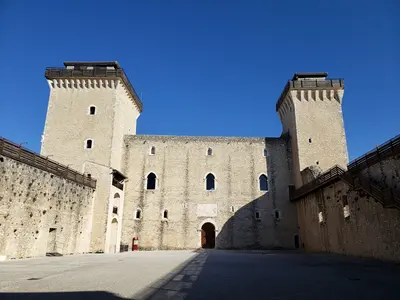
    Spoleto is a historic city in Umbria that will impress you with its medieval architecture and Roman roots. Here you will discover the imposing Duomo di Santa Maria Assunta, known for Filippo Lippi's frescoes, as well as the well-preserved Roman Theatre. A prominent landmark is the Ponte delle Torri, a spectacular medieval bridge that once served as an aqueduct. Above the city sits the Rocca Albornoziana, a fortress offering panoramic views over the surrounding Spoleto Valley. The narrow streets of the old town invite you to stroll and reveal hidden squares and traditional shops. For a relaxed exploration, a visit in spring or autumn is recommended to experience the city's full beauty without the summer tourist crowds.
    Orvieto

    Orvieto

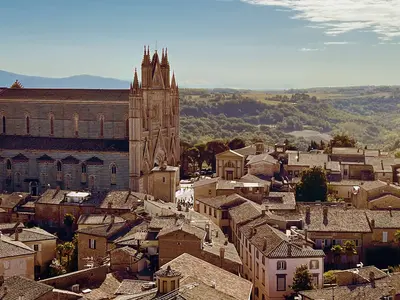
    Orvieto sits majestically atop a tufa cliff in Umbria, offering a captivating blend of Etruscan history and medieval charm. The absolute highlight is the Orvieto Cathedral, a masterpiece of Gothic architecture with an impressive facade and frescoes by Luca Signorelli inside. Also explore the underground city, a labyrinth of caves and tunnels that reveals Orvieto's Etruscan and medieval roots. Another remarkable structure is the Pozzo di San Patrizio, a deep 16th-century well with a unique double-helix staircase. Wander through the narrow streets, discover small artisan shops, and savor local cuisine in traditional trattorias. For an authentic experience, a visit in the early morning or late afternoon is recommended, once the day-trippers have departed. From the city walls, you can also enjoy expansive views over the surrounding Umbrian landscape.
    Montepulciano

    Montepulciano

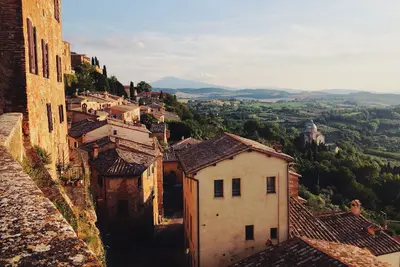
    Perched high atop a hill, Montepulciano welcomes you with a breathtaking panorama of the rolling Tuscan hills. This city is not only a masterpiece of Renaissance architecture with its elegant palaces and winding alleyways, but also the heart of the world-famous Vino Nobile di Montepulciano, which you absolutely must taste here.