Fernweh
    ExploreTravel GuidesMy Trips
    de|en
    About FernwehImprintFAQPrivacy Policy
    ExploreTravel GuidesMy Trips
    Gaspésie Peninsula

    Gaspésie Peninsula

    Region
    1. Home
    2. Destinations
    3. Canada
    4. Gaspésie Peninsula
    The Gaspésie Peninsula in the province of Québec is an unforgettable travel destination that captivates with its rugged beauty, dramatic coastal landscapes, and rich maritime culture. From majestic mountains to charming fishing villages, this region offers a unique blend of nature experiences and authentic Québec charm.
    • Overview
    • Places in the region
    • Eat & drink
    • Culture
    • Nearby
    • Overview
    • Places in the region
    • Eat & drink
    • Culture
    • Nearby
    The Gaspésie Peninsula in Québec captivates with its rugged nature and deeply rooted maritime culture.Iconic landmarks like Rocher Percé and Parc national Forillon, with its dramatic coasts, shape the landscape.Charming fishing villages attest to the heritage of the Mi'kmaq Indigenous people; inland, the Chic-Choc Mountains invite hikers.Coastal Road 132, the Route des Phares, offers a comprehensive exploration of lighthouses and coves.Summer is ideal for outdoor activities; in autumn, the changing leaves impress, but be prepared for changeable weather.

    Places in Gaspésie Peninsula

    Percé

    Percé

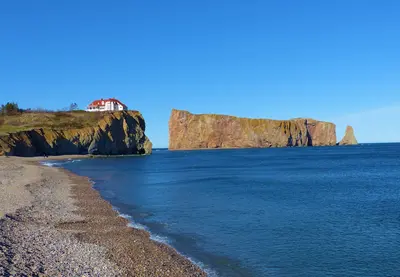
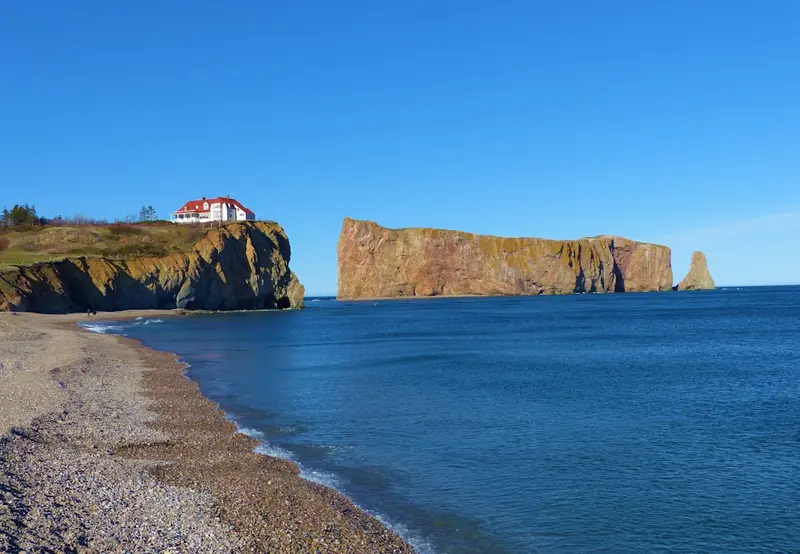
    Percé on the Gaspé Peninsula is known for its coastal landscape and the iconic Percé Rock. The Rocher Percé, a massive limestone monolith with a natural arch, is the region's landmark. The nearby Île Bonaventure is home to one of the world's largest northern gannet sanctuaries – a paradise for birdwatchers. Historically an important fishing center, this maritime character still shapes the town today. For wildlife observation and exploring the coast by boat, the summer months of June to August are ideal.

    Sights in Gaspésie Peninsula

    Discover the most important sights and attractions

    Yama Murdochville

    The Yama Murdochville on the Gaspésie Peninsula stands as a prominent monument to Canadian mining history. Here, you will encounter the remnants of a once-thriving copper mining town, largely abandoned following the closure of the Gaspé Copper Mines in 1999. The imposing headframe, frequently referred to as "Yama," continues to distinctly loom over the landscape, serving as a silent witness to an era of intense industrial activity. It offers you a direct glimpse into the rise and eventual decline of a mining community whose destiny was intrinsically linked to the extraction of raw materials. The surviving structures and rusty infrastructure create an evocative, yet aesthetically captivating backdrop, particularly for photographers. Our Tip: Ensure you wear sturdy footwear and remain conscious that you are exploring a former industrial site. For capturing the best shots, we recommend visiting during the early morning or late afternoon, when the soft light optimally accentuates the textures of the ruins and the crowds are less significant.

    Open in Google Maps

    Energie Eolienne-Mont Copper

    On the picturesque Gaspésie Peninsula, high above the landscape, you'll discover the impressive facility of Energie Eolienne-Mont Copper. This wind energy project is an outstanding example of Canada's commitment to renewable energy and distinctly shapes the region's silhouette in a modern way. The gigantic wind turbines, majestically reaching for the sky, are not only a testament to advanced engineering but also offer a fascinating contrast to the rugged surrounding nature. From the elevated viewpoints on Mont Copper, you often enjoy extensive panoramic views over the surrounding landscape and the vastness of the Gulf of St. Lawrence. The sheer size of the installations truly becomes tangible only up close. It's a place that inspires reflection on the future of energy while simultaneously highlighting the beauty of unspoiled nature. Our tip: Visit the facility on a clear day to get the best long-distance views. Early mornings or late afternoons often provide the softest light for impressive photos of the turbines against the backdrop of Gaspésie. As it can often be windy on Mont Copper, it's advisable to always bring a windproof jacket.
    Open in Google Maps

    Hydro-Québec - Poste Copper Mountain

    The Hydro-Québec - Poste Copper Mountain is an essential component of the energy infrastructure on the Gaspésie Peninsula, underscoring the central role of hydropower in Québec's development. This high-voltage facility serves for the transformation and distribution of electricity, often originating from distant hydroelectric power plants, thus supplying the region's communities. Here you'll get a glimpse into the impressive scale of modern energy technology, featuring massive transformers, switchgear, and the characteristic high-voltage pylons that blend into the landscape. It is a testament to the engineering prowess necessary to ensure a reliable power supply.Although purely functional, the sight of its complex structures offers a fascinating contrast to the surrounding nature of Gaspésie. Our Tip: Since access to the site is not permitted for safety reasons, find a safe viewpoint along Route 132. From there, you can get a good overview of the facility and appreciate its dimensions. Morning or evening hours often provide the best light for photos, when shadows emphasize the structures and make the facility appear in a unique light.
    Open in Google Maps

    L'aiguille

    L'aiguille, often referred to as "The Needle," is a striking rock formation off the coast of the Gaspésie Peninsula in Canada. It is an impressive remnant of an ancient limestone formation, shaped over millennia by the relentless force of wind and sea. You will be captivated by its slender, pointed silhouette, which rises majestically from the Gulf of St. Lawrence and is often seen in the context of the famous Percé Rock.This natural pillar is an impressive testament to the region's geological history and, together with Percé Rock, forms an iconic panorama. Visitors can admire the rock needle from the shore, but for the best perspective and to grasp its full grandeur, a boat tour is recommended. These tours often also circle the nearby Île Bonaventure, a significant bird sanctuary.Our Tip: Photographers will find ideal lighting conditions particularly at sunrise or sunset to capture the dramatic scenery, when the light highlights the rock's texture. Avoid midday for photos to prevent harsh shadows.
    Open in Google Maps

    Murdochville Cemetery

    The Murdochville Cemetery on the Gaspésie Peninsula is a silent witness to Canada's mining history. It serves as the final resting place for many of the workers and their families who once lived and toiled in Murdochville's copper mine. The town, founded in the 1950s, experienced a boom thanks to mining, before the mine closed in the late 1990s, leading to the community's decline.When visiting this cemetery, you will find a series of gravestones bearing the names and life dates of former residents. Many of these graves tell silent stories of hard work, community, and life in a remote mining settlement. The simple gravesites often reflect the humble circumstances of the miners and offer a thoughtful insight into the social structures of the era.You will notice that the cemetery possesses a quiet and often wind-swept atmosphere, surrounded by the rugged nature of Gaspésie. This reinforces the feeling of isolation and remembrance. Our Tip: Take your time to read the inscriptions and reflect on the history of these people. A visit in the late afternoon can be particularly atmospheric, as the light softens and shadows lengthen. Respect the silence of the place and the privacy of those resting here.
    Open in Google Maps

    Dining & Drinks

    Culture, Art & History

    The culture of the Gaspésie Peninsula is a multifaceted blend of indigenous roots and European influences. The Mi'kmaq were the original inhabitants, whose presence is still palpable today through place names and oral traditions. With the arrival of Jacques Cartier in 1534, European colonization began, shaping the region's maritime identity.Key periods include French settlement and later the immigration of Irish, Scots, and Jersey Islanders, who spurred the development of the fishing industry. This led to a unique architectural landscape featuring traditional wooden houses in fishing villages and characteristic lighthouses lining the coastline. Gaspésie preserves a strong maritime tradition, reflected in folk music, local crafts, and culinary specialties. The regional art scene is often inspired by the rugged nature and the sea, creating an authentic artistic expression closely tied to the lives of the locals.

    Locations nearby

    These places are nearby — perfect for additional days or a day trip.

    Percé

    Percé

    Percé on the Gaspé Peninsula is known for its coastal landscape and the iconic Percé Rock. The Rocher Percé, a massive limestone monolith with a natural arch, is the region's landmark. The nearby Île Bonaventure is home to one of the world's largest northern gannet sanctuaries – a paradise for birdwatchers. Historically an important fishing center, this maritime character still shapes the town today. For wildlife observation and exploring the coast by boat, the summer months of June to August are ideal.
    Nordküste (Green Gables Shore)

    Nordküste (Green Gables Shore)

    Diese malerische Küstenlinie ist berühmt für ihre dramatischen roten Klippen, endlosen Sandstrände und die ikonische Landschaft, die Lucy Maud Montgomery zu ihren Anne auf Green Gables-Romanen inspirierte.
    Charlottetown

    Charlottetown

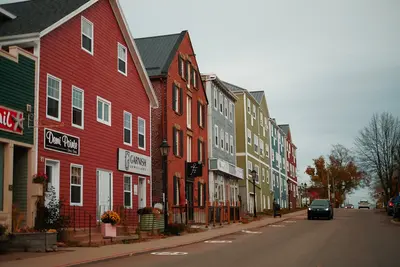
    Charlottetown, the capital of Prince Edward Island, is known as the birthplace of the Canadian Confederation. Here you'll find a charming blend of Victorian architecture and modern flair, especially in the historic city center. A visit to the Province House National Historic Site, where the Charlottetown Conference took place in 1864, offers deep insights into Canada's history. Along Peake's Wharf by the harbor, you can enjoy fresh seafood and experience the maritime ambiance. The city also serves as an ideal base for exploring the picturesque island and its coastal landscapes. For a relaxed exploration, a stroll through Victoria Row with its boutiques and cafés is recommended. The best time to visit is late spring or early autumn to enjoy the mild weather and avoid the summer tourist crowds.
    Prince Edward Island

    Prince Edward Island

    Welcome to Prince Edward Island, Canada's smallest province, a place that will immediately captivate you with its relaxed atmosphere and the breathtaking beauty of its red sand beaches. Immerse yourself in a world full of maritime traditions, culinary delights, especially fresh seafood, and experience the magic of the Anne of Green Gables stories that come alive here.
    Hopewell Rocks, New Brunswick

    Hopewell Rocks, New Brunswick

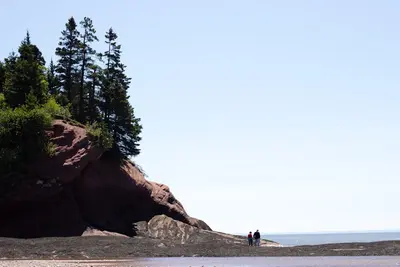
    These iconic "Flowerpot" rocks are the most spectacular example of the effects of extreme tides and can be walked around at low tide.