Fernweh: Home
    ExploreTravel GuidesPlan a tripMy tripLast visited
    de|en
    All Places & RegionsAll highlightsAbout FernwehFAQPrivacy PolicyImprint
    ExploreTravel GuidesPlan a tripMy tripLast visited
    Vieux-Montréal (Old Montreal)

    Canada

    Vieux-Montréal (Old Montreal)

    Point of InterestCulture

    Montreal's historic heart enchants with cobblestone streets, magnificent 17th and 18th-century buildings, and the impressive Notre-Dame Basilica.

    by Felix Gillen

    1. Home
    2. Destinations
    3. Canada
    4. Montreal
    5. Vieux-Montréal (Old Montreal)
    Montreal's historic heart enchants with cobblestone streets, magnificent 17th and 18th-century buildings, and the impressive Notre-Dame Basilica.

    Sehenswürdigkeiten

    Discover the most important sights and attractions

    Notre-Dame de Montréal

    1Notre-Dame de Montréal

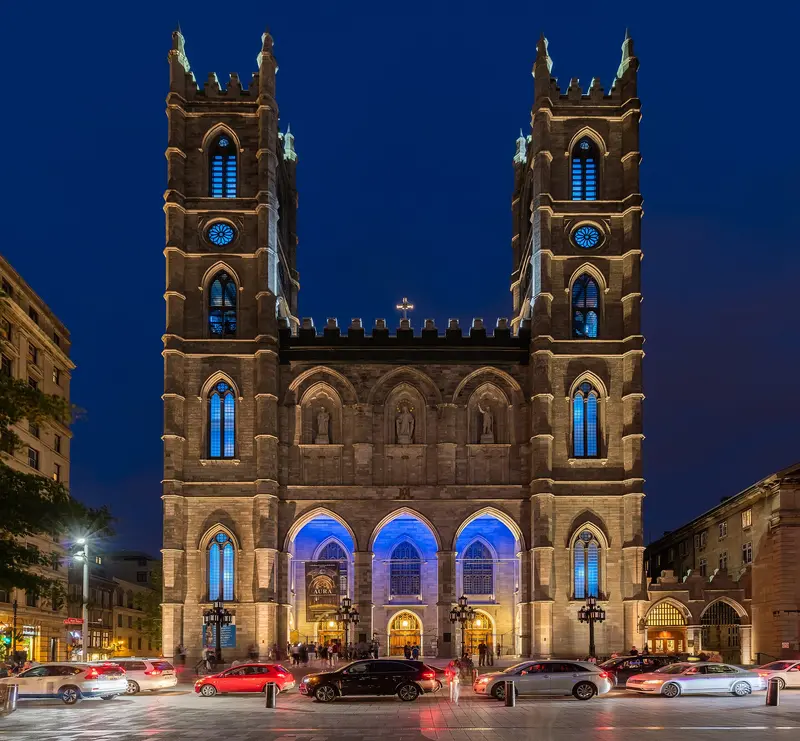
    The Notre-Dame Basilica on Place d'Armes is the Old Town's most famous building. It was built between 1824 and 1829, designed by James O'Donnell in the Neo-Gothic style. Behind its austere facade with two towers lies a colorful interior: a deep blue vault with golden stars, richly carved wood, and stained-glass windows depicting scenes from the city's history. Entry is charged; in the evenings, the AURA light show runs, for which you should book tickets in advance.
    Open in Google Maps
    Place des Arts

    2Place des Arts

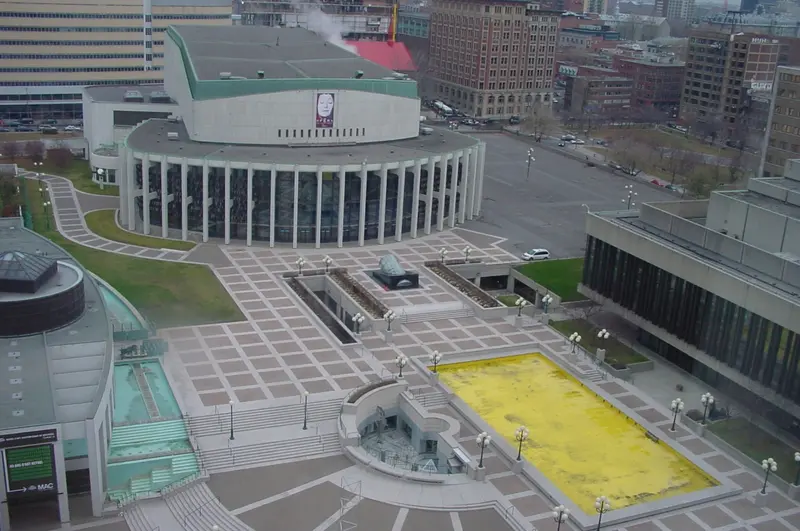
    The **Place des Arts** is Montréal's major performing arts center. It is not located in the Old City, but approximately a 15-minute walk north in the Quartier des Spectacles. Since 1963, it has been home to the Orchestre symphonique de Montréal, the Opéra de Montréal, and Les Grands Ballets, among others. On the esplanade in front, major festivals take place in the summer, most notably the Jazz Festival.
    Open in Google Maps
    St.-Josephs-Oratorium

    3St.-Josephs-Oratorium

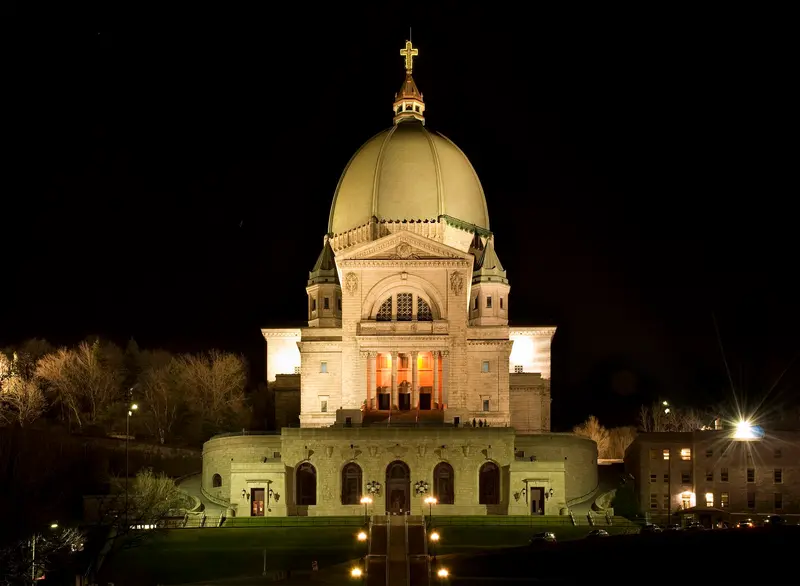
    The Saint Joseph's Oratory stands on the western slope of Mount Royal, a few kilometers from the Old Town and best reached by metro (Côte-des-Neiges station). The pilgrimage church dates back to Brother André, who erected a small chapel here in 1904; the basilica, with its mighty dome, was only completed in 1967 and is the largest church in Canada. From the terrace in front of the entrance, the view extends far over the city's northwest.
    Open in Google Maps
    Musée des beaux-arts de Montréal

    4Musée des beaux-arts de Montréal

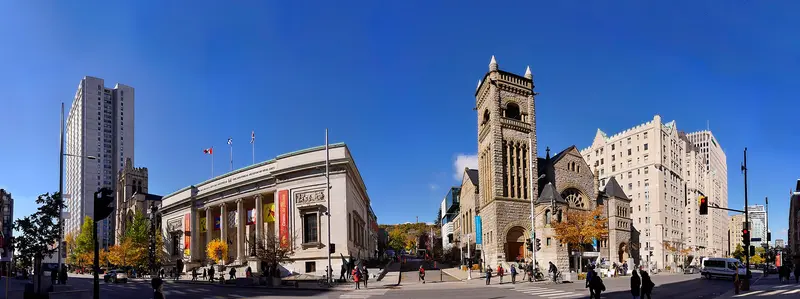
    The Montreal Museum of Fine Arts on Rue Sherbrooke Ouest was founded in 1860 and is one of Canada's most important art museums. Its collection spans several pavilions, connected underground: Art from Quebec and Canada, Old Masters, International Modern, Design, and World Cultures Art. It's located Downtown, not in the Old Town – plan at least half a day.
    Open in Google Maps

    5Saint John the Baptist Church

    The Église Saint-Jean-Baptiste is one of Montreal's largest parish churches. It is located in the Plateau Mont-Royal district on Rue Rachel, a good distance north of the Old Town. Its interior is richly decorated in neo-Baroque style; due to its excellent acoustics and large organ, the church is frequently used for concerts. Outside of services and events, it is not always open.
    Open in Google Maps

    Essen & Trinken

    Bouillon Bilk

    Moderne, von der französischen Küche inspirierte Gerichte in einem hellen Lokal mit minimalistischer Einrichtung.
    Show on Google Maps

    Pizza Il Focolaio

    Freundliches Terrassenlokal mit großer Auswahl an Holzofenpizzen mit dünnem Boden und Blick auf den Square Phillips.
    Show on Google Maps
    1

    O-Thym

    The O-Thym on Rue Atateken is located in the Village, about a 20-minute walk north of the Old Town. It's a small bistro following the 'Apportez votre vin' concept: you bring your own wine as the restaurant does not serve alcohol. The menu is written on slate boards and changes with market availability; reservations are recommended.
    Show on Google Maps

    Vieux-Port Steakhouse

    Steaks aus gereiftem Fleisch und sonntägliches Brunchbuffet in einem Steakhouse mit Sichtmauerwerk, Kaminen und mehreren Ebenen.
    Show on Google Maps

    Food and Drink

    Rue Saint-Paul

    Montreal's oldest street is lined with bistros, cafés, and restaurants in historic houses.

    Terraces on Place Jacques-Cartier

    Come summer, you sit out here, overlooking the square's buzz – touristy, yet vibrant.

    Montreal Bagels

    The small bagels, boiled in honey water and baked in a wood-fired oven, are a specialty of the city; the most famous bakeries, St-Viateur and Fairmount, are located in the Mile End district.

    Smoked Meat

    Spiced, smoked beef brisket on rye bread is a Montreal classic; Schwartz's on Boulevard Saint-Laurent is famous for it.

    Poutine

    French fries with cheese curds and gravy – this Québécois national dish is also available on many corners in the Old Town.

    History

    At the Pointe-à-Callière Museum, you can see the underground foundations of the first settlement. The Château Ramezay, seat of the governors from 1705, is one of the city's oldest buildings. After the British conquest, Montreal became Canada's commercial hub; the banks on Rue Saint-Jacques bear witness to this wealth.

    On the go

    Metro: Place-d'Armes or Champ-de-Mars (orange line). Driving and parking are not worthwhile in the district; many streets are pedestrian zones in summer.

    Accommodations in Vieux-Montréal (Old Montreal)

    Find perfect stay in Vieux-Montréal (Old Montreal)

    Booking.com* (Affiliate link)
    Search Hotels
    Agoda* (Affiliate link)
    Search Hotels
    Airbnb
    Vacation Rentals

    * Affiliate link: if you book through it, we earn a small commission. The price stays the same for you.

    Campgrounds in Vieux-Montréal (Old Montreal)

    Find perfect campground in Vieux-Montréal (Old Montreal)

    Search via Google Maps
    Campgrounds nearby (15km)
    Camping.info
    Find Campgrounds
    Park4Night
    RV Parks & Camping

    Nearby

    Montreal

    Montreal

    Montreal lies on an island in the St. Lawrence River and is Canada's second-largest city. French is the everyday language; the old town Vieux-Montréal, the local mountain Mont Royal and districts like the Plateau shape the cityscape, plus bagels, smoked meat, and a packed festival calendar.
    Mauricie NP

    Mauricie NP

    Immerse yourself in the pristine wilderness of Mauricie National Park, a breathtaking natural paradise in the heart of Quebec. Here, rolling hills, dense forests, glistening lakes, and rushing rivers invite you to unforgettable adventures. This national park is the ideal place to escape the everyday and experience the impressive Canadian nature up close.
    Ottawa

    Ottawa

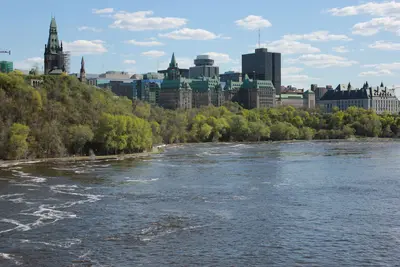
    Ottawa is the capital of Canada, located on the Ottawa River on the border between Ontario and Quebec. The Neo-Gothic Parliament Buildings, the Rideau Canal as a UNESCO World Heritage site, and several large national museums make the bilingual city a quieter, easily walkable counterpart to Toronto and Montreal.
    Québec City

    Québec City

    Québec City, founded in 1608 by Samuel de Champlain, is the capital of the province of Québec and one of the oldest cities in North America. Its walled old town above the St. Lawrence River is a UNESCO World Heritage site; French is the everyday language here.
    Baie-Saint-Paul

    Baie-Saint-Paul

    Baie-Saint-Paul, idyllically situated in Québec's UNESCO Charlevoix Biosphere Reserve, is widely known as one of Canada's most significant art towns. Along the charming Rue Saint-Jean-Baptiste, you'll find an impressive concentration of art galleries, studios, and boutiques celebrating the city's rich artistic heritage. Its picturesque location on the Saint Lawrence River and the surrounding nature served early on as inspiration for famous Canadian landscape painters. Beyond the art scene, the town offers excellent regional cuisine; discover local cheeses and artisanal cider. Late summer or early autumn, with its vibrant colors, is the ideal time to visit for exploring the galleries and the scenic landscape.

    Sources & method

    • Photos: Wikimedia Commons, Unsplash. Each photo carries its credit.
    • The content is based on web research from public, traceable sources. How the content is made · The role of AI