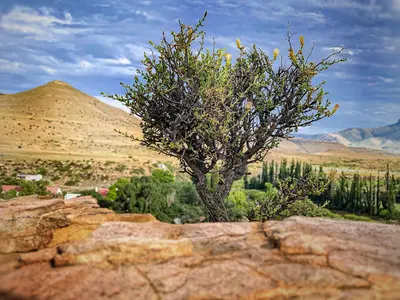
This picturesque village at the foot of the Swartberg Mountains is famous for its well-preserved Cape Dutch architecture, delicious olive products, and as an ideal starting point for exploring the spectacular Swartberg Pass.
Prince Albert, a picturesque village in the Great Karoo, lies idyllically at the foot of the majestic Swartberg Mountains, South Africa. Here you'll discover an impressive collection of well-preserved Cape Dutch and Victorian architecture, which lends the town its special historical character. The village is widely known for its award-winning olive products and figs, which you can purchase directly from local producers at the weekly market or farm stalls. The village serves as an excellent base for exploring the spectacular Swartberg Pass, a UNESCO World Heritage Site, offering breathtaking views and geological wonders. A visit to the Fransie Pienaar Museum offers in-depth insights into the regional history and culture of early settlers. For outdoor activities like hiking or mountain biking, the best time to visit is in spring or autumn to fully enjoy the pleasant temperatures.
Places in Prince Albert
Discover the most important sights and attractions
The cultural fabric of Prince Albert is deeply rooted in its history and the unique Karoo landscape. It offers visitors an **authentic glimpse into rural South Africa**, marked by a rich heritage and a vibrant present.Prince Albert, originally founded in 1762 as Kweekvallei, was renamed in 1845 in honour of Queen Victoria's consort, Prince Albert. The town developed as an important agricultural settlement in the heart of the Great Karoo, characterized by fertile soils and springs. A brief period of gold rush at the end of the 19th century also shaped its development, before the town returned to its agricultural roots.The architecture in Prince Albert is a testament to its history, with a well-preserved mix of Cape Dutch, Victorian, and Karoo-typical styles. Characteristic are the whitewashed buildings, often with ornate gables and wide verandas, shaping the historic townscape. Many of these structures are carefully restored and contribute to the charming ambiance.The local culture is shaped by rural Karoo life, reflecting a **deep connection to nature and an appreciation for craftsmanship**. Traditional practices like olive cultivation and fig farming continue to define daily life and local products. There is also an emerging art scene with local galleries inspired by the tranquil surroundings, as well as a distinct hospitality that preserves its conscious heritage.
Your local travel
Prince Albert ist ein charmantes Karoo-Städtchen, das sich ideal zu Fuß erkunden lässt. Die kompakte Größe des historischen Zentrums macht es äußerst fußgängerfreundlich, sodass Sie die malerischen Straßen und architektonischen Kleinode bequem spazierend entdecken können. Öffentliche Verkehrsmittel wie Metro, Bus oder Tram sind hier nicht vorhanden; für die Fortbewegung im Ort selbst sind Fahrräder eine beliebte und umweltfreundliche Option, oft können diese in Unterkünften oder lokalen Geschäften gemietet werden. E-Scooter sind hingegen selten anzutreffen.Für längere Strecken oder Ausflüge in die umliegende Karoo-Landschaft ist ein Mietwagen unerlässlich. Taxis oder Ride-Sharing-Dienste wie Uber sind in Prince Albert nicht verfügbar; planen Sie daher Ihre Anreise und Erkundungstouren entsprechend. Das Parken im Ort ist in der Regel unkompliziert und kostenlos. Genießen Sie die entspannte Atmosphäre und die Freiheit, dieses Juwel Südafrikas in Ihrem eigenen Tempo zu erleben.
These places are nearby — perfect for additional days or a day trip.
Oudtshoorn
The capital of the Little Karoo, famous for its ostrich farms and the impressive Cango Caves, offers a fascinating insight into South Africa's drier, yet equally beautiful interior landscape.
George
George, the unofficial capital of the Garden Route, is a central hub in South Africa's Cape Province, known for its historic buildings and picturesque location at the foot of the Outeniqua Mountains.Here you'll find the impressive Outeniqua Transport Museum, which documents the region's rich railway history with a comprehensive collection of historic locomotives.St. Mark's Cathedral, one of South Africa's oldest Anglican churches, is a striking architectural landmark in the city center.Nature lovers can explore the George Botanical Garden with its diverse Fynbos flora or the historic Montagu Pass, offering scenic views.George is also a paradise for golfers, with top-tier courses like the George Golf Club and Fancourt.Spring (September to November) and autumn (March to May) are ideal months for a visit, as the mild weather makes explorations particularly pleasant.The city serves as an ideal base for discovering the surrounding attractions of the Garden Route.
Wilderness
Wilderness is an idyllic coastal town on South Africa's famous Garden Route, known for its unspoiled nature and relaxed atmosphere. Here you'll find a unique combination of expansive sandy beaches, dense forests, and a complex lagoon system fed by the Touws River. The town is an integral part of the Garden Route National Park, offering diverse opportunities for outdoor activities like canoeing, hiking, and birdwatching. You can enjoy spectacular views of the coast and river landscape from Dolphin Point or the Map of Africa viewpoint. Due to its favorable winds, Wilderness has also established itself as a popular hotspot for paragliding. The best time to visit for nature exploration is the South African spring from September to November or autumn from March to May, when the weather is mild and pleasant.
Mossel Bay
Mossel Bay on South Africa's coast offers maritime history and nature experiences. Visit the Bartolomeu Dias Museum Complex with the historic Post Office Tree, commemorating Dias' arrival in 1488. The Cape St. Blaize Lighthouse provides coastal views and is ideal for whale watching (June-November). Hike the St. Blaize Trail along the cliffs to the famous caves. The bay is also a hub for marine adventures like shark cage diving. For a relaxed visit, the off-season in spring or autumn is recommended.
Sedgefield
Located on the Garden Route, Sedgefield is known as Africa's first "Slow Town" and captivates with its relaxed atmosphere. Here you'll find a unique combination of tranquil lagoons, pristine beaches, and abundant nature. The Swartvlei Lagoon is the heart of Sedgefield, ideal for water sports like kayaking and a paradise for birdwatchers. Along the coast, beaches like Myoli Beach invite long strolls; Gericke's Point is excellent for snorkeling. A must-visit is the Wild Oats Community Farmers Market on Saturdays for local products and handicrafts. The warmer months are optimal for outdoor activities.