Fernweh: Home
    ExploreTravel GuidesPlan a tripMy tripLast visited
    de|en
    All Places & RegionsAll highlightsAbout FernwehFAQPrivacy PolicyImprint
    ExploreTravel GuidesPlan a tripMy tripLast visited
    • Neighborhoods & highlights
    • Eat & drink
    • Culture
    • Getting around
    • Accommodation
    • Plan trip
    • Nearby
    St. Gallen
    JoachimKohler-HB / Wikimedia Commons / CC BY-SA 4.0

    Switzerland

    St. Gallen

    City

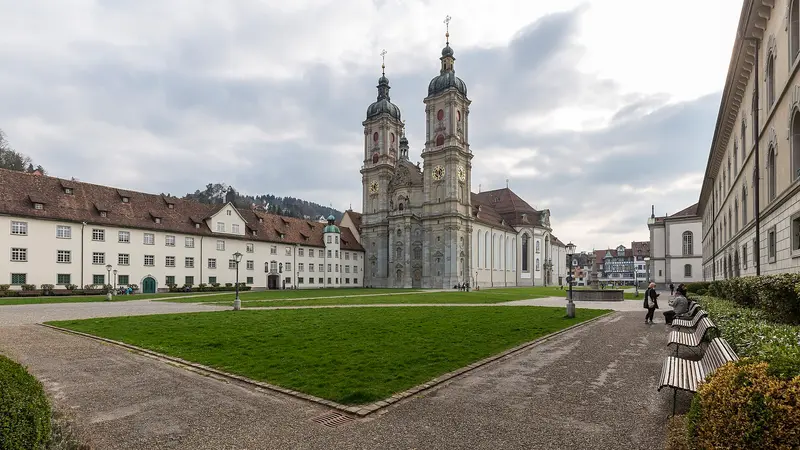
    St. Gallen is the capital of the canton of the same name and is located in northeastern Switzerland, south of Lake Constance. The city traces its origins to the hermitage of the monk Gallus, who, according to tradition, settled here in 612.

    by Felix Gillen

    1. Home
    2. Destinations
    3. Switzerland
    4. St. Gallen
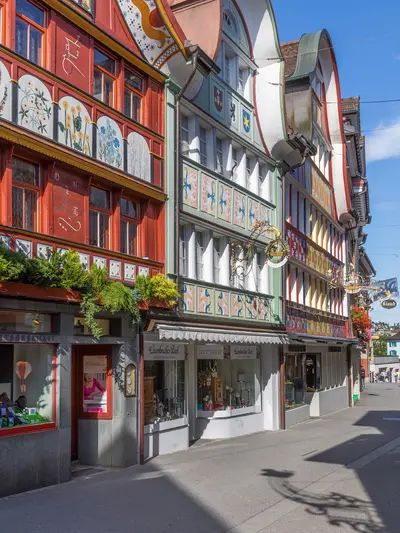
    St. Gallen is the capital of the canton of the same name and is located in northeastern Switzerland, south of Lake Constance. The city traces its origins to the hermitage of the monk Gallus, who, according to tradition, settled here in 612. This grew into one of Europe's most significant monasteries, which was dissolved in 1805.The Abbey District, with its Cathedral, Abbey Library, and Abbey Archives, has been a UNESCO World Heritage site since 1983. The late Baroque cathedral was built between 1755 and 1766 under Peter Thumb and Johann Michael Beer; admission is free. In the Baroque Hall of the Abbey Library, approximately 170,000 books and about 2,000 medieval manuscripts are stored, including the Carolingian Monastery Plan from the 9th century.Surrounding the Abbey District is the car-free Old Town, featuring 111 painted and carved bay windows, half-timbered houses, and small taverns on the first floor. In the late 19th century, embroidery made St. Gallen world-famous, a story now told by the Textile Museum. Above the city lie the Drei Weieren, from which you can see as far as Lake Constance on a clear day.

    Sights in St. Gallen

    Discover the most important sights and attractions

    Cathedral St. Gallen
    Church

    1Cathedral St. Gallen

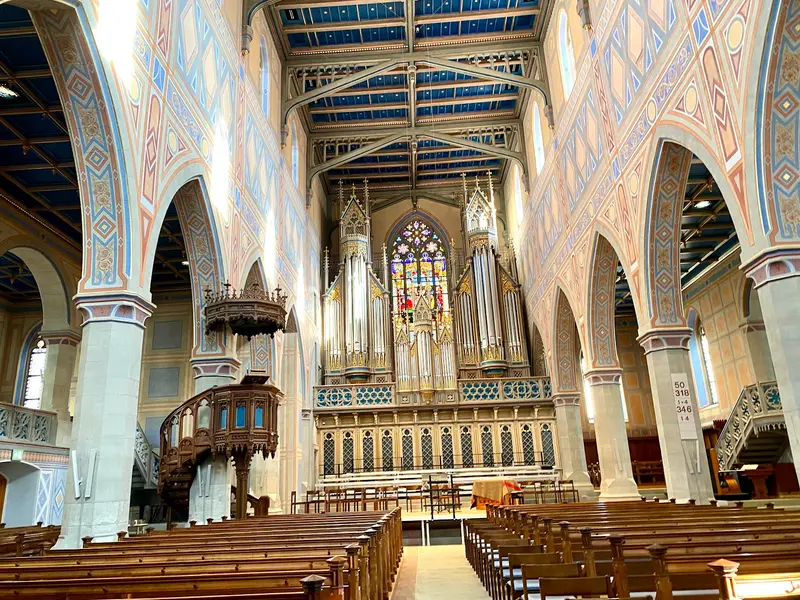
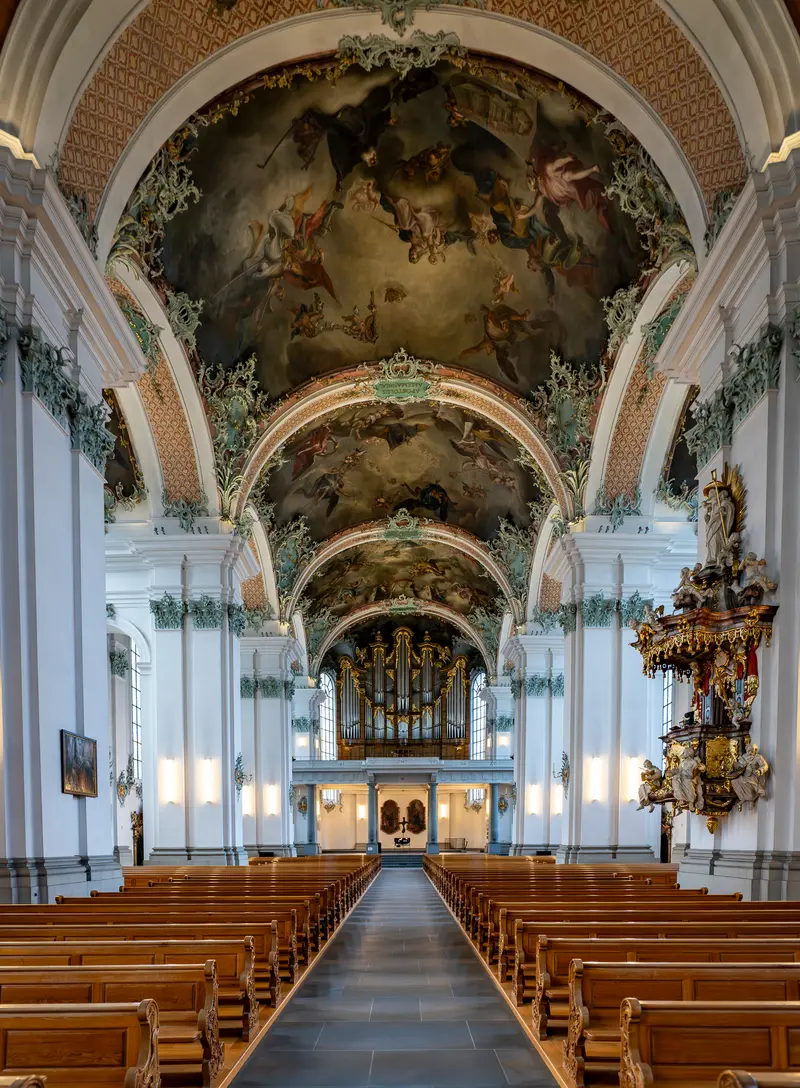
    The former monastery church, with its 68-meter-high twin towers, was built from 1755 to 1766 under Peter Thumb and Johann Michael Beer and is one of the last great Baroque churches of the Western world. Christian Wenzinger and Josef Anton Feuchtmayer created the figures and carvings. Admission is free.
    Open in Google Maps
    Abbey Library St. Gallen
    Museum

    2Abbey Library St. Gallen

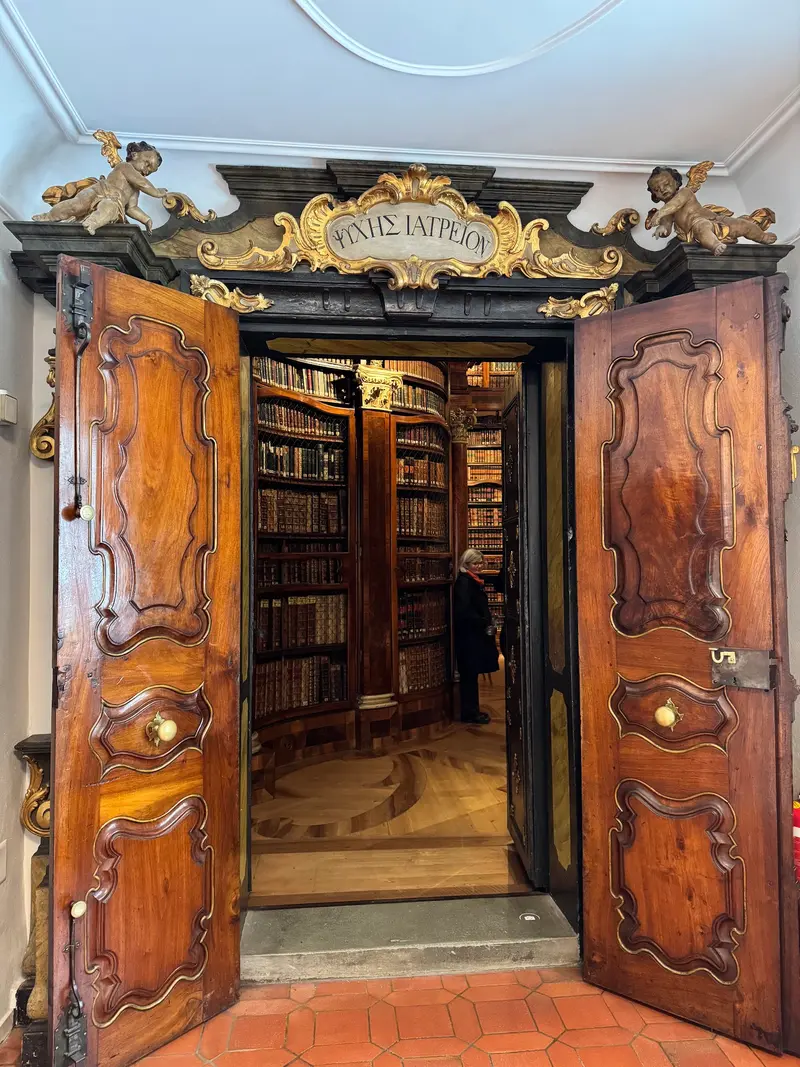
    The hall, built 1758-1762 following Peter Thumb's plans, is considered a Rococo masterpiece, featuring inlaid shelves, carved bookshelves, and ceiling paintings. The library houses around 170,000 books and some 2,000 medieval manuscripts, including the 9th-century Carolingian monastic plan. A combo ticket includes the vaulted cellar and exhibition hall.
    Open in Google Maps
    Textile Museum St. Gallen
    Museum

    3Textile Museum St. Gallen

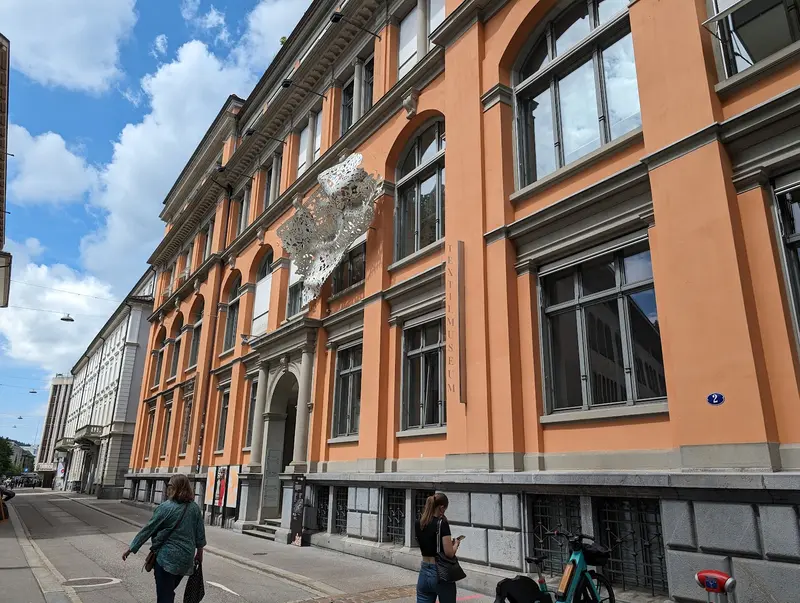
    The museum, founded in 1878, in the so-called Palazzo Rosso displays hand and machine embroidery and European lace from the Middle Ages to today. Here you understand how embroidery made St. Gallen rich and famous in the late 19th century.
    Open in Google Maps
    Drei Weieren
    Park

    4Drei Weieren

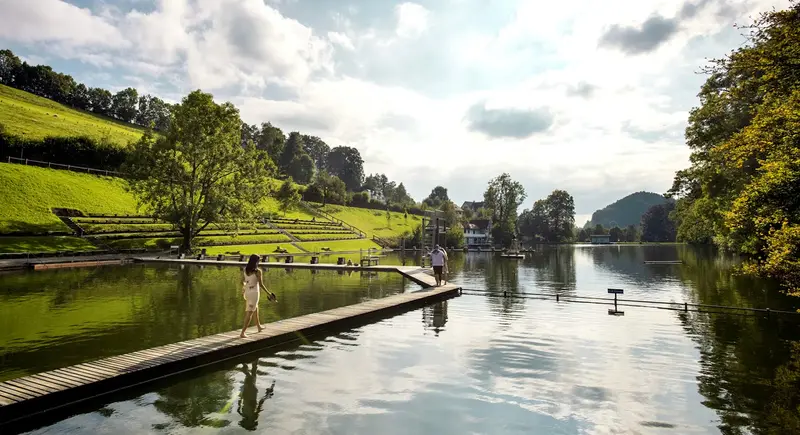
    The artificial ponds laid out on the Freudenberg slope in the 17th century are the city's recreation area. The Mühleggbahn takes you up from the Old Town, where a panoramic path offers views over St. Gallen and, on clear days, to Lake Constance.
    Open in Google Maps
    St. Laurenzen Church
    Church

    5St. Laurenzen Church

    The city's second great church is on the Old Town's edge, next to the collegiate quarter. From its tower, you'll see the Old Town rooftops and the monastery quarter.
    Open in Google Maps

    Restaurants in St. Gallen

    1

    Zum Goldenen Schäfli

    The city's most famous first-floor eatery is in the over 500-year-old former Butchers' Guild Hall. The floor and Gothic wood ceiling are so slanted that a guest at the head of the table sits about 20 centimeters higher than one at the foot.
    Show on Google Maps
    2

    Weinstube zum Bäumli

    Wine tavern on the first floor of an over 600-year-old half-timbered house on Schmiedgasse. On the menu are classics like tripe in white wine sauce, veal liver with Rösti, and St. Galler Bratwurst.
    Show on Google Maps
    3

    Wirtschaft zur alten Post

    A first-floor eatery in a restored 1552 house on Gallusstrasse, just a few steps from the Abbey District. It's known for its lava stone-grilled bratwurst with crispy Rösti.
    Show on Google Maps

    Culture in St. Gallen

    A monastery, textile trade, and a distinct culinary culture define St. Gallen to this day.The Monastery's LegacyThe Abbey Library was established during the Baroque redesign of the monastery district, its hall built from 1758 to 1762 according to plans by Peter Thumb. With its inlaid shelves, carved bookcases, and ceiling frescoes, it is considered a Rococo masterpiece. A selection of the manuscripts is displayed in changing exhibitions, while the Lapidarium in the vaulted cellar showcases artifacts from the medieval monastery buildings. Since 1821, the library has also housed the Egyptian mummy of Schepenese, complete with painted sarcophagi.Embroidery and First-Floor EateriesThe prosperity of the embroidery boom is evident in the Old Town, for instance, in the magnificent oriel windows like the Camel, Gryphon, or Pelican Bay. Characteristic of St. Gallen are the Erststockbeizli (first-floor taverns): life moved to the brighter rooms on the first floor because the medieval city's ground level was damp. Many of these eateries have preserved their Gothic ceiling beams and wooden paneling.The St. Gallen BratwurstThis veal bratwurst, first mentioned in the St. Gallen Butcher's Guild statutes in 1438, still contains fresh milk today, giving it its light color. In Eastern Switzerland, it is traditionally eaten only with bread and no mustard. Due to the OLMA agricultural fair in October, it is also known as Olma-Bratwurst.

    Exploring St. Gallen

    From Zurich Airport, Intercity and Eurocity trains travel directly to St. Gallen in about 50 minutes. From the station, it's just a few minutes' walk to the Old Town, which is largely car-free.The Mühleggbahn, a short funicular railway, takes you from the Old Town up to the Drei Weieren.The narrow-gauge Appenzeller Bahn travels directly from St. Gallen station to Appenzell in just over half an hour.The City Pass covers buses and trains within the city zone for one day.

    Accommodations in St. Gallen

    Find perfect stay in St. Gallen

    Booking.com* (Affiliate link)
    Search Hotels
    Agoda* (Affiliate link)
    Search Hotels
    Airbnb
    Vacation Rentals

    * Affiliate link: if you book through it, we earn a small commission. The price stays the same for you.

    Campgrounds in St. Gallen

    Find perfect campground in St. Gallen

    Search via Google Maps
    Campgrounds nearby (15km)
    Camping.info
    Find Campgrounds
    Park4Night
    RV Parks & Camping

    Plan your trip to St. Gallen

    Save places, build a route and plan your city trip, all in one place.

    1. 1
      Sunrise over alpine peaks and a sea of clouds
      1234

      Round trip

      12 days · 4 stops

      Saved

      Pick a route

      Pick a ready-made one or save places and plan your own.

      Open bookmarks
    2. 2

      Trip to St. Gallen

      Live
      • 1Cathedral St. Gallen3 days
      • 2Abbey Library St. Gallen4 days
      • 3Textile Museum St. Gallen5 days
      Budget

      Plan your trip

      The planner sorts stops, days and budget. Plan together in real time.

      Start trip planning
    3. 3
      9:41 No signal
      St. Gallen
      Available offline

      Use it on the road

      Download the guide to your phone and use it on site, even offline.

    Nearby

    Appenzell

    Appenzell

    Appenzell is the capital of the canton of Appenzell Innerrhoden and lies in gently rolling hills at the foot of the Alpstein range, south of St. Gallen. The heart of the village is the Hauptgasse, with more than 60 shops and colorfully painted facades. Many shop and inn signs still hang here in the traditional style known as Tafeen.On the Landsgemeindeplatz, the Landsgemeinde meets on the last Sunday in April, when eligible voters decide by a show of hands in the open air. Nearby are the Town Hall, with its facade painted in 1928, and St. Mauritius Parish Church, whose parish dates back to 1071.A short train ride away, the mountains of the Alpstein begin at Wasserauen. A cable car takes six minutes to reach Ebenalp at 1,644 meters. From there, you hike down to the Wildkirchli caves and the Berggasthaus Aescher, built against the cliff, and on to the Seealpsee. Other cable cars run up the Hoher Kasten and the Kronberg.
    Bodensee

    Bodensee

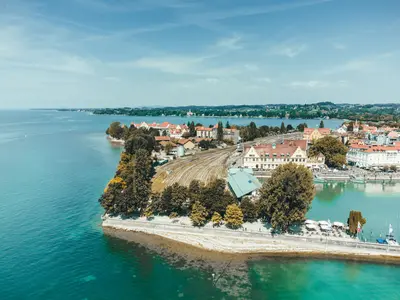
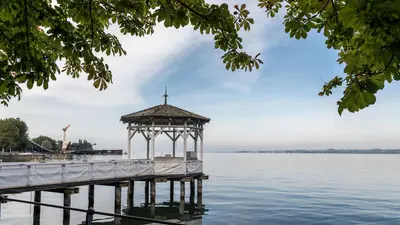
    Lake Constance, at roughly 395 meters above sea level, lies between Germany, Austria, and Switzerland, covering 536 square kilometers. Stretching 69 kilometers from Bregenz to Stein am Rhein, it plunges 251 meters at its deepest point between Fischbach and Uttwil. The Alpine Rhine flows in, the Seerhein connects the Obersee and Untersee, and the river then exits as the Hochrhein.On the German side, Baden-Württemberg and Bavaria share its shores. Travel by ferry and ship here between Konstanz, the flower island Mainau, the castle town Meersburg, and the island city Lindau, where a UNESCO World Heritage site awaits on Reichenau Island.
    Lindau

    Lindau

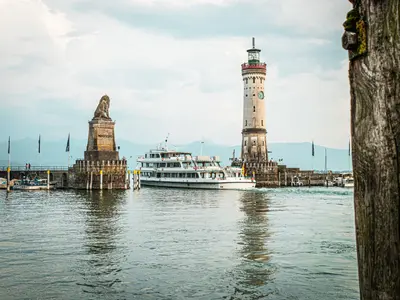
    Lindau is the Bavarian town on Lake Constance, its old town situated on an approximately 0.69-square-kilometer island in the eastern Obersee. A road bridge and the railway embankment connect it to the mainland, on which trains travel to Lindau-Insel station.The landmark is the harbor entrance: On one side, the six-meter-high Bavarian Lion made of Kelheim marble, is enthroned; opposite stands the New Lighthouse, completed in 1856, Germany's southernmost. Also featured are the 12th-century Mangturm and the painted Old Town Hall dating from 1422.
    Bregenz & Bodensee

    Bregenz & Bodensee

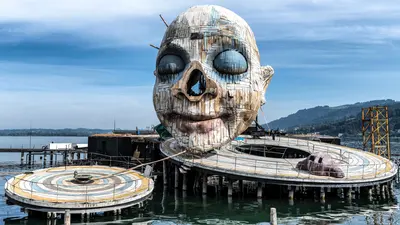
    In the very west, Vorarlberg borders Lake Constance. Bregenz is home to the Seebühne, where summer operas are staged directly on the water.
    Bregenz

    Bregenz

    Bregenz is located on Lake Constance in the far west of Austria. The city is known for the Bregenz Festival: Since 1946, opera has been performed directly on the water on the Lake Stage every July and August, in front of almost 7,000 spectators.

    Sources & method

    • Photos: Wikimedia Commons, Google Maps. Each photo carries its credit.
    • Place data such as addresses and ratings comes from Google Maps.
    • The content is based on web research from public, traceable sources. How the content is made · The role of AI