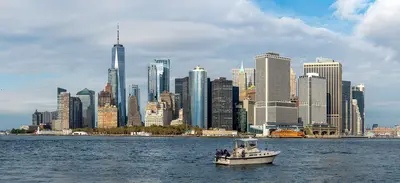
New York City, in the eponymous state, is divided into five boroughs: Manhattan, Brooklyn, Queens, the Bronx, and Staten Island.
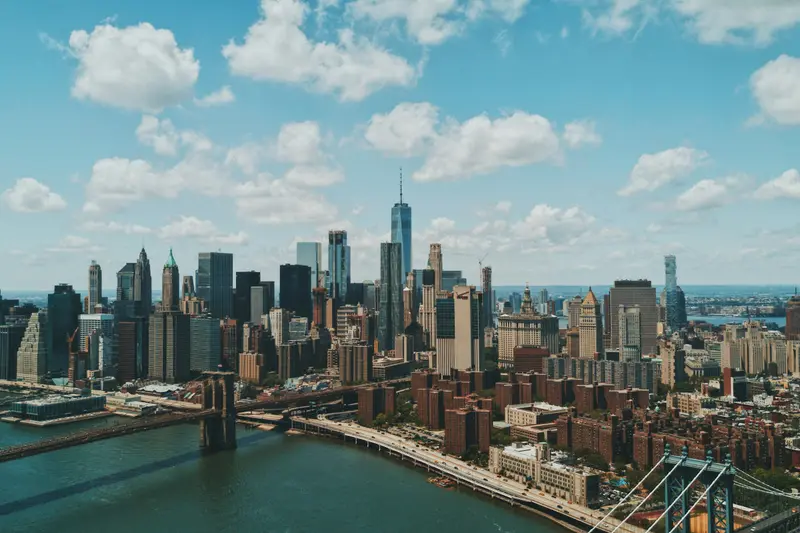
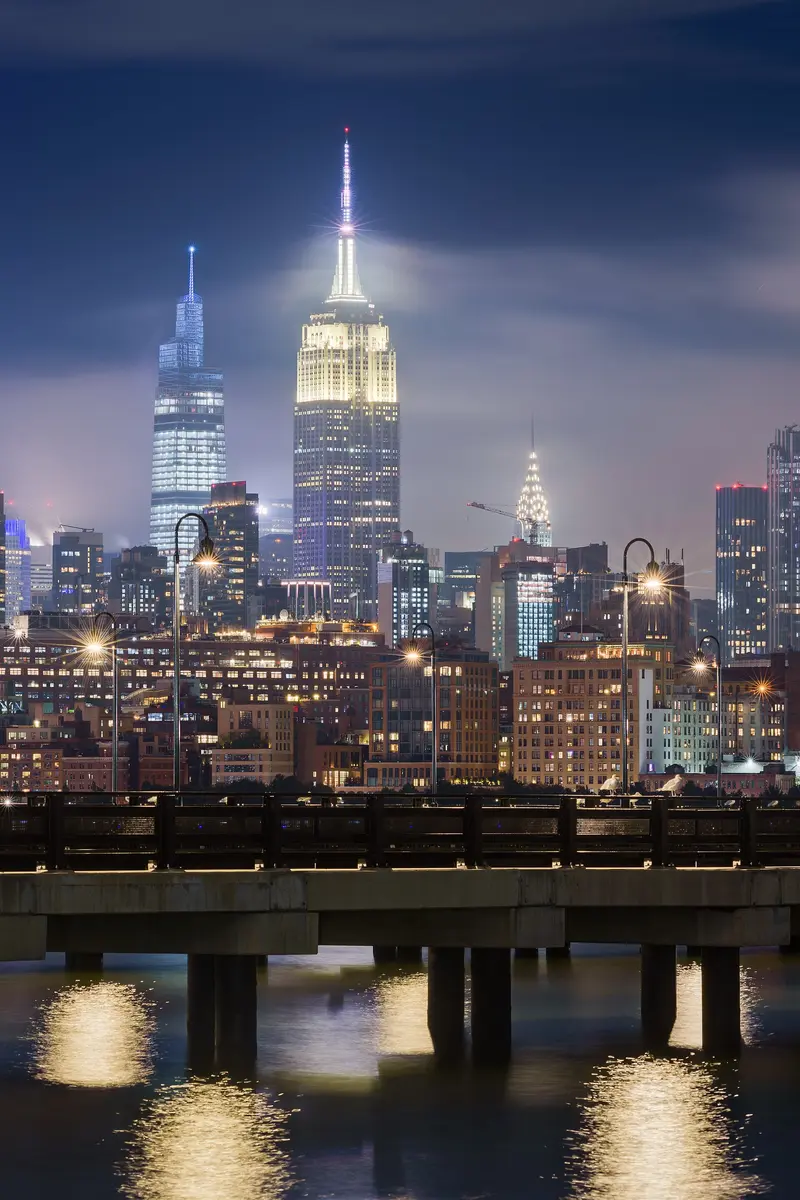
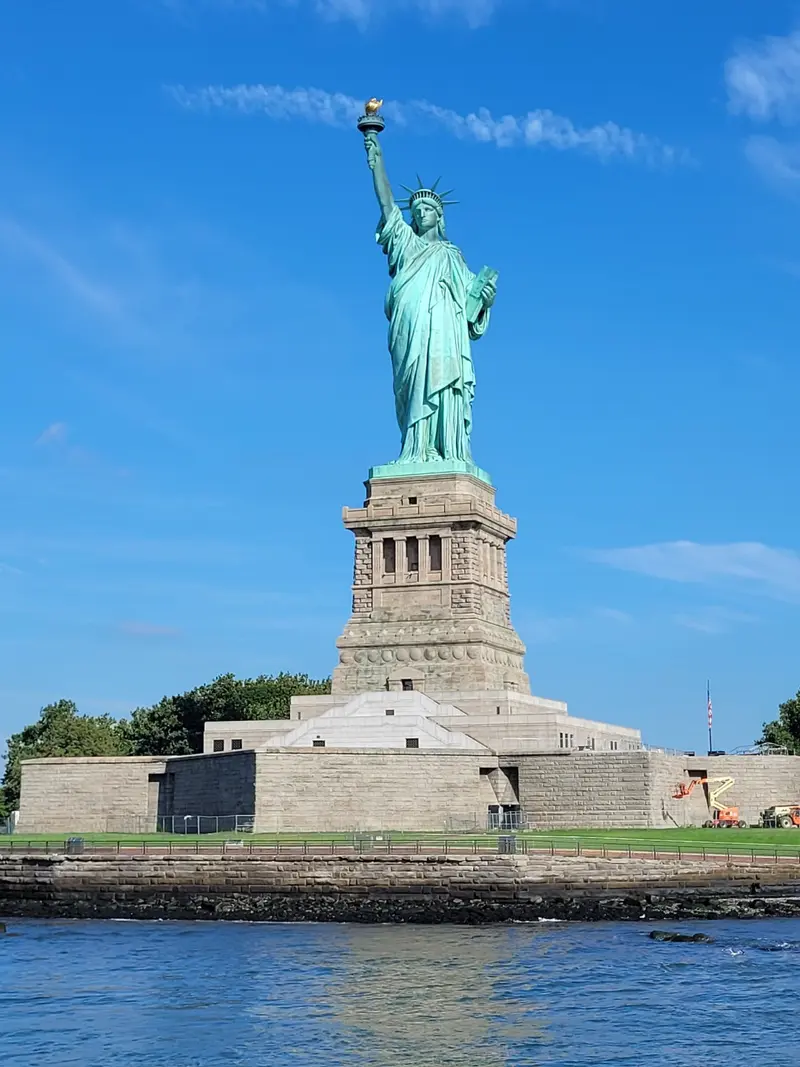
New York City, in the eponymous state, is divided into five boroughs: Manhattan, Brooklyn, Queens, the Bronx, and Staten Island. You come for its skyline, large museums, and numerous neighborhoods, each with its own distinct character, home to around 8.8 million people.In the heart of Manhattan lies Central Park, 341 hectares in size and publicly accessible since 1858. On the West Side, the High Line runs, a park on a former elevated railway line, stretching approximately 2.3 kilometers through the Meatpacking District and Chelsea. The Brooklyn Bridge, opened in 1883, leads across the East River to Brooklyn. The Statue of Liberty was inaugurated in 1886.The subway operates 24/7, a ride costs 3 dollars. You pay contactlessly with credit card or smartphone directly at the turnstile. JFK and LaGuardia airports are located in Queens.
New York City is home to approximately 8.6 million inhabitants spread across five boroughs and nearly 780 square kilometers of land area, making it the most populous city in the USA. You get around here by subway, bus, and ferry, with contactless payment via OMNY. The city's character is defined by its density and diversity: estimates suggest around 800 languages are spoken here, and many neighborhoods still bear the marks of immigration today. In Manhattan, highlights include Midtown with Times Square and Grand Central, the Lower East Side with its traditional delis, and Harlem, the heart of the Harlem Renaissance. Brooklyn stretches to Coney Island beach, and the Bronx is considered the birthplace of Hip-Hop.
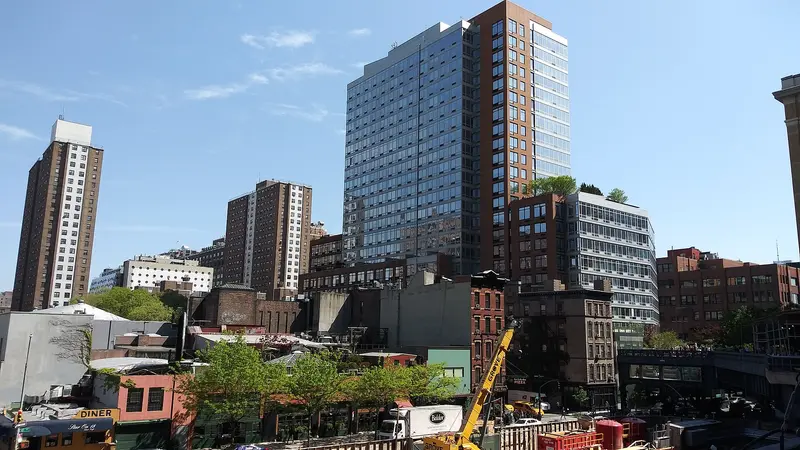
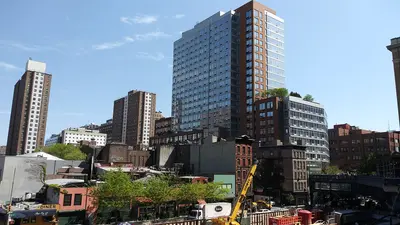
The West Side, between Gansevoort Street and 34th Street, shows how New York reinvents itself. Where slaughterhouses, warehouses, and a freight railway once stood, you'll now find galleries, designer shops, and glass residential towers.
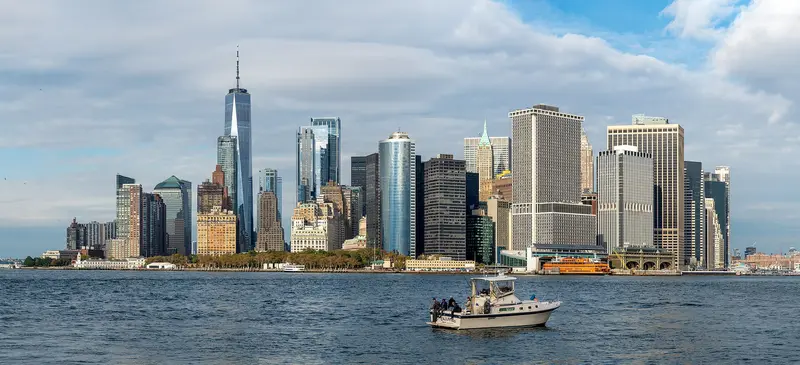
Manhattan's southern tip holds the city's oldest part. Just west of Castle Clinton, Fort Amsterdam was established in 1626, and by 1658, Stone Street became Nieuw Amsterdam's first cobblestoned road.
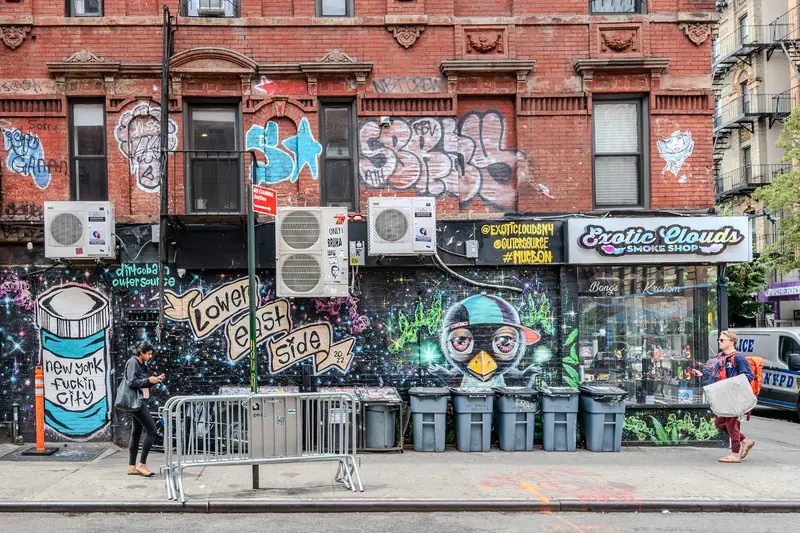
Lower East Side, East Village, Chinatown and Little Italy
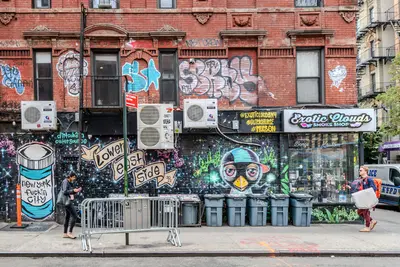
Few Manhattan spots tell as much about immigration as this corner. From the 19th century, immigrant families crowded into the Lower East Side's tenements.
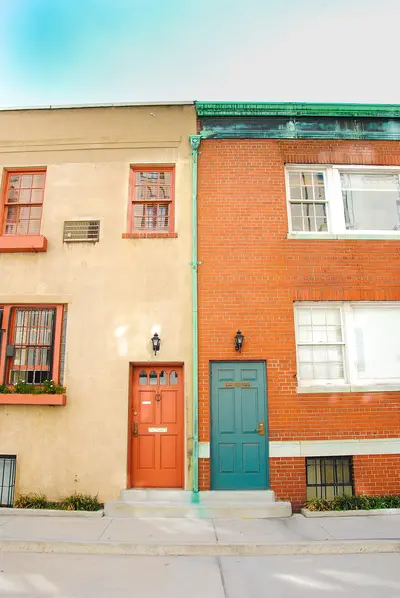
Between Houston Street and 14th Street, Manhattan becomes more intimate. The streets abandon the grid pattern, trees shade brick houses, and a café sits on almost every corner.
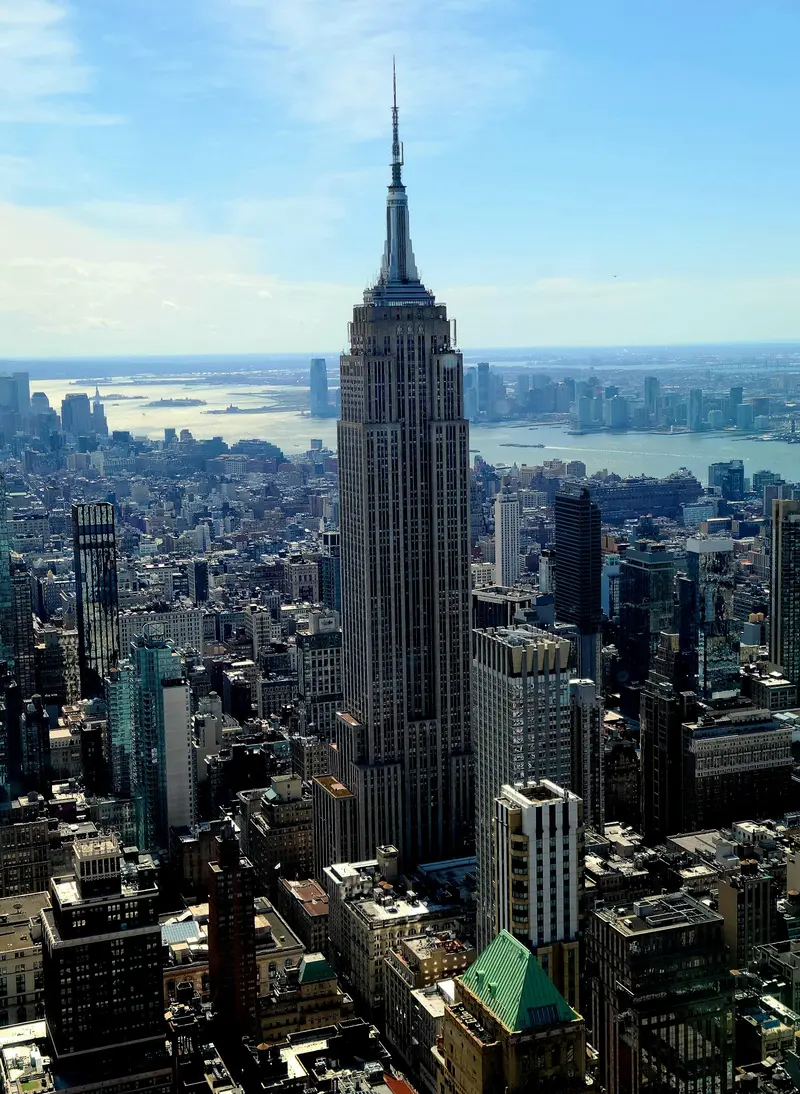
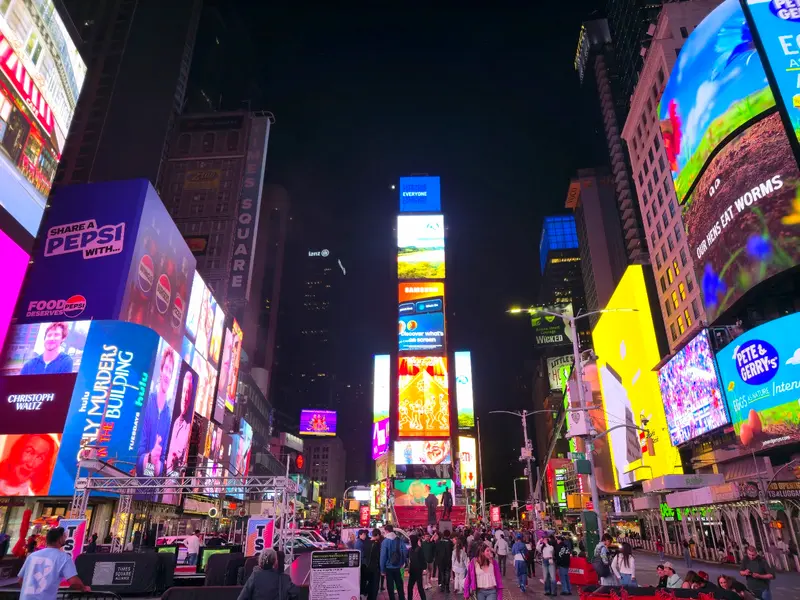
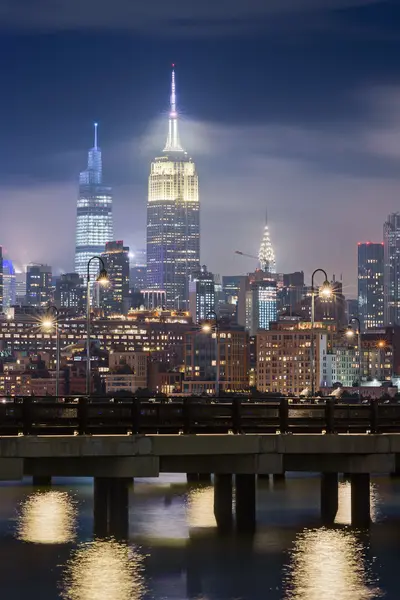
Midtown is the New York from films and postcards: skyscrapers, yellow cabs, neon signs. Between 34th and 59th Street, most of the city's classics cluster within a few square kilometers, and by day, office workers and visitors share the sidewalks.At Times Square, named in 1904 after the New York Times, the famous ball has been dropping on New Year's Eve since 1907. Since 2009, Broadway here has been a pedestrian zone, and surrounding it is the Theater District with its major musicals. A few blocks east stands the Rockefeller Center, an Art Deco ensemble from the 1930s with an ice rink and, since 1933, the Christmas tree.For views from above, choose between the 381-meter-tall Empire State Building (1931) and the Top of the Rock, which offers a prime view of the Empire State itself. On the ground, worthwhile stops include Grand Central Terminal with its main hall, the reading rooms of the New York Public Library, Bryant Park just behind it, and the Museum of Modern Art.Observation decks are least crowded in the mornings, whereas Times Square truly comes alive only after nightfall. For discounted same-day musical tickets, head to the TKTS booth.
Central Park divides northern Manhattan into two worlds. To the west is the Upper West Side, with its brownstones, delis, and a more relaxed, intellectual reputation; to the east, the Upper East Side, with city mansions and major museums along Fifth Avenue.The park itself is approximately 4 kilometers long and spans 341 hectares. Frederick Law Olmsted and Calvert Vaux won the 1858 competition with their Greensward Plan, and the park was completed in 1876. Behind its seemingly natural landscape lies completely planned design. Stroll across the Mall to Bethesda Terrace, continue to the Bow Bridge over the lake, and then to Strawberry Fields with its Imagine mosaic for John Lennon.On the east side, the Museum Mile, between 82nd and 110th Street, boasts nine museums, including the Metropolitan Museum of Art and the Guggenheim. On the west side, the American Museum of Natural History awaits with its life-sized blue whale. As of April 2025, the Frick Collection, located in steel magnate Henry Clay Frick's villa, is also reopened after its renovation.Allow a full day for the park and one museum. Mornings are the quietest in the park, and The Met is open until 9 PM on Fridays and Saturdays.
Sights in New York City
Discover the most important sights and attractions
Historic Landmark
1Statue of Liberty and Ellis Island
Ferries from Statue City Cruises, the sole authorized provider, depart from The Battery and Liberty State Park. The standard ticket includes both islands, featuring the Statue of Liberty Museum and the Ellis Island National Museum of Immigration. Pedestal and Crown access is subject to limited online availability; the Crown ascent involves 162 steps with no elevator.
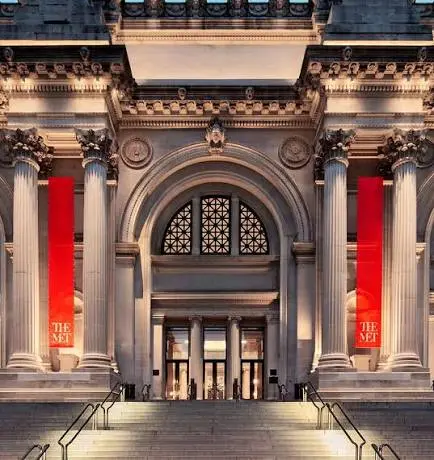
The museum on Fifth Avenue is open Sunday through Tuesday and Thursday from 10 AM to 5 PM, Fridays and Saturdays until 9 PM, closed Wednesdays. Adults pay $30; the ticket is also valid on the same day for The Met Cloisters in northern Manhattan.
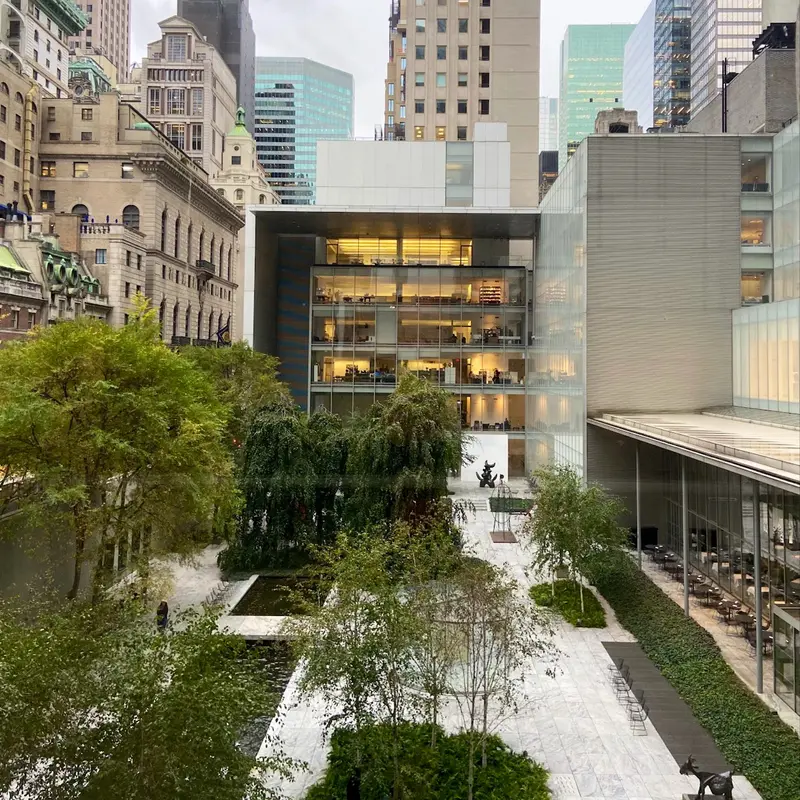
The museum on West 53rd Street is open daily from 10:30 AM, and until 8:30 PM on Fridays. Admission is $30, but free on Fridays from 5:30 PM for New York State residents only.
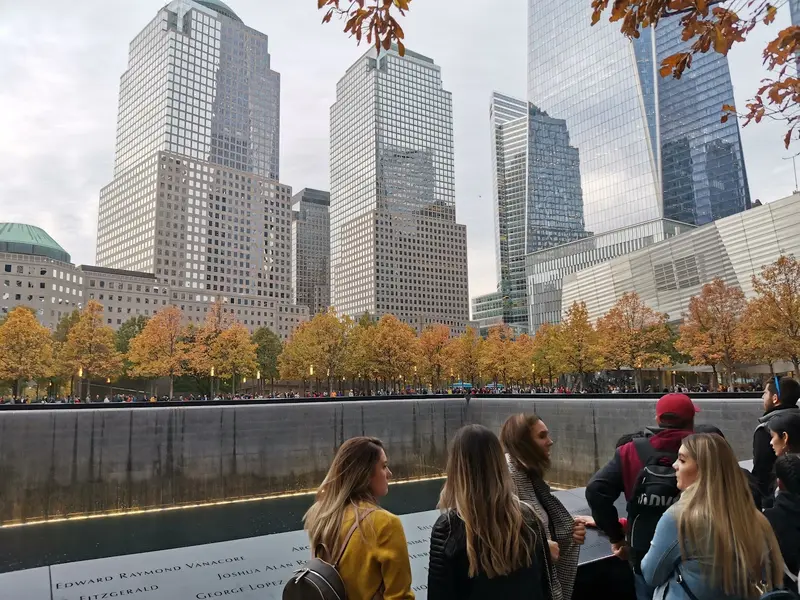
The two reflecting pools in the footprints of the Twin Towers bear the names of 2,983 victims of the 2001 and 1993 attacks. The Memorial is free to access daily from 8 AM to 8 PM, but for the Museum, which opened in 2014, you need a pre-purchased ticket.
Der Platz an der Kreuzung von Broadway, Seventh Avenue und 42nd Street trägt seit 1904 den Namen der New York Times und ist das Zentrum des Theater District. Seit 2009 ist der Broadway zwischen 42nd und 47th Street Fußgängerzone, an Silvester sinkt hier seit 1907 der Ball.
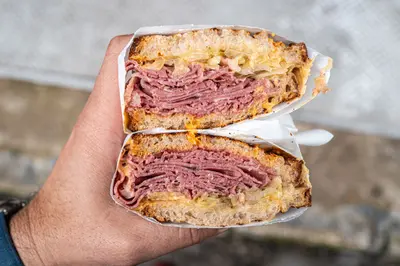
Jewish deli on East Houston Street in the Lower East Side, known since 1888 for its pastrami sandwich on rye bread. At the entrance, you get a ticket where your order is noted.
Many classics of New York cuisine can be traced back to Italian and Jewish immigrants.
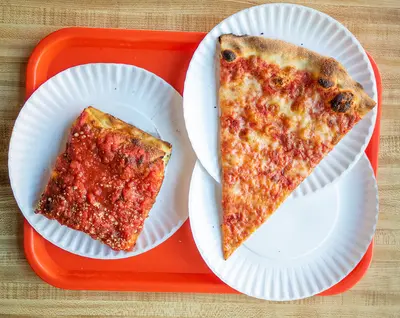
New York Pizza Slice
The large, thin crust is crispy at the edge and soft enough in the middle to fold, topped with tomato sauce and grated mozzarella. The style developed in the early 20th century from Neapolitan pizza, and it is usually sold by the slice.
Bagel with Lox
Jewish immigrants from Poland brought the bagel to New York, where the dough is boiled in water before baking. Traditionally, it comes with smoked salmon (Lox), cream cheese, capers, tomato, and red onions.
Pastrami on Rye
The pastrami sandwich on rye bread is the classic from Jewish delis. At Katz's Delicatessen on East Houston Street in the Lower East Side, it has been served since its founding in 1888.
New York Cheesecake
The New York variant is based on cream cheese and became known in the 1930s in Jewish eateries like Reuben's and Lindy's. Junior's in Brooklyn, founded in 1950, is still known for its cheesecake today.
Hot Dog
Nathan Handwerker opened a hot dog stand in 1916 on Coney Island. Nathan's Famous still stands on the corner of Surf and Stillwell Avenue, where an annual hot dog eating contest is held every July 4th.
Museums, Stages and Immigration History
The Metropolitan Museum of Art on Fifth Avenue costs $30 for adults; the ticket is also valid on the same day for The Met Cloisters in northern Manhattan. Only residents of New York State and students from New York, New Jersey, and Connecticut may pay what they wish, with valid ID. The museum is closed on Wednesdays. The MoMA also charges $30; on Fridays from 5:30 PM to 8:30 PM, admission is free only for New York State residents. MoMA PS1 in Queens is free for everyone.Broadway: 41 theaters with at least 500 seats in the Theater District and at Lincoln Center. TKTS booths sell same-day tickets with 20 to 50 percent off.Music: The Bronx is considered the birthplace of Hip-Hop; Harlem was the center of the Harlem Renaissance.Immigration: From 1892 to 1954, approximately 12 million people entered the country via Ellis Island. The main building has been an immigration museum since 1990.
A subway or bus ride costs $3. From January 1, 2026, MetroCards will no longer be sold; you pay via OMNY with a contactless card or smartphone. If you always use the same payment method, subway and local bus rides are free after $35 within seven days.JFK: The AirTrain runs to Jamaica (subway, Long Island Rail Road) and Howard Beach stations and costs $8.75.Newark: The AirTrain connects to the airport train station, with links to NJ Transit and Amtrak. Without a train ticket, it costs $8.75. Due to modernization, temporary shuttle buses are in operation.LaGuardia: The Q70 LaGuardia Link bus is free and runs from Terminals B and C to the subway hubs Jackson Heights-Roosevelt Av and 74 St-Broadway.Ferries: The Staten Island Ferry between Whitehall Terminal and St. George is free and operates 24/7. The NYC Ferry will cost $5 per ride from October 19, 2026.Citi Bike: Single ride $4.99 for 30 minutes, Day Pass $25, E-bikes $0.41 per minute.Car: A congestion charge applies in Manhattan up to and including 60th Street, $9 during the day with E-ZPass, 50 percent more without E-ZPass.