ExploreTravel GuidesPlan a trip
    de|en
    All Places & RegionsAbout FernwehFAQPrivacy PolicyImprint
    ExploreTravel GuidesPlan a trip
    • Neighborhoods & highlights
    • Eat & drink
    • Nightlife
    • Getting around
    • Accommodation
    • Plan trip
    • Nearby
    Coronado

    United States

    Coronado

    City

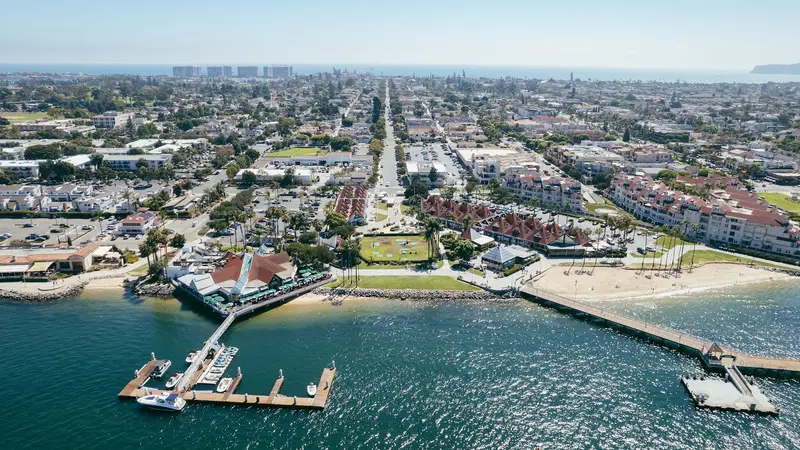
    Coronado is located across the bay from Downtown. Although often referred to as 'Coronado Island,' it's actually a peninsula: To the south, the narrow Silver Strand connects it to the mainland.

    1. Home
    2. Destinations
    3. United States
    4. San Diego
    5. Coronado
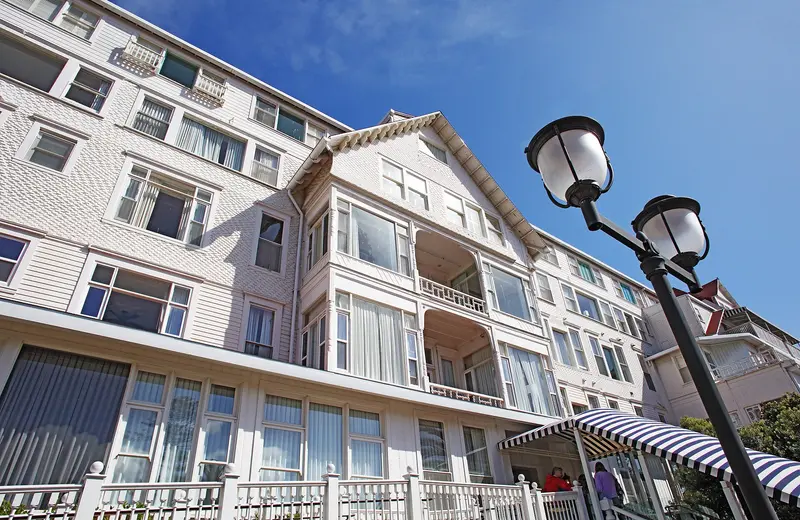
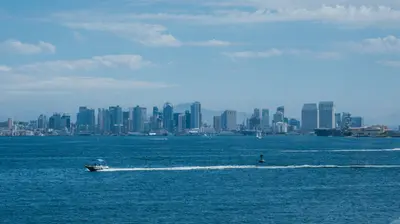
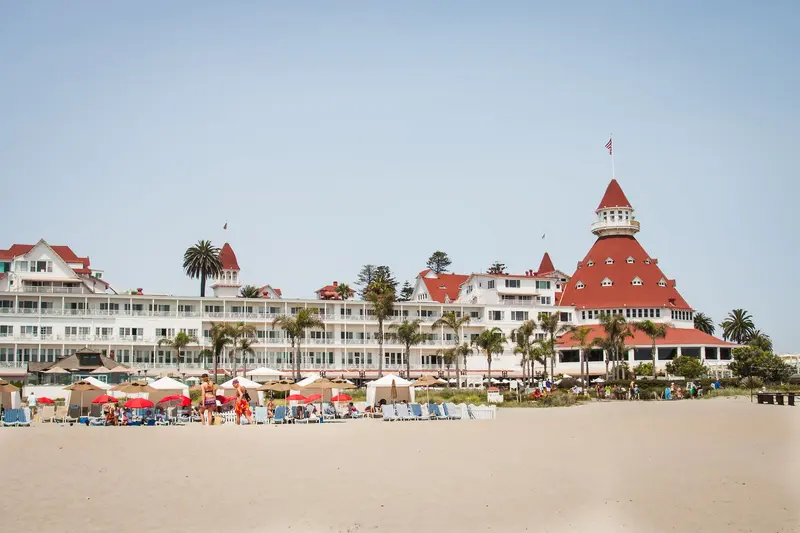
    Coronado is located across the bay from Downtown. Although often referred to as 'Coronado Island,' it's actually a peninsula: To the south, the narrow Silver Strand connects it to the mainland. Coronado is a self-contained small town of around 20,000 residents, quiet, well-maintained, and heavily influenced by the Navy.Its landmark is the Hotel del Coronado, opened in 1888 as the world's largest resort hotel. The white wooden structure with red turrets stands directly on the beach and was the setting for Billy Wilder's 'Some Like It Hot' (1959). North is the Naval Air Station North Island, where Glenn Curtiss founded the USA's first flight school in 1911; south, Navy SEALs train at the Naval Amphibious Base.What to do here is simple: Stroll along the wide sandy beach in front of the hotel, browse Orange Avenue with its shops and eateries, and cycle along the bay. The ferry journey is a mini-excursion, with views of the Downtown skyline.Allow half to a full day. In the evening, the illuminated skyline viewed from the ferry landing is worthwhile.

    Sights in Coronado

    Discover the most important sights and attractions

    Coronado Beach
    Attraction

    1Coronado Beach

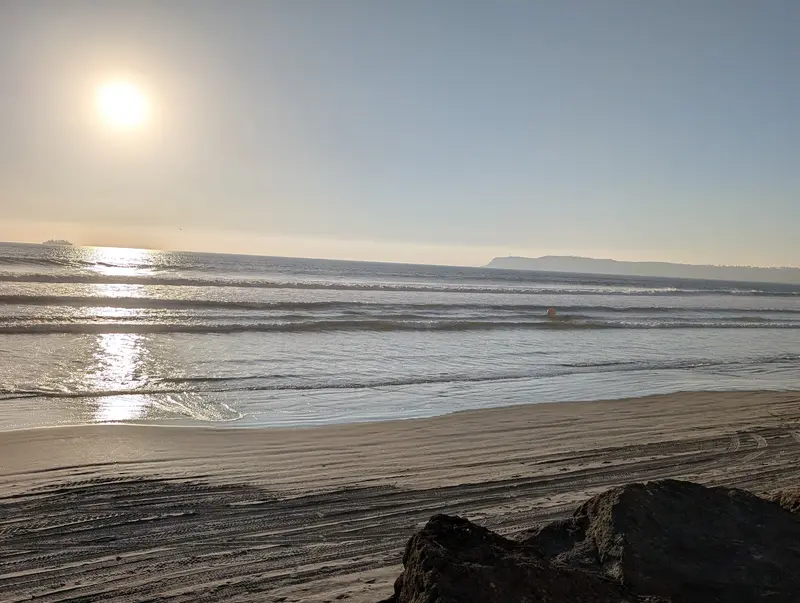
    Wide, flat sandy beach in front of the Hotel del Coronado, ideal for long walks at sunset.
    Open in Google Maps
    Coronado Ferry Landing
    Attraction

    2Coronado Ferry Landing

    This is where the ferry from Downtown docks. From the shore, you get a sweeping view across the bay to the San Diego skyline.
    Open in Google Maps
    Hotel del Coronado
    Historic Landmark

    3Hotel del Coronado

    The 1888 Victorian wooden hotel was the world's largest resort hotel upon its opening and has been a National Historic Landmark since 1977. Even without staying overnight, you can walk through the lobby and stroll on the beach in front.
    Open in Google Maps

    Restaurants in Coronado

    1

    Little Frenchie

    French bistro on Orange Avenue, known for its cassoulet.
    Show on Google Maps
    2

    The Henry

    Casual restaurant with American cuisine, known for its Short-Rib-Potstickers.
    Show on Google Maps
    3

    Cocina 35

    A Mexican restaurant that is particularly known for its Chilaquiles.
    Show on Google Maps

    Nightlife

    1

    Coronado Brewing Company

    Brothers Ron and Rick Chapman opened the brewpub in 1996 in their hometown. At the Orange Avenue pub, enjoy beer straight from the source.
    Show on Google Maps

    Getting There & Around

    You can reach Coronado via the bridge, by ferry, or along the Silver Strand.Ferry (Flagship): hourly from Broadway Pier, about every 30 minutes from the Convention Center to Coronado Ferry Landing, travel time around 15 minutes.Bus 901 runs from Downtown to Coronado, including from 12th & Imperial.San Diego-Coronado Bridge: Opened in 1969, with an approx. 61-meter clearance for naval ships. Pedestrians and cyclists are not allowed on the bridge.On the island, you can easily get around by bike or on foot; Orange Avenue connects the ferry landing and Hotel del Coronado.
    Accommodations in Coronado

    Find perfect stay in Coronado

    Booking.com* (Affiliate link)
    Search Hotels
    Agoda* (Affiliate link)
    Search Hotels
    Airbnb
    Vacation Rentals

    * Affiliate link: if you book through it, we earn a small commission. The price stays the same for you.

    Campgrounds in Coronado

    Find perfect campground in Coronado

    Search via Google Maps
    Campgrounds nearby (15km)
    Camping.info
    Find Campgrounds
    Park4Night
    RV Parks & Camping

    Plan your trip to Coronado

    Save places, build a route and plan your city trip, all in one place.

    1. 1
      1234

      Round trip

      12 days · 4 stops

      Saved

      Pick a route

      Pick a ready-made one or save places and plan your own.

      Open bookmarks
    2. 2

      Trip to Coronado

      Live
      • 1Coronado Beach3 days
      • 2Coronado Ferry Landing4 days
      • 3Hotel del Coronado5 days
      Budget

      Plan your trip

      The planner sorts stops, days and budget. Plan together in real time.

      Start trip planning
    3. 3
      9:41 No signal
      Available offline

      Use it on the road

      Download the guide to your phone and use it on site, even offline.

    Nearby

    Gaslamp Quarter and East Village

    Gaslamp Quarter and East Village

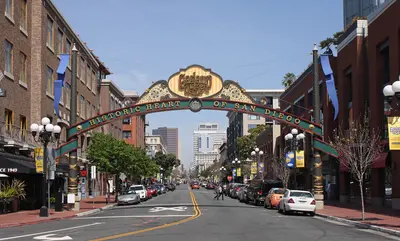
    The Gaslamp Quarter is the historic core of Downtown San Diego. Across approximately 38 acres, or about 15 hectares, brick buildings and Victorian facades from the late 19th and early 20th centuries line the streets, now housing restaurants, rooftop bars, and clubs. Since 1980, the district has been listed on the National Register of Historic Places, and the distinctive archway over Fifth Avenue has been in place since 1992.The history begins in 1867, when Alonzo Horton bought about 800 acres of land and developed his "New Town" by the harbor. From the 1880s until 1916, a part of the area was known as Stingaree, a rough district with saloons, gambling halls, and brothels. The oldest surviving building is a prefabricated wooden house from 1850, which arrived by ship from the East Coast and now serves as a museum. A small detail: the streets were mostly lit by arc lamps back then, not gas lanterns.Directly to the east, East Village adjoins, a younger residential district more characterized by new buildings, centered around Petco Park. The San Diego Padres' baseball stadium opened in 2004 and incorporates an old brick warehouse of the Western Metal Supply Co. In East Village, you'll find many of the city's more exciting new restaurants and cocktail bars.During the day, a stroll is worthwhile, looking up at the facades, ideally with a guided tour from the Gaslamp Quarter Historical Foundation. In the evenings, Fifth Avenue fills up, and on Padres game days, it gets especially crowded around the stadium.
    San Diego

    San Diego

    San Diego liegt ganz im Südwesten der USA, direkt an der Grenze zu Mexiko. Mit rund 1,39 Millionen Einwohnern ist sie die achtgrößte Stadt der USA und die zweitgrößte Kaliforniens, wirkt aber entspannter als Los Angeles im Norden. Das Klima ist mild und trocken, mit warmen Sommern und milden Wintern. Im Frühsommer hängt morgens oft Küstennebel, den die Einheimischen „June Gloom“ nennen.Die Stadt hat viele Gesichter: Marinestützpunkte und Flugzeugträger an der Bucht, spanisch-mexikanische Wurzeln in Old Town, die Museen im Balboa Park, Surfstrände von Ocean Beach bis La Jolla und eine der dichtesten Brauereiszenen der USA. Dazu kommen Fish Tacos, California Burritos und eine Küche, die stark von der Grenzregion geprägt ist.
    Little Italy and Embarcadero

    Little Italy and Embarcadero

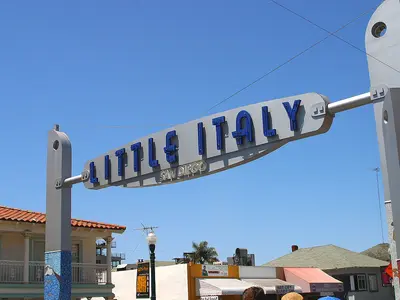
    Little Italy lies on Downtown's northwest rim, mere blocks from the bay. Forty-eight blocks bustle with trattorias, wine bars, design shops, and galleries, alongside homes and small squares. By night, India Street is one of the city's top entertainment strips.The district was founded by Italian fishing families, primarily from Liguria and Sicily. They built the boats that built San Diego's tuna fleet; in 1911, the Pacific Tuna Canning Company opened here. The last canning factories closed in the early 1980s. Interstate 5's construction in the 1970s cut the district in two. Fishing is over, but Italian heritage lives on in delis, bakeries, and festivals.On Saturdays, 8 AM to 2 PM, visit the Little Italy Mercato, one of the county's largest farmers markets with over 200 stalls; it's also smaller on Wednesdays. From here, it's just minutes to the Embarcadero, the bay's waterfront promenade. There lie museum ships, the aircraft carrier USS Midway, and further south, the shops of Seaport Village.The best is a combination of morning at the Mercato, afternoon by the water, and dinner in Little Italy. At sunset, a walk along the bay is worthwhile.
    Balboa Park

    Balboa Park

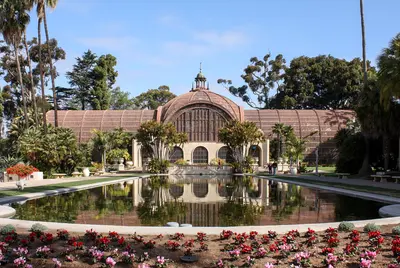
    Balboa Park, spanning approximately 1,200 acres (nearly 490 hectares), is one of the largest urban parks in the USA and San Diego's cultural heart. It's home to the San Diego Zoo, around 16 museums and cultural institutions, gardens, theaters, and ample space for strolling.The city decided back in 1868 to designate the area as a park. It gained its present appearance from the 1915/16 Panama-California Exposition and the 1935/36 California Pacific International Exposition. The ornate Spanish Colonial and Baroque-style buildings along El Prado date from this period, as does the Cabrillo Bridge from 1914, serving as the main entrance. Since 1977, the park and its exhibition buildings have been a National Historic Landmark. The zoo also traces its origins to the exposition: it was founded in 1916 with animals left over after the show.Plan at least half a day; for the Zoo and one or two museums, allow closer to two days. Many gardens and the architecture can be enjoyed for free, such as the Botanical Building, restored in 2024, or the free organ concerts on Sunday afternoons.Mornings are quieter, and parking is easier to find. In the late afternoon, beautiful light falls on the facades along El Prado. Many museums are not open daily, so check their hours beforehand.
    Old Town

    Old Town

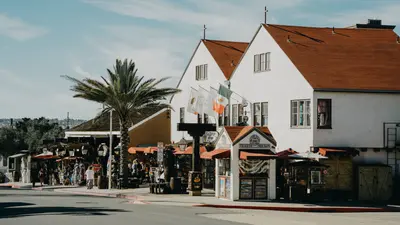
    Old Town is the cradle of San Diego. On the hill above the present-day district, the Spanish founded the Presidio and the first mission in 1769, the first of many missionary outposts in Alta California. Below it, a small settlement arose from 1821, which served as the city's center during the Mexican period and its first decades under US rule.This period from 1821 to 1872 is showcased today by the Old Town San Diego State Historic Park. Restored and reconstructed adobe buildings, an old newspaper office, a school, and a stable with carriages are arranged around a green plaza. Admission to the park and its museums is free. Old Town didn't remain the city center because of Alonzo Horton, who began building his “New Town” by the harbor from 1867, which is today's Downtown.Besides the museums, Mexican restaurants, margaritas in courtyards, and craft shops define the district. This is partly touristy, but especially cozy in the evenings. For a quieter look at the beginnings, a short climb to Presidio Park with the Junípero Serra Museum is worthwhile.It's best to come in the late morning when the museums open and stay until dinner. The museums in the State Park close at 5 PM.