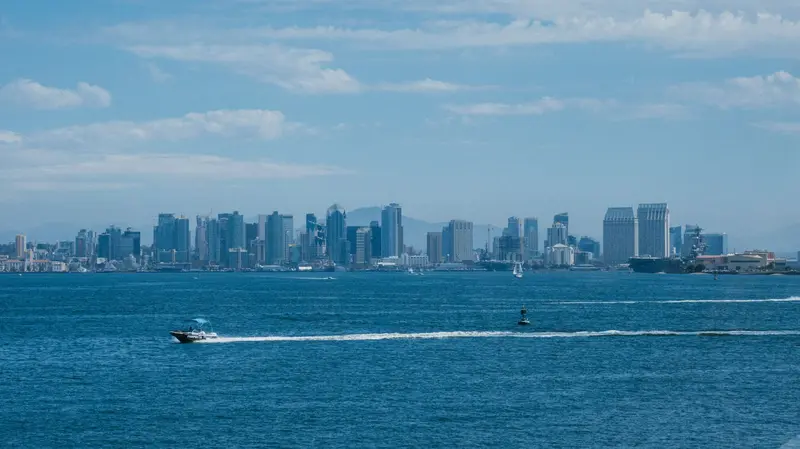
San Diego liegt ganz im Südwesten der USA, direkt an der Grenze zu Mexiko. Mit rund 1,39 Millionen Einwohnern ist sie die achtgrößte Stadt der USA und die zweitgrößte Kaliforniens, wirkt aber entspannter als Los Angeles im Norden.
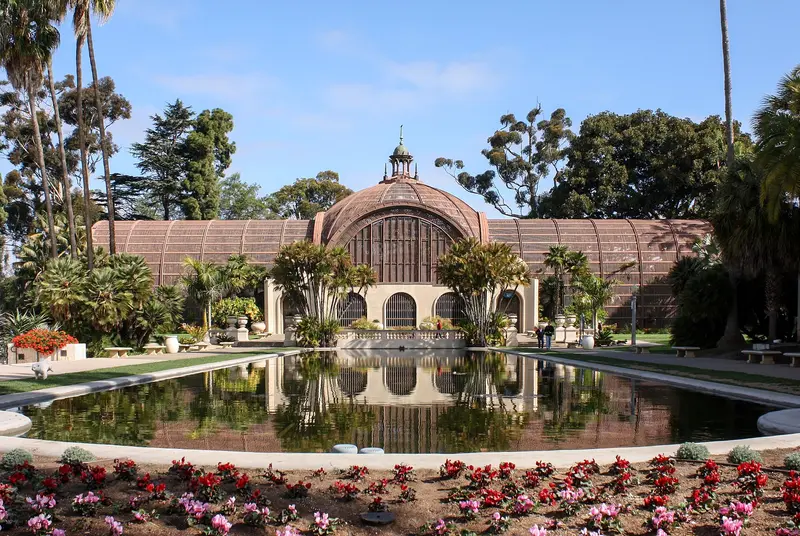
San Diego liegt ganz im Südwesten der USA, direkt an der Grenze zu Mexiko. Mit rund 1,39 Millionen Einwohnern ist sie die achtgrößte Stadt der USA und die zweitgrößte Kaliforniens, wirkt aber entspannter als Los Angeles im Norden. Das Klima ist mild und trocken, mit warmen Sommern und milden Wintern. Im Frühsommer hängt morgens oft Küstennebel, den die Einheimischen „June Gloom“ nennen.Die Stadt hat viele Gesichter: Marinestützpunkte und Flugzeugträger an der Bucht, spanisch-mexikanische Wurzeln in Old Town, die Museen im Balboa Park, Surfstrände von Ocean Beach bis La Jolla und eine der dichtesten Brauereiszenen der USA. Dazu kommen Fish Tacos, California Burritos und eine Küche, die stark von der Grenzregion geprägt ist.
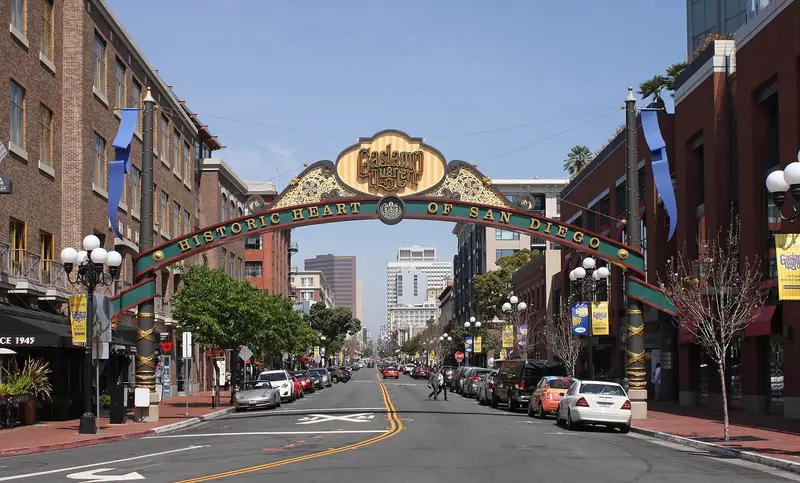
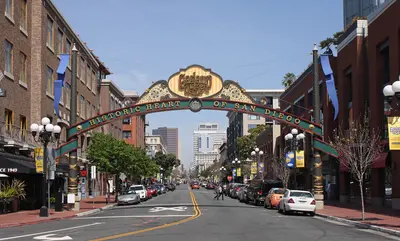
San Diego is sprawling, but the city center with Gaslamp Quarter, Little Italy, and Embarcadero is easily explored on foot. For the other neighborhoods, you can use the San Diego Trolley, buses, and the ferry to Coronado; for the northern coast, a car is practical. What's special is the mix of big city, beach, and nature: Mornings with sea lions in La Jolla, afternoons with museums in Balboa Park, evenings with craft beer in East Village. First-time visitors should plan to include Downtown with Gaslamp Quarter and Little Italy, Balboa Park, Old Town, La Jolla, and Coronado. For beach days, Pacific Beach and Mission Beach are great.
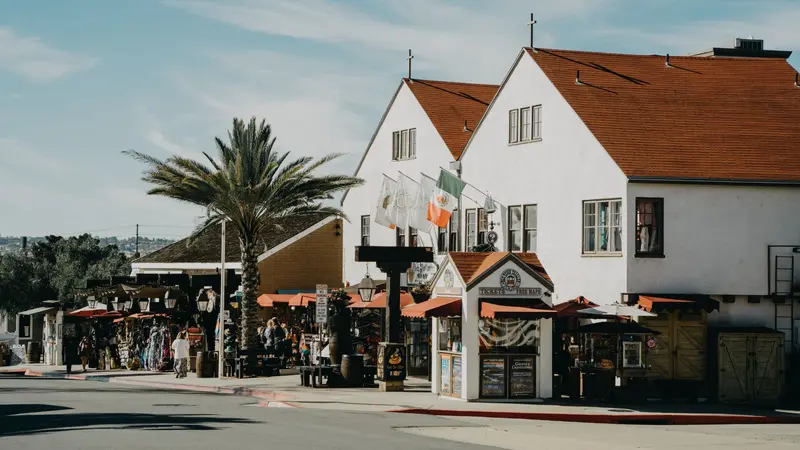
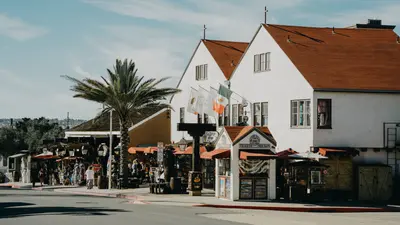
Old Town is the cradle of San Diego. On the hill above the present-day district, the Spanish founded the Presidio and the first mission in 1769, the first of many missionary outposts in Alta California.
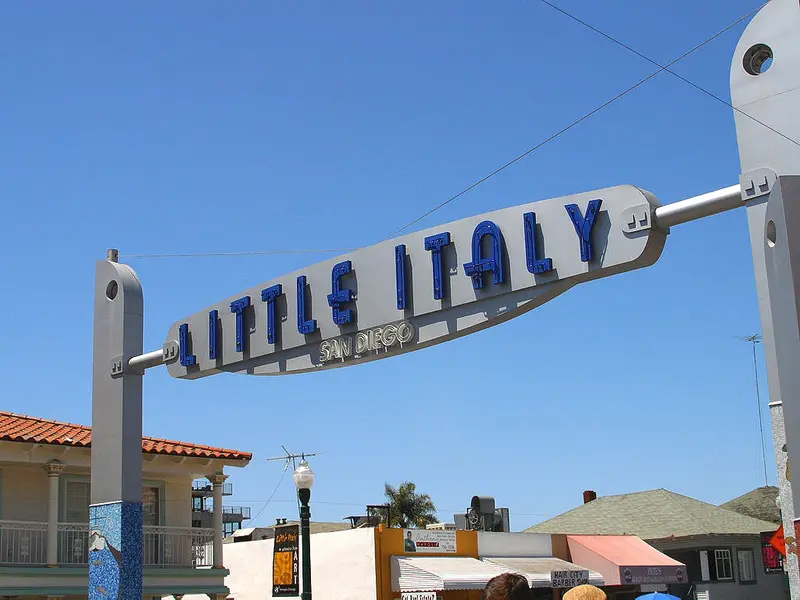
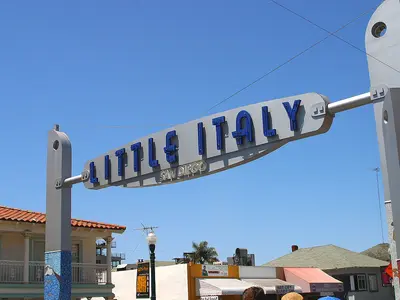
Little Italy lies on Downtown's northwest rim, mere blocks from the bay. Forty-eight blocks bustle with trattorias, wine bars, design shops, and galleries, alongside homes and small squares. By night, India Street is one of the city's top entertainment strips.The district was founded by Italian fishing families, primarily from Liguria and Sicily. They built the boats that built San Diego's tuna fleet; in 1911, the Pacific Tuna Canning Company opened here. The last canning factories closed in the early 1980s. Interstate 5's construction in the 1970s cut the district in two. Fishing is over, but Italian heritage lives on in delis, bakeries, and festivals.On Saturdays, 8 AM to 2 PM, visit the Little Italy Mercato, one of the county's largest farmers markets with over 200 stalls; it's also smaller on Wednesdays. From here, it's just minutes to the Embarcadero, the bay's waterfront promenade. There lie museum ships, the aircraft carrier USS Midway, and further south, the shops of Seaport Village.The best is a combination of morning at the Mercato, afternoon by the water, and dinner in Little Italy. At sunset, a walk along the bay is worthwhile.
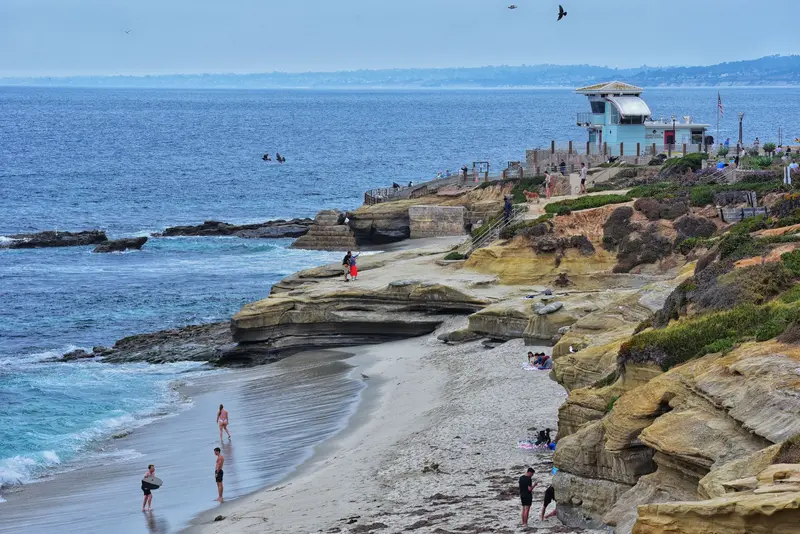
La Jolla is located about 19 kilometers north of Downtown and boasts approximately 11 kilometers of Pacific coastline. This affluent district features expensive villas, yet its coast belongs to everyone: rocky coves, caves, sea lions on the cliffs, and sandy beaches for surfing and snorkeling.The area was shaped by publisher and philanthropist Ellen Browning Scripps, who settled here in 1896. She funded, among other things, the Scripps Institution of Oceanography, founded in 1903 and later evolving into the University of California San Diego, and the Children's Pool wall in 1931. Her former residence, designed by Irving Gill, now houses the Museum of Contemporary Art San Diego.The heart of La Jolla is The Village around Prospect Street, featuring galleries, boutiques, and restaurants with ocean views. Directly below lies La Jolla Cove, a small bay within a marine protected area, where hundreds of California Sea Lions rest. Further north, you'll find La Jolla Shores with its wide sandy beach and the Birch Aquarium, while to the south is the surf spot Windansea.Arrive early in the morning for easier parking and often calmer waters. At sunset, a stroll across the lawn of Scripps Park above the Cove is worthwhile.
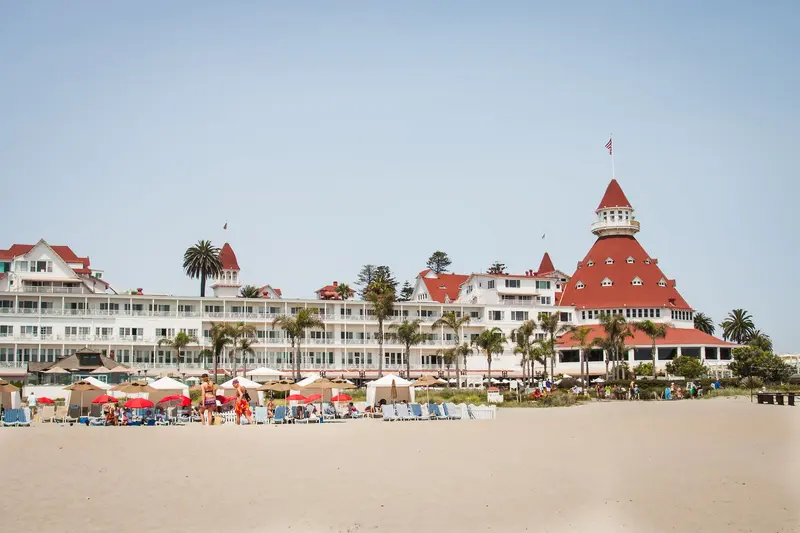
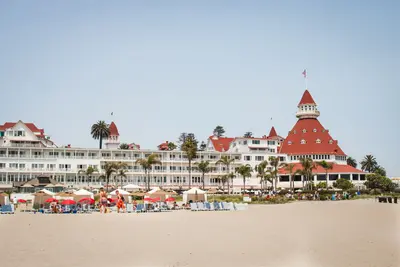
Coronado is located across the bay from Downtown. Although often referred to as 'Coronado Island,' it's actually a peninsula: To the south, the narrow Silver Strand connects it to the mainland. Coronado is a self-contained small town of around 20,000 residents, quiet, well-maintained, and heavily influenced by the Navy.Its landmark is the Hotel del Coronado, opened in 1888 as the world's largest resort hotel. The white wooden structure with red turrets stands directly on the beach and was the setting for Billy Wilder's 'Some Like It Hot' (1959). North is the Naval Air Station North Island, where Glenn Curtiss founded the USA's first flight school in 1911; south, Navy SEALs train at the Naval Amphibious Base.What to do here is simple: Stroll along the wide sandy beach in front of the hotel, browse Orange Avenue with its shops and eateries, and cycle along the bay. The ferry journey is a mini-excursion, with views of the Downtown skyline.Allow half to a full day. In the evening, the illuminated skyline viewed from the ferry landing is worthwhile.
Sights in San Diego
Discover the most important sights and attractions
Park
1Cabrillo National Monument
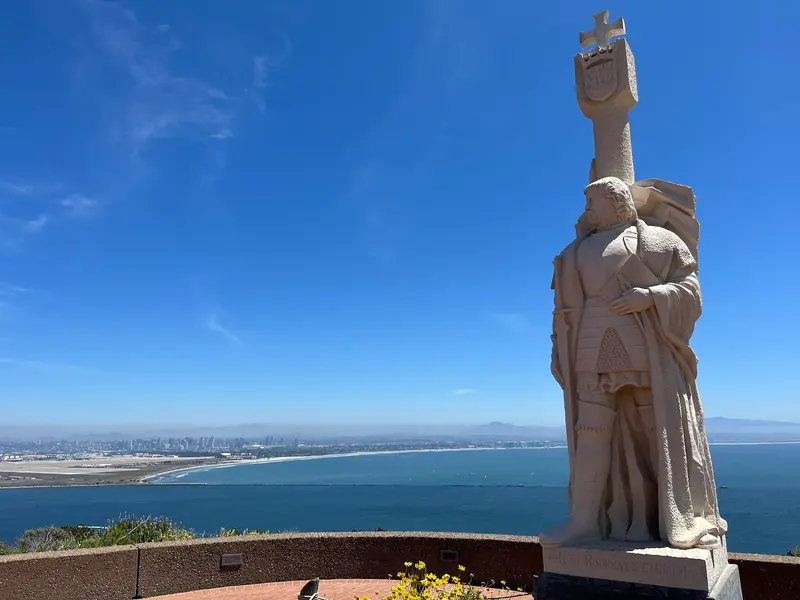
At the tip of Point Loma, the monument commemorates Juan Rodríguez Cabrillo, the first European to set foot on the present-day US West Coast in 1542. It also includes the Old Point Loma Lighthouse from 1855 and tide pools, which are accessible until 4:30 PM. Open daily 9 AM to 5 PM; vehicle entry costs $20 USD (valid for 7 days).
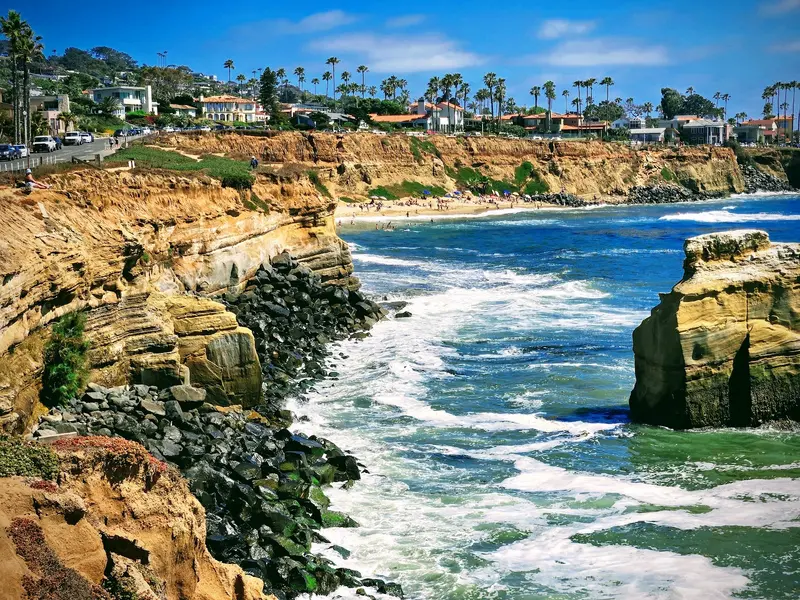
About 28 hectares of cliffs with arches and sea caves on the western edge of Point Loma. The name says it all: here you watch the sun set, and in winter, with some luck, also migrating gray whales.
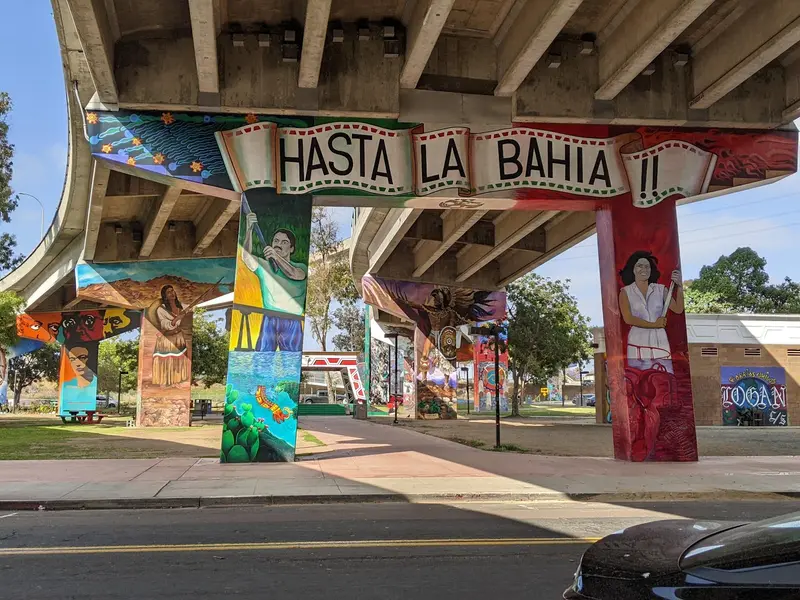
The park in Barrio Logan originated in 1970 when residents stopped the construction of a parking lot and a Highway Patrol station. The murals on the pillars of the Coronado Bridge are considered the USA's largest collection of outdoor murals; since 2016, the park is a National Historic Landmark.
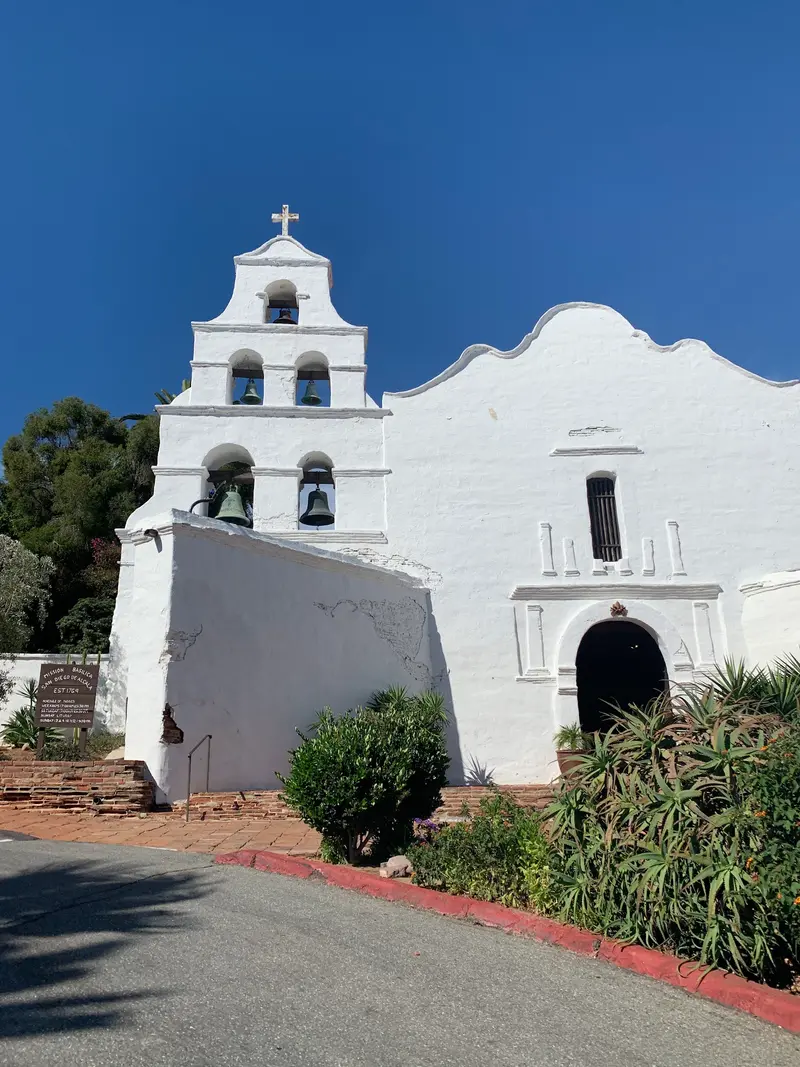
Founded in 1769 by Junípero Serra, the Mission is considered the "Mother of Alta California's Missions". Today's church in Mission Valley is an active parish and has been a basilica since 1976; you can reach it via the Green Line, getting off at the Mission San Diego station.
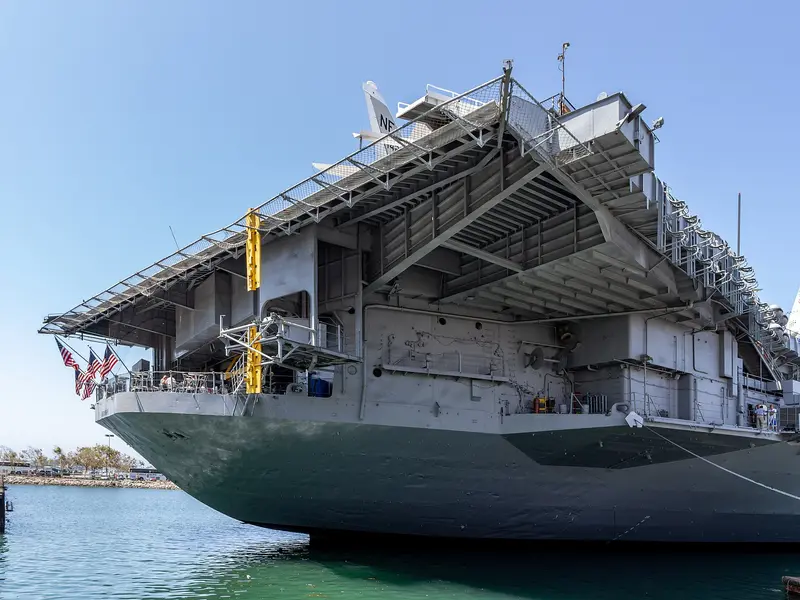
The aircraft carrier was in service from 1945 to 1992 and is considered the longest-serving carrier of the 20th century. Since June 7, 2004, it has been a museum in the bay, welcoming over 20 million visitors in its first 20 years.
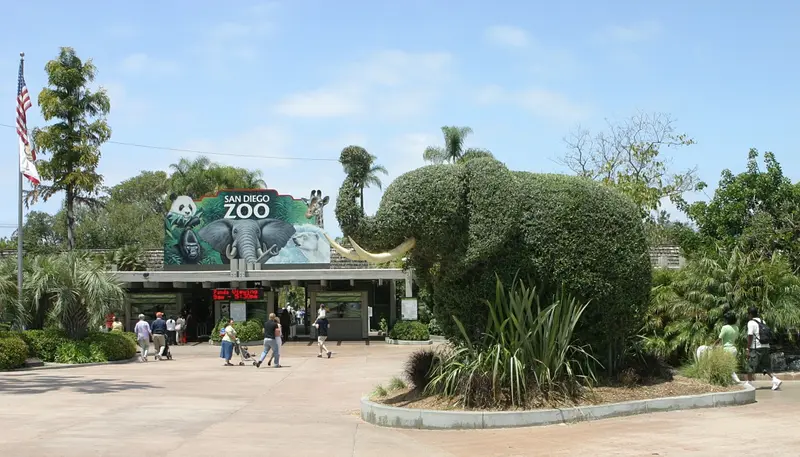
Founded in 1916 with animals from the World's Fair, the zoo in Balboa Park spans about 40 hectares. Float above the grounds on the Skyfari gondola; Giant Pandas returned here in 2024.
San Diego's cuisine is one of the border region: many classics hail from Baja California or originated in the city's taco shops. Add to that fresh fish from the Pacific and a brewery scene that ranks among the most significant in the USA.
Fish Tacos
The fish taco originates from Baja California. Ralph Rubio made it popular in the USA after discovering it on a trip to San Felipe, opening his first stand in Pacific Beach in 1983. Traditionally, it's fried fish in a corn tortilla with cabbage, salsa, and a light sauce.
California Burrito
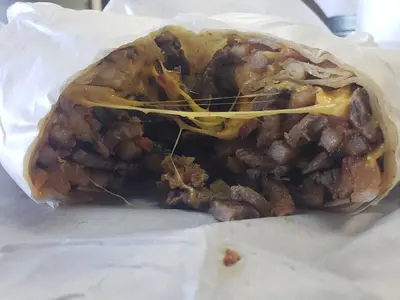
A burrito with Carne Asada, French fries, and cheese, often served with guacamole, sour cream, or Pico de Gallo. It originated in San Diego's taco shops; its inventor is disputed.
Carne Asada Fries
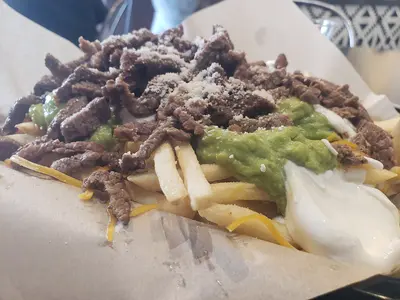
French fries with grilled beef, guacamole, sour cream, and cheese, traditionally Cotija. Lolita's taco shop claims to have invented the dish in the late 1990s. You can get them in almost every Mexican fast-food joint and even at Petco Park.
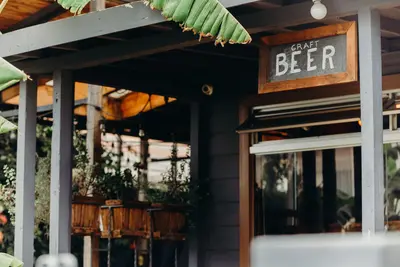
Craft Beer
Karl Strauss opened the city's first post-Prohibition brewery in 1989; today, well over 150 exist. Taste the beer directly in taprooms, like Karl Strauss' original brewpub in Downtown.
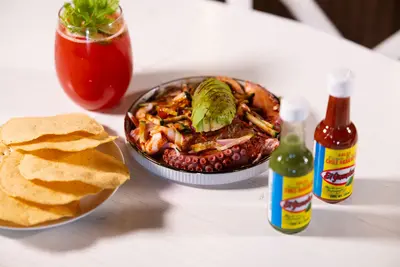
Baja Seafood
Beyond tacos, Mariscos spots serve ceviche, tostadas, and tortas with fish and seafood. A great place to start is Oscar's Mexican Seafood in Pacific Beach or Hillcrest.
Marine, Mexico, Beer and Waves
Few cities are as closely linked to the US Navy. Naval Base San Diego is the main homeport of the US Pacific Fleet, with over 50 ships stationed here. On Coronado, Glenn Curtiss founded the first flight school in the USA in 1911, which became Naval Air Station North Island. The aircraft carrier USS Midway, commissioned in 1945 and decommissioned in San Diego in 1992, has been a museum since 2004, attracting over 20 million visitors in 20 years.The city's roots are Spanish and Mexican. In 1542, Juan Rodríguez Cabrillo reached the bay; in 1769, Spaniards founded the Presidio and Mission; from 1821, the settlement belonged to Mexico. San Diego directly borders Mexico, and the border region's culture shapes its cuisine, language, and art. This is visible in Chicano Park in Barrio Logan, which residents fought for in 1970, and whose murals under the Coronado Bridge are among the largest collections of outdoor murals in the USA.San Diego became a craft beer hub starting in 1989, when Karl Strauss opened the city's first brewery in Downtown since Prohibition. Ballast Point, AleSmith, Stone, and many more followed; by 2022, the city boasted over 150 breweries. Surfing is popular along the entire coast, with Windansea in La Jolla being the most famous, where surfers built their straw hut in 1947 and Tom Wolfe described the scene in "The Pump House Gang".
AirportSan Diego International Airport (SAN) is located right on the edge of Downtown, by the bay. Bus 992 runs daily from about 4:30 AM to 1 AM, departing approximately every 15 minutes and reaching Santa Fe Depot in about 15 minutes. The free San Diego Flyer connects the airport with the Old Town Transit Center, where the Trolley, COASTER, and Amtrak stop. A single fare on the MTS network costs $3, a day pass $7 (as of 2026). You can pay with the PRONTO card or app, and on Bus 992, you can also use a contactless credit card.San Diego TrolleyThe Metropolitan Transit System (MTS) light rail network has been in operation since 1981. The most important lines are:Blue Line: From San Ysidro at the Mexican border, through Downtown and Old Town, to UC San Diego and the UTC Transit Center.Green Line: From 12th & Imperial, through the Gaslamp Quarter, the Embarcadero, Little Italy, and Old Town, through Mission Valley to El Cajon.Orange Line: From Downtown east to El Cajon.Copper Line: From El Cajon to Santee.You can transfer at 12th & Imperial, Santa Fe Depot, America Plaza, and Courthouse.TrainThe Amtrak Pacific Surfliner connects San Diego with Los Angeles, Santa Barbara, and San Luis Obispo over approximately 560 kilometers, partly running directly along the coast. In San Diego, it stops at Santa Fe Depot and the Old Town Transit Center.Border to TijuanaThe Blue Line ends in San Ysidro at the border crossing to Tijuana. Before crossing the border, inform yourself about the current entry requirements and the advisories from the Federal Foreign Office.